
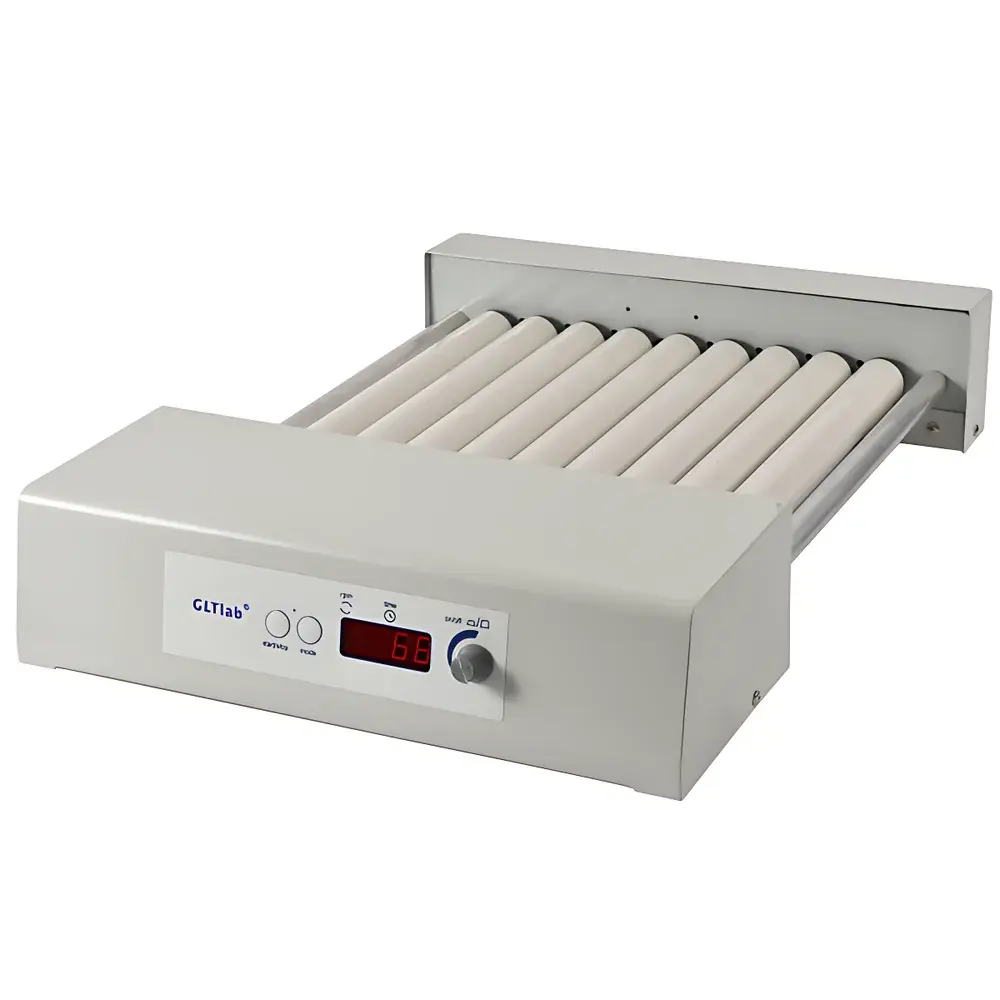
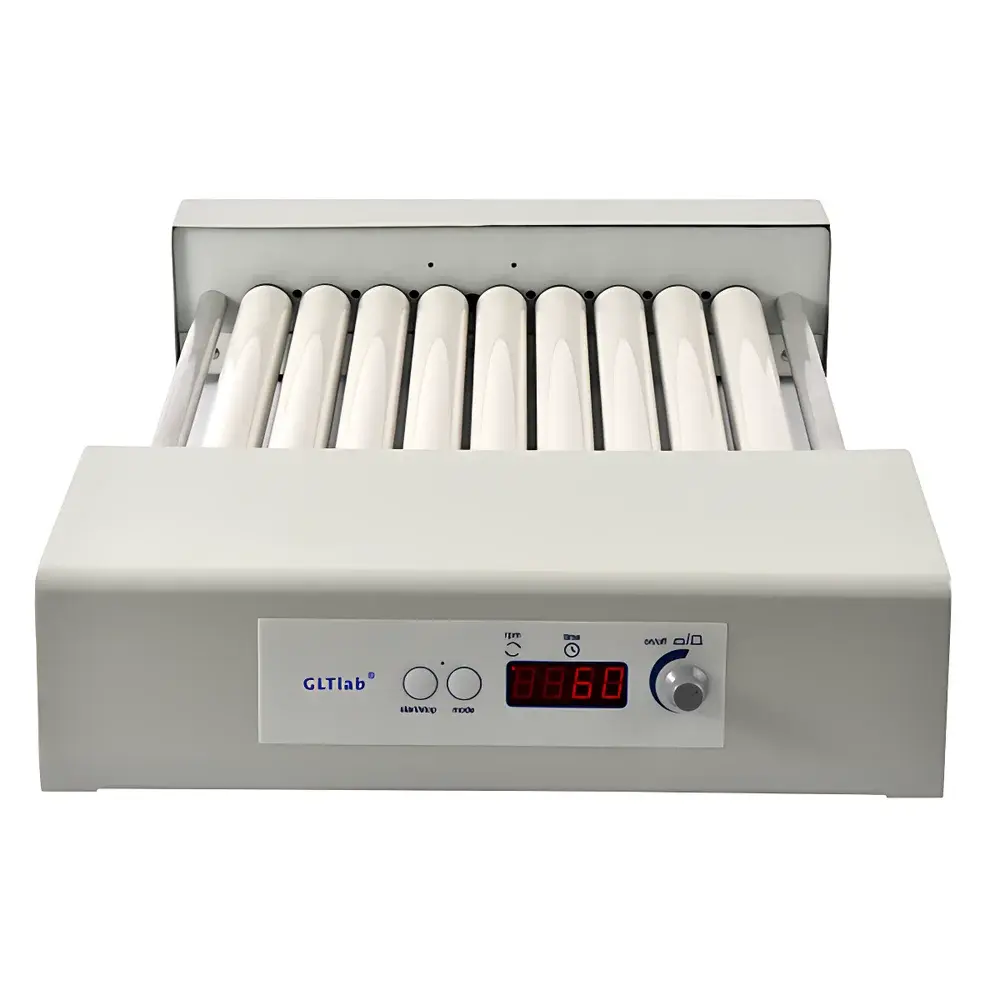
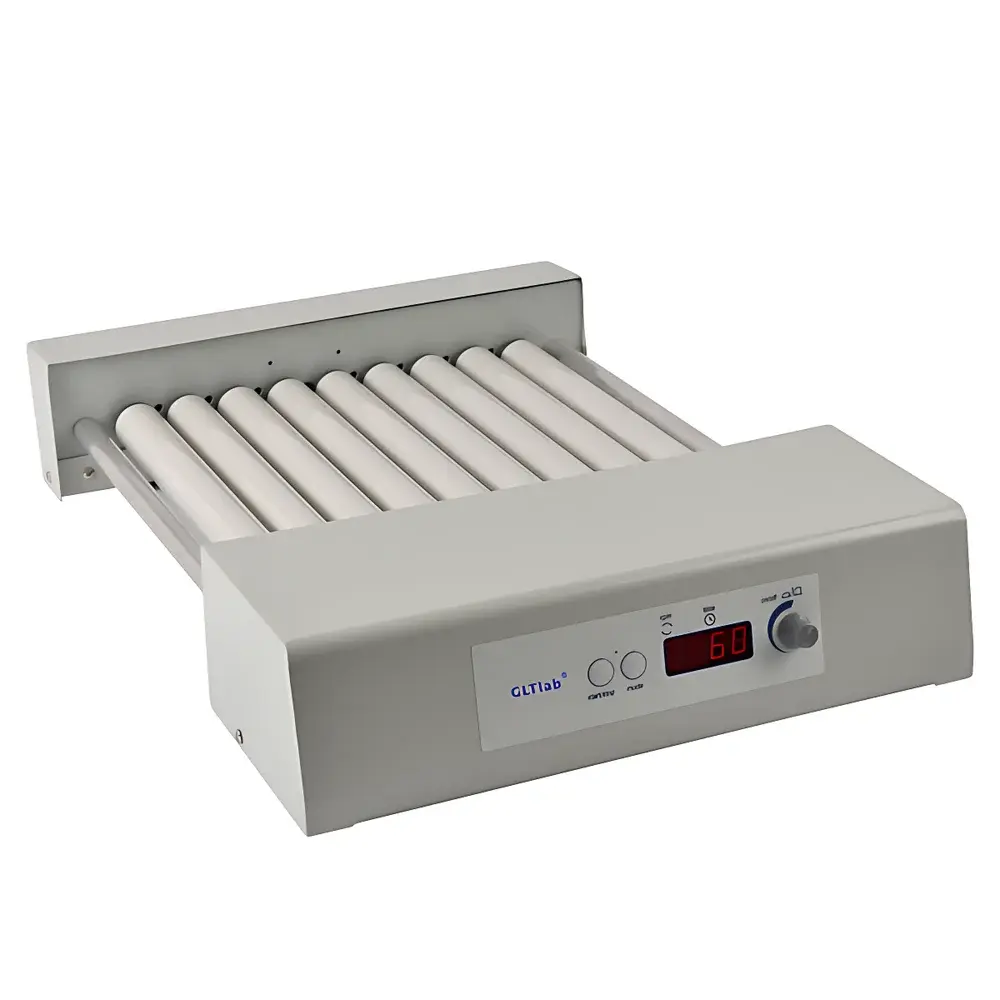
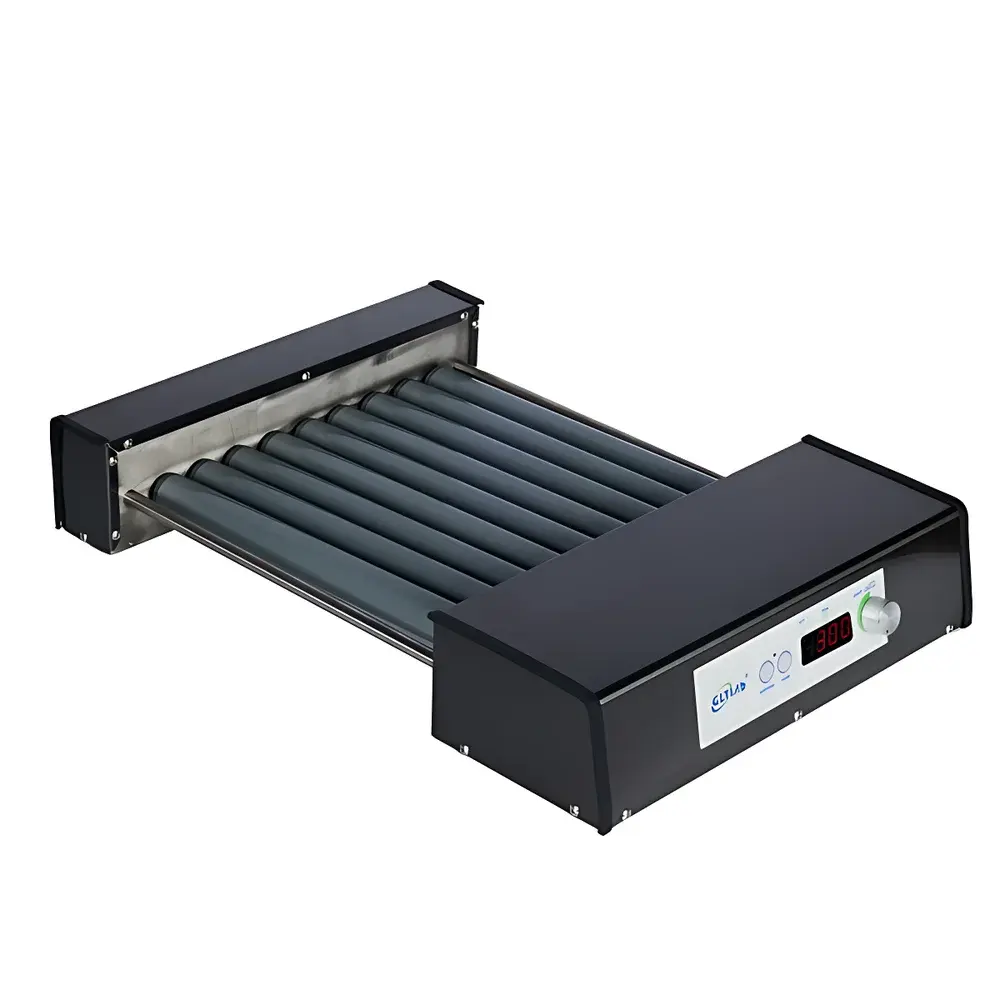
Maplelab LTR2D Orbital Roller Mixer
| Brand | Maplelab |
|---|---|
| Model | LTR2D |
| Origin | Guangdong, China |
| Manufacturer Type | Authorized Distributor |
| Country of Origin | China |
| Power Supply | 12 V DC, 5 A |
| Maximum Load Capacity | 40 kg |
| Roller Dimensions | 450 × 100 mm |
| Speed Range | 5–1000 rpm |
| Timer Range | 9–99 hours |
| Control Mode | Digital Microprocessor Control |
| Display | LED |
| Operating Modes | Rolling Only |
| Construction | Stainless Steel Frame & Housing |
| Environmental Rating | Stable Operation in Refrigerated, Humid, and Elevated-Temperature Labs |
Overview
The Maplelab LTR2D Orbital Roller Mixer is an industrial-grade laboratory mixing instrument engineered for consistent, low-shear sample homogenization under variable environmental conditions. Utilizing a precision-engineered orbital rolling motion—where cylindrical rollers rotate around a fixed horizontal axis—the LTR2D ensures uniform agitation of samples housed in tubes, flasks, or bottles without vortexing or foaming. Unlike orbital shakers or vortex mixers, the LTR2D’s single-axis rolling mechanism minimizes mechanical stress on sensitive biologicals (e.g., cell suspensions, antibody conjugates) and viscous reagents (e.g., polymer solutions, battery slurry precursors), preserving structural integrity while achieving high reproducibility across repeated runs. Designed for long-duration unattended operation, the unit supports continuous mixing up to 99 hours with programmable start/stop functionality—critical for applications requiring extended incubation-mixing protocols such as antigen-antibody binding, gel polymerization, or electrode slurry conditioning in battery R&D.
Key Features
- Stainless steel chassis and housing—corrosion-resistant, easy to decontaminate, and compliant with ISO 14644-1 Class 8 cleanroom-compatible surface finish standards.
- Digital microprocessor control system with LED display for real-time monitoring of speed (5–1000 rpm) and remaining timer duration (9–99 h).
- Upgraded gear train architecture—reducing wear-related drift and eliminating periodic recalibration requirements observed in legacy roller mixer designs.
- High-torque DC motor (12 V, 5 A) delivering stable rotational output at full load (up to 40 kg), validated per IEC 61000-6-2 electromagnetic compatibility requirements.
- Thermally stable operation across –10 °C to +45 °C ambient range—tested per ASTM E2913 for performance consistency in cold rooms, humidity chambers, and warm incubator environments.
- No external ventilation or forced cooling required—passive thermal management enables integration into enclosed glove boxes or biosafety cabinets (Class II A2 compatible).
Sample Compatibility & Compliance
The LTR2D accommodates standard laboratory vessels including 15 mL and 50 mL conical tubes, 100–500 mL glass or PETG bottles, and custom-sized containers up to 450 mm length × 100 mm diameter. Its roller geometry supports both horizontal and angled placement configurations, enabling optimization of mixing efficiency for low-volume (5000 mPa·s) electrochemical slurries. The device conforms to general laboratory equipment safety standards (IEC 61010-1:2010) and carries CE marking for EMC and Low Voltage Directive compliance. While not certified for use in explosive atmospheres (ATEX), it meets IP20 ingress protection rating suitable for non-hazardous lab zones.
Software & Data Management
The LTR2D operates as a standalone hardware platform with no embedded firmware update capability or cloud connectivity. All operational parameters are set locally via front-panel controls; no software installation or driver dependencies are required. For regulated environments (e.g., GLP/GMP labs), the absence of digital data logging means manual entry into lab notebooks or LIMS remains the primary audit trail method. However, its deterministic behavior—repeatable speed/timer settings across power cycles—and mechanical durability support 21 CFR Part 11-aligned procedural controls when paired with documented SOPs and operator training records.
Applications
- Battery material R&D: Homogenization of cathode/anode slurries (NMC, LFP, silicon composites) prior to coating or rheological characterization.
- Clinical diagnostics: Gentle mixing of serum/plasma samples for immunoassay preparation without hemolysis or fibrin clot disruption.
- Pharmaceutical QC: Reconstitution and suspension of lyophilized proteins or nanoparticle formulations under temperature-controlled conditions.
- Environmental testing labs: Extraction agitation of soil/water matrices for heavy metal or organic contaminant analysis (EPA Method 3050B-compatible workflows).
- Academic research: Long-term cell culture maintenance (e.g., 3D spheroid formation), enzyme kinetics assays, and polymer crosslinking studies.
FAQ
Does the LTR2D support variable-angle roller positioning?
No—the LTR2D uses fixed-horizontal roller orientation optimized for maximum load stability and torque transfer. Angle-adjustable models (e.g., MTR series) are available separately.
Is calibration documentation provided with shipment?
A factory-verified performance certificate is included, listing speed accuracy (±2 rpm at 100–1000 rpm) and timer deviation (<±0.5% over 24 h), traceable to NIST-traceable reference instruments.
Can the unit be operated inside a CO₂ incubator?
Yes—provided internal temperature does not exceed +45 °C and relative humidity remains below 80% RH non-condensing. Ventilation grilles must remain unobstructed.
What maintenance intervals are recommended?
Lubrication-free gearmotor design requires only quarterly visual inspection of roller shafts and mounting brackets. No scheduled lubrication or belt replacement is necessary within the first 5 years of typical lab use.
Is the stainless steel housing electropolished?
No—it features brushed #4 finish stainless steel (ASTM A480), offering mechanical durability and cleanability appropriate for ISO Class 7–8 laboratory environments.



