
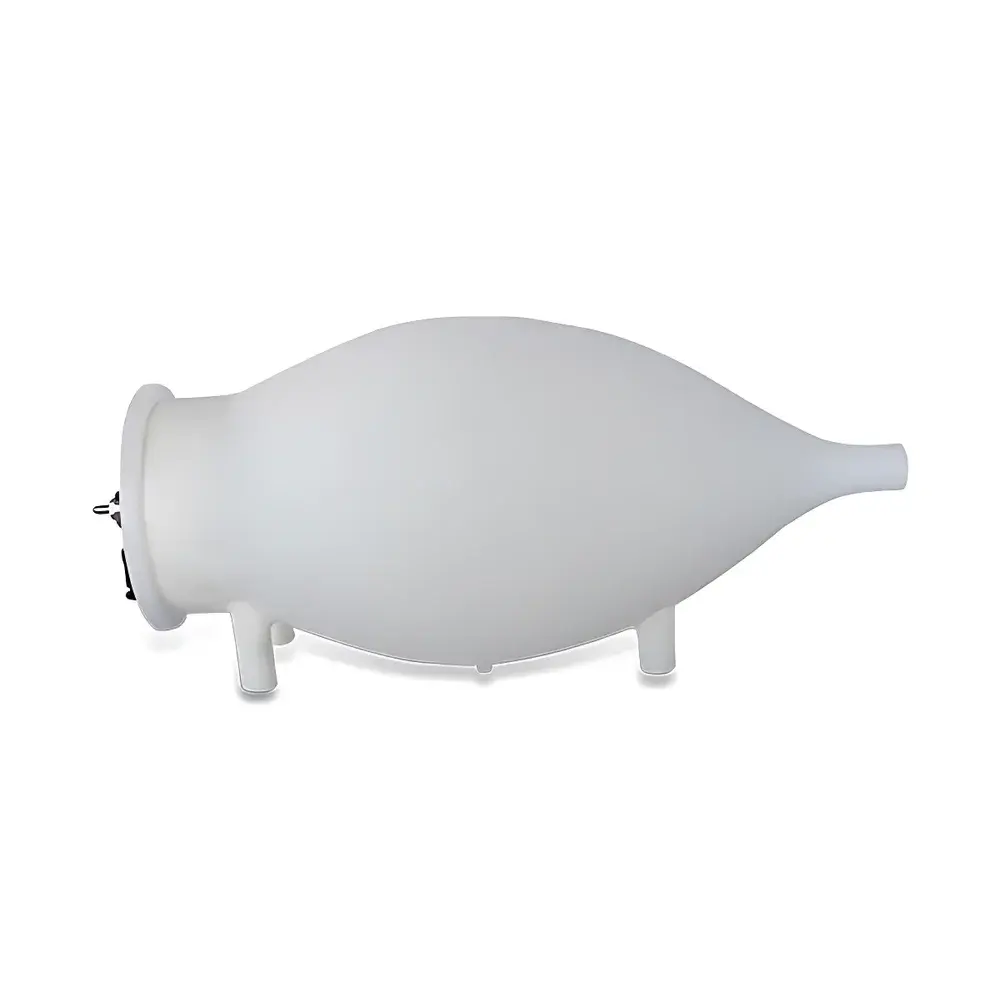
HRH-TAG1 Dual-Fluid Liquid Aerosol Generator
| Brand | Huironghe |
|---|---|
| Origin | Beijing, China |
| Manufacturer Type | Authorized Distributor |
| Country of Origin | China |
| Model | HRH-TAG1 |
| Pricing | Available Upon Request |
| 雾化原理 | Dual-Fluid (Gas-Driven) Nebulization |
| Target MMAD | 1–3 μm |
| Target GSD | 1.5–3.0 |
| Liquid Path Tubing | Silicone, 2 mm ID × 4 mm OD |
| Compressed Air Line | PU Tubing, 4 mm ID × 6 mm OD |
| Aerosol Outlet Port | 16 mm ID × 20 mm OD |
| Compliance | OECD TG 403, 412, 413, 436 |
Overview
The HRH-TAG1 Dual-Fluid Liquid Aerosol Generator is an engineered aerosol source system designed for controlled, reproducible generation of liquid-based test atmospheres in inhalation toxicology and pharmacological research. It operates on the principle of dual-fluid (pneumatic) nebulization—where pressurized gas (typically compressed air or nitrogen) shears a continuous liquid stream into fine droplets via high-velocity impingement within a multi-channel vortex chamber. This mechanism enables stable aerosol production across a broad range of liquid physicochemical properties—including aqueous solutions, organic solvents, viscous oils, and colloidal suspensions—without reliance on ultrasonic energy or thermal phase change. The system incorporates an integrated aerodynamic classification buffer chamber to narrow particle size distribution, delivering aerosols with a mass median aerodynamic diameter (MMAD) tightly constrained between 1 and 3 µm and a geometric standard deviation (GSD) of 1.5–3.0—parameters aligned with human upper and lower respiratory tract deposition profiles per ISO 2942 and ICRP lung model recommendations.
Key Features
- Multi-channel high-turbulence nebulization head enabling consistent droplet breakup across variable liquid viscosities (up to 500 cP) and surface tensions (20–40 mN/m)
- Precise, continuously adjustable gas-to-liquid ratio (GLR) control via calibrated needle valves and digital pressure regulators (range: 1–8 bar gas supply; 0.1–5 mL/min liquid flow)
- Integrated inertial classification buffer chamber with residence time optimization to reduce polydispersity and suppress coarse-mode (>10 µm) particles
- Chemically resistant fluid path: medical-grade silicone tubing (2 × 4 mm), PU pneumatic lines (4 × 6 mm), and stainless-steel aerosol outlet port (16 × 20 mm)
- Modular design supporting integration with whole-body or nose-only exposure chambers, cascade impactors (e.g., Andersen, Next Generation Impactor), and real-time particle sizers (e.g., SMPS, OPS)
Sample Compatibility & Compliance
The HRH-TAG1 accommodates diverse liquid formulations relevant to regulatory inhalation studies: water-miscible compounds (e.g., saline, drug solutions), lipophilic carriers (e.g., corn oil, squalene), and stabilized suspensions containing submicron particles (e.g., TiO₂, SiO₂, or bacterial endotoxin dispersions). Its operational envelope meets critical requirements defined in Organisation for Economic Co-operation and Development (OECD) Test Guidelines, including TG 403 (Acute Inhalation Toxicity), TG 436 (Acute Toxicity Categorisation Approach), TG 412 (28-Day Subacute Inhalation Study), and TG 413 (90-Day Subchronic Inhalation Study). All aerosol output parameters are traceable to NIST-calibrated reference instruments, and system validation protocols support GLP-compliant study documentation per OECD Principles of Good Laboratory Practice (ENV/MC/CHEM(98)17).
Software & Data Management
While the HRH-TAG1 operates as a standalone hardware platform, it is fully compatible with third-party data acquisition systems (e.g., LabVIEW, MATLAB, or custom Python-based DAQ) for synchronized logging of inlet pressure, liquid flow rate, temperature, and real-time aerosol concentration (via optical particle counters or gravimetric filters). Optional analog/digital I/O modules enable closed-loop feedback control when interfaced with exposure chamber environmental monitors. Audit trails, user access levels, and electronic signatures can be implemented through validated LIMS or ELN platforms to satisfy FDA 21 CFR Part 11 and EU Annex 11 requirements for regulated preclinical studies.
Applications
- Preclinical inhalation toxicology testing in rodent and non-rodent species under OECD and EPA guidelines
- Development and qualification of inhaled therapeutics (e.g., corticosteroids, bronchodilators, mRNA lipid nanoparticles)
- Immunotoxicity and adjuvant activity assessment using antigen-loaded aerosols in murine infection models
- Generation of bioaerosols (e.g., Mycobacterium tuberculosis, influenza virus, fungal spores) for aerosol challenge studies
- Calibration and performance verification of personal and area air sampling devices (e.g., cyclones, membrane filters, electrostatic precipitators)
FAQ
What types of liquids can be nebulized with the HRH-TAG1?
Aqueous solutions, ethanol/water mixtures, vegetable oils (e.g., corn oil), mineral oil, squalene, and stable colloidal suspensions (e.g., nanosuspensions with surfactant stabilization) are routinely processed. Highly volatile solvents (e.g., acetone, diethyl ether) require external vapor management.
Is the system compatible with sterile operation?
Yes—fluid path components are autoclavable (121°C, 20 min), and the generator may be installed upstream of HEPA-filtered exposure chambers for aseptic aerosol delivery in biosafety level 2 (BSL-2) facilities.
How is aerosol concentration quantified during use?
Concentration is determined gravimetrically (filter collection + microbalance) or optically (real-time OPC/SMPS), with mass concentration reported in mg/m³ and number concentration in #/cm³—both traceable to ISO 17025-accredited calibration standards.
Can the HRH-TAG1 be used for regulatory submission studies?
Yes—its design, operational repeatability, and alignment with OECD TGs support its use in GLP-compliant studies intended for regulatory submission to EMA, PMDA, Health Canada, and the U.S. FDA.







