
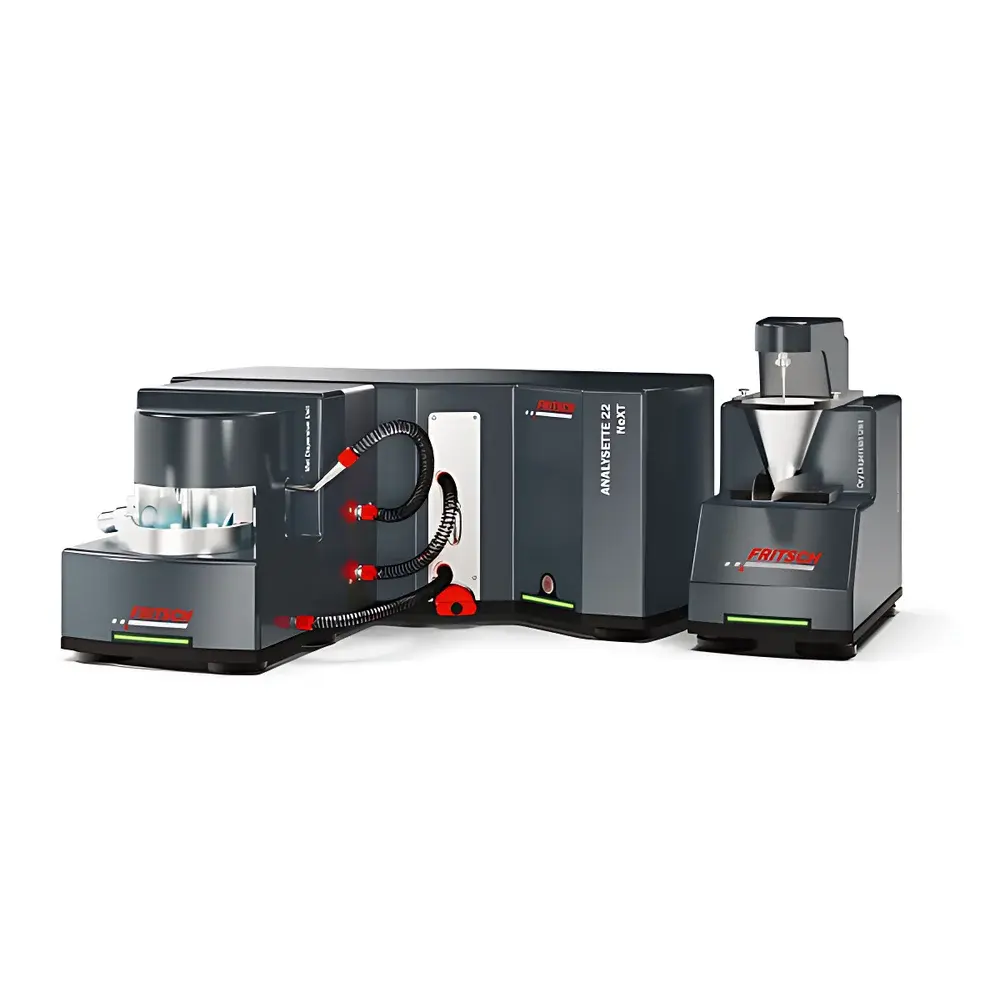
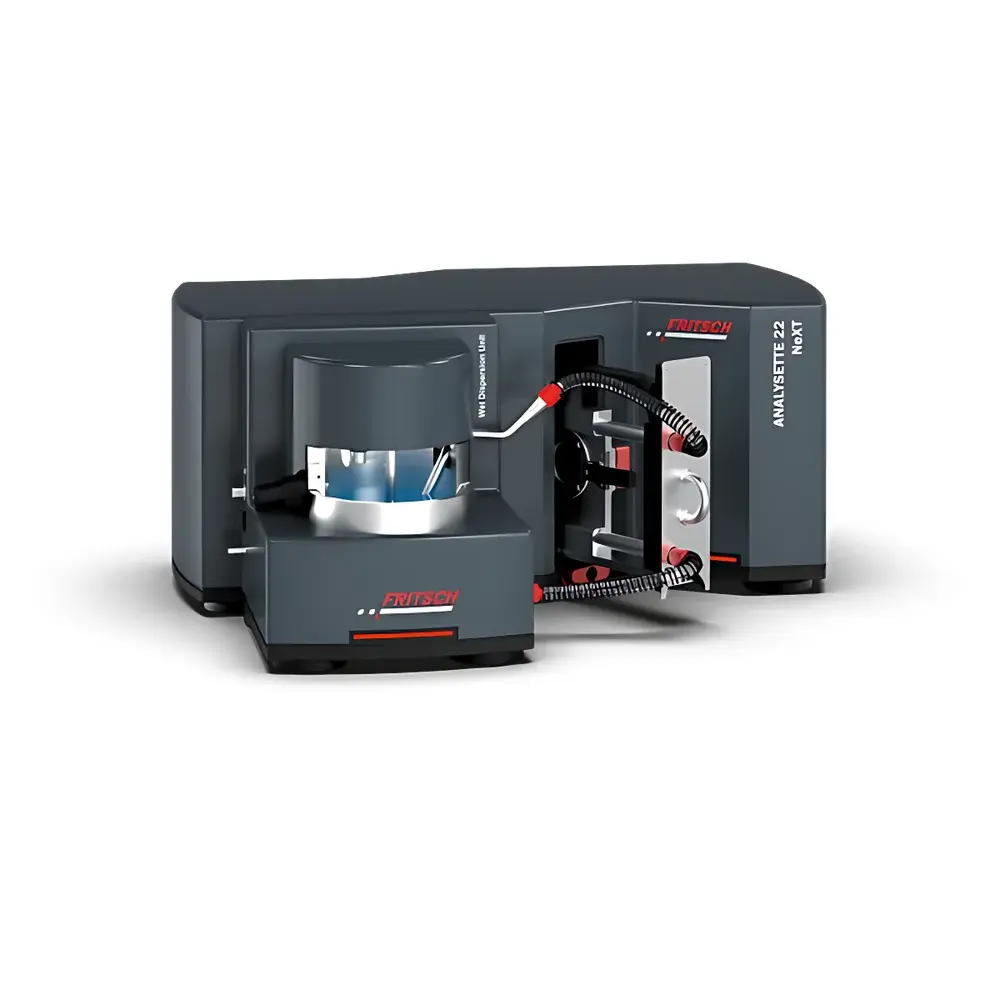
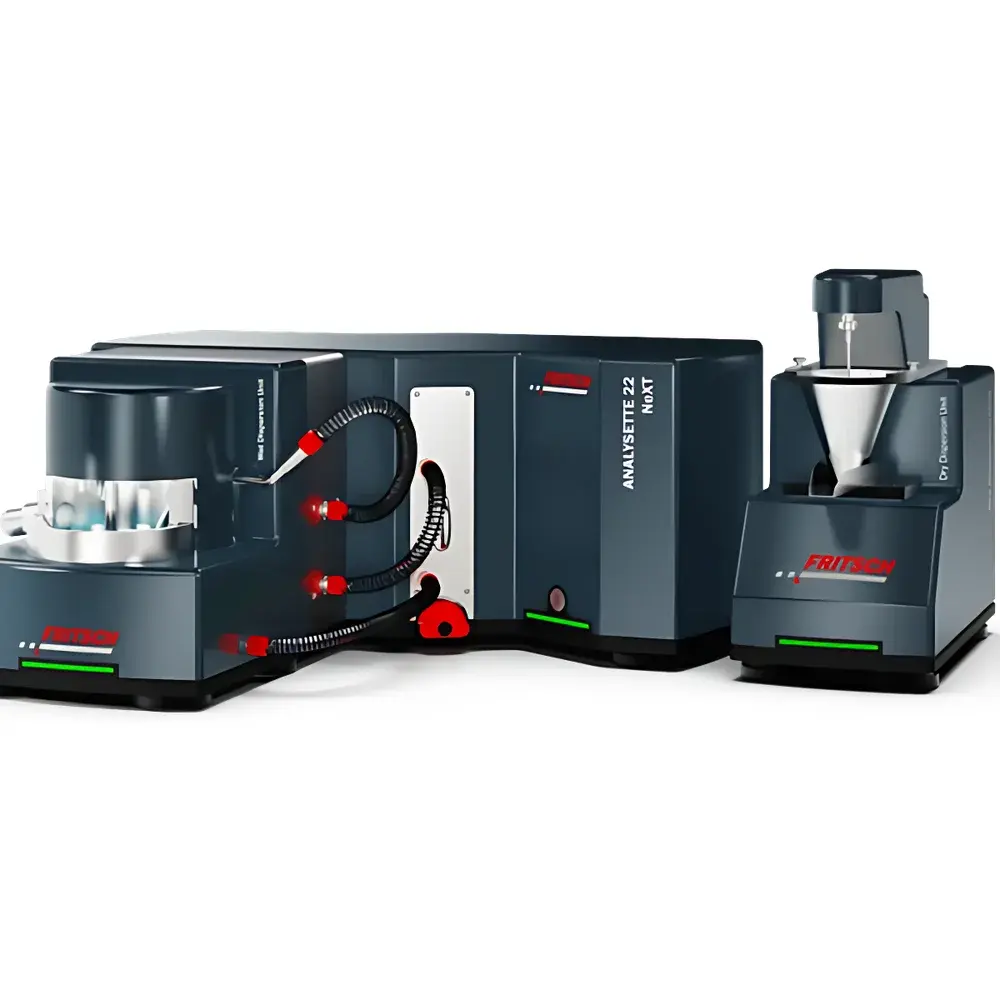
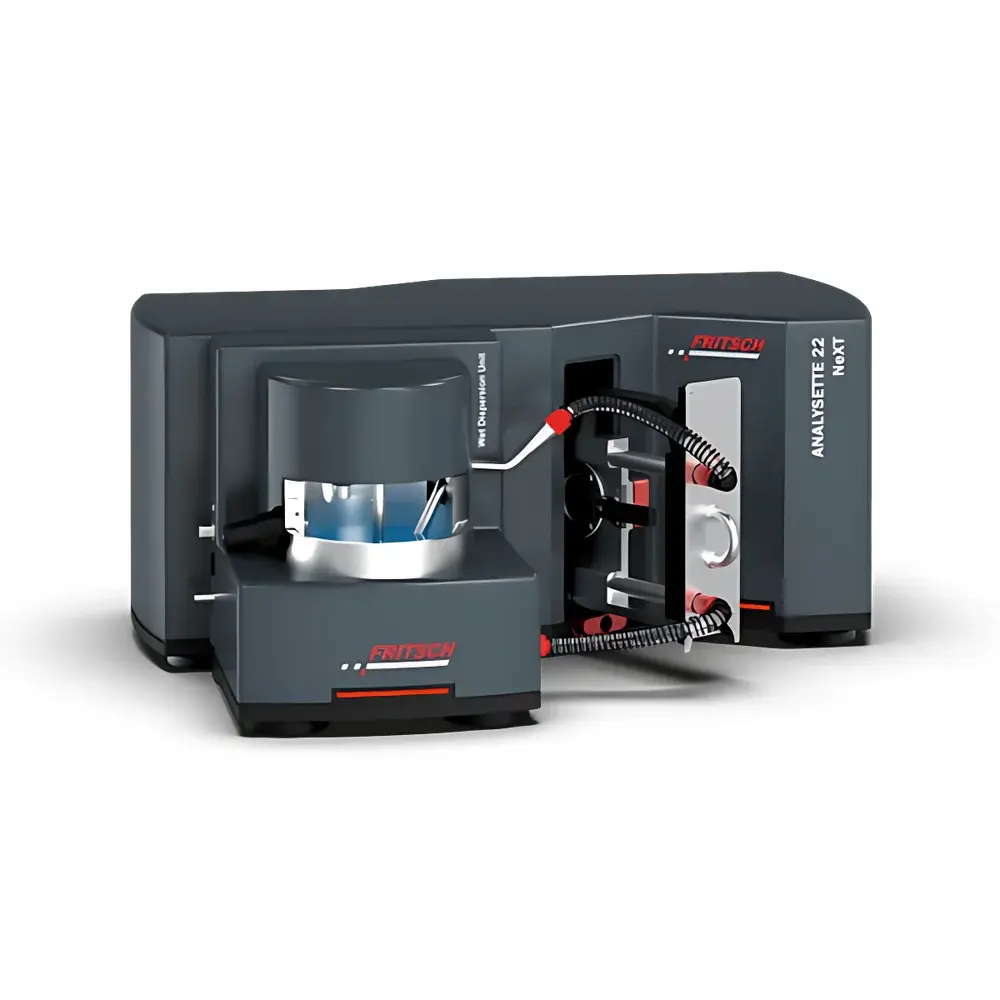
FRITSCH A-22 Nano Laser Particle Size Analyzer
| Brand | FRITSCH |
|---|---|
| Origin | Germany |
| Manufacturer Type | Direct Manufacturer |
| Product Category | Imported Instrument |
| Model | A-22 |
| Dispersion Method | Dry & Wet Dispersion |
| Instrument Type | Laboratory Laser Particle Size Analyzer |
| Measurement Range | 0.01–3800 µm |
| Repeatability | <0.5% |
| Measurement Time | 10 s |
Overview
The FRITSCH A-22 Nano Laser Particle Size Analyzer is a high-precision, dual-mode laboratory instrument engineered for comprehensive particle size distribution (PSD) analysis across an exceptionally broad dynamic range—from colloidal nanoparticles to coarse granules. Based on the physical principle of Mie scattering theory and optimized Fraunhofer diffraction modeling, the A-22 Nano employs a multi-angle, multi-detector optical system with a stabilized He-Ne laser (632.8 nm) and advanced signal processing algorithms to resolve particles as small as 0.01 µm while maintaining robust detection up to 3800 µm. Unlike conventional single-range analyzers, the A-22 Nano offers modular optical path configuration—enabling users to select between standard micro-range (A-22 eco: 0.5–1500 µm) or full nano-to-macro capability (A-22 Nano: 0.01–3800 µm) without hardware replacement. This design reflects FRITSCH’s long-standing commitment to application-driven instrumentation, where optical architecture, fluidic dynamics, and data integrity are co-engineered—not retrofitted.
Key Features
- Extended measurement range: 0.01 µm to 3800 µm in a single run, enabled by a hybrid detector array comprising forward-scatter, side-scatter, and back-scatter photodiode modules with adaptive gain control.
- High reproducibility: <0.5% relative standard deviation (RSD) for repeated measurements under identical dispersion conditions—validated per ISO 13320:2020 Annex B guidelines.
- Dual dispersion compatibility: Integrated dry dispersion unit with adjustable vacuum-assisted disperser and wet dispersion module featuring programmable ultrasonic energy control (0–100 W), variable stirrer speed (0–4000 rpm), and temperature- and pH-sensing probes for real-time process monitoring during liquid suspension analysis.
- Minimal mechanical complexity: Fewer moving parts compared to competitive systems—no rotating lenses, no manual alignment mechanisms—reducing calibration drift and extending mean time between maintenance (MTBM) beyond 15,000 operational hours.
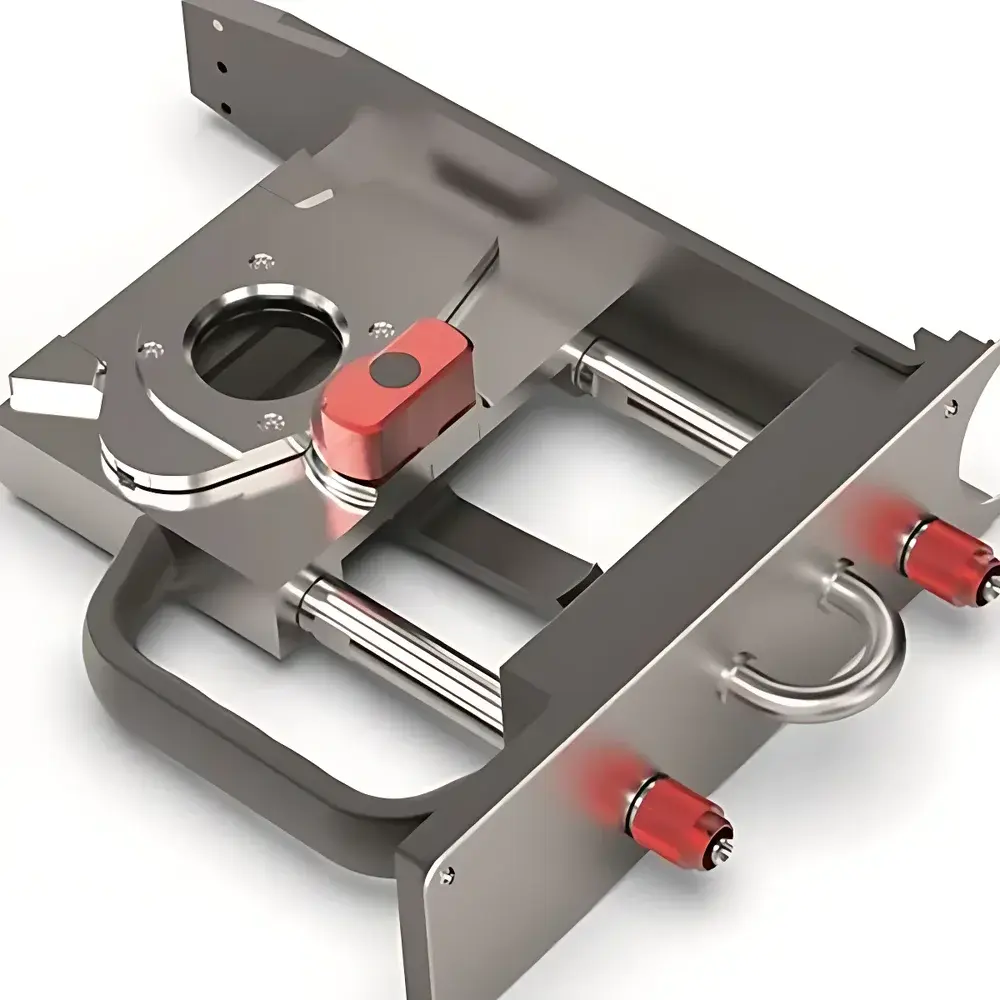
- Ergonomic, cleanable design: Fully sealed optical chamber with zero dead-volume sample pathways; all wetted surfaces made from chemically resistant PEEK and sapphire; tool-free disassembly for rapid cleaning and cross-sample contamination mitigation.
- Compact footprint: 520 × 410 × 330 mm (W × D × H); designed for integration into regulated QC labs with limited bench space without compromising thermal or vibrational stability.
Sample Compatibility & Compliance
The A-22 Nano supports diverse material classes—including metal oxides, pharmaceutical actives (APIs), catalysts, pigments, ceramics, polymers, and biological aggregates—across both aqueous and organic dispersions (e.g., ethanol, isopropanol, xylene). Its wet dispersion module complies with ASTM D4294–22 for particulate characterization in non-aqueous media, while dry dispersion performance aligns with ISO 9276-2:2019 for powder handling and deagglomeration assessment. All firmware and software components meet EU Machinery Directive 2006/42/EC and EMC Directive 2014/30/EU requirements. For regulated environments, optional 21 CFR Part 11-compliant audit trail logging, electronic signature support, and user role-based access control (RBAC) are available through the optional LabSoft Suite.
Software & Data Management
Controlled via FRITSCH LabSoft v5.3, the A-22 Nano provides intuitive workflow-driven operation—from method setup and real-time scatter pattern visualization to automated report generation (PDF/CSV/XLSX). The software implements ISO/IEC 17025 traceability protocols, embedding metadata such as instrument ID, calibration date, operator ID, environmental conditions (T, pH), and raw intensity distributions directly into each result file. Batch processing, statistical comparison (t-test, ANOVA), and D10/D50/D90 interpolation with confidence intervals are natively supported. Raw data export preserves full angular intensity arrays for third-party reanalysis using proprietary or open-source Mie inversion tools (e.g., PyMieScatt, DMAS). Data storage follows GLP-aligned folder structures with SHA-256 checksum validation for integrity verification.
Applications
- Pharmaceutical development: Monitoring nanoparticle drug carrier size stability during lyophilization cycles and accelerated aging studies.
- Advanced materials R&D: Quantifying agglomeration kinetics of SiO₂, TiO₂, and carbon nanotubes in solvent-based slurries.
- Quality control in battery manufacturing: Verifying cathode/anode precursor particle size distribution prior to sintering—critical for electrode homogeneity and cycle life prediction.
- Food & beverage: Assessing starch granule swelling behavior in hot aqueous systems and emulsion droplet size evolution during homogenization.
- Environmental science: Characterizing sediment suspensions and microplastic fragmentation profiles in aquatic toxicity assays.
FAQ
What standards does the A-22 Nano comply with for particle sizing accuracy?
It conforms to ISO 13320:2020 (laser diffraction), ISO 9276-2:2019 (representation of PSD), and ASTM D4294–22 (non-aqueous dispersion), with optional validation kits traceable to NIST SRM 1963 and SRM 2800.
Can the A-22 Nano measure samples in aggressive solvents like THF or chloroform?
Yes—the wet dispersion cell and flow path components are constructed from PEEK, sapphire, and Hastelloy C-276, ensuring compatibility with most organic solvents; chemical resistance documentation is provided per EC 440/2008 Annex VII.
Is method transfer possible between A-22 eco and A-22 Nano configurations?
Yes—LabSoft v5.3 supports shared method templates and identical dispersion parameter definitions; only optical calibration files differ, and these are auto-loaded based on selected hardware configuration.
How is temperature and pH data integrated during wet analysis?
Integrated Pt100 temperature sensor and ISFET-based pH probe feed real-time values directly into the measurement metadata stream; no external DAQ required.
Does the system support automated cleaning validation?
Yes—LabSoft includes a dedicated “Clean Check” protocol that runs baseline scatter diagnostics before and after sample injection, generating pass/fail reports aligned with internal SOPs or ISO 22442-3 biocompatibility cleaning verification criteria.



