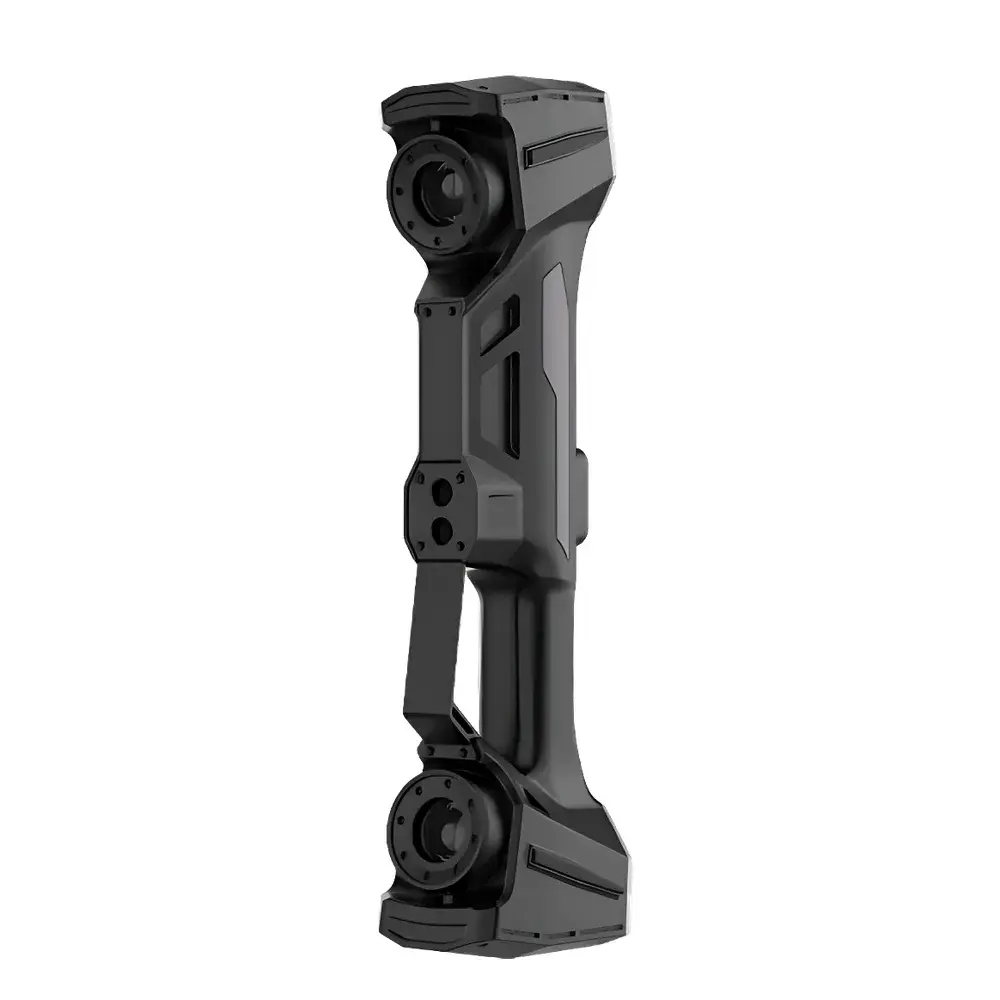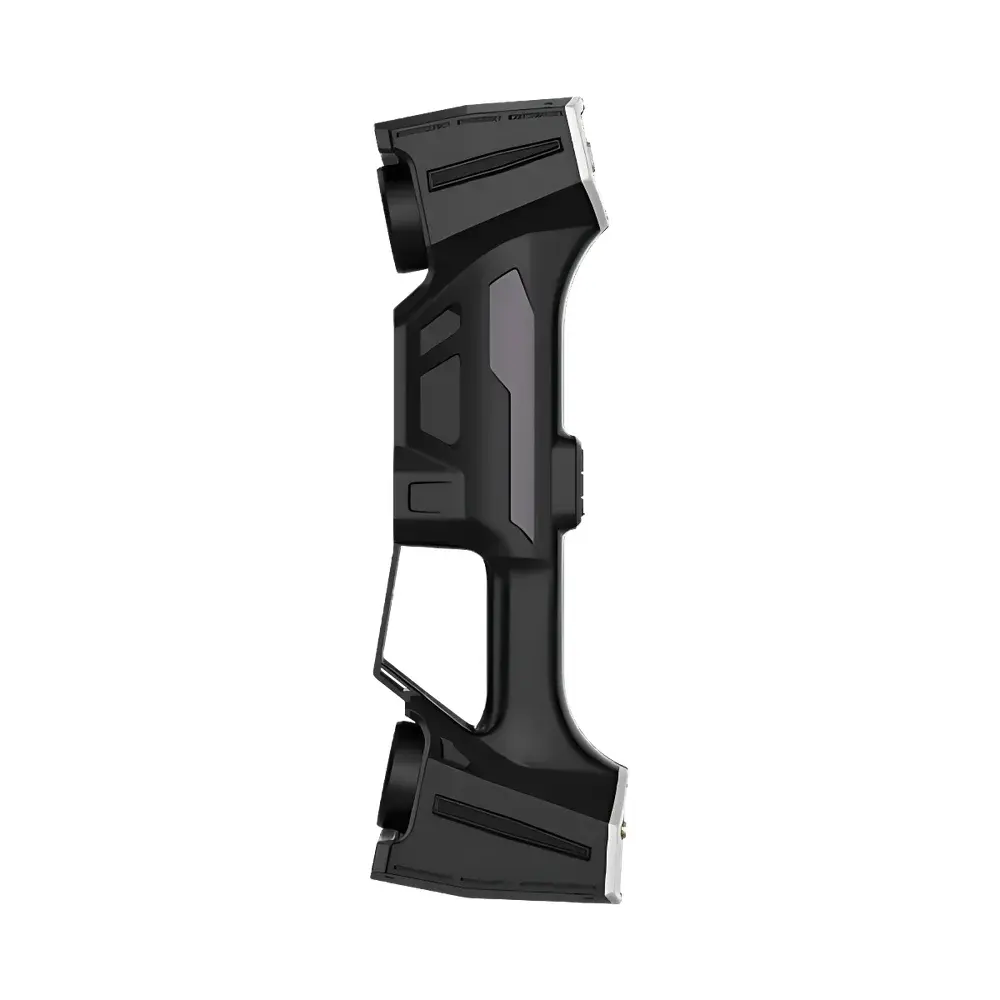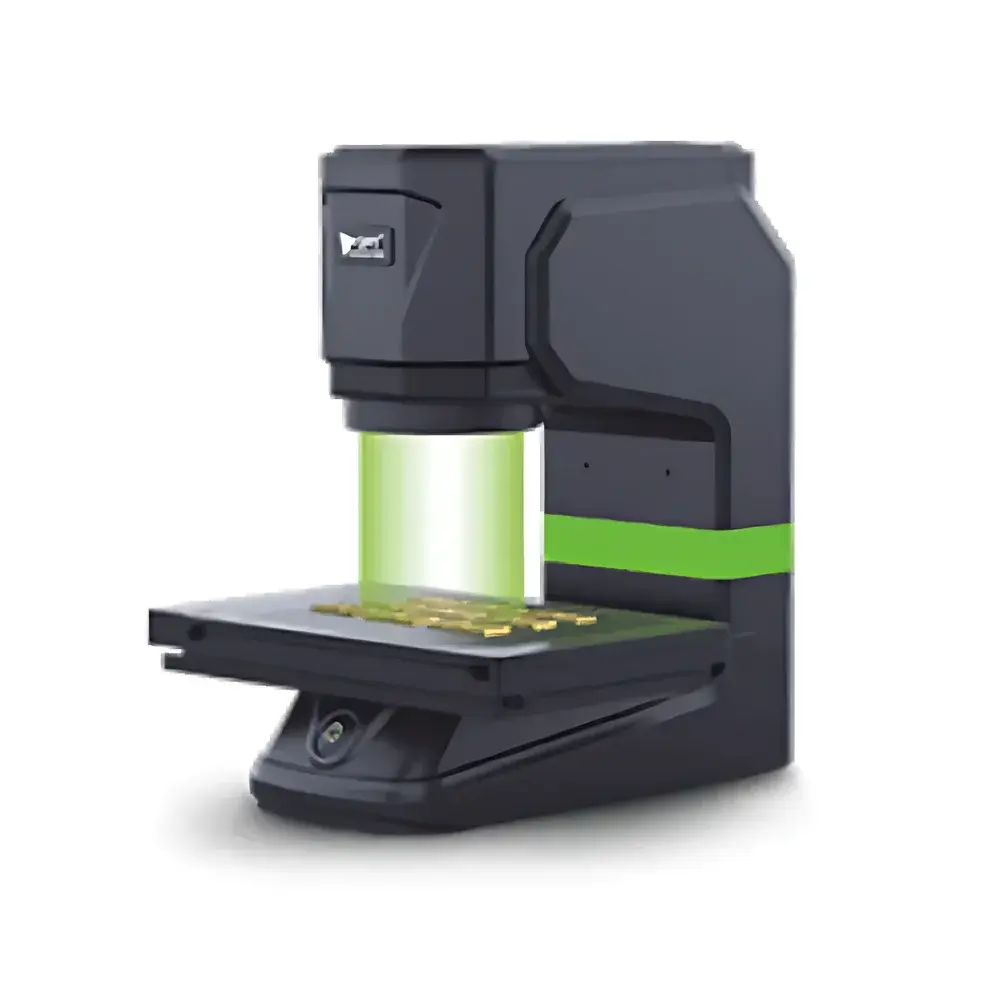
SmartFlash Series One-Touch Measurement Sensor
| Brand | CREAMFORM |
|---|---|
| Model | SmartFlash |
| Type | High-Precision Vision-Based Displacement & Dimensional Metrology Sensor |
| Origin | Guangdong, China |
| Construction | Full Aluminum Alloy Frame with Crossed-Roller Bearings and Linear Motor Drive |
| Optical System | Dual Telecentric Lenses with Distortion Correction Algorithm |
| Illumination | Multi-Angle + Low-Angle Custom LED Source |
| Image Processing | Sub-Pixel Edge Detection, Burr Filtering, Adaptive Contrast Enhancement |
| Automation | CAD-Driven Program Generation (No Coding Required), Auto-Focus, Automatic Feature Registration |
| Measurement Mode | Parallel Feature Extraction (≥100 Parts, ≥300 Features per Batch) |
| Data Output | Multi-Format Reports (PDF/Excel/CSV), PLC Integration (Modbus TCP, EtherNet/IP, PROFINET) |
| Compliance | Designed for ISO 10360-7 & VDI/VDE 2634 Part 2 Conformance Testing |
| Software | Proprietary Real-Time Metrology Suite with Audit Trail Logging (21 CFR Part 11 Ready) |
Overview
The SmartFlash Series is a vision-based, high-precision dimensional metrology sensor engineered for automated, operator-independent geometric measurement in high-mix, high-volume manufacturing environments. Utilizing telecentric imaging principles—where object magnification remains constant regardless of axial position—the system eliminates perspective error critical for accurate 2D and 2.5D feature analysis. Its dual telecentric optical path, combined with proprietary real-time distortion correction algorithms, ensures sub-pixel spatial fidelity across the full field of view. The sensor operates on a rigid aluminum platform equipped with crossed-roller linear guides and a brushless linear motor, delivering nanometer-level positional repeatability and acceleration stability essential for consistent metrological performance. Unlike traditional coordinate measuring machines (CMMs) or laser triangulation sensors, SmartFlash performs non-contact, full-field parallel measurement—capturing and evaluating all target features simultaneously rather than sequentially—thereby decoupling measurement time from feature count.
Key Features
- One-touch operation: Automatic part registration, focus adjustment, and feature extraction initiated with a single command—no operator calibration or manual alignment required.
- CAD-driven metrology: Direct import of STEP, IGES, or DXF files enables automatic generation of measurement routines; geometric tolerances (GD&T) are parsed and applied without scripting or programming expertise.
- Multi-spectral illumination architecture: Integrated low-angle and multi-directional LED sources enhance surface texture contrast, revealing subtle form deviations, burrs, chamfers, and edge breaks that conventional coaxial lighting obscures.
- Sub-pixel edge localization: Advanced convolution-based edge detection with adaptive thresholding and morphological filtering achieves effective resolution beyond native pixel pitch—critical for micron-level repeatability in diameter, gap, and position measurements.
- Real-time parallel processing: All geometric features—including distances, angles, radii, concentricity, and profile deviations—are computed concurrently within a single image acquisition cycle, reducing cycle time by up to 85% versus serial inspection methods.
- Industrial communications readiness: Native support for Modbus TCP, EtherNet/IP, and PROFINET enables seamless integration into factory automation ecosystems, including MES, SCADA, and PLC-controlled assembly lines.
Sample Compatibility & Compliance
SmartFlash accommodates parts ranging from 5 mm × 5 mm to 300 mm × 300 mm (custom fields available), with height variations up to 50 mm. It supports reflective, matte, anodized, and lightly textured surfaces without requiring spray or fixturing—leveraging dynamic exposure control and polarization management. The system is designed and validated per ISO 10360-7 (acceptance and reverification testing for vision measuring systems) and VDI/VDE 2634 Part 2 (optical 3D measuring systems). While not certified as GMP-compliant out-of-the-box, its software architecture includes configurable audit trail logging, electronic signature support, and user role-based access control—fully aligning with FDA 21 CFR Part 11 requirements when deployed under documented quality procedures.
Software & Data Management
The embedded metrology software suite provides a deterministic, deterministic execution environment with deterministic timing guarantees for measurement cycles. Each measurement session generates a timestamped, immutable data packet containing raw image metadata, calibrated coordinate data, GD&T evaluation results, and traceable process parameters (exposure time, lens focus position, illumination intensity). Reports export to PDF (with digital signature embedding), Excel (for SPC charting), and CSV (for statistical database ingestion). Historical data is indexed by part ID, batch number, and operator ID—enabling full traceability for internal audits or regulatory review. Optional cloud gateway modules support encrypted HTTPS upload to enterprise data lakes or AWS S3 buckets with TLS 1.3 encryption and AES-256 at rest.
Applications
- Electronics: PCB fiducial verification, connector pin coplanarity, solder paste volume estimation (via height map reconstruction).
- Automotive: Brake pad thickness uniformity, gasket hole pattern accuracy, stamped bracket flatness and positional tolerance validation.
- Medical device manufacturing: Catheter hub concentricity, syringe barrel wall thickness consistency, implant screw thread pitch and flank angle verification.
- Consumer hardware: Smartphone frame dimensional compliance, watch case crown alignment, battery compartment clearance checks.
- Quality gate deployment: Inline pass/fail decision making with configurable tolerance bands and auto-rejection flagging via PLC handshake signals.
FAQ
Does SmartFlash require periodic recalibration?
Yes—annual traceable calibration against NIST-traceable artifacts is recommended. The system logs all calibration events with date, technician ID, and deviation metrics for audit purposes.
Can it measure transparent or highly reflective parts?
Yes, with optional polarized illumination kits and dynamic HDR exposure stacking—validated for glass substrates and polished stainless steel up to Ra 0.2 µm.
Is CAD model update synchronization supported?
Yes—version-controlled CAD import allows automatic revalidation of measurement programs upon geometry revision, with change impact assessment reports.
What is the typical measurement uncertainty for a 10 mm feature?
At 20 °C ± 1 °C ambient, with stabilized lighting and vibration isolation, expanded uncertainty (k=2) is ≤ ±0.8 µm for length measurements within the central 70% of FOV.
How is firmware updated in a regulated production environment?
Firmware updates are delivered as signed packages with SHA-256 checksums; installation requires dual-operator approval and generates a locked audit log entry compliant with IEC 62304 Class B requirements.