
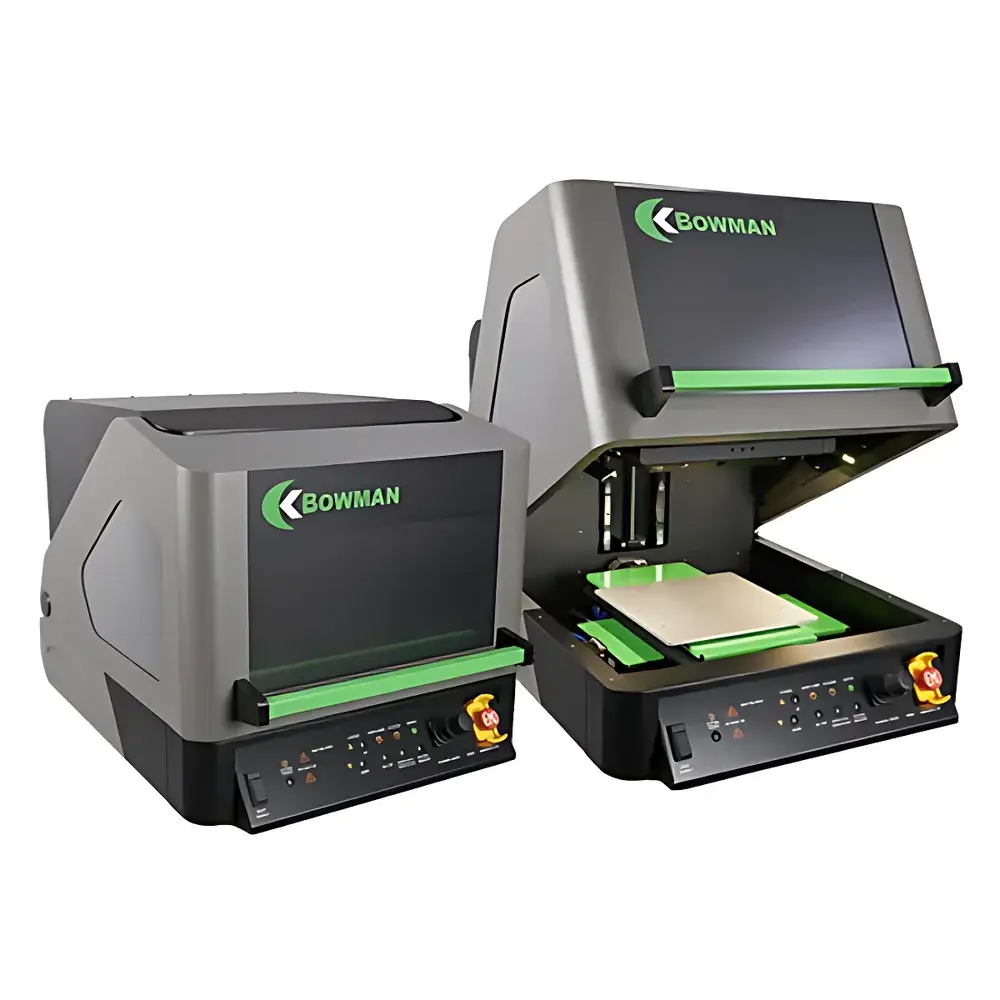
Auniontech XRF-Desktop Energy Dispersive X-Ray Fluorescence Spectrometer
| Brand | Auniontech |
|---|---|
| Origin | Shanghai, China |
| Manufacturer Type | Authorized Distributor |
| Product Category | Domestic (PRC-Made) |
| Model Designation | XRF-Desktop Series |
| Form Factor | Benchtop |
| Detector Technology | Silicon Drift Detector (SDD) |
| Elemental Range | Na (11) to U (92) |
| Simultaneous Elements | Up to 25 |
| Coating Layers | Up to 5 (including alloy substrates) |
| Analysis Mode | Fundamental Parameters (FP) & Standardless Quantitative Analysis |
| Software Platform | Archer™ XRF Suite |
| Compliance | CE, RoHS, ISO/IEC 17025-compatible workflows |
| Connectivity | USB 2.0 |
| Footprint | < 400 × 350 × 300 mm |
| Weight | < 25 kg |
Overview
The Auniontech XRF-Desktop Energy Dispersive X-Ray Fluorescence Spectrometer is a benchtop analytical instrument engineered for non-destructive elemental composition and thin-film coating thickness analysis. It operates on the principle of energy-dispersive X-ray fluorescence (ED-XRF): a high-stability micro-focus X-ray tube irradiates the sample, inducing characteristic secondary (fluorescent) X-ray emission from constituent atoms. Emitted photons are collected by a high-resolution silicon drift detector (SDD), which converts photon energy into electrical signals with sub-eV energy resolution. The resulting spectrum—intensity versus photon energy—is processed to identify elements (via peak energy assignment) and quantify concentrations or layer thicknesses (via intensity modeling using fundamental parameters algorithms). Designed for routine QC/QA in electroplating, PCB manufacturing, precious metal verification, and alloy certification, the system delivers laboratory-grade accuracy without requiring vacuum environments or cryogenic cooling.
Key Features
- Benchtop form factor with compact footprint (< 400 × 350 × 300 mm) and lightweight chassis (< 25 kg), enabling deployment in constrained lab spaces or production floor environments.
- Silicon drift detector (SDD) with typical energy resolution ≤125 eV at Mn Kα (5.9 keV), ensuring reliable separation of adjacent elemental peaks (e.g., S Kα / Pb Mα, Ni Kβ / Cu Kα).
- Micro-focus X-ray tube (W or Rh anode, 50 kV / 1 mA max) with selectable filtration and multi-position primary beam filters to optimize excitation for light elements (Na–Cl) or heavy metals (Sn–Pb).
- Motorized collimator turret supporting interchangeable apertures (100 µm, 300 µm, 1 mm) for spatially resolved analysis of heterogeneous samples or small features.
- Adjustable sample stage with Z-axis focus control (±10 mm range) to accommodate irregular geometries, thick substrates, or multi-layer stacks without repositioning.
- Integrated thermal management and short warm-up time ( 15,000 h MTBF).
Sample Compatibility & Compliance
The XRF-Desktop accommodates solid, flat, or gently curved samples up to Ø100 mm × 30 mm height. No sample preparation is required for conductive metals; non-conductive materials (e.g., plastics, ceramics) may be analyzed with optional charge neutralization or thin-film calibration. The system supports ASTM E1598 (Coating Thickness), ISO 3497 (Metallic Coatings), and GB/T 17722 (Chinese national standard for ED-XRF). Data acquisition and reporting workflows align with GLP/GMP documentation requirements, including audit-trail-enabled user login, timestamped measurement logs, and version-controlled method files. While not FDA 21 CFR Part 11 certified out-of-the-box, the Archer™ software architecture supports configuration for electronic signature and data integrity controls upon customer request.
Software & Data Management
Archer™ XRF Suite provides a unified interface for acquisition, processing, and reporting. Its dual-module architecture separates spectral processing (peak deconvolution, background subtraction, matrix correction) from quantitative analysis (FP-based modeling, empirical calibration, layer stack definition). The software includes a built-in library of >120 certified reference materials (CRMs), customizable quick-access toolbars, real-time spectrum overlay, and dynamic ROI (region-of-interest) mapping. All results export to CSV, XML, or PDF formats; report templates are fully editable via WYSIWYG editor and support company branding, multi-language output, and compliance metadata (operator ID, instrument ID, calibration date). Raw spectra and processed data are stored in vendor-neutral HDF5 format for third-party interoperability.
Applications
- Quantitative analysis of electroplated layers (e.g., Ni/Cu/Sn on PCBs, Au/Pd/Ni on connectors) with thickness resolution down to 0.01 µm for single layers and ±5% RSD for multilayer stacks.
- Alloy grade identification and positive material identification (PMI) across stainless steels, brasses, aluminum alloys, and superalloys.
- RoHS screening for restricted substances (Pb, Cd, Hg, Cr⁶⁺, Br) in consumer electronics and automotive components.
- Geological and environmental sample screening (soils, sediments, ores) with detection limits ranging from 1–10 ppm for transition metals under optimized conditions.
- Research applications in metallurgy, corrosion science, and thin-film development where rapid, non-contact compositional profiling is required.
FAQ
What elements can the XRF-Desktop detect?
It detects elements from sodium (Na, Z=11) to uranium (U, Z=92), with optimal sensitivity for Mg–U in air mode and Na–F with helium purge or vacuum option.
Can it analyze multi-layer coatings on alloy substrates?
Yes—up to five discrete layers, including complex substrates such as brass-on-steel or Sn-Bi solder on Cu, using fundamental parameters modeling.
Is vacuum or helium purge required for light element analysis?
Air mode suffices for Mg and heavier elements; helium purging improves detection limits for Na, Mg, Al, Si, P, and S.
How is calibration performed?
Calibration uses certified reference materials (CRMs) traceable to NIST or BAM standards; FP-based analysis eliminates need for full calibration curves in many routine applications.
Does the system support remote operation or network integration?
Yes—USB-connected operation is standard; optional Ethernet interface enables LAN-based control and centralized data archiving via compatible LIMS platforms.
Related Products




