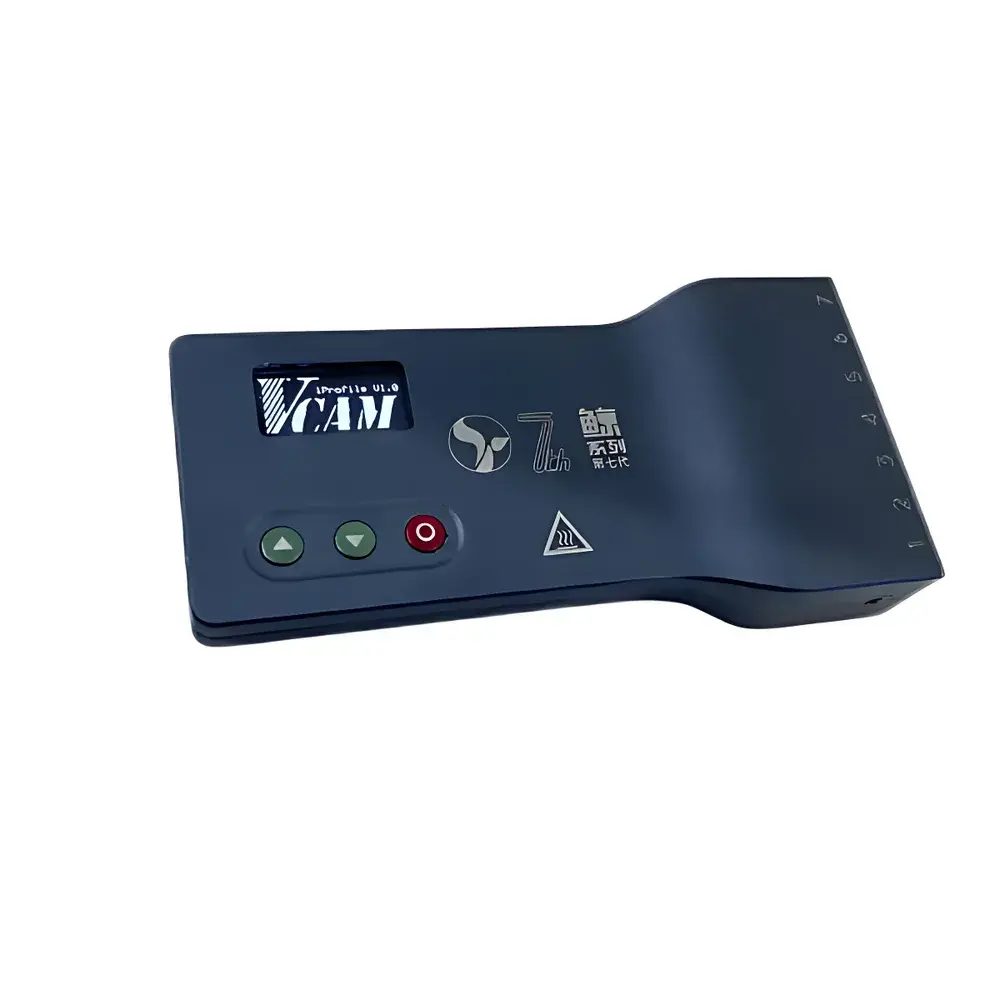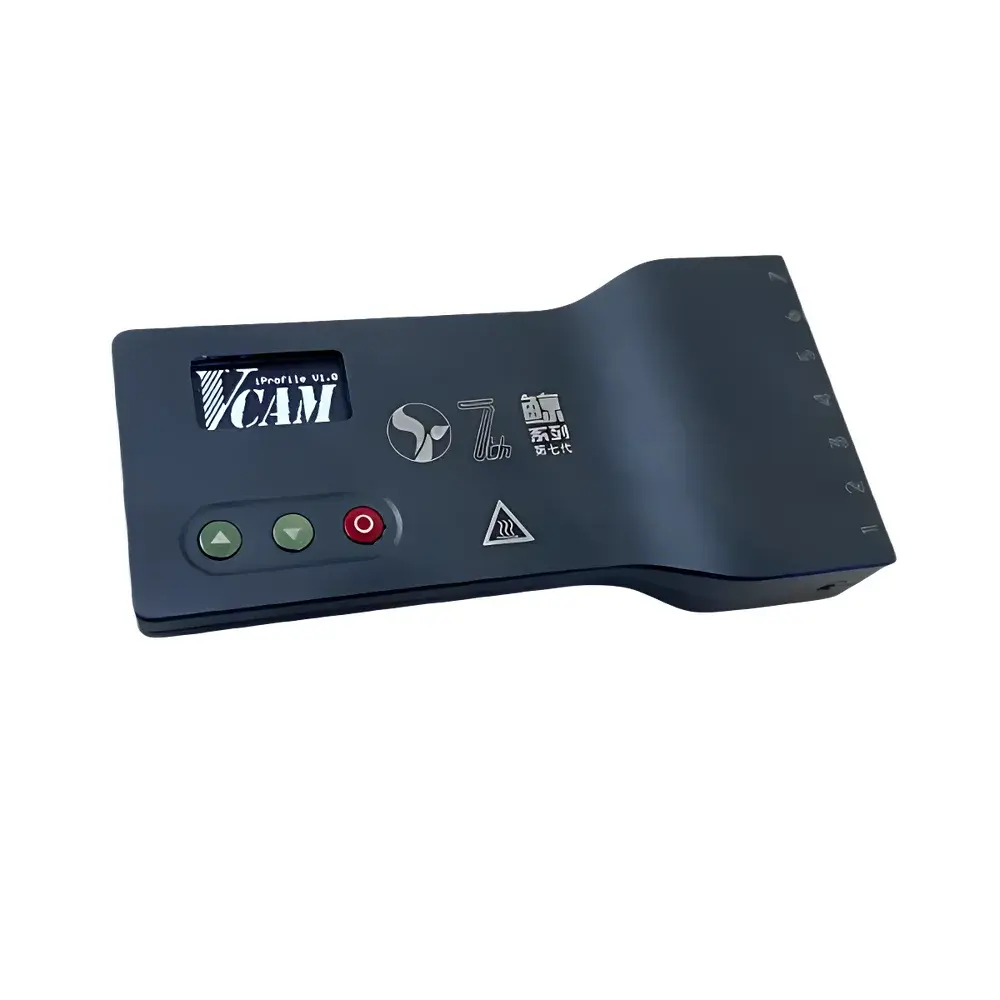
Auniontech Julight Microscopic Laser Vibrometer
| Brand | Auniontech |
|---|---|
| Origin | Shanghai, China |
| Manufacturer Type | Authorized Distributor |
| Country of Origin | China |
| Model | Julight Micro-VibroScope Series |
| Price | Upon Request |
| Measurement Principle | Non-contact Laser Doppler Vibrometry (LDV) with Integrated High-Resolution Optical Microscopy |
| Frequency Range | Up to 35 MHz |
| Displacement Resolution | 10 pm |
| Spot Size | < 4 µm |
| Maximum Velocity | ±40 m/s (at 3 MHz bandwidth) |
| Velocity Accuracy | ±1% of reading |
| Measurement Direction | Normal-component vibration only |
| Configuration Options | Single-point, 2D scanning, and 3D scanning modes available |
| Compliance | Designed for ISO 18431-1 (Vibration and shock — Signal processing), ASTM E1876 (Standard Test Method for Dynamic Young’s Modulus), and compatible with GLP/GMP-aligned data integrity workflows |
Overview
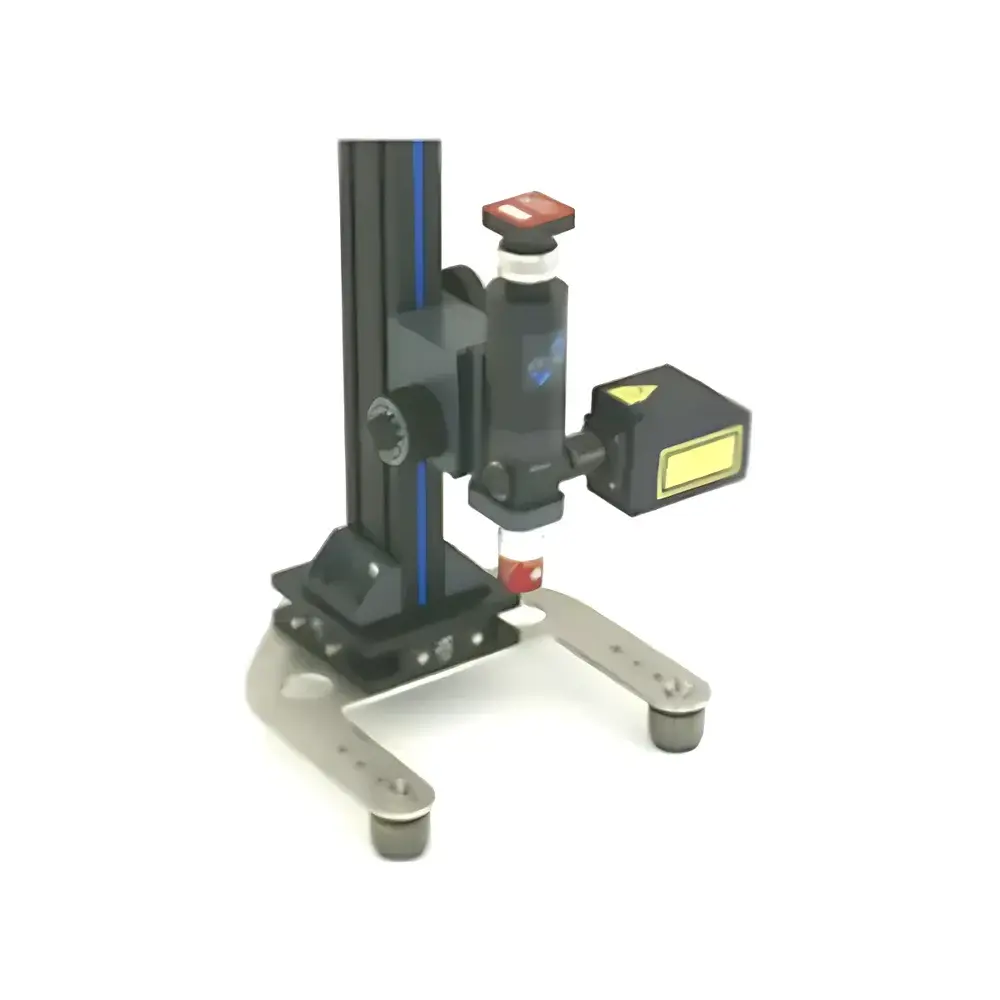
The Auniontech Julight Micro-VibroScope Series is a high-precision, non-contact microscopic laser vibrometer engineered for nanoscale dynamic characterization of microstructures. It integrates a stabilized He–Ne or near-infrared laser Doppler vibrometer (LDV) with a motorized, long-working-distance optical microscope—enabling simultaneous real-time visualization and quantitative vibration measurement at the micron and sub-micron scale. The system operates on the principle of heterodyne interferometry: incident laser light reflects from a vibrating surface, undergoes Doppler frequency shift proportional to instantaneous velocity, and is mixed with a reference beam to generate an analog signal directly proportional to surface velocity. This velocity signal is digitally integrated to yield displacement and differentiated to extract acceleration—providing full modal vector information. Unlike contact-based accelerometers or piezoelectric sensors, the Micro-VibroScope eliminates mass-loading effects and mechanical coupling artifacts, making it uniquely suited for fragile, high-frequency, and electrically sensitive devices such as MEMS resonators, IC interconnects, and thin-film transistors.
Key Features
- Sub-4 µm optical spot size enables spatially resolved vibration mapping on features smaller than 10 µm—critical for modern semiconductor packaging and MEMS design validation.
- DC-coupled velocity detection with up to 35 MHz analog bandwidth supports analysis of ultra-high-frequency modes in silicon nitride membranes, RF-MEMS switches, and piezoelectric thin-film actuators.
- 10 picometer displacement resolution (RMS, 1 Hz bandwidth) ensures traceable metrology-grade performance compliant with ISO/IEC 17025 calibration traceability requirements when used with NIST-traceable reference shakers.
- Motorized XYZ tilt-pan-rotate stage provides precise alignment and repeatability across multi-site measurements; integrated auto-focus and live image stabilization reduce operator dependency.
- Modular architecture supports seamless upgrade paths—from single-point point-and-measure operation to fully automated 2D raster scanning and synchronized 3D out-of-plane + in-plane motion reconstruction.
Sample Compatibility & Compliance
The Micro-VibroScope is routinely deployed in cleanroom-compatible environments (Class 1000 and better) for in-line qualification of wafers, diced die, and packaged components. It accommodates reflective and semi-transparent samples—including bare silicon, SiC power modules, GaN HEMTs, OLED backplanes, and flexible PCB substrates—without requiring target deposition or surface preparation. All measurement data files include embedded metadata (timestamp, laser power, focus position, environmental temperature/humidity logs) to support audit-ready documentation per FDA 21 CFR Part 11 and EU Annex 11 requirements. System firmware complies with IEC 61000-4 electromagnetic immunity standards, and optical path design meets EN 60825-1 Class 2M laser safety classification.
Software & Data Management
Control and analysis are performed via VibroStudio Pro—a Windows-based application developed in compliance with IEEE 1159 and ISO 13373-1 standards for machinery condition monitoring. The software provides real-time FFT, order tracking, waterfall plots, and operational deflection shape (ODS) synthesis. Raw time-domain velocity traces are saved in HDF5 format with lossless compression and SHA-256 checksums. Audit trails record all parameter changes, user logins, and export actions. Optional add-ons include MATLAB® and Python SDKs for custom algorithm integration, and a RESTful API for integration into factory MES platforms (e.g., Siemens Opcenter, Rockwell FactoryTalk).
Applications
- Modal analysis of MEMS inertial sensors and micro-mirrors under electrostatic actuation.
- Thermo-mechanical stability assessment of flip-chip solder joints during thermal cycling tests.
- Vibration mode identification in TFT-LCD gate driver ICs to correlate resonance peaks with pixel flicker artifacts.
- Ultrasonic bond integrity verification in wire-bonded power modules using time-resolved transient response analysis.
- Non-destructive evaluation of delamination risk in multilayer ceramic capacitors (MLCCs) via standing-wave pattern imaging.
FAQ
Is the system compatible with vacuum or controlled-atmosphere chambers?
Yes—optical head variants with vacuum-rated kinematic mounts and fused silica windows are available for integration into SEM-compatible or glovebox environments.
Can the system measure vibrations on non-reflective surfaces such as black silicon or carbon composites?
Yes—optional broadband anti-reflection coating removal modules and high-sensitivity quadrant photodetector configurations improve signal-to-noise ratio on low-reflectivity surfaces down to 1% reflectivity.
Does the software support automated pass/fail criteria for production line deployment?
Yes—customizable tolerance envelopes can be defined per frequency bin, amplitude threshold, or phase coherence metric, with CSV/XML report generation and PLC-triggered sorting outputs.
What calibration services are offered?
Auniontech provides annual NIST-traceable velocity calibration using primary-standard electrodynamic shakers (B&K 4809/4810), including uncertainty budgets per GUM (JCGM 100:2008).
Is remote support and firmware update capability included?
Yes—all systems ship with secure TLS-encrypted remote desktop access enabled for diagnostic sessions, and over-the-air firmware updates are delivered via signed package repositories.