
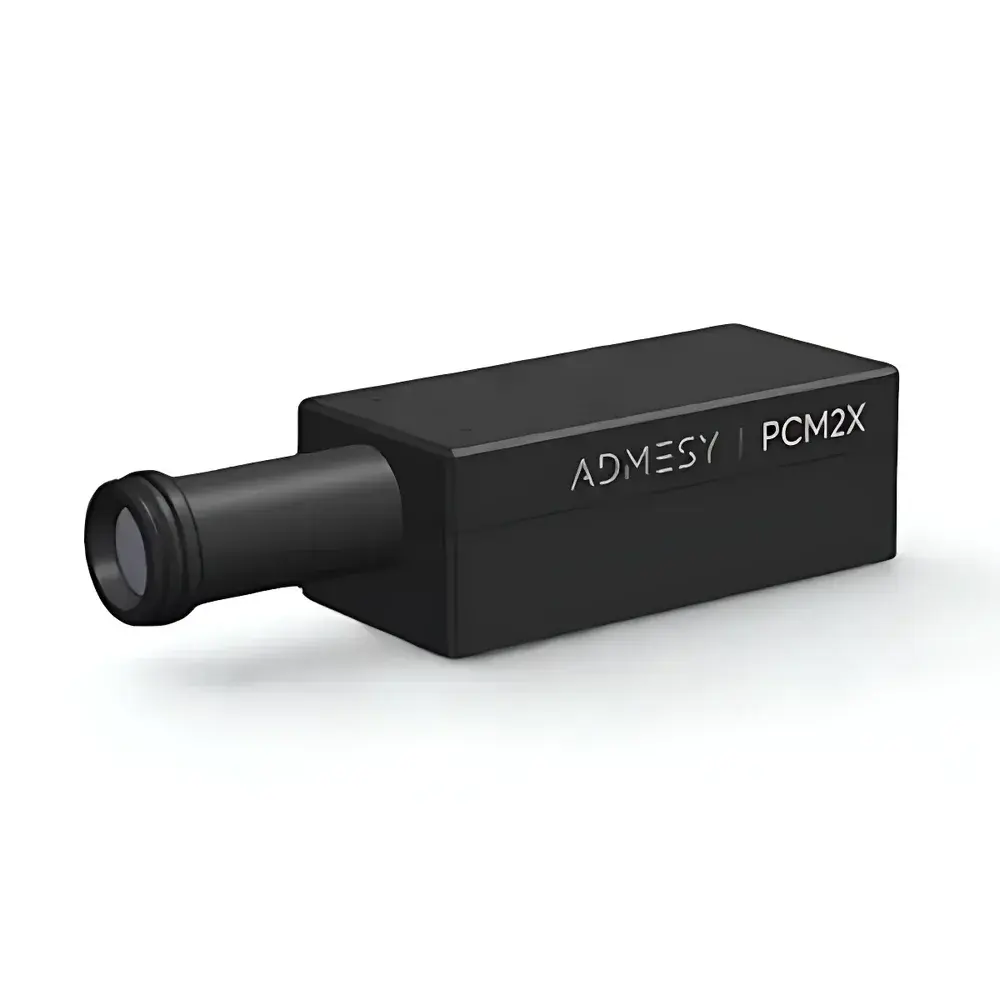
Auniontech PCM2X-102 High-Sensitivity Luminance and Colorimeter
| Brand | Auniontech |
|---|---|
| Origin | Shanghai, China |
| Manufacturer Type | Authorized Distributor |
| Product Category | Domestic |
| Model | PCM2X-102 |
| Price | Upon Request |
| Luminance Range | 0.00005–60,000 cd/m² |
| Chromaticity Range | 0.0005–60,000 cd/m² |
| XYZ Sampling Rate | 600 kS/s (internal), configurable output rates |
| Field of View | ±8.5° |
| Measurement Spot Size | 10 mm at 25 mm working distance |
| Compliance | USB-MTC compliant |
| OS Support | Windows, Linux, macOS |
| Software Integration | VISA-compatible |
| Triggering | Hardware VSYNC input |
| Shutter | Mechanical, USB-MTC–compliant |
| CIE Standards | CIE 1931 2° observer, CIE 170-2:2015 compliant |
| Flicker Analysis | FFT-based (FMA, JEITA, custom), time-domain FMA (VRR), FIR-filtered processing |
| Auto-ranging | Yes |
| Sensitivity | ≤0.00005 cd/m² (luminance), ≤0.0005 cd/m² (chromaticity) |
Overview
The Auniontech PCM2X-102 is a high-sensitivity, high-speed photometric and colorimetric measurement instrument engineered for precision characterization of low-luminance displays, OLEDs, microLEDs, automotive lighting, and emerging emissive technologies. It operates on the fundamental principles of CIE-standardized tristimulus colorimetry—using spectrally matched XYZ optical filters aligned to the CIE 1931 2° standard observer—and integrates calibrated photopic luminance detection per ISO/CIE definitions. Unlike conventional colorimeters relying on slower analog integration or limited dynamic range, the PCM2X-102 employs a low-noise, wide-dynamic-range analog front-end coupled with high-fidelity XYZ parallel sampling architecture. This enables simultaneous acquisition of X, Y, and Z channel waveforms at up to 600,000 samples per second—capturing transient luminance events, flicker harmonics, and temporal color shifts with sub-millisecond resolution—even at luminance levels as low as 0.00005 cd/m². Its optical engine minimizes stray light and étendue loss through optimized relay optics and precision aperture alignment, ensuring measurement repeatability <±0.5% over time under controlled environmental conditions.
Key Features
- Ultra-low-luminance capability: Certified sensitivity down to 0.00005 cd/m² for luminance and 0.0005 cd/m² for chromaticity measurements.
- High-speed XYZ waveform capture: Internal 600 kS/s sampling with configurable output rates (e.g., 1 kS/s, 10 kS/s, 100 kS/s) optimized for flicker, response time, and temporal uniformity analysis.
- CIE-compliant photometry: Fully traceable to CIE 1931 2° and CIE 170-2:2015 spectral responsivity curves; factory-calibrated against NIST-traceable standards.
- Hardware-triggered synchronization: Dedicated VSYNC input supports pixel-level timing alignment with display drivers, essential for evaluating variable refresh rate (VRR) and adaptive sync technologies.
- Integrated mechanical shutter: USB-MTC–compliant actuation ensures precise dark-reference acquisition without manual intervention—critical for GLP/GMP-aligned workflows.
- Auto-ranging photodetector system: Dynamically selects optimal gain stages across six decades (0.00005–60,000 cd/m²), eliminating manual range selection errors and improving throughput.
- Flicker analytics engine: Onboard MCU implements standardized metrics—including FMA (flicker modulation amplitude), JEITA MRT, and user-defined custom algorithms—as well as time-domain VRR-aware FMA using FIR filtering.
Sample Compatibility & Compliance
The PCM2X-102 is designed for non-contact measurement of planar and curved emissive surfaces including AMOLED, QD-OLED, Mini-LED backlit LCDs, microLED arrays, HUDs, and automotive interior lighting modules. Its ±8.5° field-of-view and fixed 10 mm spot size (at 25 mm working distance) ensure consistent spatial averaging while minimizing edge diffraction effects. The instrument complies with key international standards for photometric instrumentation: CIE Publication 170-2:2015 (requirements for colorimeters), IEC 62341-6-3 (OLED flicker test methods), and ISO 9241-307 (evaluation of electronic visual displays). For regulated environments, its USB-MTC–compliant shutter and deterministic trigger latency support audit-ready operation under FDA 21 CFR Part 11 and EU Annex 11 requirements when integrated into validated software platforms.
Software & Data Management
The PCM2X-102 communicates via USB 2.0 using industry-standard VISA (Virtual Instrument Software Architecture) protocols, enabling seamless integration with LabVIEW, LabWindows/CVI, MATLAB, Python (PyVISA), and Visual Studio–based applications. A comprehensive SDK provides low-level register access, real-time streaming control, and batch calibration file handling. All acquired XYZ waveforms are stored in IEEE 754 double-precision binary format with embedded metadata (timestamp, exposure, gain, shutter state, CIE observer mode). Raw data exports support HDF5 and CSV formats—compatible with JMP, Origin, and custom Python/Pandas pipelines. Firmware updates and configuration persistence are managed through signed, version-controlled binaries to maintain integrity in production QA environments.
Applications
- Display R&D: Temporal luminance uniformity mapping, pixel response time profiling, and VRR-induced color shift quantification.
- Quality Assurance: Automated pass/fail evaluation of flicker thresholds per JEITA CP-3406 or IEEE 1789 guidelines during final test.
- Automotive Lighting Validation: Photometric verification of DRLs, tail lamps, and digital light processing (DLP) modules under pulse-width-modulated (PWM) dimming.
- AR/VR Microdisplay Characterization: Sub-pixel-level luminance stability assessment under high-frame-rate rendering (≥120 Hz).
- Regulatory Testing: Pre-compliance screening for ENERGY STAR, TCO Certified, and DisplayPort Adaptive-Sync certification requirements.
- Academic Research: Human visual perception studies involving mesopic/scotopic transitions and temporal contrast sensitivity functions.
FAQ
What CIE observer standards does the PCM2X-102 support?
It implements both CIE 1931 2° and CIE 170-2:2015 spectral weighting functions, selectable via software configuration.
Is the instrument suitable for measuring curved or textured surfaces?
Yes—its fixed 10 mm spot size and ±8.5° angular acceptance enable repeatable measurements on gently curved emissive surfaces; however, highly textured or specularly reflective surfaces require additional validation per ISO 13406-2 Annex B.
Can the PCM2X-102 perform real-time flicker analysis without external software?
Yes—the onboard MCU computes FMA, JEITA MRT, and custom flicker indices in real time; results are streamed alongside raw XYZ data.
Does it support automated dark-current compensation?
Yes—mechanical shutter actuation triggers synchronized dark-reference acquisition prior to each measurement cycle, enabling drift-corrected photometry.
How is calibration traceability maintained?
Each unit ships with a NIST-traceable calibration certificate referencing CIE standard illuminants A and D65; annual recalibration is recommended per ISO/IEC 17025–accredited laboratories.





