
Auniontech 405–805 nm Low-Jitter Picosecond Pulsed Semiconductor Laser Module
| Brand | Auniontech |
|---|---|
| Origin | Shanghai, China |
| Manufacturer Type | Authorized Distributor |
| Product Type | Fiber-Coupled Picosecond Pulsed Laser Source |
| Wavelength Options | 405, 445, 488, 520, 635, 850 nm |
| Pulse Width (FWHM) | Down to 50 ps |
| Peak Power | Up to 150 mW |
| Average Power (at 80 MHz) | 1.5 mW |
| CW Output Power | 30 mW |
| Repetition Rate | Internally selectable from 1.25 MHz to 80 MHz |
| Spectral Bandwidth | ±10 nm |
| Output Coupling | Single-mode fiber (4 µm core), FC connector |
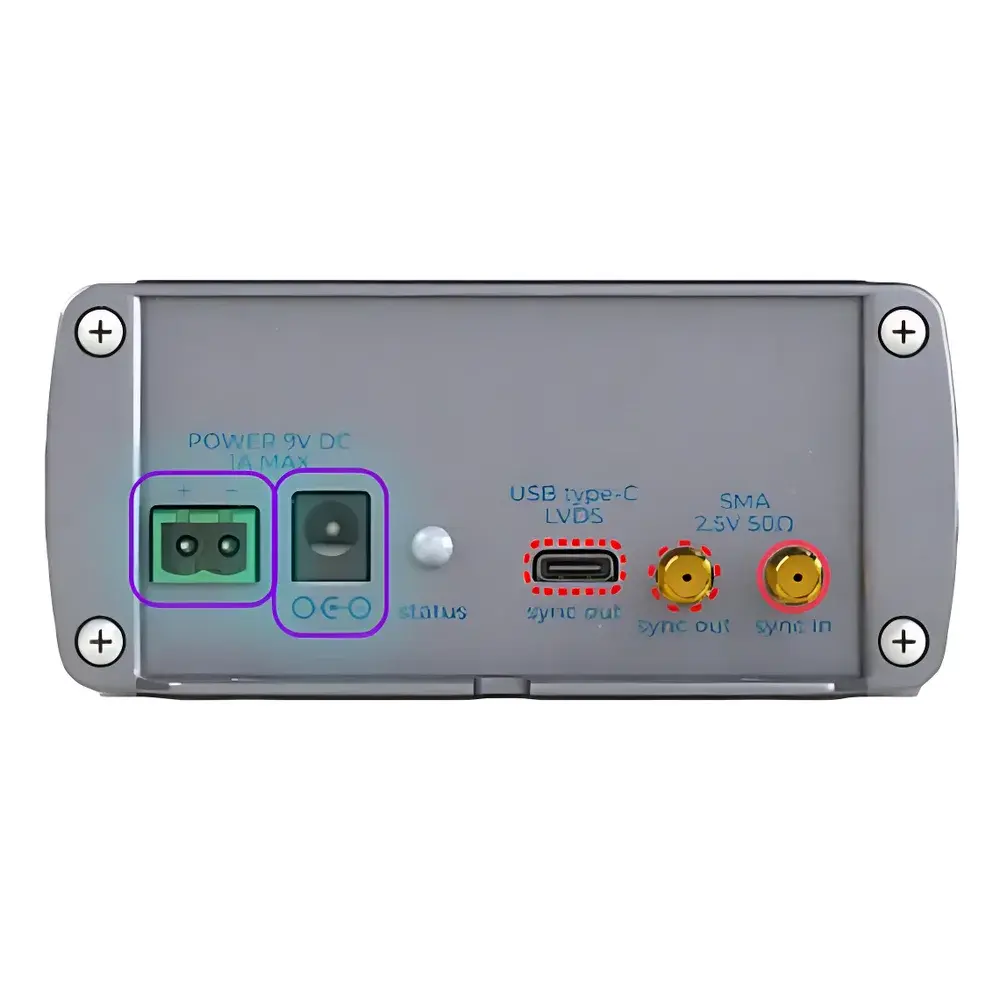
| Synchronization | LVTTL-4 V @ 50 Ω (SMA), LVDS via USB-C (FLIM Labs proprietary interface) |
| Power Supply | DC 9 V, ≤1 A (2.1/5.5 mm coaxial or jumper) |
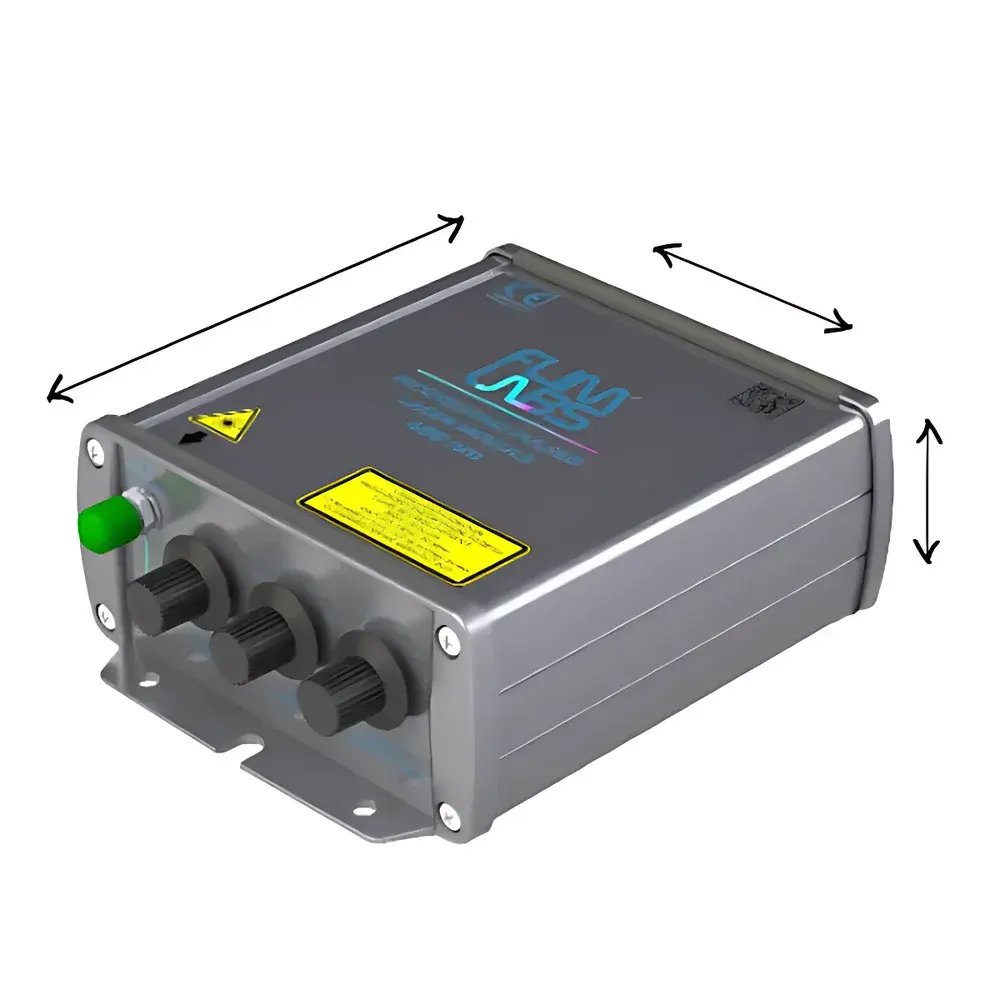
| Dimensions | 135 × 110 × 50 mm |
| Weight | 510 g |
Overview
The Auniontech 405–805 nm Low-Jitter Picosecond Pulsed Semiconductor Laser Module is a compact, turnkey optical source engineered for time-resolved fluorescence applications requiring precise temporal control and high pulse-to-pulse stability. Based on gain-switched semiconductor laser diode technology, it delivers transform-limited picosecond pulses with sub-50 ps FWHM duration across six discrete wavelengths—405, 445, 488, 520, 635, and 850 nm—enabling flexible excitation matching for diverse fluorophores in FLIM (Fluorescence Lifetime Imaging Microscopy), TCSPC (Time-Correlated Single Photon Counting), and ultrafast spectroscopy. Unlike mode-locked lasers or amplified systems, this module achieves low timing jitter (<10 ps RMS, typical) through optimized driver electronics and monolithic thermal stabilization, eliminating the need for external cooling or real-time feedback loops. Its fully self-contained architecture operates without host PC dependency, supporting standalone deployment in OEM instruments, portable lab setups, or integrated microscopy platforms.
Key Features
- Fiber-coupled single-mode output (4 µm core, FC connector) ensures stable beam delivery and compatibility with standard SMF-28 or PM-fiber interfaces.
- Internally selectable repetition rates (1.25, 2.5, 5, 10, 20, 40, and 80 MHz) and external triggering capability (1 kHz–80 MHz) enable synchronization with detectors, scanners, or data acquisition systems under varying experimental constraints.
- Dual operation modes: continuous-wave (CW) at up to 30 mW or pulsed (PW) with peak power up to 150 mW and average power of 1.5 mW at 80 MHz—optimized for signal-to-noise ratio in photon-starved FLIM acquisitions.
- Integrated LVTTL-compatible sync output and input (SMA, 50 Ω) provide deterministic timing reference for TCSPC hardware; optional LVDS interface via USB-C enables high-fidelity clock distribution per FLIM Labs specifications.
- Robust mechanical design (135 × 110 × 50 mm, 510 g) meets industrial vibration and thermal drift requirements for benchtop integration or embedded use in regulated environments.
Sample Compatibility & Compliance
This laser module is compatible with standard biological and chemical samples used in fluorescence lifetime assays—including NAD(P)H, FAD, collagen, elastin, quantum dots, and organic dyes—without inducing photodamage at recommended average power levels. It complies with IEC 60825-1:2014 Class 3B laser safety requirements when operated within specified output limits. All electrical interfaces meet CE EMC Directive 2014/30/EU and RoHS 2011/65/EU standards. While not certified for clinical diagnostic use, its performance parameters align with common validation benchmarks referenced in ASTM E2877 (standard guide for FLIM system characterization) and ISO/IEC 17025-compliant calibration workflows for time-domain optical instrumentation.
Software & Data Management
The module integrates natively with FLIM Labs’ open-source software suite, supporting real-time histogram reconstruction, phasor plot generation, and AI-assisted decay component separation. The software provides full API access (Rust, C/C++, C#, Python, Node.js, .NET) for custom acquisition logic and pipeline integration. Export formats include HDF5 (for FAIR data principles), MATLAB (.mat), SVG (for publication-ready phasor diagrams), and cloud-synced project archives. Audit trails, user-defined metadata tagging, and timestamped session logs support GLP/GMP-aligned documentation practices. No proprietary runtime dependencies are required—software runs on Windows 10/11 and Ubuntu 20.04 LTS or later.
Applications
- Time-resolved fluorescence microscopy in life sciences laboratories, including label-free metabolic imaging of live cells and tissue sections.
- TCSPC-based lifetime mapping in materials science for characterizing carrier recombination dynamics in perovskites, OLEDs, and 2D semiconductors.
- OEM integration into confocal, multiphoton, or light-sheet microscopes where space, power efficiency, and jitter-sensitive gating are critical.
- Calibration sources for streak cameras, SPAD arrays, and time-of-flight sensors in metrology and defense R&D.
- Educational platforms for teaching ultrafast optics, photon statistics, and lifetime-based sensing principles.
FAQ
What is the typical timing jitter specification for this laser module?
Timing jitter is typically <10 ps RMS (measured relative to internal clock edge), verified using a high-bandwidth oscilloscope and fast photodiode under stable thermal conditions.
Can the laser be modulated externally at arbitrary frequencies outside the listed range?
External triggering is supported from 1 kHz to 80 MHz; operation below 1 kHz may result in unstable pulse formation due to gain recovery limitations in the diode structure.
Is the spectral bandwidth tunable or fixed per wavelength option?
Each configured wavelength variant has a fixed center wavelength with ±10 nm spectral width (FWHM); no continuous tuning is available.
Does the module support TTL-level modulation of pulse amplitude or extinction ratio?
Yes—the digital modulation input accepts LVTTL-4 V signals for on/off gating with >100:1 extinction ratio and <1 ns rise/fall times.
What calibration documentation is provided with shipment?
Each unit ships with a factory test report listing measured pulse width (FWHM), average power, peak power, repetition rate accuracy, and sync delay skew—traceable to NIST-traceable photodetectors and time-interval analyzers.




