
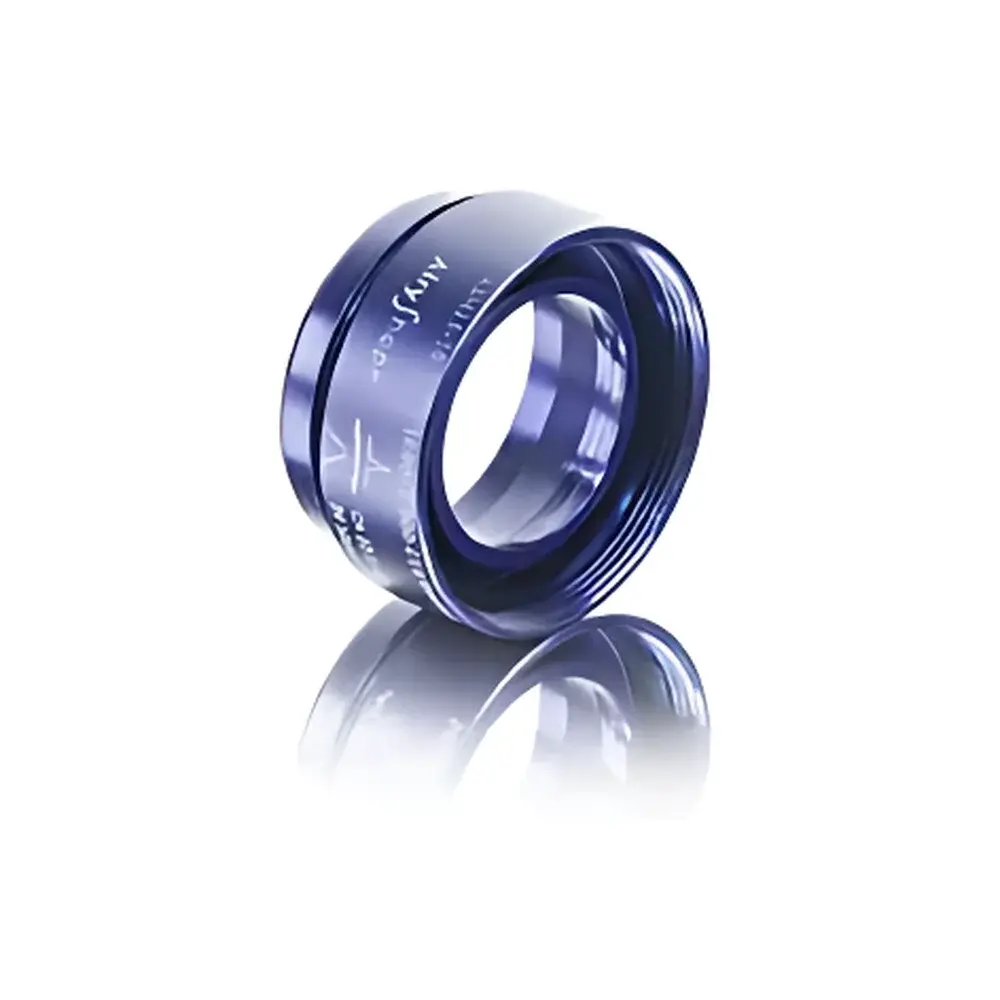
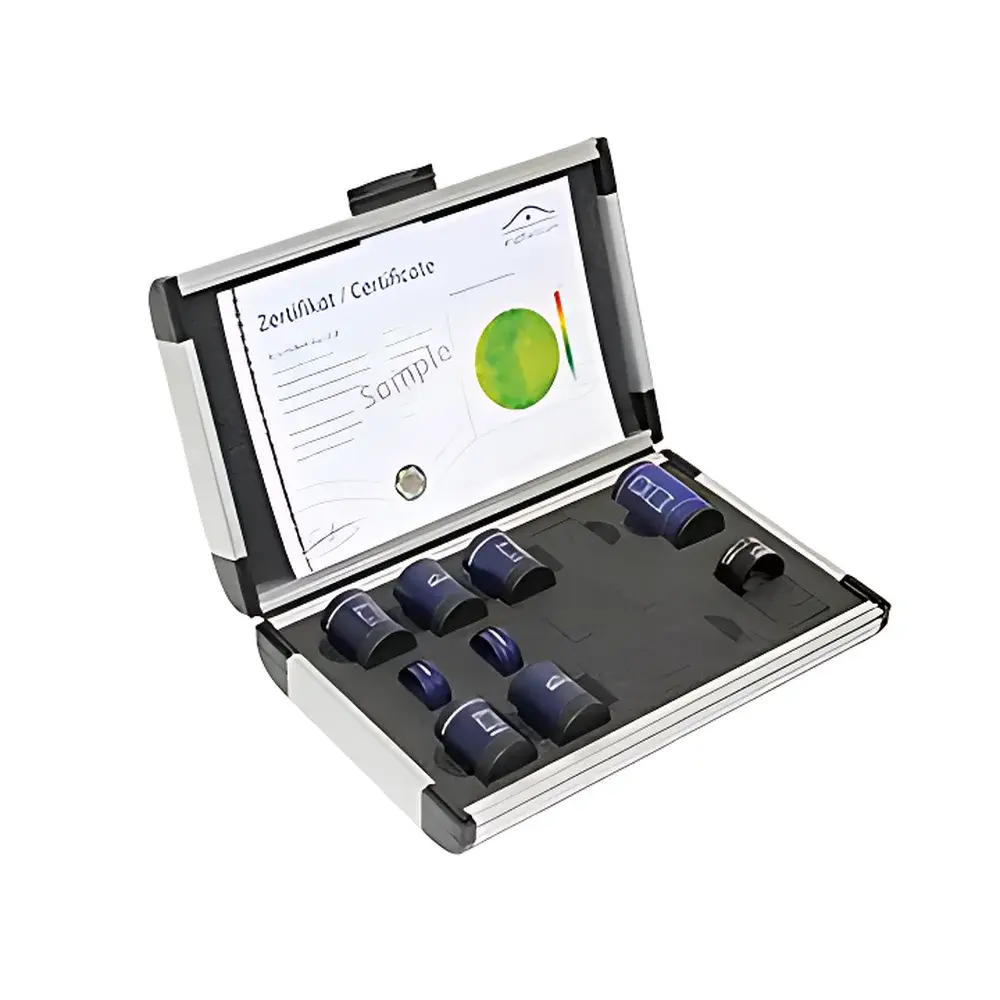
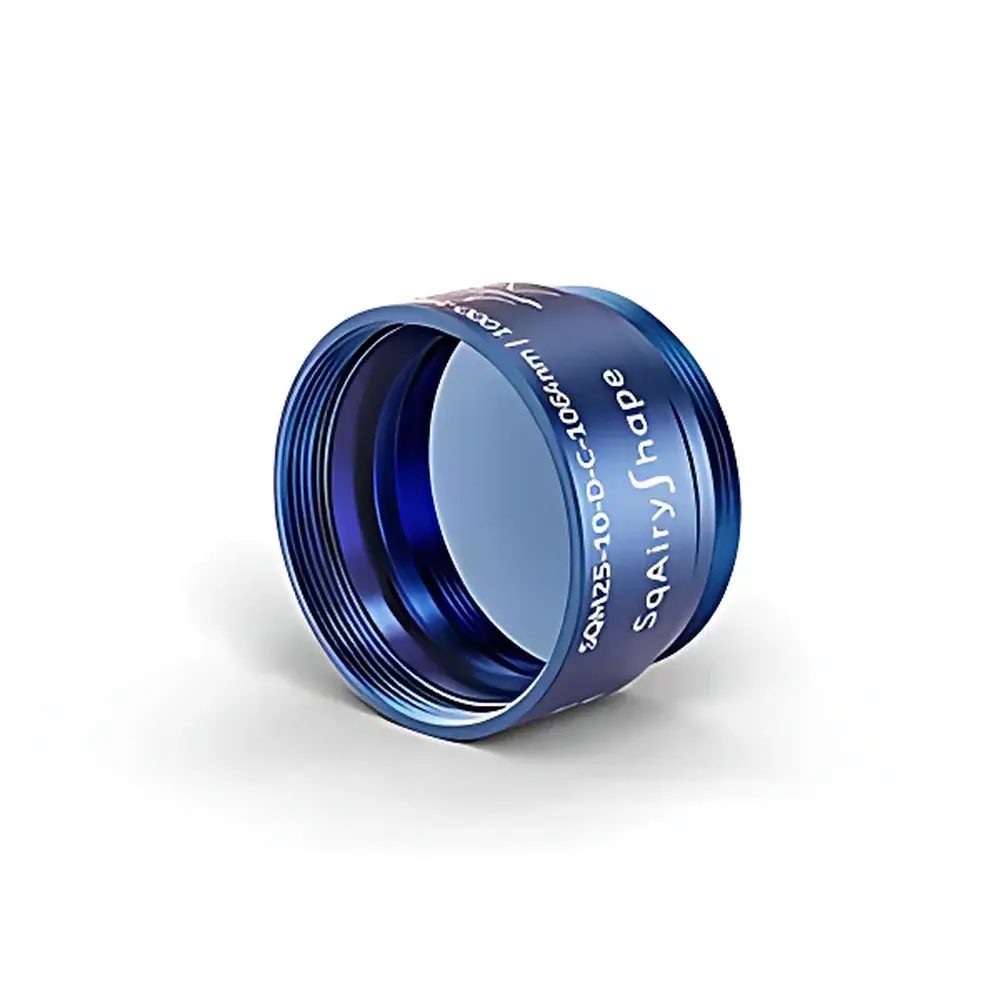
Asphericon a|AiryShape and a|SqAiryShape Aspheric Beam Shaping Optics
| Brand | Asphericon |
|---|---|
| Origin | Germany |
| Model | a |
| Wavelength Range | 300–1600 nm |
| Input Beam Diameter (1/e²) | 10 mm |
| Output Beam Diameter (dAiry) | 10 mm |
| Laser-Induced Damage Threshold | 12 J/cm² @ 100 Hz, 6 ns, 532 nm |
Overview
The Asphericon a|AiryShape and a|SqAiryShape are high-precision aspheric beam shaping optics engineered for deterministic transformation of collimated Gaussian laser beams into controlled intensity distributions at the focal plane. Based on advanced phase modulation principles—leveraging tailored aspheric surface topographies—the a|AiryShape generates rotationally symmetric profiles including flat-top (Top-Hat) and annular (Donut) distributions, while the a|SqAiryShape extends this capability to square-symmetric intensity patterns with four-fold rotational symmetry. Unlike diffractive or refractive homogenizers, these components operate via non-diffractive, single-pass wavefront engineering, preserving spatial coherence and minimizing energy loss. They are designed for integration downstream of collimation optics and upstream of standard focusing lenses (e.g., f = 200 mm), enabling flexible working distance adjustment without re-optimization. Their performance is intrinsically tied to input beam quality: diffraction-limited collimation and wavefront error < λ/10 (RMS) are required to achieve theoretical intensity uniformity and edge steepness.
Key Features
- Ultra-broad spectral compatibility: optimized across 300–1600 nm, supporting UV (355 nm), visible (532 nm, 635 nm), and NIR (1064 nm, 1550 nm) laser sources
- Compact monolithic design: no moving parts, no alignment-sensitive gratings or micro-lens arrays—enabling robust OEM integration in space-constrained optical trains
- Scalable output profile dimensions: transverse beam size linearly scales with focal length of the downstream lens—facilitating rapid adaptation to varying spot size requirements
- High laser damage resistance: certified LIDT of 12 J/cm² (100 Hz, 6 ns, 532 nm), suitable for pulsed nanosecond and picosecond industrial lasers
- Precision kinematic mounting interface: integrated alignment fiducials and reference surfaces ensure sub-arcminute centering repeatability and minimal coma induction
- Surface figure accuracy: polished aspheres meet ISO 10110-5 specifications with surface irregularity < λ/20 (633 nm), ensuring minimal wavefront distortion beyond design intent
Sample Compatibility & Compliance
The a|AiryShape and a|SqAiryShape are compatible with TEM₀₀ collimated beams having M² < 1.1 and 1/e² diameter of 10 mm. They require low-aberration focusing optics (e.g., achromatic doublets or reflective objectives) to preserve shaped intensity fidelity. These components comply with ISO 10110 optical manufacturing standards and are supplied with full metrology reports including interferometric surface maps and spectral transmission data. While not classified as medical or safety-critical devices per IEC 60825-1, their use in laser material processing systems must adhere to applicable local laser safety regulations (e.g., ANSI Z136.1, DIN EN 60825-1). Integration into GMP-regulated environments (e.g., laser-based medical device manufacturing) is supported by traceable calibration documentation and material certification (RoHS-compliant fused silica substrate).
Software & Data Management
No proprietary software is required for operation—these are passive optical elements. However, Asphericon provides downloadable Zemax OpticStudio and Code V prescription files (including surface sag tables and coating models) for accurate system-level simulation. Beam propagation analysis (e.g., via MATLAB or Python using FFT-based angular spectrum methods) is recommended to model axial intensity evolution and working distance-dependent profile transitions. For process validation in regulated industries, users may embed beam shape verification into existing QA workflows using calibrated CCD/CMOS beam profilers (e.g., Ophir Pyrocam III, Gentec-EO Maestro) with NIST-traceable calibration certificates. Audit trails for beam characterization data can be maintained in accordance with FDA 21 CFR Part 11 when integrated with compliant laboratory information management systems (LIMS).
Applications
- Laser micromachining: uniform Top-Hat profiles enable consistent ablation depth in thin-film scribing, solar cell patterning, and flex PCB drilling
- Femtosecond laser surface structuring: Donut modes support vortex-assisted LIPSS (Laser-Induced Periodic Surface Structures) generation with enhanced spatial periodicity control
- Optical trapping & manipulation: annular intensity distributions provide stable toroidal optical potentials for particle confinement
- Thin-film annealing & crystallization: square Top-Hat profiles from a|SqAiryShape deliver homogeneous thermal load distribution across rectangular substrates
- Interferometric sensor illumination: engineered flat-top beams improve fringe contrast and reduce speckle noise in digital holography setups
- LIBS (Laser-Induced Breakdown Spectroscopy): stabilized focal intensity improves plasma reproducibility and elemental quantification accuracy
FAQ
Can the a|AiryShape be used with femtosecond lasers?
Yes—its ultra-low dispersion fused silica substrate and monolithic design avoid nonlinear effects and group delay dispersion common in diffractive elements; however, pulse broadening must be evaluated separately using the full optical path.
What is the minimum required input beam quality for optimal performance?
A collimated TEM₀₀ beam with M² ≤ 1.05 and wavefront error < λ/10 RMS is recommended; deviations increase central peak intensity and degrade flatness in Top-Hat profiles.
Is custom wavelength optimization available?
Yes—Asphericon offers application-specific phase profile recalculations for wavelengths outside the standard 300–1600 nm range, subject to substrate transmission limits and manufacturing feasibility review.
How does working distance affect the output profile?
The a|AiryShape supports axial profile tuning: Top-Hat is most uniform at focus, while Donut intensity maxima shift axially; a|SqAiryShape maintains square symmetry across ±1.5 mm around focus, as verified by experimental beam mapping.
Are mounting adapters included?
Standard versions include SM1-threaded (1.035″-40) kinematic mounts with alignment screws; custom flanges (e.g., CF, ISO-K) and motorized translation stages are available upon request.



