
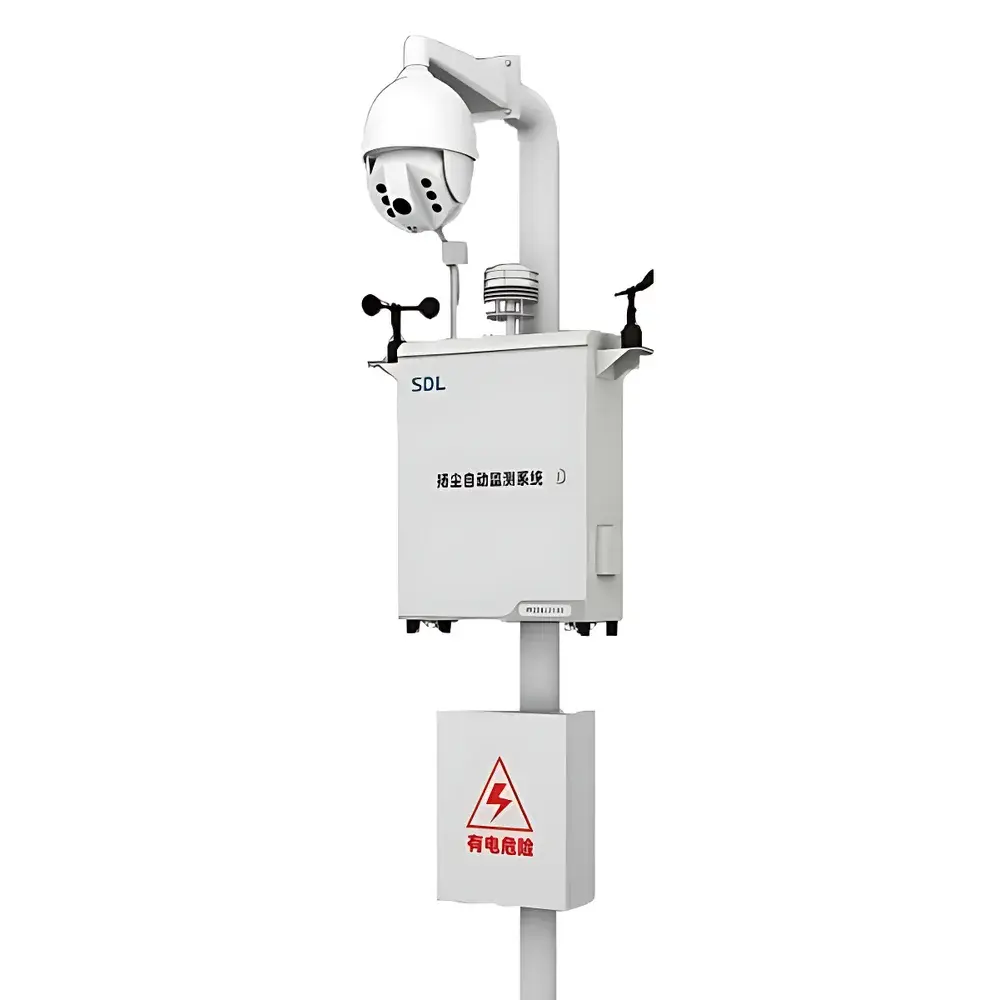
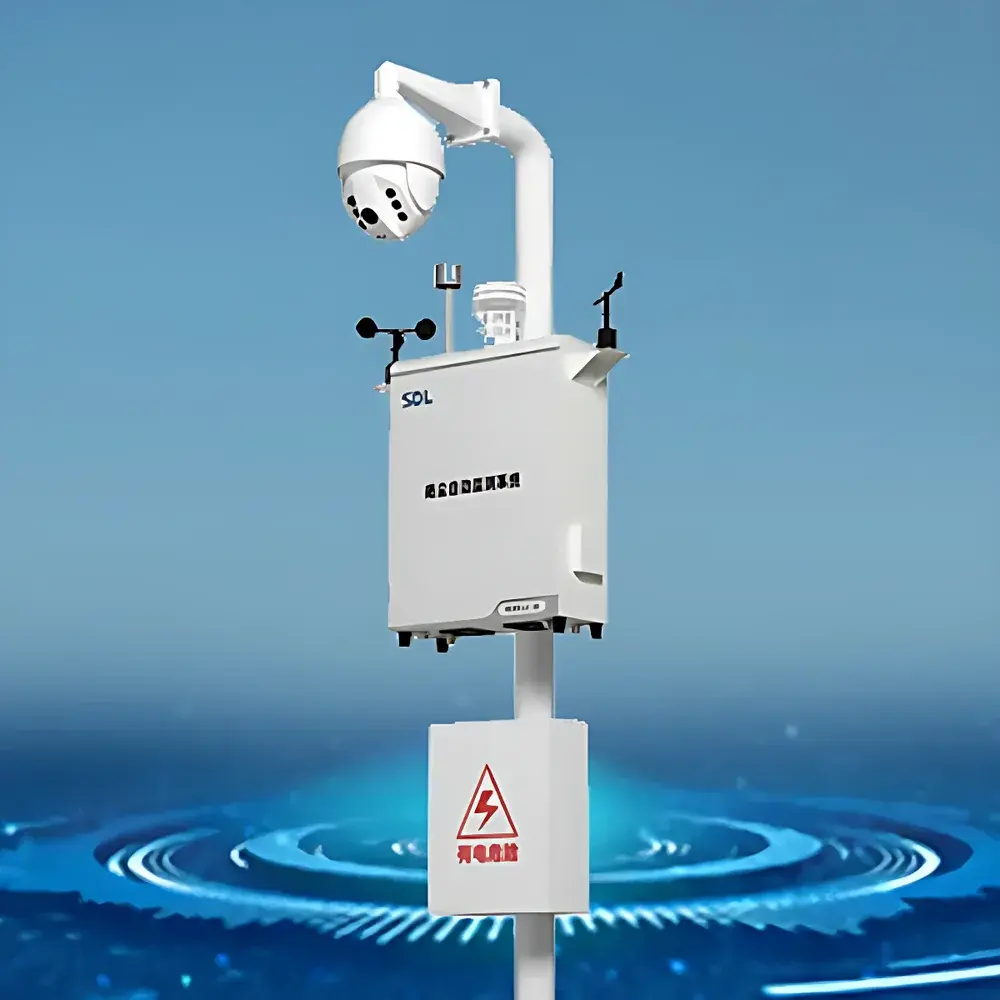
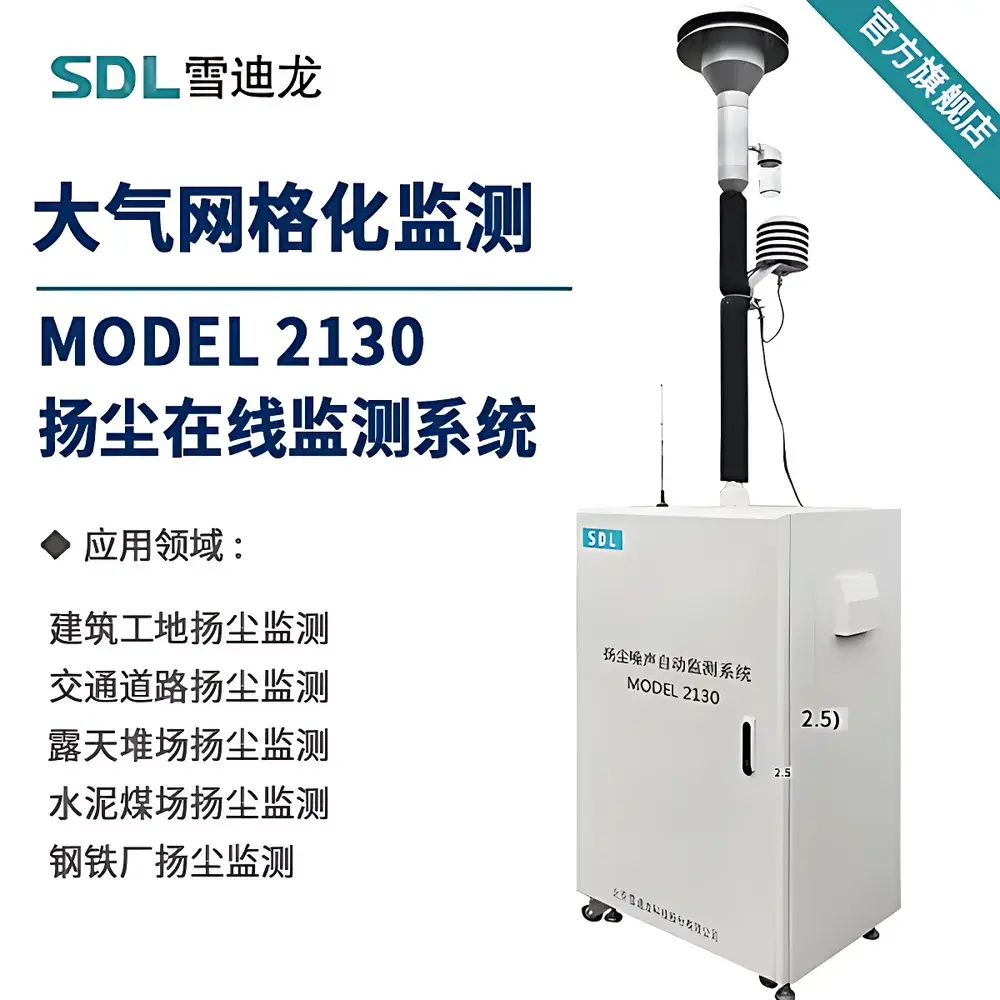
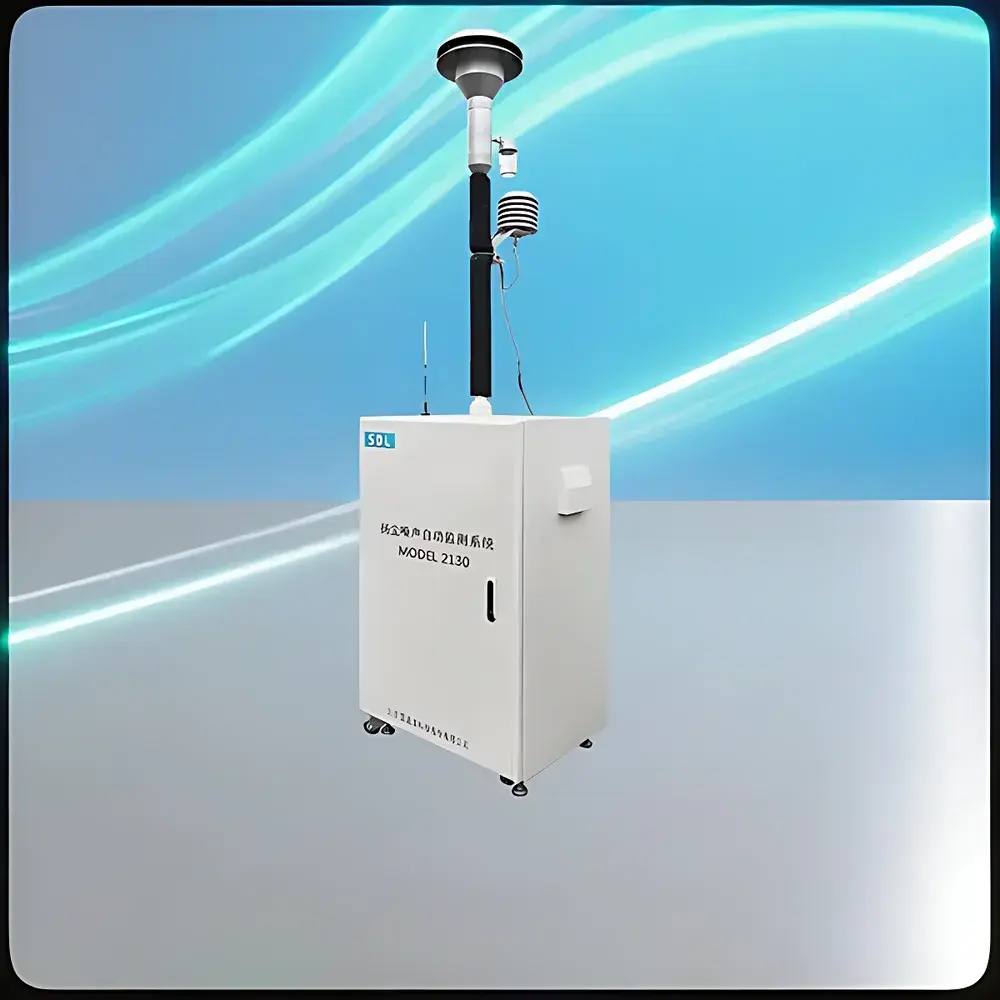
SDL MODEL 2130 Online Dust Monitoring System
| Brand | SDL |
|---|---|
| Origin | Beijing, China |
| Manufacturer Type | Direct Manufacturer |
| Product Origin | Domestic (China) |
| Model | MODEL 2130 |
| Instrument Type | Online |
| Measurement Principle | Optical Scattering (Light Scattering) |
| Measured Parameters | PM₁₀ and PM₂.₅ (standalone or simultaneous), TSP (optional) |
| Measurement Range Options | 0–10, 0–30, 0–50, or 0–100 mg/m³ |
| Minimum Detection Limit | 0.001 mg/m³ |
| Compliance Certifications | CCEP (China Environmental Protection Product Certification), CPA (China Metrology Approval) |
Overview
The SDL MODEL 2130 Online Dust Monitoring System is an industrial-grade, continuous ambient particulate matter monitoring instrument engineered for long-term, unattended operation in complex outdoor environments. It employs the well-established principle of forward-scattered light detection—where airborne particles passing through a calibrated laser beam generate scattered light intensity proportional to their size and concentration. This optical scattering methodology enables real-time quantification of respirable and inhalable particulate fractions, specifically PM₂.₅ and PM₁₀, with optional TSP (Total Suspended Particulates) measurement capability. Designed for regulatory-grade deployment, the system meets the technical requirements for fixed-site environmental monitoring under China’s HJ 653–2013 and HJ 654–2013 standards for particulate matter analyzers, and supports data transmission compliant with the national HJ 212–2017 communication protocol. Its robust architecture ensures stable performance across temperature extremes, high humidity, and variable wind conditions typical of construction sites, open stockyards, and industrial perimeters.
Key Features
- Modular hardware design enabling seamless integration of optional modules: meteorological five-parameter sensor suite (wind speed/direction, temperature, humidity, atmospheric pressure), noise level meter, HD IP camera, and outdoor LED display panel.
- Integrated humidity compensation algorithm and optional active dew-point dehumidification unit to minimize hygroscopic bias in high-humidity environments—critical for accurate PM₂.₅ measurement in coastal or monsoon-affected regions.
- Intelligent data management: automatic local data storage with timestamped backup; manual or scheduled data retransmission upon network recovery; multi-platform data forwarding (up to 5 concurrent destinations via TCP/IP or GPRS/4G).
- Event-triggered multimedia capture: automatic still-image capture upon PM exceedance; time-synchronized video overlay with real-time PM values and timestamps; optional audio recording during alarm events.
- Two-way remote control interface supporting fog cannon activation via digital output relay or Modbus RTU command—enabling closed-loop dust suppression response directly from the monitoring node.
- Multi-mode communication: Ethernet, RS485, 4G LTE (CAT1/CAT4), NB-IoT, and LoRaWAN options—configured via web-based device manager without firmware reflash.
Sample Compatibility & Compliance
The MODEL 2130 is validated for continuous sampling of ambient air in non-explosive, non-corrosive atmospheres. It complies with China’s mandatory certification framework for environmental monitoring instruments, including the China Environmental Protection Product Certification (CCEP) and the China Metrology Type Approval (CPA). While not certified to ISO 12103-1 or EN 12341 for reference method equivalence, its optical scattering engine is factory-calibrated against gravimetric reference samplers traceable to NIM (National Institute of Metrology, China). The system supports audit-ready data logging with immutable timestamps, user-access logs, and configuration change history—aligned with GLP-aligned operational practices for municipal and provincial environmental bureaus. Optional firmware upgrades can enable partial compliance with EPA Method PS-11 (for PM₂.₅) when deployed with co-located FRM/FEM reference monitors for site-specific correlation modeling.
Software & Data Management
The embedded Linux-based firmware delivers secure, role-based access to a responsive HTML5 web interface (HTTPS/TLS 1.2), supporting remote configuration, diagnostic reporting, and firmware updates over secure channels. The system generates standardized CSV and XML data packets formatted per HJ 212–2017, including measurement values, status flags (e.g., “maintenance required”, “flow fault”), and QA/QC metadata (e.g., zero/span check results, lamp intensity decay logs). An optional cloud-hosted SaaS platform provides GIS-mapped visualization, statistical trend analysis (hourly/daily/monthly averages, 90th percentile exceedances), automated alerting (SMS/email/webhook), and RESTful API endpoints for integration with third-party environmental information systems (EIS), smart city dashboards, or ERP platforms. All data transfers support TLS encryption and configurable message signing for integrity verification.
Applications
The MODEL 2130 is deployed across diverse regulatory and industrial use cases requiring spatially resolved, time-synchronized particulate data. Primary applications include continuous compliance monitoring at construction sites subject to local “green building” ordinances; real-time emission tracking along arterial roads and highway corridors; fugitive dust surveillance at bulk material handling facilities (coal terminals, cement silos, iron ore stockpiles); and perimeter monitoring for steel manufacturing plants operating under SO₂/PM dual-emission permits. Secondary applications encompass demolition site impact assessment, municipal landfill boundary monitoring, port-side sand and gravel loading operations, and neighborhood-level community air quality initiatives where localized PM exposure correlates with residential health surveys. Its modular expandability makes it suitable for hybrid urban monitoring networks integrating acoustic, meteorological, and gaseous pollutant sensors.
FAQ
Does the MODEL 2130 meet international calibration standards such as ISO 20988 or EN 15267?
No—it is certified under China’s domestic regulatory framework (CCEP and CPA) and aligned with HJ-series standards. For international deployment, field correlation studies against EN 12341-compliant reference analyzers are recommended.
Can the system operate reliably in temperatures below –20°C or above +50°C?
The standard enclosure is rated for –20°C to +50°C ambient operation. Extended-range versions with heated inlet and thermal-stabilized optical chamber are available upon request.
Is raw scatter signal data accessible for custom algorithm development?
Yes—via serial debug port or Modbus register mapping, the unprocessed photodiode voltage output and pulse count histogram data can be retrieved for advanced aerosol characterization research.
What cybersecurity protocols does the device support?
It implements TLS 1.2 for web and API communications, SSHv2 for CLI access, configurable password complexity policies, and disabled default credentials upon first boot.
How frequently is firmware updated, and how are updates delivered?
Major firmware releases occur biannually; critical security patches are issued ad hoc. Updates are delivered via signed OTA packages verified using ECDSA-256 signatures before installation.
Related Products







