
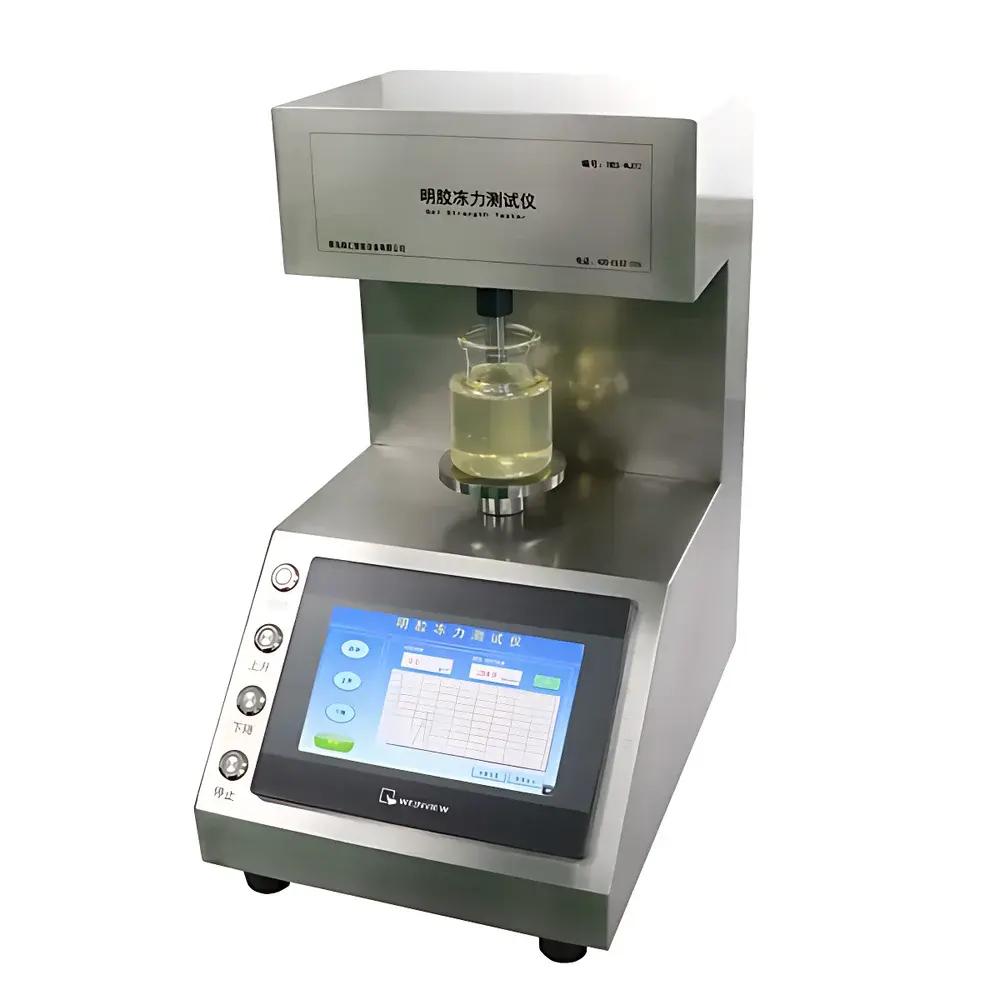
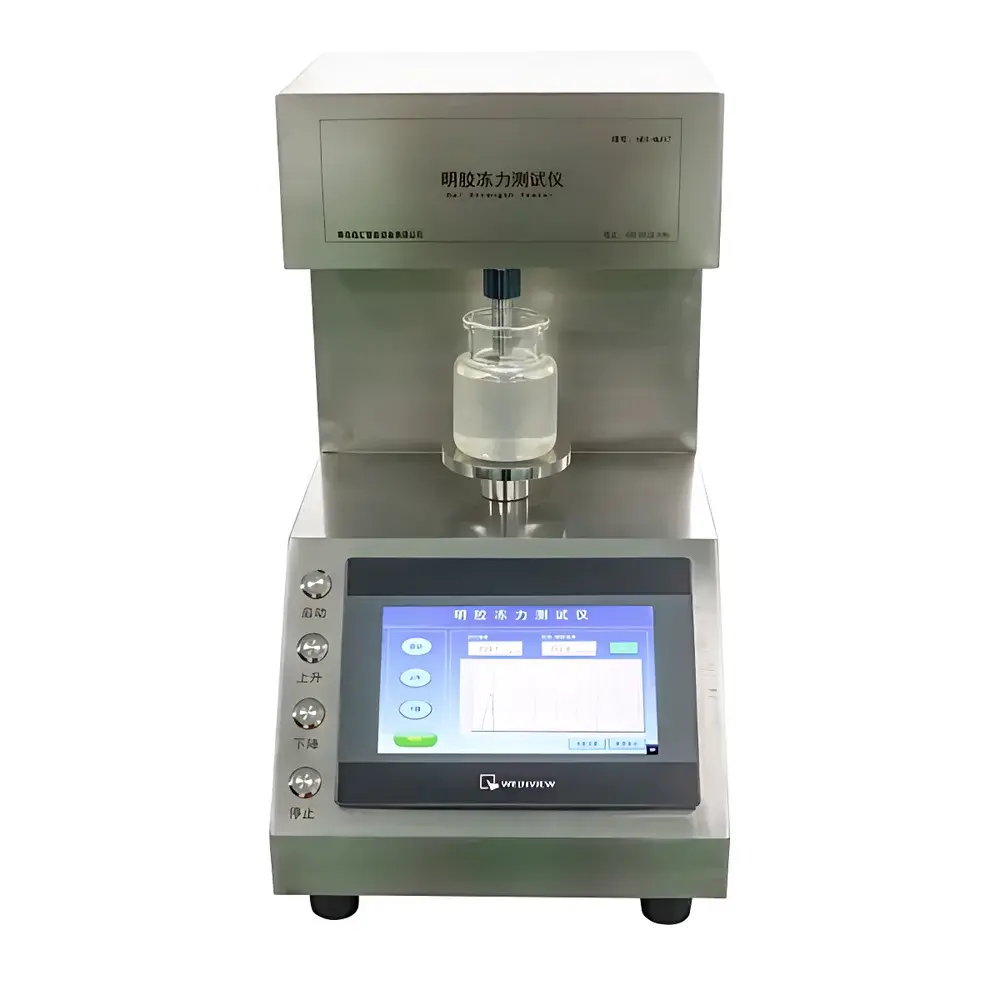
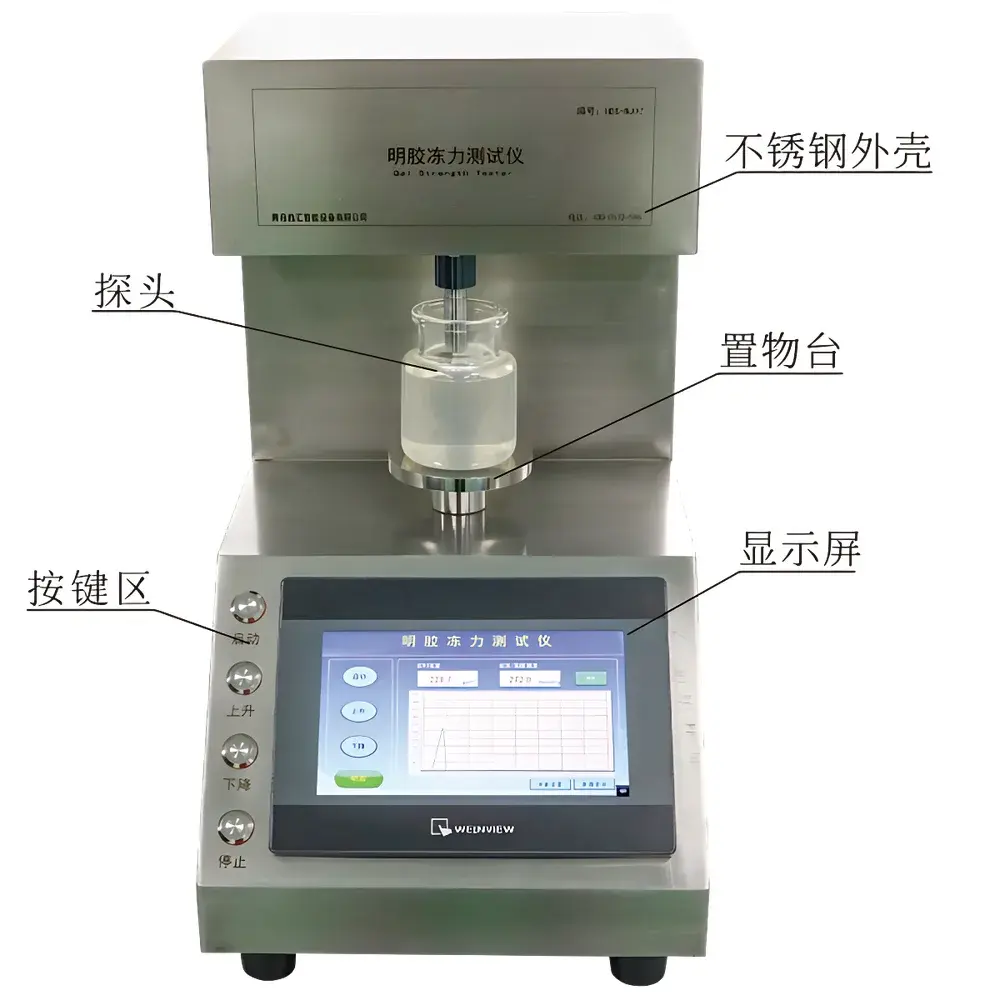
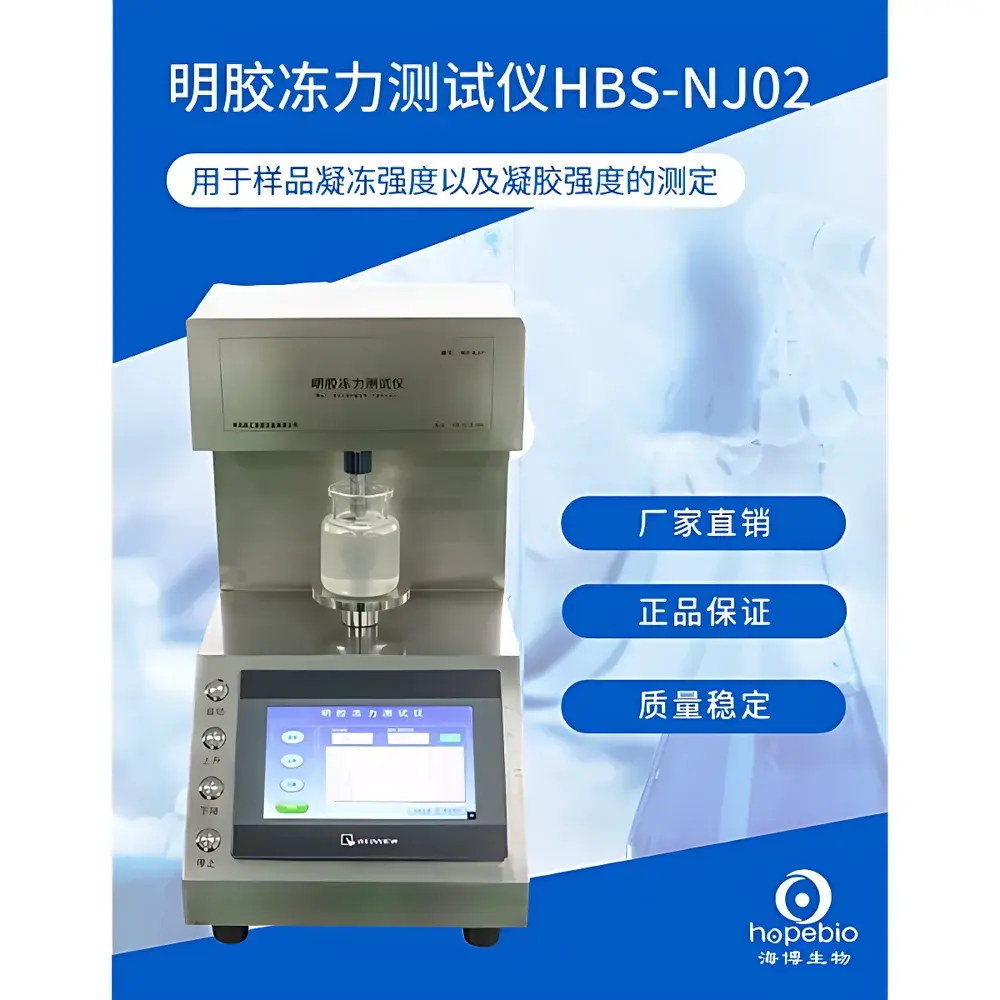
Hopebio HBS-NJ02 Gel Strength Tester
| Brand | Hopebio |
|---|---|
| Origin | Shandong, China |
| Manufacturer Type | Authorized Distributor |
| Country of Origin | China |
| Model | HBS-NJ02 |
| Measurement Range | 0–3000 g/cm² (gel) / 0–300 Bloom g (gelatin) |
| Probe Diameter | 12.7 ± 0.1 mm |
| Probe Material | AISI 304 Stainless Steel |
| Penetration Depth (adjustable) | 1–50 mm |
| Stroke Range | 0–40 mm |
| Load Cell Accuracy | ±0.1 g |
| Data Storage | Local history (60 days), exportable via FAT32-formatted USB drive (<32 GB) |
| Touchscreen | 7-inch LCD |
| Dimensions | 350 × 250 × 435 mm |
| Weight | 10 kg |
| Compliance | ISO 9665, GB 6783-2013, GB 28304-2012, Chinese Pharmacopoeia 2020 (Capsule-grade Gelatin) |
Overview
The Hopebio HBS-NJ02 Gel Strength Tester is a precision mechanical instrument engineered for standardized determination of gel strength in hydrocolloid systems, primarily following the Boussingault-type probe penetration method. It operates on the principle of controlled axial force application using a calibrated stainless-steel plunger to measure resistance during either fixed-depth indentation (for gelatin, per Bloom scale) or rupture-force detection (for gels such as agar, carrageenan, or pectin). The device implements a defined probe geometry (12.7 mm diameter, ASTM/ISO-compliant), programmable descent velocity, and real-time load acquisition—enabling quantitative assessment of textural integrity critical to food formulation, pharmaceutical excipient qualification, and polymer research. Its architecture integrates a high-stability load cell (±0.1 g resolution), linear motion control with adjustable stroke (1–50 mm), and embedded firmware calibrated against traceable reference standards.
Key Features
- High-resolution load measurement system with ±0.1 g accuracy and 0–3000 g/cm² range (gel mode) or 0–300 Bloom g (gelatin mode)
- ISO 9665-compliant 12.7 ± 0.1 mm AISI 304 stainless-steel probe with polished surface finish and dimensional traceability
- Programmable test parameters: pre-test approach speed, measurement speed, retraction speed, and penetration depth (1–50 mm in 0.1 mm increments)
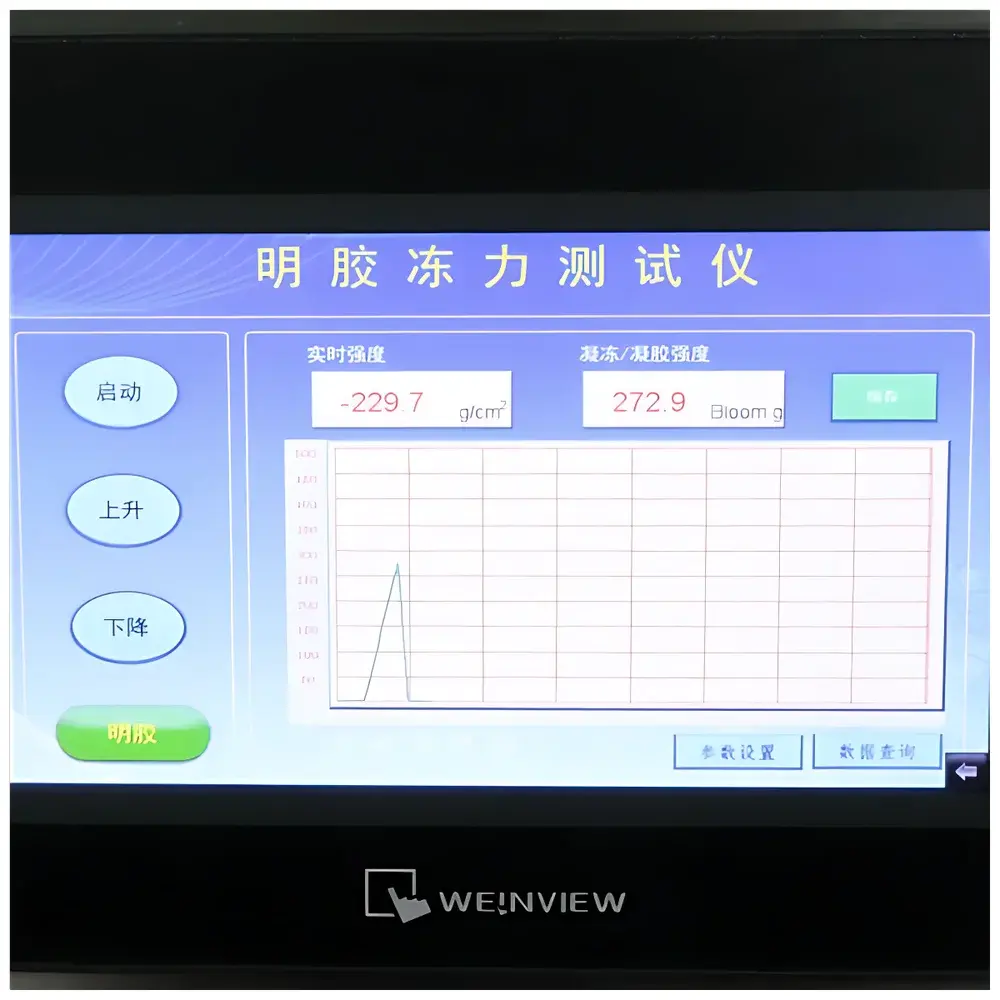
- Integrated 7-inch capacitive touchscreen interface with real-time force–displacement curve visualization and peak-hold capture
- Onboard data logging with automatic timestamping; 60-day local storage and USB export capability (FAT32, ≤32 GB)
- Rugged aluminum-alloy chassis with anti-vibration base design; optimized for laboratory benchtop stability (operating temperature: 10–25 °C)
- Self-zeroing function upon startup when platform load ≤60 g; prevents baseline drift from ambient thermal or mechanical drift
Sample Compatibility & Compliance
The HBS-NJ02 supports a broad spectrum of thermo-reversible and irreversible hydrogels, including but not limited to gelatin, agarose, carrageenan, pectin, konjac glucomannan, alginate, casein gels, whey protein isolates, butterfat networks, and synthetic superabsorbent polymers (SAPs). Sample preparation follows standardized conditioning protocols: gelatin samples require refrigerated setting at 10 °C for 16–18 h prior to testing per GB 6783-2013; plant-based gels must be equilibrated at 20 ± 1 °C for ≥1.5 h before measurement. The instrument satisfies regulatory requirements for quality control in GMP-compliant food and pharmaceutical manufacturing environments, supporting audit-ready documentation through timestamped raw data files and operator-defined test IDs. It aligns with ISO 9665 (adhesives – animal glues), GB 28304-2012 (curdlan gel strength), and Chinese Pharmacopoeia 2020 Volume IV (gelatin for capsule use), enabling direct comparability across international R&D and QC labs.
Software & Data Management
Data acquisition and analysis are managed via embedded firmware without external PC dependency. Each test generates a structured CSV file containing time-stamped force (g), displacement (mm), and derivative metrics (e.g., maximum force, penetration work, yield point). Files are organized chronologically and tagged with user-assigned batch IDs. USB export supports FAT32-formatted drives only, ensuring compatibility with LIMS integration and offline statistical review (e.g., ANOVA, control charting). While the device does not implement FDA 21 CFR Part 11 electronic signature functionality, its deterministic test execution, immutable data logs, and manual operator ID entry support GLP-aligned workflows where electronic records are supplemented by paper-based SOP sign-offs.
Applications
This tester serves as a primary metrology tool in food science laboratories evaluating texture modifiers in dairy analogs, meat emulsions (e.g., surimi gels), confectionery (jellies, marshmallows), and plant-based alternatives. In pharmaceutical development, it verifies batch-to-batch consistency of capsule shell gelatin, wound-healing hydrogels, and sustained-release matrix tablets. Industrial applications extend to oilfield polymer rheology screening (e.g., xanthan gum crosslinking efficiency), cosmetic gel stability profiling (e.g., carbomer networks), and QA/QC of functional ingredients like modified starches and microbial exopolysaccharides. Its reproducibility (CV < 2.5% intra-lab, n = 10) meets ISO 5725-2 repeatability criteria for routine testing.
FAQ
What is the recommended sample thickness for accurate gel strength measurement?
Minimum sample thickness must exceed probe penetration depth by ≥2 mm to prevent bottom-effect interference; typical practice uses 15–20 mm height for 4 mm indentation tests.
Can the HBS-NJ02 be used for non-food gels such as polyacrylamide or PVA hydrogels?
Yes—provided the material exhibits measurable elastic-plastic deformation within the 0–3000 g/cm² range and maintains structural integrity during probe descent; calibration verification with NIST-traceable polymer standards is advised.
Is temperature control integrated into the instrument?
No—the HBS-NJ02 does not include active thermal regulation; users must precondition samples in climate-controlled chambers per ISO/GB specifications prior to loading.
How often should the load cell be recalibrated?
Annual recalibration against certified dead-weight standards is recommended; field verification using Class M1 weights (500 g, 1000 g, 2000 g) should be performed quarterly.
Does the device support custom test protocols beyond gelatin and gel modes?
Firmware allows parameter customization (speed, depth, dwell time), but dedicated modes are limited to Bloom and rupture-force paradigms; advanced protocol scripting requires third-party DAQ integration via analog output port.






