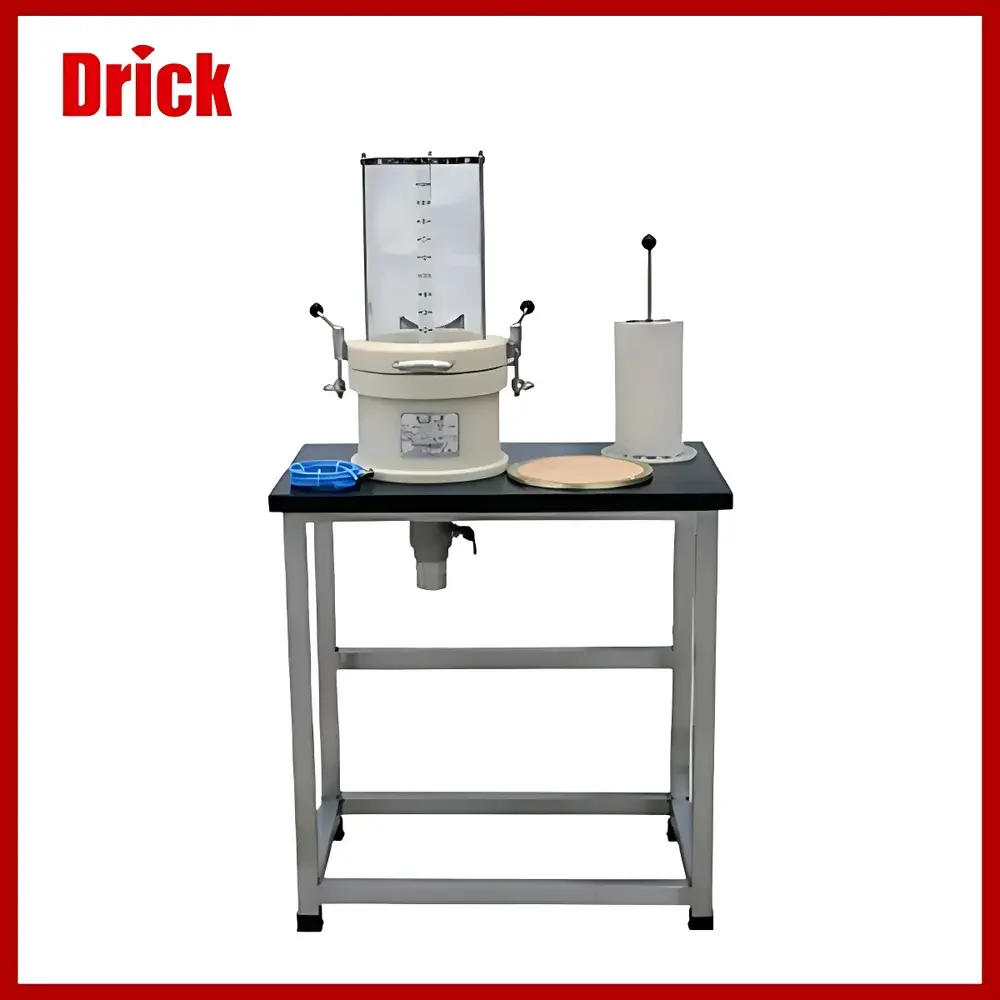
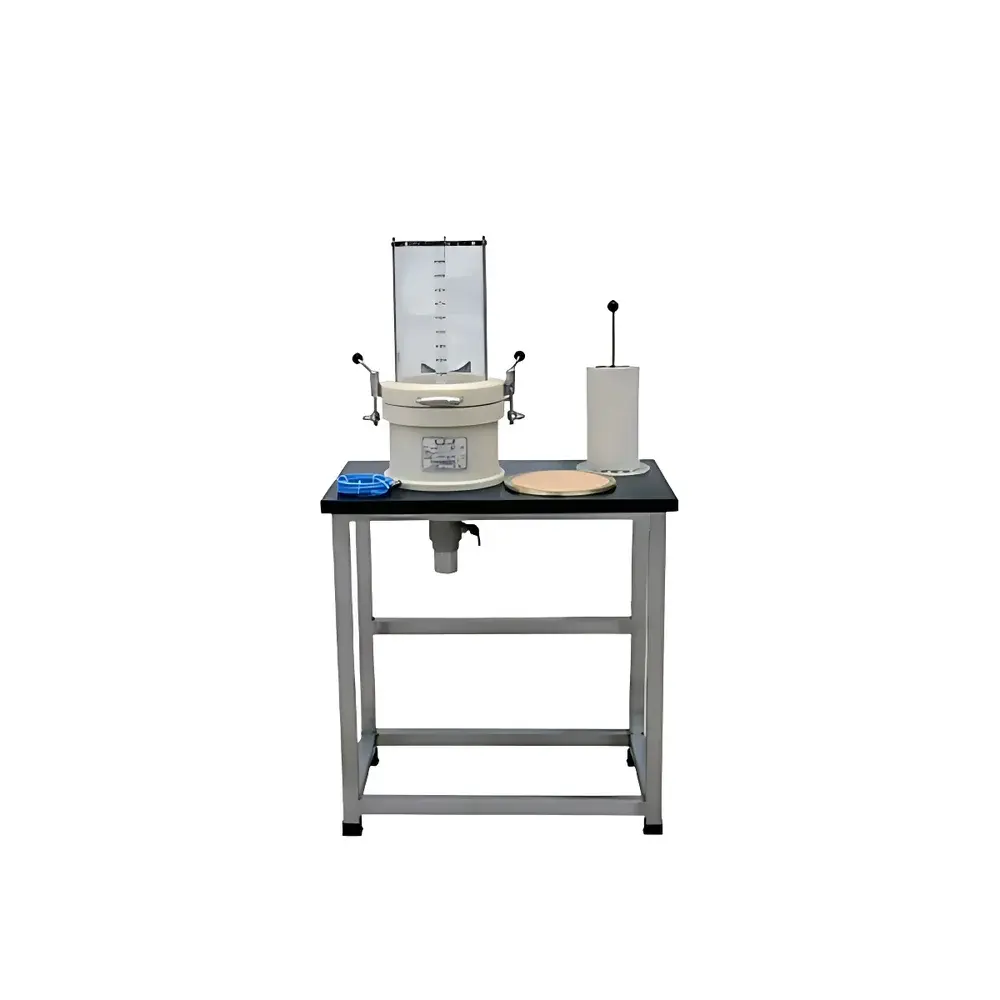
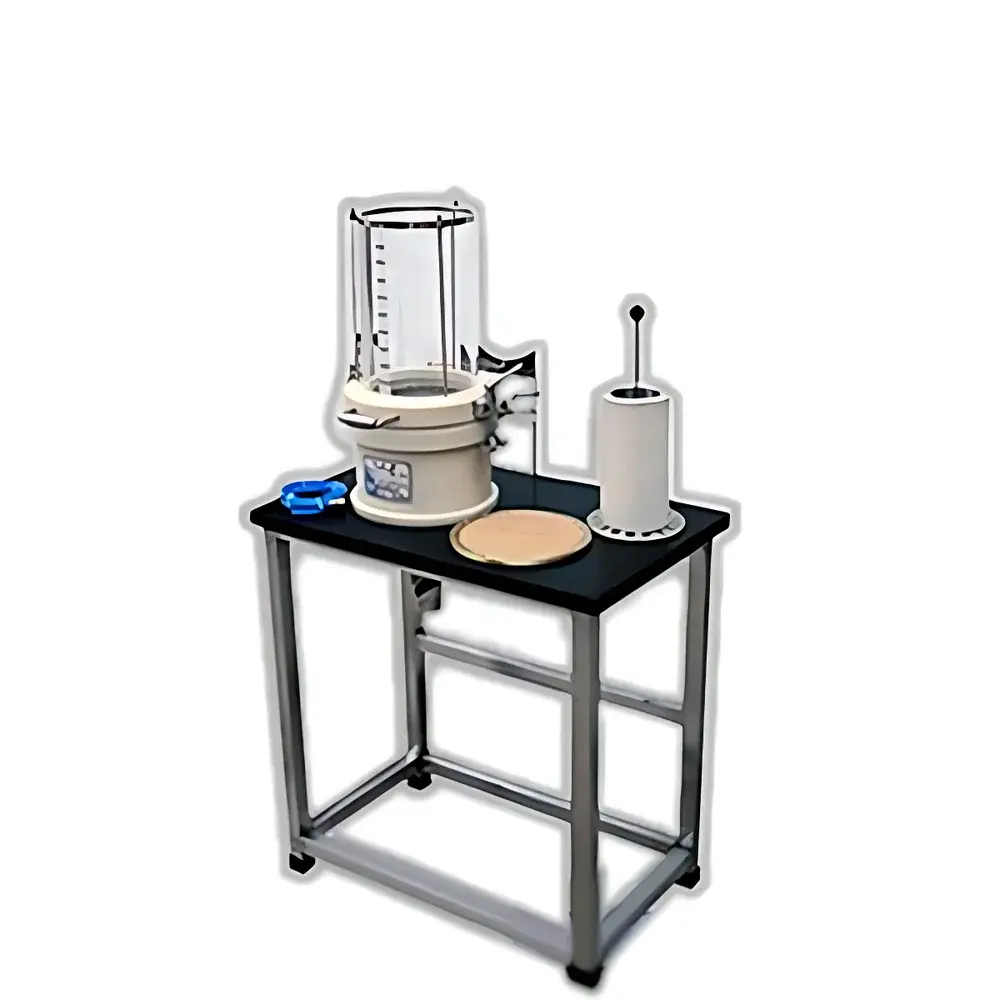
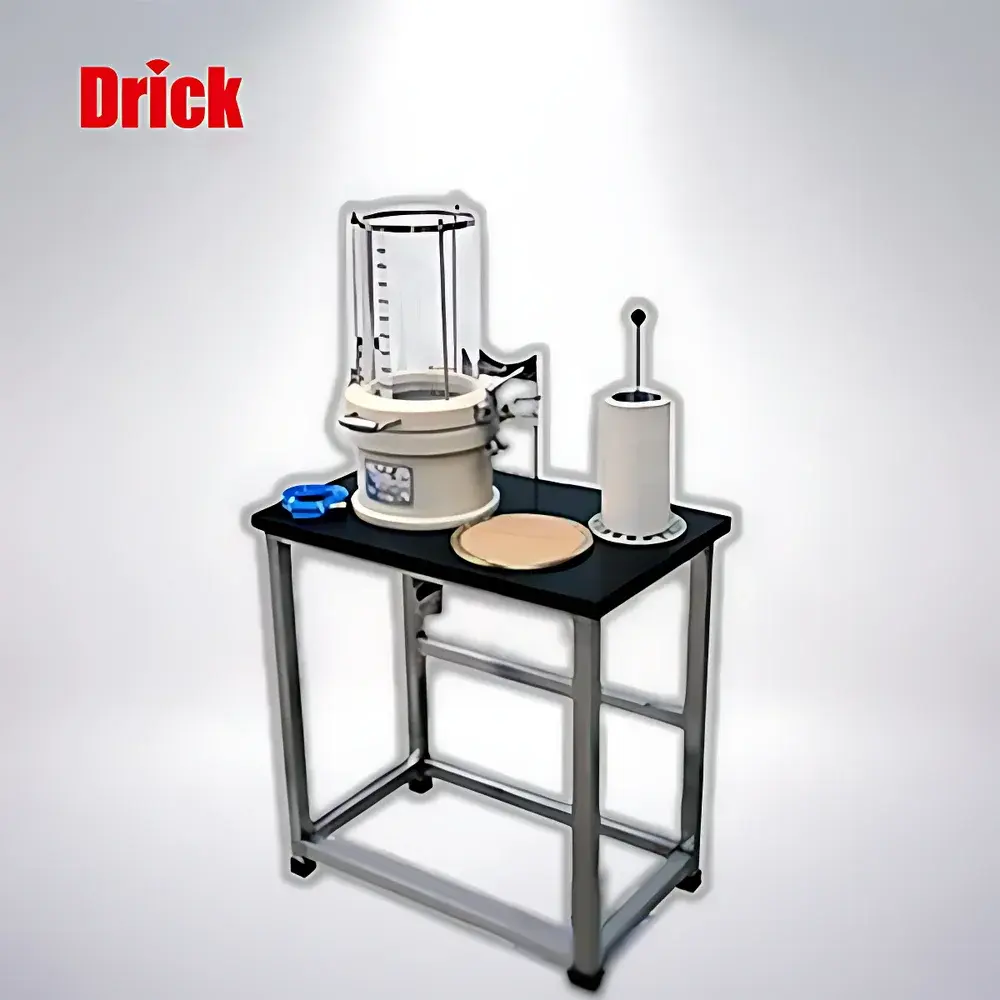
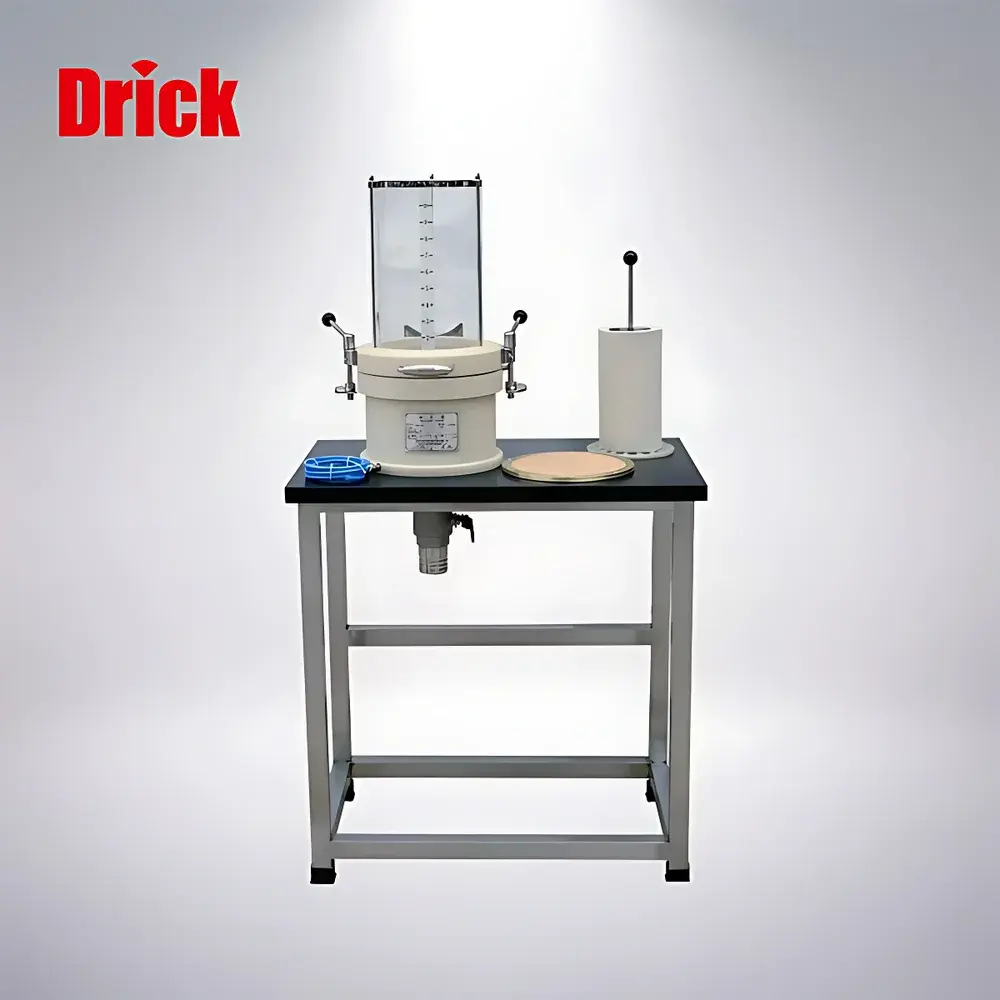
Drick DRK6L Simple Sheet Former for Laboratory Paper Physical Property Testing
| Brand | Drick |
|---|---|
| Origin | Shandong, China |
| Manufacturer Type | Direct Manufacturer |
| Country of Origin | China |
| Model | DRK6L Simple Sheet Former |
| Price | USD 7,000 (FOB Qingdao) |
| Sheet Diameter | 200 mm |
| Forming Cylinder Capacity | 10 L |
| Water Consumption per Cycle | 14 L |
| Overall Dimensions | 940 mm × 600 mm × 1400 mm |
Overview
The Drick DRK6L Simple Sheet Former is a benchtop laboratory instrument engineered for standardized handsheet formation in pulp and paper research and quality control environments. It operates on the principle of vacuum-assisted drainage through a porous wire mesh, enabling reproducible preparation of uniform, air-dried circular paper sheets (Ø200 mm) from dilute fiber suspensions. Designed in accordance with core standards including ISO 5269-1, TAPPI T205 sp, and GB/T 28256, the DRK6L supports compliant sample preparation for downstream physical property testing—such as tensile strength (ISO 1924), burst resistance (ISO 2758), tear resistance (ISO 1974), and thickness (ISO 534). Its robust mechanical architecture, manually controlled vacuum system, and fixed-diameter forming cylinder ensure minimal operator-induced variability, making it suitable for routine use in QC labs, R&D centers, and academic pulp & paper laboratories where traceability and inter-laboratory comparability are critical.
Key Features
- Vacuum-driven sheet formation using a precision-machined Ø200 mm stainless-steel forming cylinder with fine-wire mesh support—ensuring consistent sheet geometry and fiber orientation.
- 10-liter capacity suspension reservoir with calibrated level markings and integrated stirrer to maintain homogeneous fiber dispersion prior to drainage.
- Manual vacuum regulation via adjustable diaphragm valve, allowing precise control over dewatering rate and final sheet consistency (typically 4–6% solids content after initial drainage).
- Modular aluminum frame with epoxy-coated steel base, optimized for stability during vacuum cycling and long-term corrosion resistance in humid lab environments.
- Low-maintenance design: no PLC or servo components; all mechanical linkages and seals are serviceable with standard tools and documented in the bilingual technical manual (English/Chinese).
- Compliant with ISO/IEC 17025 documentation requirements—includes factory calibration certificate, dimensional verification report, and material traceability for wet-end components.
Sample Compatibility & Compliance
The DRK6L accommodates a broad range of fiber types—including bleached/unbleached hardwood/softwood kraft, recycled deinked pulp (DIP), bamboo, bagasse, and nanocellulose suspensions—with typical consistency ranges of 0.1–0.5% (w/w). It supports both single-fiber and blended suspensions, provided viscosity remains below 15 mPa·s at 20°C to ensure uniform drainage. All wet-end contact surfaces (cylinder, deckle ring, drainage pan) are fabricated from 316 stainless steel, meeting FDA 21 CFR 176.170 criteria for incidental food-contact materials. The device is routinely deployed in GLP-compliant pulp evaluation workflows and aligns with ASTM D646/D6860 test method prerequisites for handsheet preconditioning. Optional accessories—including humidity-controlled drying racks (per ISO 187) and standardized deckle rings for grammage adjustment—are available under separate part numbers.
Software & Data Management
The DRK6L is a stand-alone mechanical instrument without embedded software or digital interfaces. However, it integrates seamlessly into regulated laboratory data ecosystems: operators record batch-specific parameters (pulp consistency, vacuum duration, ambient RH/T) in paper-based or LIMS-linked electronic logbooks. Each unit ships with a structured SOP template aligned with ISO/IEC 17025 clause 7.5, covering equipment setup, blank run verification, and preventive maintenance scheduling. Audit trails for calibration history and operator training records can be maintained externally in accordance with FDA 21 CFR Part 11 requirements when paired with validated electronic documentation systems.
Applications
- Routine preparation of ISO-standard Ø200 mm handsheets for physical testing in paper mills and third-party certification labs.
- Comparative evaluation of refining degree, filler retention, and retention aid efficiency across pulp batches.
- Development and validation of novel fiber blends, bio-based additives, or functional coatings requiring controlled sheet morphology.
- Teaching laboratories for pulp & paper science curricula—demonstrating fundamental drainage kinetics, formation analysis, and grammage–density relationships.
- Pre-screening of pilot-scale process changes prior to full-scale machine trials, reducing trial-and-error costs.
FAQ
What standards does the DRK6L comply with for handsheet formation?
It conforms to ISO 5269-1, TAPPI T205 sp, and GB/T 28256 for circular handsheet preparation, and supports downstream testing per ISO 1924, ISO 2758, ISO 1974, and ISO 534.
Can the DRK6L produce sheets other than Ø200 mm?
No—the forming cylinder is fixed at 200 mm diameter; alternative sizes require different tooling not supported by this model.
Is vacuum pressure digitally monitored or adjustable?
Vacuum is manually regulated via a calibrated diaphragm valve; no built-in pressure sensor or digital readout is included.
What maintenance is required for long-term reliability?
Monthly inspection of mesh integrity, quarterly lubrication of vacuum valve stem, and annual verification of cylinder concentricity using supplied alignment gauge.
Does Drick provide installation support or operator training?
Yes—standard delivery includes remote video-assisted commissioning and a 2-hour virtual SOP training session for up to three lab personnel.