
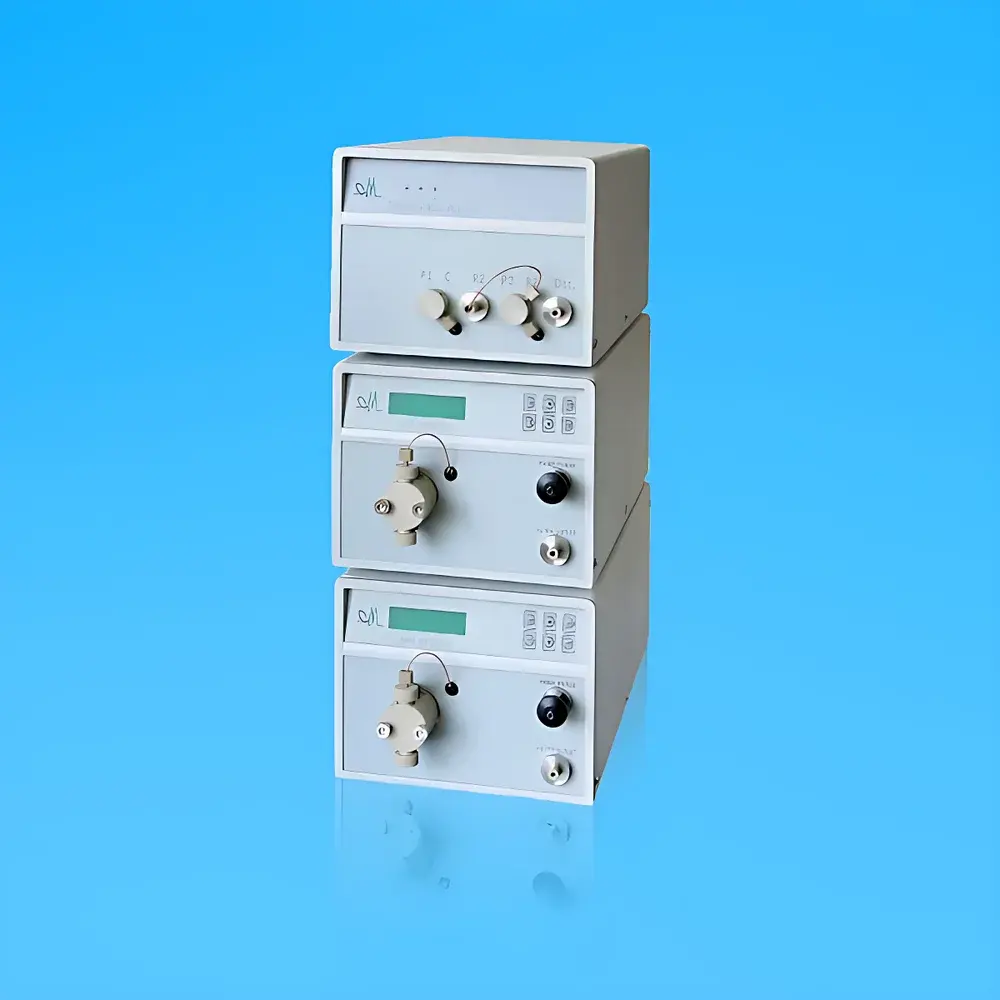
CoMetro COM6000 Post-Column Derivatization System for Glyphosate Analysis in Drinking Water per GB/T 5750.9–2023
| Brand | CoMetro |
|---|---|
| Origin | Imported |
| Manufacturer Type | Authorized Distributor |
| Model | COM6000 |
| Temperature Range | Ambient +10 °C to 150 °C |
| Derivatization Reagent Flow Rate | 0.001–10 mL/min |
Overview
The CoMetro COM6000 Post-Column Derivatization System is an engineered solution designed to meet the analytical requirements of GB/T 5750.9–2023, the latest Chinese national standard for the determination of glyphosate in drinking water. This system operates on the principle of post-column derivatization coupled with high-performance liquid chromatography (HPLC) and fluorescence detection (FLD), enabling sensitive and selective quantification of glyphosate — a polar, non-chromophoric herbicide that cannot be directly detected by conventional UV or fluorescence methods without chemical enhancement. The COM6000 introduces derivatizing reagents (e.g., o-phthalaldehyde/mercaptoethanol or FMOC-Cl) into the HPLC effluent stream downstream of the separation column, where rapid, temperature-controlled reactions generate highly fluorescent derivatives. Its integration into validated workflows supports regulatory compliance for routine monitoring of glyphosate at sub-µg/L levels in municipal drinking water supplies, as mandated under China’s updated potable water safety framework.
Key Features
- Programmable reaction coil heater with precise temperature control from ambient +10 °C to 150 °C, ensuring optimal derivatization kinetics for glyphosate and other primary amines (e.g., carbamates)
- High-accuracy dual-pump configuration supporting independent control of mobile phase and derivatization reagent flow rates (0.001–10 mL/min, resolution ≤0.001 mL/min)
- Chemically inert fluidic path constructed from PEEK, stainless steel, and fluoropolymer tubing to prevent reagent degradation or metal-catalyzed side reactions
- Modular design compatible with major HPLC platforms (Agilent, Waters, Shimadzu, Thermo Fisher) and fluorescence detectors with standard 1/16″ tubing interfaces
- Integrated leak sensor and pressure monitoring circuitry for operational safety and method robustness during extended unattended runs
- Compliant with ISO/IEC 17025 documentation requirements for calibration traceability and system suitability testing
Sample Compatibility & Compliance
The COM6000 is validated for use in multi-residue analysis of polar pesticides requiring derivatization prior to fluorescence detection. It supports official methods including GB/T 5750.9–2023 (glyphosate, carbofuran, carbaryl), HJ 960–2018 (carbamates in soil/sediment), GB 23200.112–2018 (carbamates in plant matrices), NY/T 761–2008 (multi-class pesticide screening), and HJ 1025–2019 (carbamates in solid waste). All applications leverage the system’s ability to maintain stoichiometric reagent excess and consistent residence time under defined thermal conditions — critical parameters for achieving inter-laboratory reproducibility. The system architecture conforms to GLP principles and supports audit-ready records for regulatory submissions under CNAS-accredited laboratories.
Software & Data Management
While the COM6000 operates as a hardware-integrated accessory without embedded firmware or standalone software, it is fully compatible with industry-standard chromatography data systems (CDS) such as OpenLab CDS, Empower, LabSolutions, and Chromeleon. Method parameters—including derivatization pump flow rate, reaction zone temperature, and injection timing—are programmable via the host CDS. All system events (e.g., temperature ramp completion, pressure threshold alerts) are logged through analog/digital I/O signals or optional RS-232/USB interface modules. For FDA 21 CFR Part 11 compliance, electronic records generated during COM6000-assisted analyses retain full audit trail integrity when captured within validated CDS environments, including user authentication, electronic signatures, and immutable data archiving.
Applications
- Quantitative determination of glyphosate in drinking water at detection limits ≤0.1 µg/L per GB/T 5750.9–2023
- Simultaneous analysis of carbamate pesticides (e.g., carbaryl, carbofuran, methomyl) in environmental and food matrices using OPA or FMOC derivatization chemistries
- Support for amino acid profiling in clinical or biopharmaceutical QC labs where post-column ninhydrin or OPA derivatization is required
- Method development for emerging polar contaminants requiring enhanced detectability via derivatization-enhanced fluorescence or electrochemical detection
- Routine QC of derivatization reagent stability and reaction efficiency through system suitability tests (e.g., peak area RSD ≤3%, retention time shift ≤0.1 min)
FAQ
Is the COM6000 compatible with reversed-phase HPLC columns?
Yes — the system is agnostic to column chemistry and is routinely deployed with both anion-exchange (e.g., Comatex SAX) and reversed-phase columns, provided mobile phase compatibility with derivatization reagents is verified.
What derivatization reagents are recommended for glyphosate according to GB/T 5750.9–2023?
The standard specifies o-phthalaldehyde (OPA) in combination with 2-mercaptoethanol (ME) as the primary derivatization system; alternative protocols using FMOC-Cl are also supported with appropriate method validation.
Does the COM6000 include built-in data logging or remote diagnostics?
No — it functions as a dedicated hardware module; all data acquisition and diagnostics are handled by the connected HPLC data system.
Can the COM6000 be used for EPA Method 547.1 (glyphosate in drinking water)?
While not pre-validated for EPA methods, its operational parameters align with the technical requirements of EPA 547.1; full method transfer requires laboratory-specific validation per EPA guidance.
What maintenance intervals are recommended for long-term reliability?
Daily flushing with compatible solvents, quarterly inspection of reaction coils and fittings, and annual calibration of temperature and flow sensors are advised per CoMetro’s Maintenance Protocol M-PCD-2023.




