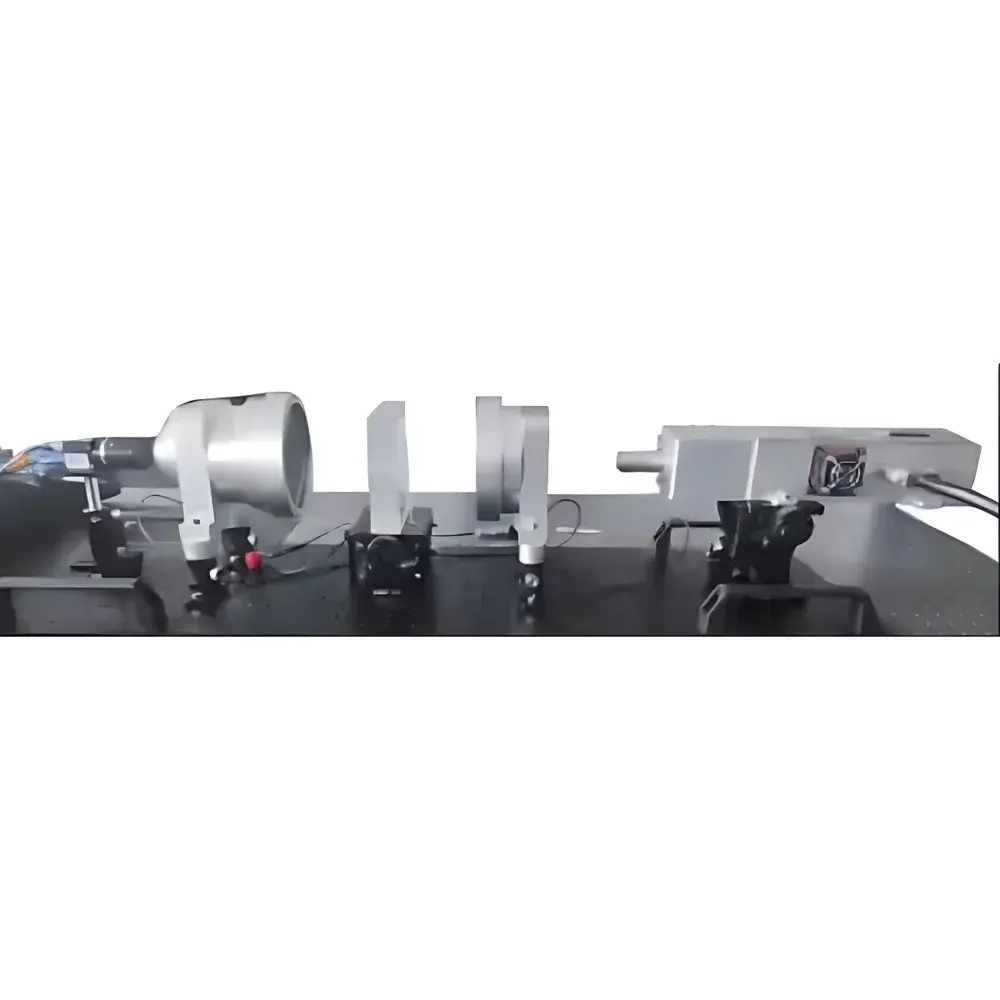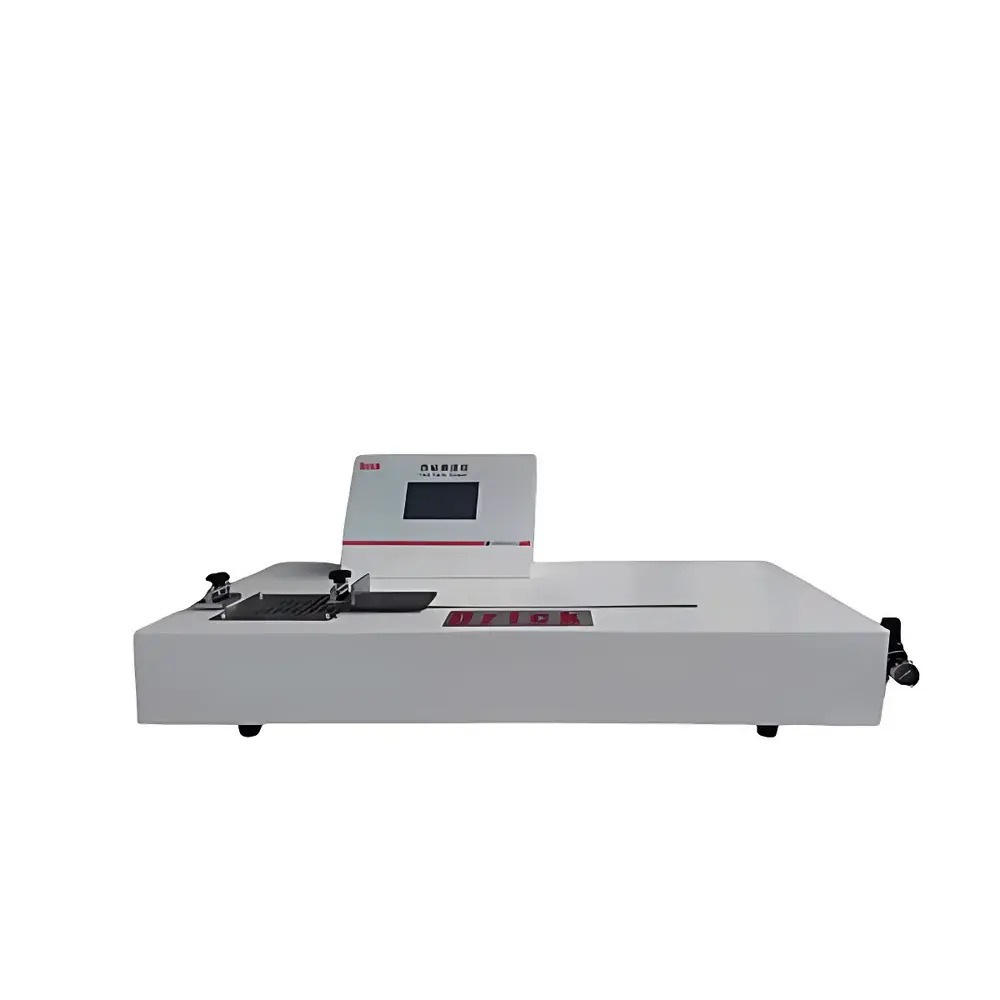

Drick HTT-L1 Touchscreen Color Display Hot Tack Tester (ASTM-Compliant)
| Brand | Drick |
|---|---|
| Origin | Shandong, China |
| Manufacturer Type | Direct Manufacturer |
| Region of Origin | Domestic (China) |
| Model | HTT-L1 |
| Price Range | USD 7,000 – 14,000 |
| Load Speed | 0.1–1400 cm/min |
| Force Resolution | 0.001 N |
| Force Accuracy | ±0.2% FS |
| Sampling Rate | 200 Hz |
| Sealing Temperature Range | Ambient to 200 °C |
| Temperature Control Accuracy | ±0.5 °C |
| Sealing Pressure Range | 100–500 kPa |
| Pressure Resolution | 0.1 kPa |
| Sealing Time Range | 10–99999 ms |
| Data Storage Capacity | 511 test batches × 10 replicates per batch |
| Compliance Standards | ASTM F1921 (Hot Tack), ASTM F2029 (Heat Seal Strength) |
Overview
The Drick HTT-L1 Touchscreen Color Display Hot Tack Tester is an ASTM-compliant, integrated thermal bonding evaluation system engineered for precise measurement of hot tack strength—the transient adhesive force developed between thermoplastic seal layers immediately after heat sealing and before full cooling. Based on the fundamental principle of controlled-force tensile separation under defined thermal and temporal conditions, the HTT-L1 implements a dual-phase mechanical architecture: a high-speed, digitally regulated pneumatic sealing station followed by a synchronized, variable-rate peel or tensile separation module. This configuration enables direct, real-time quantification of interfacial cohesion at elevated temperatures—critical for optimizing packaging line speeds, validating seal integrity in high-speed vertical form-fill-seal (VFFS) operations, and ensuring compatibility with polyolefin, polyester, and metallized laminates used in pharmaceutical blister packaging, food pouches, and medical device sterile barrier systems.
Key Features
- High-resolution ARM-based embedded control system with 800 × 480 TFT color touchscreen interface, offering intuitive navigation and microcomputer-style operation without external PC dependency.
- Continuously adjustable load speed from 0.1 to 1400 cm/min—fully compliant with ASTM F1921 Method B requirement for hot tack peel testing at 1200 cm/min.
- Dual-mode heating system with digital PID temperature regulation, delivering rapid thermal stabilization and ±0.5 °C uniformity across the sealing bar surface.
- Integrated high-precision digital pressure transducer and electro-pneumatic pressure controller, enabling repeatable, digitally set sealing pressures from 100 to 500 kPa with 0.1 kPa resolution.
- Real-time force acquisition at 200 Hz sampling rate and 0.001 N resolution, supporting statistically robust data capture for dynamic hot tack profiles.
- Onboard statistical engine calculating mean, maximum, minimum, and standard deviation for up to 10 replicate tests per batch—automatically assigned and logged with user-defined batch identifiers.
- Multi-layer hardware and software protection architecture, including overpressure cutoff, thermal runaway prevention, emergency stop logic, and firmware-level fault diagnostics.
Sample Compatibility & Compliance
The HTT-L1 accommodates standard ASTM and ISO specimen geometries (e.g., 15 mm × 100 mm strips) cut from flexible packaging films, laminates, foils, and coated papers. It supports three primary test modes within a single platform: hot tack (ASTM F1921), heat seal strength (ASTM F2029), and conventional tensile testing—enabling comparative analysis of thermal bonding kinetics versus cooled-state seal integrity. All test parameters—including dwell time (10–99999 ms), temperature ramp profiles, pressure setpoints, and separation velocity—are programmable and auditable. The instrument meets essential functional requirements for GLP-compliant environments, with timestamped, non-editable test records stored internally. While not inherently 21 CFR Part 11 validated out-of-box, its deterministic firmware behavior, immutable batch logging, and absence of remote connectivity make it suitable for validation under internal SOPs aligned with FDA-regulated packaging development workflows.
Software & Data Management
The HTT-L1 operates autonomously via its embedded Linux-based OS and requires no host computer for routine operation. Test configurations are saved as named protocols; each executed test is archived with batch ID, timestamp, operator code (optional), and full parameter traceability. Internal memory retains up to 511 batches, each containing up to 10 individual test results—with raw force-time curves and summary statistics preserved. Data export is supported via USB flash drive in CSV format for integration into LIMS or statistical process control (SPC) platforms. The interface supports multilingual menu overlays (English default), and all numeric inputs—including batch ID entry—utilize an on-screen keypad to eliminate external keyboard dependency and reduce contamination risk in cleanroom-adjacent labs.
Applications
- Optimization of heat seal initiation temperature and dwell time for high-speed packaging lines handling snack foods, dairy pouches, and retortable meals.
- Quantitative assessment of hot tack decay profiles to predict seal failure during downstream filling, capping, or accumulation conveyance.
- Material qualification of new sealant resins (e.g., ionomer-modified LDPE, ethylene-acrylate copolymers) against legacy formulations.
- Root-cause analysis of seal leakage in sterile barrier systems when correlated with DSC-measured melt enthalpy and rheological data.
- Supporting ASTM F1921-based validation protocols for pharmaceutical blister lidding foil adhesion under accelerated aging conditions.
- Quality assurance benchmarking across production shifts using automated pass/fail thresholds based on hot tack mean ± 2σ limits.
FAQ
What distinguishes hot tack testing from standard heat seal strength testing?
Hot tack measures the cohesive strength of a seal while still above its glass transition temperature—typically within milliseconds to seconds post-sealing—whereas heat seal strength evaluates the cooled, fully solidified bond.
Does the HTT-L1 support automatic calibration verification?
Yes—built-in self-diagnostic routines verify sensor zero offset and amplifier gain stability prior to each test sequence; NIST-traceable external force calibration kits are recommended annually.
Can test methods be password-protected to prevent unauthorized modification?
Operator-level access control is implemented: administrator passwords restrict editing of method templates, system settings, and data deletion functions.
Is the sealing jaw alignment adjustable for uneven film tension?
The upper sealing bar incorporates precision-ground parallelism adjustment screws, allowing fine-tuning of contact uniformity across the 150 mm active width.
How is thermal drift compensated during extended testing sessions?
The PID controller continuously monitors ambient and block temperature gradients using dual RTD sensors; compensation algorithms dynamically adjust power delivery to maintain setpoint accuracy within ±0.5 °C over 8-hour continuous operation.