
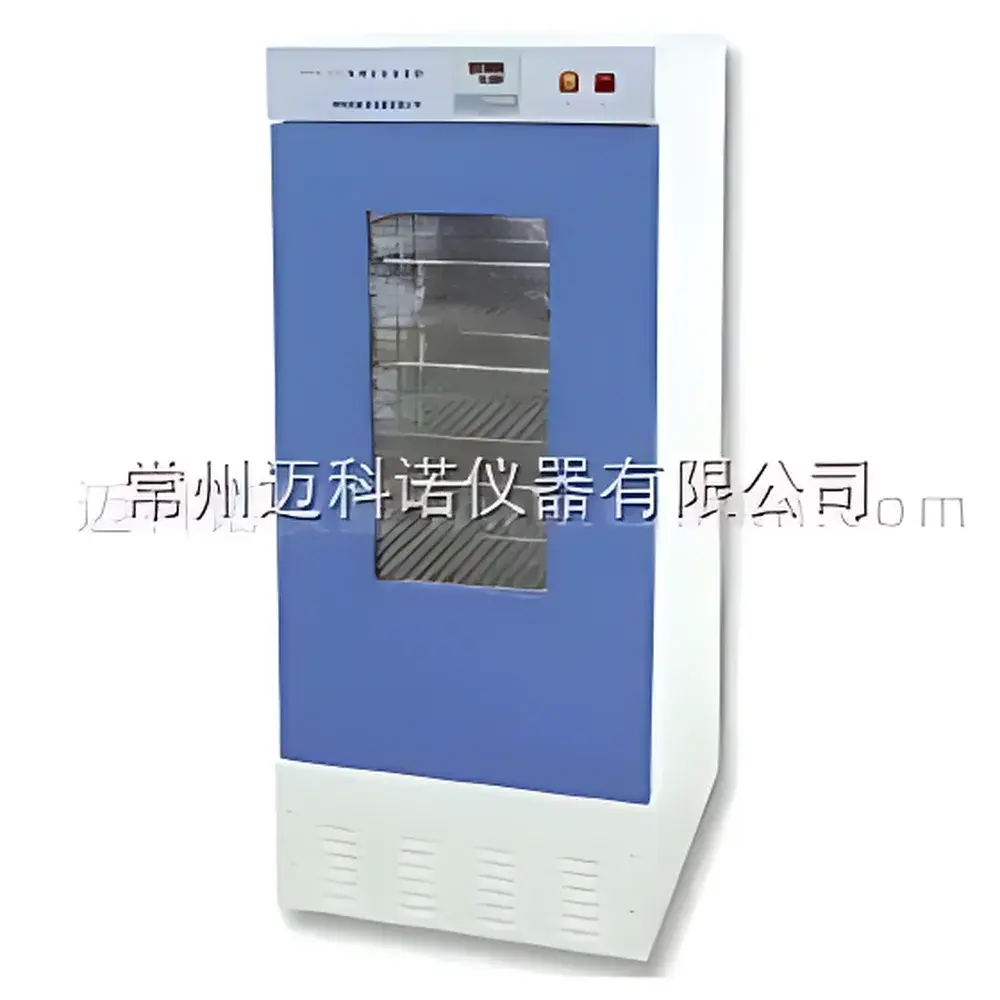
MKN SPX-250 Biochemical Incubator
| Brand | MKN |
|---|---|
| Model | SPX-250 |
| Capacity | 250 L |
| Temperature Range | 5–50 °C |
| Temperature Control Accuracy | ±0.5 °C |
| Temperature Uniformity | ±0.5 °C |
| Power Supply | AC 220 V ±10%, 50 Hz ±2% |
| Rated Power | ≤500 W |
| Operating Environment | 0–40 °C, RH ≤85% |
| Construction | Cold-rolled steel exterior with powder coating, stainless steel interior chamber |
| Insulation | Polyurethane foam |
| Display | LED digital display (optional LCD upgrade) |
| Cooling/Heating | Dual-mode thermoelectric or compressor-based system (standard configuration includes refrigeration compressor with anti-short-cycle protection and delayed restart logic) |
Overview
The MKN SPX-250 Biochemical Incubator is a precision-controlled, dual-mode (heating and cooling) environmental chamber engineered for stable, long-term maintenance of biological samples under defined thermal conditions. Designed in accordance with ISO 13408-1 (aseptic processing) and aligned with GLP-compliant laboratory infrastructure requirements, the SPX-250 employs a microprocessor-based PID temperature regulation system to maintain setpoint stability across its operational range of 5–50 °C. Its thermally optimized chamber architecture—featuring high-density polyurethane insulation, double-layered tempered glass door with anti-fog treatment, and a laminar air distribution system—ensures minimal thermal gradient (<±0.5 °C uniformity) and rapid recovery after door opening. The unit operates continuously without duty-cycle limitation, supporting unattended incubation protocols essential for microbial culture expansion, enzyme activity assays, cell line propagation, and environmental stress testing.
Key Features
- Microprocessor-driven PID temperature controller with real-time LED digital display (LCD optional), offering ±0.5 °C control accuracy and repeatability verified per ASTM E2797–21 calibration guidelines.
- Dual-mode thermal management: integrated refrigeration compressor with built-in anti-short-cycling logic and 3-minute power-loss delay restart to extend compressor service life and ensure system reliability.
- Chamber construction: electropolished 304 stainless steel interior (Ra ≤0.8 µm surface finish) for corrosion resistance and ease of decontamination; external housing of cold-rolled carbon steel with epoxy-polyester powder coating (ISO 20468 Class C2 corrosion resistance).
- Optimized airflow design: rear-mounted centrifugal blower with adjustable directional vents ensures uniform temperature distribution and minimizes stratification—validated by 9-point thermal mapping per ICH Q5C Annex 2.
- Integrated interior lighting: cool-white LED panel (CCT 6000 K, <1 W power draw) with independent switch, enabling non-invasive visual monitoring without thermal load interference.
- Safety architecture: over-temperature cut-off (independent mechanical thermostat), ground-fault circuit interrupter (GFCI)-compatible input, and condensate management tray for humidified operation scenarios.
Sample Compatibility & Compliance
The SPX-250 accommodates standard laboratory vessels including Petri dishes (up to 150 mm), multi-well plates (6–96-well), culture flasks (T25–T225), and glass serum bottles. Its chamber dimensions (520 × 480 × 1020 mm W×D×H) allow vertical stacking of up to three full-height shelf levels (adjustable at 30 mm intervals). The unit complies with IEC 61010-1:2010 for electrical safety in laboratory equipment and meets EMC requirements per CISPR 11 Group 1, Class B. While not certified for medical device manufacturing (ISO 13485), it supports GxP-aligned workflows when deployed with documented IQ/OQ protocols and calibrated traceable to NIST-traceable standards.
Software & Data Management
The base configuration includes local data logging via internal memory (10,000-point capacity, timestamped at 1-minute intervals), exportable via USB port in CSV format. Optional RS-485 Modbus RTU interface enables integration into centralized building management systems (BMS) or LIMS platforms. When paired with MKN’s optional DataBridge™ software (v3.2+), users gain access to audit-trail-enabled operation logs, alarm history with root-cause tagging, and automated report generation compliant with FDA 21 CFR Part 11 requirements—including electronic signatures, user role-based access control, and immutable event records.
Applications
- Biochemical assay development requiring precise low-temperature stabilization (e.g., restriction enzyme digestion at 4–25 °C).
- Microbial growth kinetics studies across mesophilic ranges (e.g., E. coli, Bacillus subtilis, yeast strains) under controlled aeration conditions.
- Environmental simulation for ecotoxicology testing (OECD 201, 202) and biodegradation assessment (ISO 14851/14852).
- Long-duration seed germination and plant tissue culture experiments (ISTA-certified protocols).
- Stability testing of diagnostic reagents and reference standards per USP and ICH Q1A(R2).
- QC/QA support for pharmaceutical water systems (PW/WFI storage loop monitoring at 25 °C).
FAQ
What is the maximum ambient temperature at which the SPX-250 maintains 5 °C internally?
At an ambient temperature of 30 °C and 60% RH, the unit achieves and sustains 5 °C with ≤15-minute stabilization time post-door opening (per ISO 15197:2013 Annex D test protocol).
Is the incubator suitable for CO₂-sensitive applications?
No—this model lacks CO₂ concentration control or gas-tight sealing; it is designed exclusively for temperature-regulated air environments.
Can the LED display be retrofitted with a touchscreen LCD module in-field?
Yes—MKN offers factory-authorized LCD upgrade kits (P/N SPX-LCD-KIT-250) compatible with units manufactured after Q3 2022; installation requires firmware update v2.4.1 or later.
Does the unit include validation documentation for GMP environments?
Standard delivery includes Factory Acceptance Test (FAT) report and calibration certificate (NIST-traceable RTD probe); User Requirement Specification (URS)-driven IQ/OQ templates are available upon request.
What maintenance intervals are recommended for the refrigeration system?
Compressor oil and filter-drier replacement every 24 months under continuous operation; annual verification of evaporator coil cleanliness and condensate drain integrity is advised.




