
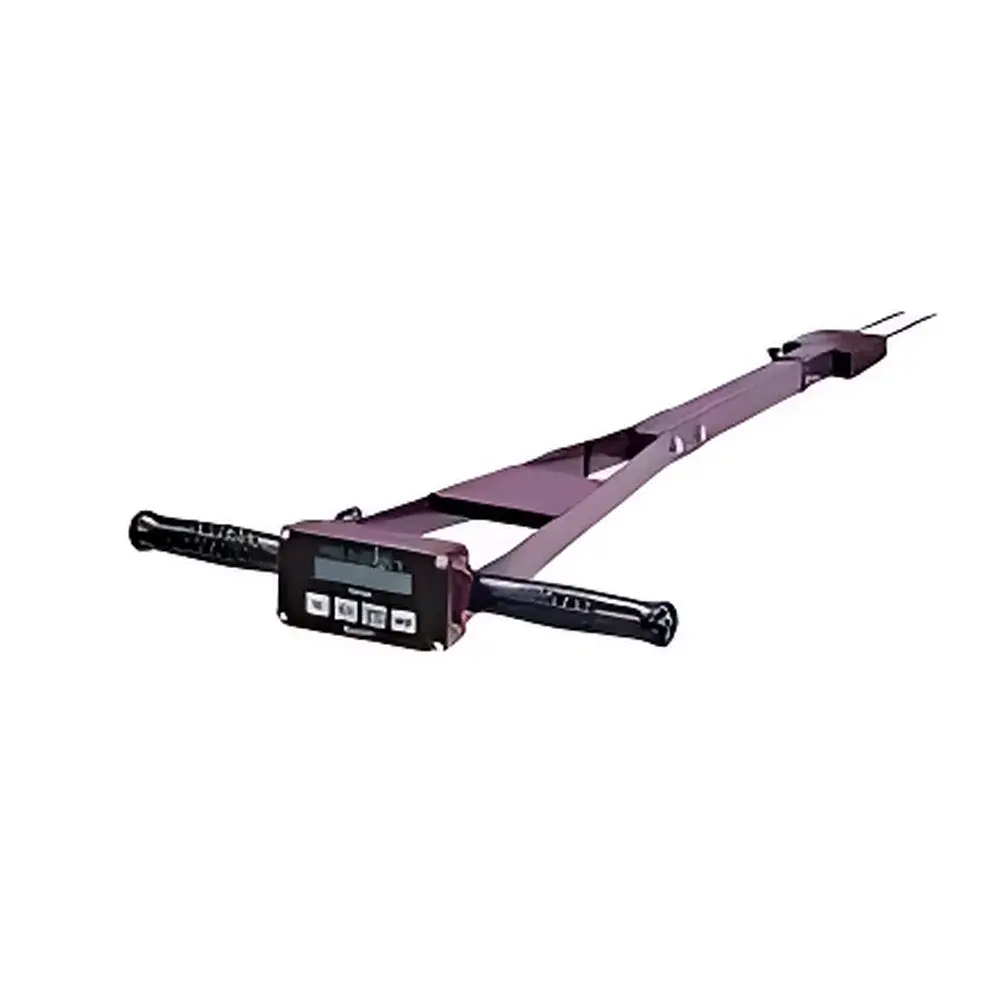
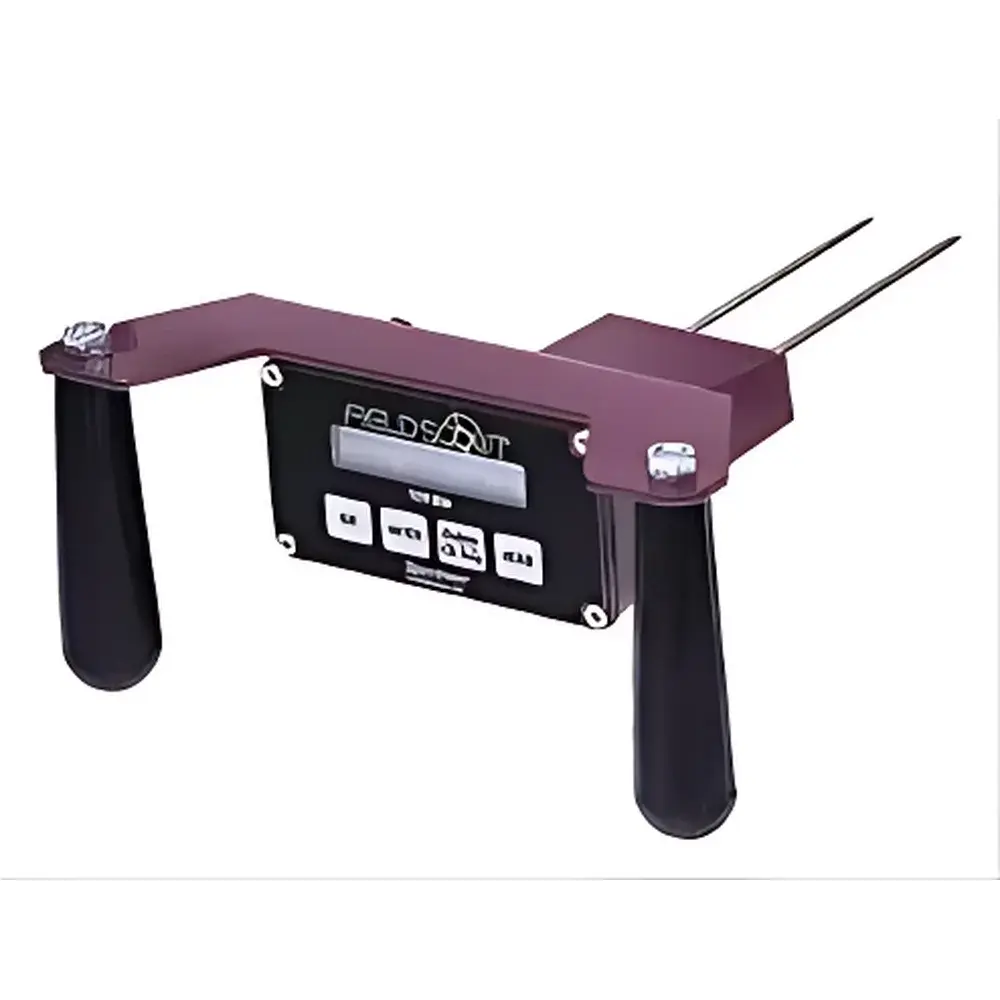
Acclima TDR300 Time-Domain Reflectometry Soil Moisture Profiler
| Origin | USA |
|---|---|
| Supplier Type | Authorized Distributor |
| Import Status | Imported |
| Model | TDR300 |
| Pricing | Available Upon Request |
Overview
The Acclima TDR300 is a precision time-domain reflectometry (TDR) soil moisture profiler engineered for high-reproducibility volumetric water content (θv) measurement in field and laboratory environments. Unlike capacitance-based sensors, the TDR300 operates on the physical principle of electromagnetic pulse propagation velocity along parallel-rod waveguides embedded in soil—where dielectric permittivity (εr) correlates directly with θv via established calibration models (e.g., Topp et al., 1980). This physics-based approach ensures minimal sensitivity to soil salinity (EC < 2 dS/m) and texture-induced drift when used within validated clay-content limits (<30% by mass). The instrument delivers continuous, non-destructive profiling across discrete depth intervals using interchangeable probe lengths (3.8 cm, 7.5 cm, 12 cm, and 20 cm), enabling stratified root-zone monitoring essential for irrigation scheduling, drought assessment, and hydrological modeling.
Key Features
- Two operational modes: Volumetric Water Content (VWC) mode for absolute θv reporting (m3/m3 or % vol), and Re-Irrigation Mode for user-defined relative moisture scaling (0–100 index)
- Dual-soil calibration architecture: Separate empirical algorithms optimized for standard mineral soils and high-clay soils (≥25% clay), improving accuracy under variable textural conditions
- Integrated data logger with 12-month battery life (4 × AA alkaline cells), supporting up to 16,384 timestamped readings per probe channel
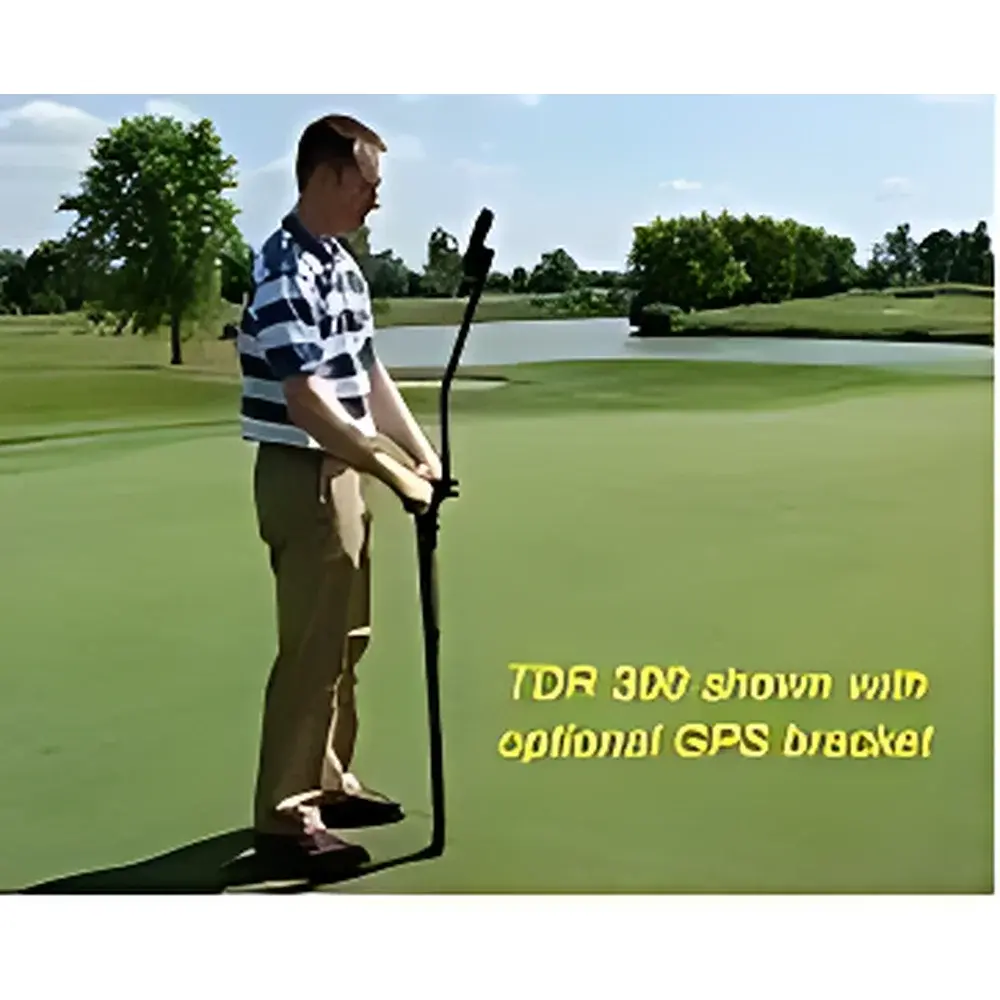
- RS-232 serial interface compliant with EIA/TIA-232-F standards, enabling direct integration with differential GPS (DGPS) receivers for georeferenced spatial mapping
- Ruggedized aluminum housing (IP67-rated) and stainless-steel probe rods designed for long-term burial in agricultural, ecological, and civil infrastructure applications
Sample Compatibility & Compliance
The TDR300 is validated for use in mineral soils ranging from sandy loam to heavy clay, provided bulk electrical conductivity remains below 2 dS/m and clay content does not exceed 30% (w/w). It is not recommended for organic soils (e.g., peat >30% OM), saline-sodic soils (EC > 4 dS/m), or frozen ground. The device complies with FCC Part 15 Class B emissions requirements and meets IEC 61326-1:2013 criteria for electromagnetic compatibility in industrial environments. While not certified for GMP/GLP-regulated clinical trials, its data integrity features—including immutable internal timestamps, sequential record numbering, and RS-232 checksum validation—support audit-ready workflows aligned with ISO/IEC 17025:2017 documentation practices.
Software & Data Management
The TDR300 ships with Acclima’s proprietary PC-based configuration and visualization software, supporting firmware updates, probe calibration import, and real-time data streaming. Raw waveform files (.tdr) are exportable in CSV format for third-party analysis in MATLAB, R, or Python (NumPy/Pandas). Integration with SpecMap™ enables geospatial interpolation (IDW, kriging) and contour mapping of moisture gradients across fields or watersheds. All software modules enforce role-based access control and generate electronic audit trails compliant with FDA 21 CFR Part 11 requirements for electronic records and signatures—provided system-level IT controls (e.g., domain authentication, encrypted storage) are implemented per organizational SOPs.
Applications
- Precision irrigation management in row crops, orchards, and vineyards through dynamic root-zone moisture threshold triggering
- Long-term soil moisture network deployment for climate resilience studies and watershed-scale hydrologic budgeting
- Validation of satellite-based soil moisture products (e.g., SMAP, Sentinel-1) at in situ ground-truth sites
- Soil physics research involving infiltration dynamics, evapotranspiration partitioning, and preferential flow characterization
- Environmental compliance monitoring for landfill cover systems, remediation sites, and engineered bioswales
FAQ
What is the measurement principle underlying the TDR300?
It uses time-domain reflectometry: a nanosecond-scale electromagnetic pulse is transmitted along parallel rods; the travel time delay between incident and reflected signals determines soil dielectric permittivity, which is converted to volumetric water content using soil-specific calibration equations.
Can the TDR300 be deployed in saline soils?
It maintains ±3% accuracy only when bulk EC remains below 2 dS/m and clay content is under 30%. For higher salinities, consider supplemental EC compensation or alternative sensing modalities such as neutron probe or cosmic-ray neutron sensing.
Does the instrument support remote telemetry?
The TDR300 itself lacks built-in cellular or LoRaWAN connectivity; however, its RS-232 output can be interfaced with external data loggers (e.g., Campbell Scientific CR1000X) equipped with radio or cellular modems for unattended transmission.
How is probe length selected for installation?
Probe length should match the target monitoring depth: 3.8 cm for surface evaporation studies, 7.5–12 cm for shallow-root crops, and 20 cm for deep-rooted perennials or vadose zone profiling—always ensuring full rod burial and minimal air gaps during insertion.
Is calibration required before field deployment?
Factory calibration covers generic mineral soils; site-specific calibration using gravimetric sampling is recommended for highest accuracy, particularly in high-organic or high-clay matrices where default algorithms may introduce bias.







