
Archimed MIJ-03 Soil Oxygen Concentration Sensor
| Brand | Archimed |
|---|---|
| Origin | Japan |
| Model | MIJ-03 |
| Principle | Galvanic Oxygen Sensor with Porous Membrane |
| Measurement Range | 0–20.9% O₂ (full scale) |
| Output Signal | 45–65 mV (linear vs. O₂ concentration) |
| Accuracy | ±0.5% O₂ |
| Response Time (t₉₀) | 240 ± 30 s |
| Operating Temperature | 0–40 °C (extended range –10 to +60 °C with integrated thermistor compensation) |
| Storage Temperature | –20 to +60 °C |
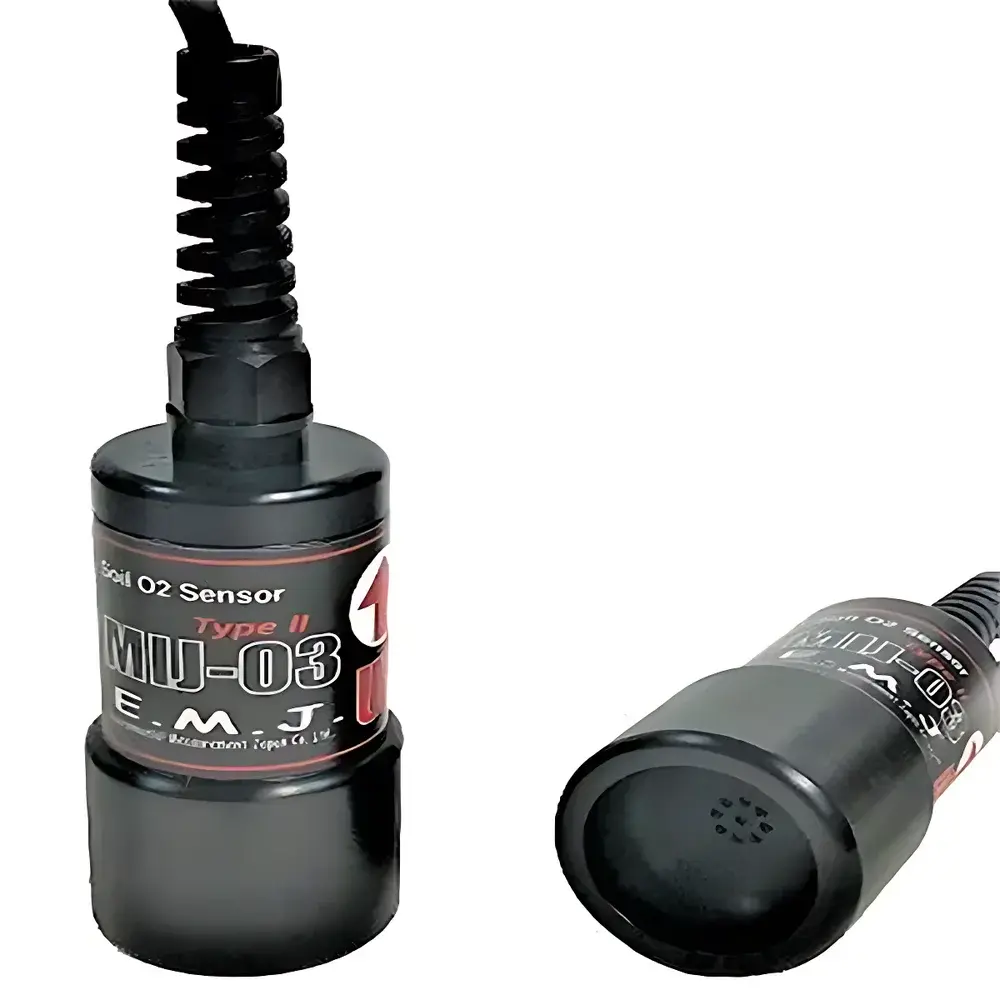
| Sensor Body Material | Rigid thermoplastic housing |
| Dimensions | Ø40 mm × 78 mm (sensor head) |
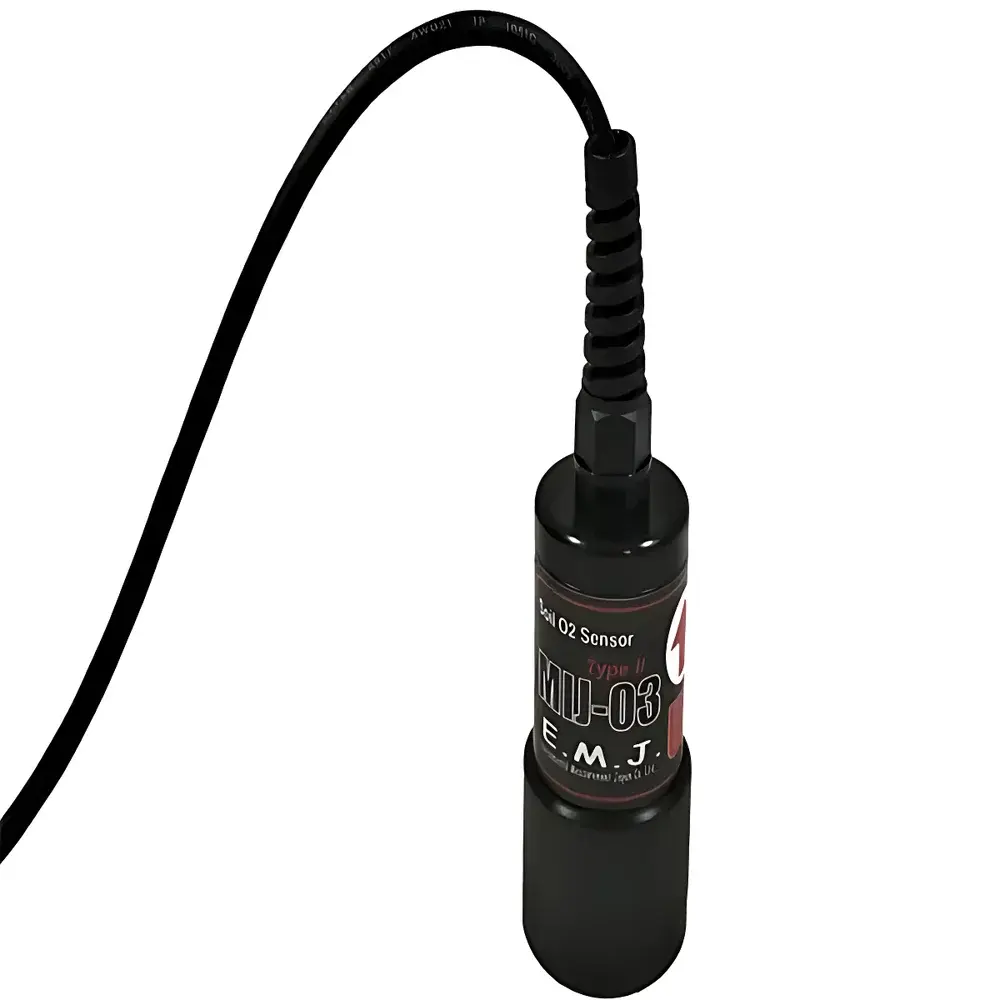
| Cable Length | ~5 m (shielded, color-coded: red/+ , black/–) |
| Weight | ~220 g (including cable) |
| Temperature Compensation | Built-in NTC thermistor |
| Pressure Compensation | Internal air bubble reference |
| Humidity Effect | Negligible at 0% RH |
| Zero Output | 0 mV at 0% O₂ |
| Compliance | Designed for long-term in situ deployment per ISO 11274 (soil physical properties), compatible with GLP-aligned data acquisition systems |
Overview
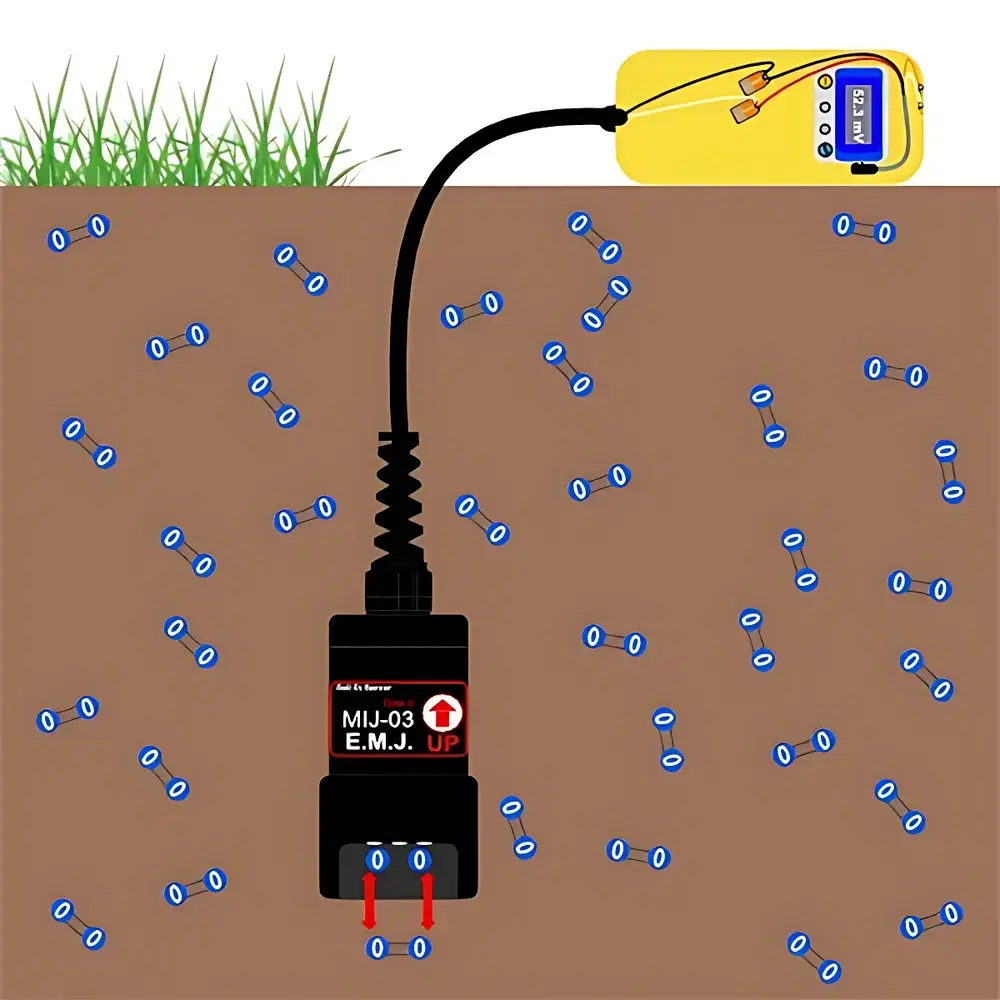
The Archimed MIJ-03 Soil Oxygen Concentration Sensor is a galvanic-type electrochemical sensor engineered for continuous, in situ monitoring of molecular oxygen (O₂) partial pressure in unsaturated soil matrices. It operates on the principle of spontaneous oxygen reduction at a gold cathode within a sealed, aqueous electrolyte cell — a configuration classified under ISO 8573-1 as a primary galvanic oxygen sensor. The sensor employs a dual-layer polytetrafluoroethylene (PTFE) membrane system: an outer hydrophobic PTFE barrier prevents liquid water ingress while permitting selective diffusion of O₂ molecules, and an inner PTFE layer maintains stable electrolyte geometry around the Pb anode and Au cathode. As O₂ diffuses through both membranes, it undergoes catalytic reduction at the cathode (O₂ + 2H₂O + 4e⁻ → 4OH⁻), generating a microampere-level current proportional to ambient O₂ partial pressure. This current is converted to a low-impedance voltage output (45–65 mV full-scale) via an internal precision shunt resistor. Unlike optical or paramagnetic sensors, the MIJ-03 requires no external power supply, making it ideal for remote, battery-limited, or solar-powered environmental monitoring networks.
Key Features
- Self-powered galvanic operation — zero power consumption during measurement
- Integrated NTC thermistor for real-time temperature compensation across 0–40 °C (extended to –10 to +60 °C)
- Passive pressure stabilization via internal air bubble reference chamber
- Robust thermoplastic housing rated for long-term burial (≥10 years service life under typical field conditions)
- No zero-point calibration required: 0% O₂ yields precisely 0 mV output
- Immune to rainwater saturation and transient surface flooding due to hydrophobic PTFE membrane architecture
- Linear analog voltage output (mV) compatible with standard data loggers (e.g., Campbell Scientific CR series, Onset HOBO, Delta-T Devices DL2e)
- Minimal drift: <±2% full-scale deviation over 12 months under stable soil conditions (per manufacturer accelerated aging tests)
Sample Compatibility & Compliance
The MIJ-03 is validated for use in mineral soils, peat, compost, and horticultural substrates with bulk densities between 0.8–1.8 g/cm³ and volumetric water content up to 45%. It is not intended for submerged or permanently saturated environments (e.g., paddy fields or wetland sediments), where anaerobic conditions may accelerate anode passivation. The sensor complies with ISO 11274 (soil physical characterization), ASTM D422 (particle size analysis context), and supports adherence to GLP documentation requirements when paired with audit-trail-capable data loggers. Its analog output design ensures compatibility with FDA 21 CFR Part 11–compliant acquisition platforms when configured with electronic signature and change-control modules.
Software & Data Management
As a passive analog transducer, the MIJ-03 does not include embedded firmware or digital communication protocols. Data acquisition relies entirely on external logging hardware. Users typically deploy it with programmable loggers supporting differential voltage input (±100 mV range, 16-bit resolution minimum). Calibration coefficients are applied post-acquisition using linear transformation: [O₂ %] = (Vout − Vzero) × (20.9 / Vspan), where Vzero = 0 mV and Vspan = nominal 55 mV (midpoint of 45–65 mV spec). Temperature-compensated outputs can be derived using the built-in thermistor’s resistance curve (standardized β-parameter equation). Raw time-series data export formats (CSV, Excel) integrate seamlessly into MATLAB, Python (NumPy/Pandas), or commercial environmental analytics suites such as EcoTech ECOLOG or Aqua4D Soil Analytics.
Applications
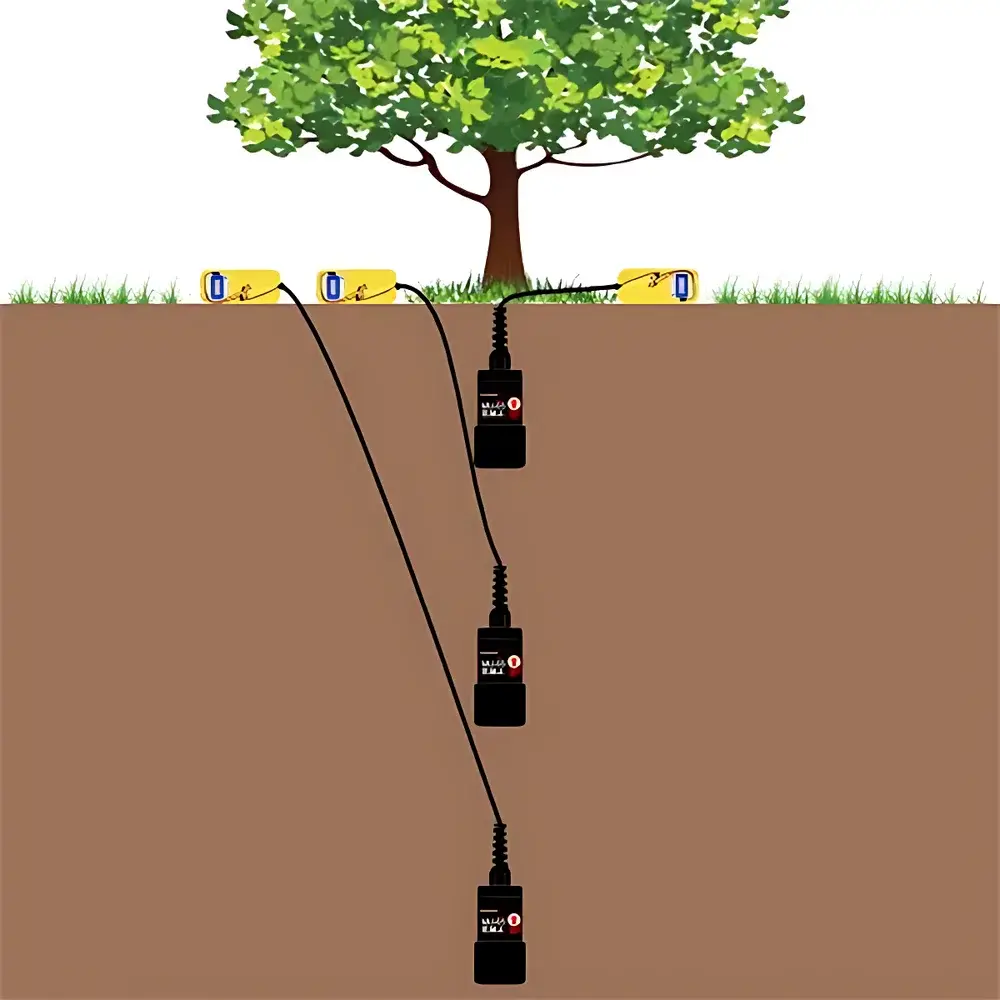
- Root-zone aeration profiling in precision agriculture and controlled-environment horticulture
- Long-term monitoring of soil respiration dynamics in carbon sequestration studies
- Validation of soil gas transport models (e.g., diffusion coefficients, tortuosity estimation)
- Early detection of compaction-induced hypoxia in orchard and vineyard root zones
- Assessment of bioremediation progress in petroleum-contaminated soils
- Greenhouse substrate aeration optimization for hydroponic and aquaponic support media
- Field validation of denitrification thresholds in nitrogen management trials
FAQ
Does the MIJ-03 require periodic recalibration?
No. The sensor exhibits inherent zero stability (0% O₂ = 0 mV) and does not require zero or span adjustments under normal operating conditions. Annual verification against a certified gas standard (e.g., 0% and 20.9% O₂ in N₂ balance) is recommended for regulatory-grade deployments.
Can it be installed horizontally or only vertically?
Both orientations are supported. The sensor’s symmetric cylindrical geometry and internal bubble reference ensure consistent performance regardless of installation angle. Horizontal placement is common in lysimeter walls or profile trenches.
What is the expected service life in clay-rich soils?
Under continuous burial in high-clay soils (>35% clay), mechanical abrasion resistance remains intact, but electrolyte depletion may reduce sensitivity after 7–8 years. Field data from Japanese agricultural research stations indicate median functional life of 8.2 years (n=47 units, 2016–2023).
Is the output signal affected by soil pH or salinity?
No measurable interference has been observed across pH 4.0–8.5 and EC ≤4 dS/m. The PTFE membrane excludes ions and colloids, isolating the electrochemical reaction from chemical matrix effects.
How deep can the sensor be buried?
Rated for permanent burial up to 1.5 m depth. For deeper profiles (>1 m), users should verify cable strain relief integrity and consider optional stainless-steel conduit protection in rocky or till soils.
Related Products







