
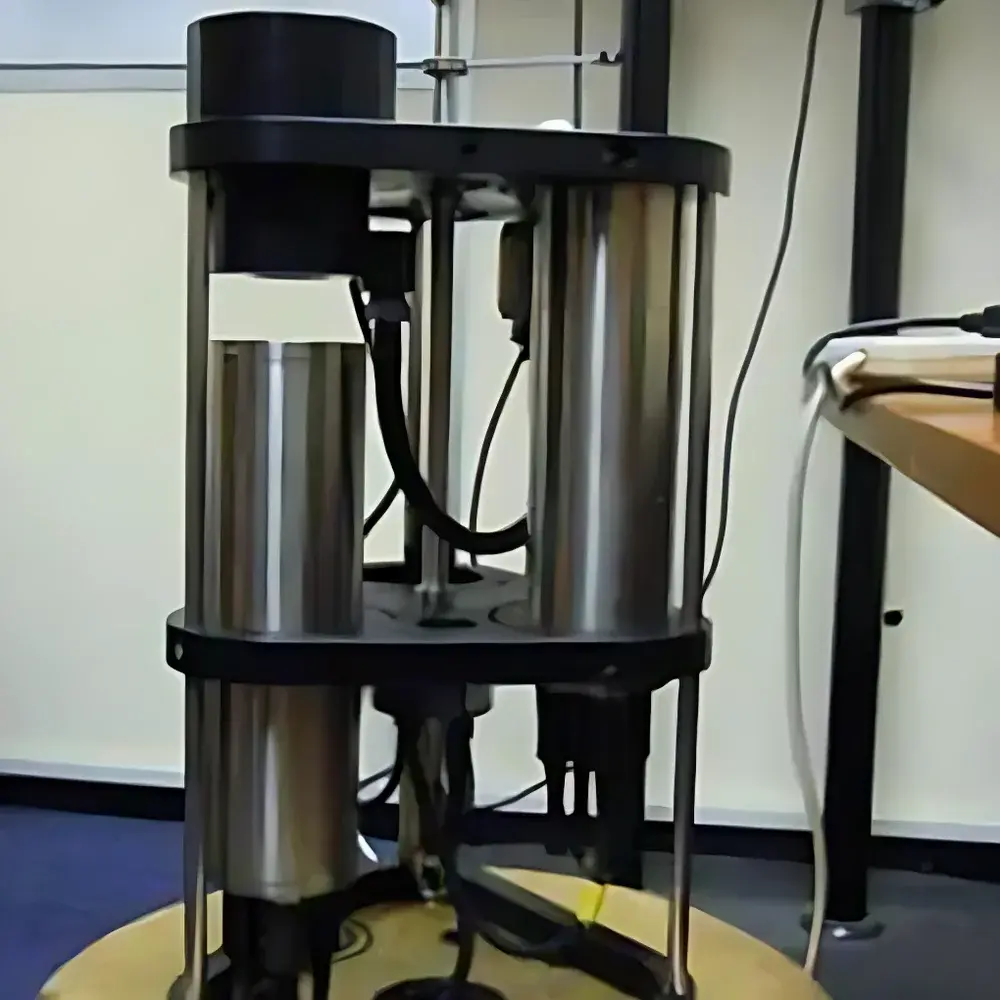
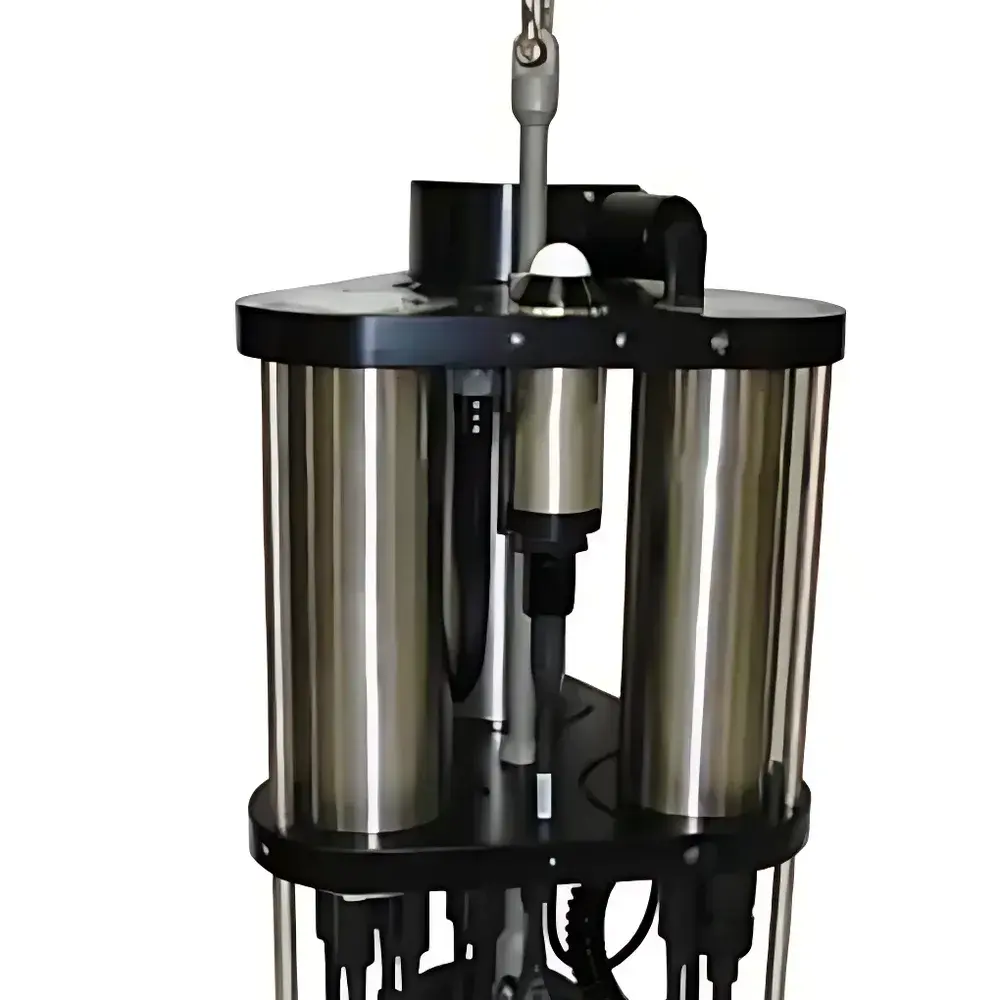
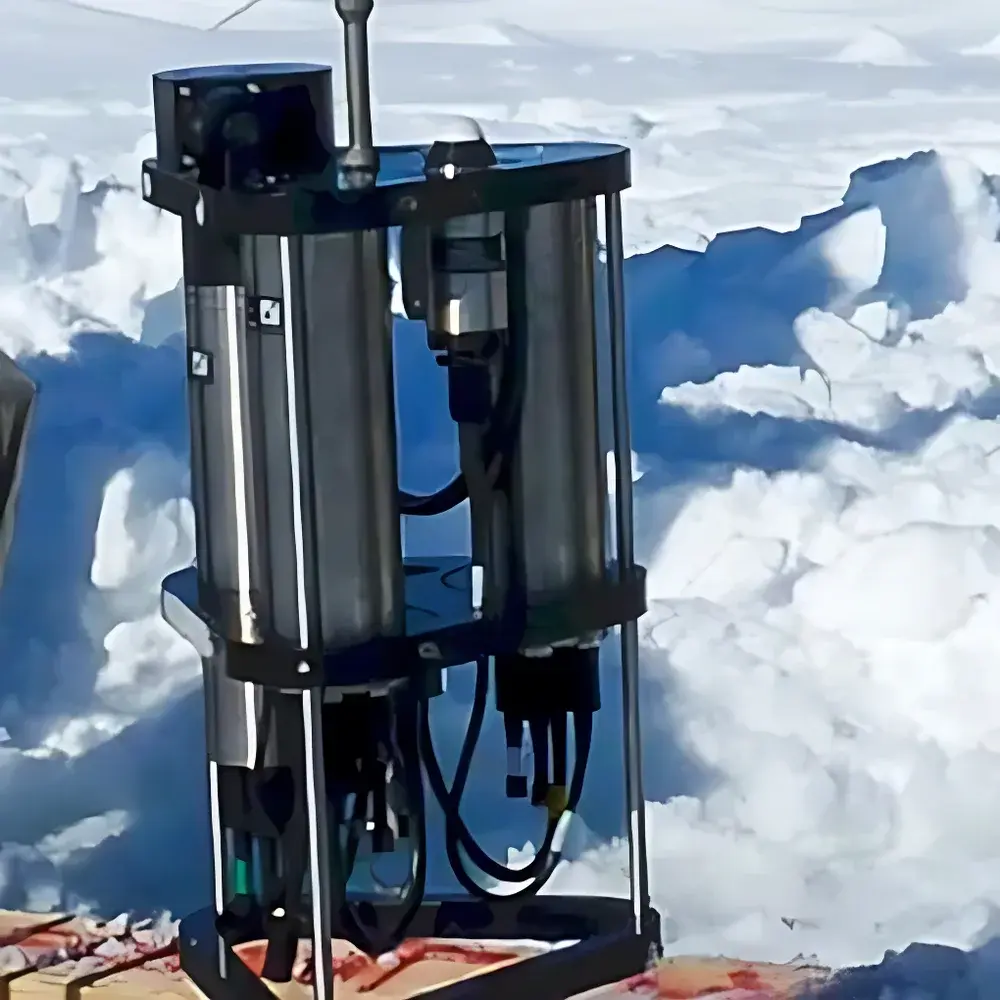
FastOcean APD In Situ Algal Fluorometer
| Brand | 4DigitalBooks |
|---|---|
| Origin | United Kingdom |
| Manufacturer Type | Authorized Distributor |
| Import Status | Imported |
| Model | FastOcean APD |
| Instrument Type | In Situ Algal Fluorometer |
| Measurement Principle | Fast Repetition Rate (FRR) Fluorescence |
| Excitation Wavelengths | 450 nm, 530 nm, 624 nm |
| Depth Rating | 600 m |
| Operating Voltage | 18–36 V DC |
| Power Consumption | 4.8 W (peak 5 W) |
| Battery Life | 6 hours continuous operation |
| Sampling Frequency | 10 Hz |
| Fluorescence Signal Range | Equivalent to Chl-a concentration 0.02–200 mg/m³ |
| LED Irradiance Units | photons·m⁻²·s⁻¹ × 10²² |
| Software Platform | FastPro8 v3.2+ |
| Compliance | CE, RoHS, IP68 submersible housing |
| Data Output | ASCII, CSV, NetCDF |
| Interface | RS-232/RS-485, optional Ethernet/WiFi module |
Overview
The FastOcean APD In Situ Algal Fluorometer is a high-precision, submersible optical instrument engineered for quantitative assessment of phytoplankton photochemical activity in natural aquatic environments. It implements Fast Repetition Rate (FRR) fluorometry—a non-invasive, pulse-amplitude-modulated (PAM) technique that resolves the kinetics of photosystem II (PSII) electron transport by delivering rapid, saturating microsecond light flashes across three discrete excitation wavelengths (450 nm, 530 nm, and 624 nm). This multi-wavelength capability enables spectral discrimination of functional pigment groups—including chlorophyll a, phycobiliproteins, and photoprotective carotenoids—thereby supporting robust estimation of gross primary productivity (GPP), quantum yield of PSII (ΦPSII), and photochemical quenching (qP) under both ambient light and dark-adapted conditions. Designed for long-term deployment at depths up to 600 m, the FastOcean APD operates autonomously or in real-time mode, delivering temporally resolved fluorescence transients with 10 Hz acquisition resolution and calibrated irradiance control (expressed in photons·m⁻²·s⁻¹ × 10²²).
Key Features
- Triple-excitation FRR fluorometry with independently controlled 450 nm (blue), 530 nm (green), and 624 nm (red) LEDs for spectrally resolved PSII probing
- Integrated dual-sensor architecture: one sensor optimized for in situ profiling, the other configurable for laboratory-based dark-adaptation experiments
- Full environmental light synchronization: automatic detection and compensation for ambient irradiance during measurement sequences
- Programmable deployment mode: battery-powered autonomous operation via onboard scheduler; supports timed, depth-triggered, or event-driven sampling protocols
- Rugged titanium-alloy housing rated IP68 and pressure-tested to 600 m seawater equivalent (60 bar)
- Low-power electronics architecture: nominal 4.8 W consumption, enabling >6 hours continuous operation on standard marine-grade Li-ion battery packs
- Real-time telemetry interface: RS-232/RS-485 serial output with optional Ethernet or WiFi expansion for integration into observatory networks
Sample Compatibility & Compliance
The FastOcean APD is validated for use across freshwater, estuarine, and marine matrices without sample pre-treatment. Its optical path design minimizes scattering artifacts in turbid waters (up to 100 NTU), and its calibration traceability follows ISO 10260:2022 (optical sensors for chlorophyll a fluorescence) and ASTM D8079-21 (standard guide for in vivo chlorophyll fluorescence measurements). The instrument complies with CE marking requirements for electromagnetic compatibility (EN 61326-1) and environmental protection (RoHS Directive 2011/65/EU). All firmware and data handling routines support audit-ready metadata tagging, including timestamp (UTC), GPS-derived position (when interfaced), pressure, temperature, and irradiance logs—enabling full traceability for GLP-compliant monitoring programs.
Software & Data Management
FastPro8 software serves as the unified platform for instrument configuration, real-time visualization, post-processing, and regulatory-grade archiving. It implements automated blank subtraction, kinetic curve fitting using the Joliot–Lavorel model, and batch recalibration of derived parameters—including effective absorption cross-section (σPSII), electron turnover rate (ETR), and non-photochemical quenching (NPQ). Data export conforms to FAIR principles: outputs are generated in ASCII, CSV, and NetCDF-4 formats with CF-1.8 metadata conventions. FastPro8 includes built-in validation checks aligned with US EPA Method 445.0 (in vivo chlorophyll a) and supports 21 CFR Part 11-compliant user authentication, electronic signatures, and immutable audit trails for GMP-regulated applications.
Applications
- High-resolution vertical profiling of phytoplankton photophysiology in stratified water columns
- Time-series monitoring of bloom dynamics, photoinhibition onset, and recovery kinetics during diel cycles
- Validation of satellite-derived ocean color products (e.g., OCI, OCx algorithms) through coincident in situ FRR datasets
- Ecotoxicological assessment of photosynthetic inhibition following exposure to herbicides or heavy metals
- Integration with moored observatories, AUVs, and glider platforms for synoptic biogeochemical mapping
- Calibration and ground-truthing of autonomous nutrient and oxygen sensors within coupled biogeochemical models
FAQ
What is the minimum detectable chlorophyll a concentration for reliable FRR signal acquisition?
The system achieves stable FRR transient resolution down to an equivalent chlorophyll a concentration of 0.02 mg/m³ in clear seawater, verified against certified reference materials (CRM-414, NIST).
Can the FastOcean APD be deployed alongside other sensors in a FastAct multiplexed system?
Yes—the APD sensor head is electrically and mechanically compatible with the FastAct modular interface standard, enabling synchronized triggering, shared power management, and time-aligned data fusion with CTD, DO, pH, and nitrate sensors.
Does FastPro8 support batch processing of large-scale FRR datasets from multiple deployments?
Yes—FastPro8 includes parallelized curve-fitting engines and metadata-aware project organization tools, allowing reproducible reprocessing of terabyte-scale time-series archives with version-controlled parameter sets.
Related Products







