
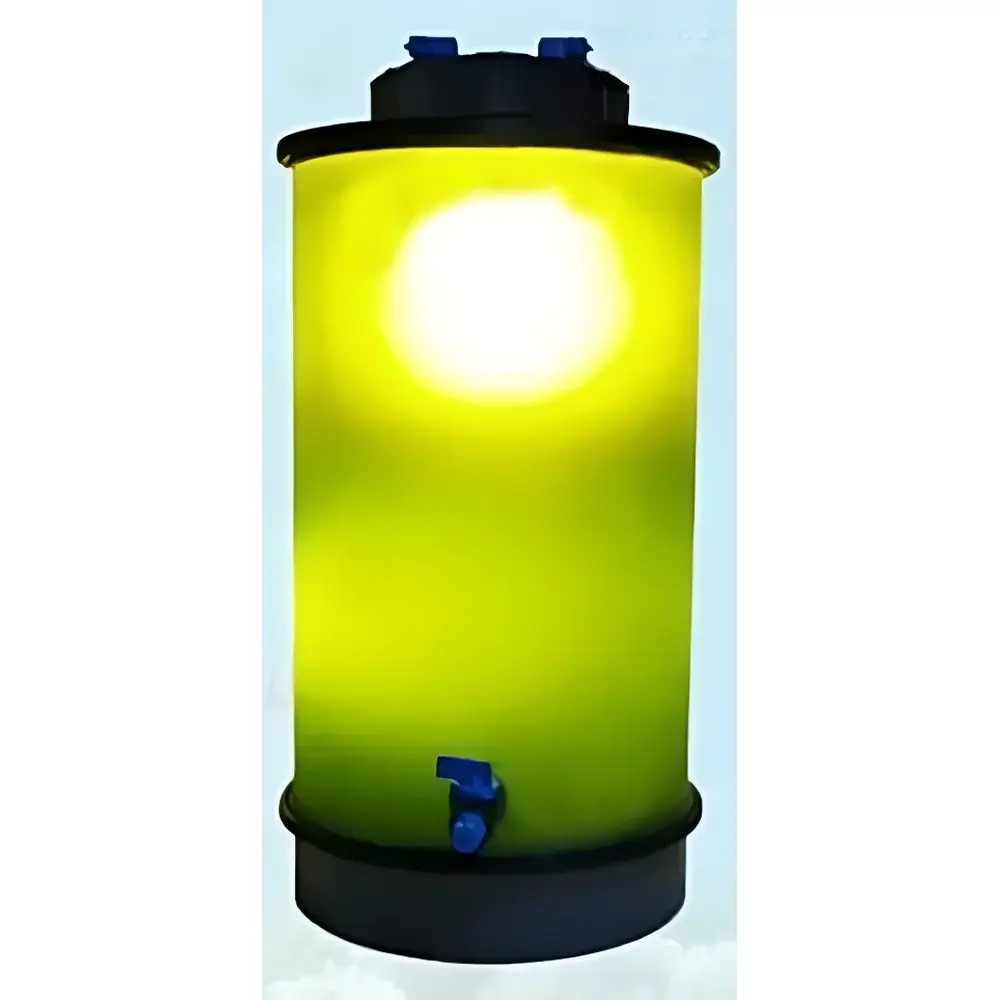
PB250 Large-Scale Photobioreactor System
| Origin | Germany |
|---|---|
| Manufacturer Type | Authorized Distributor |
| Origin Category | Imported |
| Model | PB-250 |
| Pricing | Available Upon Request |
Overview
The PB250 Large-Scale Photobioreactor System is an engineered platform designed for controlled, reproducible cultivation of microalgae and other photosynthetic phytoplankton under laboratory and pilot-scale conditions. Based on the principle of continuous or semi-continuous turbidostatic culture, the system maintains optimal growth dynamics through precise regulation of light intensity, gas exchange, nutrient dosing, and medium renewal. Its cylindrical, vertically oriented design—featuring a 12 L working volume, 200 mm internal diameter, and 520 mm height—enables uniform illumination distribution and efficient mass transfer. Constructed from high-transmission optical-grade acrylic, the transparent culture vessel ensures consistent photon flux penetration across the entire culture column while resisting UV degradation and chemical leaching. The system operates as a closed, sterile-capable environment, minimizing contamination risk and supporting GLP-compliant experimental workflows in academic, industrial, and regulatory research settings.
Key Features
- Optimized photobioreactor geometry: 12 L working volume with high surface-to-volume ratio (S/V ≈ 0.38 m⁻¹) to maximize light utilization efficiency and minimize self-shading effects.
- Integrated LED-based illumination unit with adjustable spectral output (typically 450–650 nm peak range), enabling wavelength-specific physiological studies and strain optimization.
- Robust threaded lid assembly with O-ring sealing and multiple port configurations (gas inlet/outlet, sampling, pH/DO probe insertion, nutrient addition) for flexible sensor integration and process monitoring.
- Programmable controller (220 × 80 × 70 mm; 85–250 VAC, 5 W) providing timed actuation of lighting cycles, air sparging, and peristaltic nutrient dosing—supporting both diurnal rhythm simulation and automated batch-fed operation.
- Dual-mode fluid management: manual or automated medium exchange at up to 30% daily volume replacement rate, compatible with sterile tubing connectors and inline filters (0.22 µm) for aseptic operation.
- Modular magnetic stirrer base ensuring gentle, non-shearing mixing (typical rotational speed: 50–300 rpm) to maintain cell suspension without damaging delicate algal filaments or colonial structures.
Sample Compatibility & Compliance
The PB250 accommodates a broad spectrum of freshwater and marine microalgal species—including Chlorella vulgaris, Nannochloropsis oceanica, Dunaliella salina, and Phaeodactylum tricornutum—as well as cyanobacteria such as Synechocystis sp. PCC 6803. Its materials of construction comply with USP Class VI and ISO 10993-5 biocompatibility standards. All wetted components are autoclavable (121°C, 20 min) or compatible with ethanol/isopropanol sterilization. The system supports adherence to ASTM D5540 (Standard Practice for Sampling Water for Microbiological Analysis) and ISO 8692 (Freshwater Algal Growth Inhibition Test) protocols when configured with appropriate sensors and data logging.
Software & Data Management
While the base PB250 operates via embedded hardware logic, optional RS-485 or USB-to-serial interfaces enable integration with third-party SCADA platforms (e.g., LabVIEW, MATLAB, or Python-based control scripts) for real-time parameter logging and closed-loop feedback control. The controller retains event timestamps for all actuated functions (light on/off, nutrient pulses, air flow initiation), satisfying audit trail requirements under FDA 21 CFR Part 11 when paired with validated electronic record systems. Raw operational logs can be exported in CSV format for post-hoc correlation with biomass yield (OD₇₅₀), chlorophyll-a concentration (µg/mL), or fatty acid profile data.
Applications
- Physiological characterization of algal strains under controlled photo-bioreactor conditions (light/dark cycling, nitrogen limitation, CO₂ enrichment).
- Bioprocess development for high-value metabolite production (astaxanthin, EPA/DHA, phycocyanin) prior to scale-up to 100+ L photobioreactors.
- Toxicity screening assays compliant with OECD 201 and ISO 8692 using standardized algal test organisms.
- Carbon capture and utilization (CCU) research evaluating algal CO₂ fixation rates under variable flue gas compositions.
- Educational use in biotechnology and environmental engineering curricula for teaching principles of phototrophic cultivation, mass balance, and process automation.
FAQ
Is the PB250 suitable for axenic cultures?
Yes—the sealed vessel design, autoclavable components, and optional HEPA-filtered air supply support maintenance of axenic or mono-algal cultures when combined with proper aseptic technique.
Can I integrate dissolved oxygen or pH probes directly into the vessel?
Yes—two standardized 12 mm threaded ports are provided for insertion of commercial sterilizable probes; compatibility with Mettler Toledo, Hamilton, or Thermo Scientific sensors has been verified.
What is the maximum operating temperature range?
The system is rated for ambient operation between 15–30°C; external water-jacketed cooling or incubator housing is recommended for thermally sensitive strains or extended high-light experiments.
Does the controller support remote monitoring?
The standard unit does not include Wi-Fi or Ethernet; however, OEM firmware upgrades and external IoT gateways (e.g., Raspberry Pi + Modbus TCP adapter) are supported for cloud-based telemetry deployment.
Are spare parts and consumables available globally?
Yes—acrylic vessel replacements, LED modules, magnetic stir bars, and peristaltic pump tubing are stocked by authorized distributors in North America, EMEA, and APAC regions under manufacturer warranty terms.



