
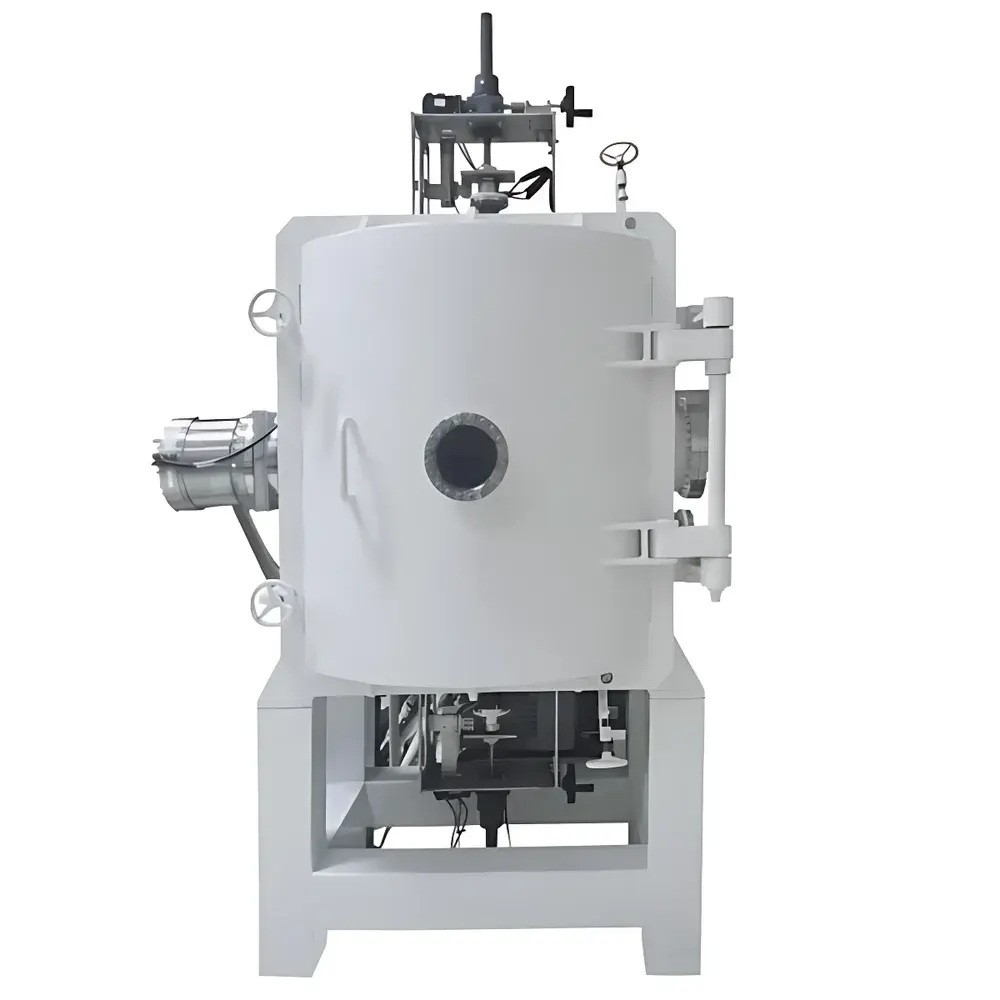
XIATECH TC1000 Custom Series Cryogenic Vacuum Guarded-Plate Thermal Conductivity Analyzer
| Brand | XIATECH |
|---|---|
| Origin | Shaanxi, China |
| Model | TC1000 Custom Series |
| Instrument Type | Guarded-Plate Method |
| Sample Capacity | Single |
| Test Environment | Ambient Pressure (with vacuum/inert/oxidizing gas options) |
| Dimensions (L×W×H) | 850 × 800 × 1000 mm |
| Accuracy | ±5% (±1% near room temperature) |
| Thermal Conductivity Range | < 2.5 W/(m·K) |
| Repeatability | ±1% |
| Test Atmosphere | Vacuum (down to 10⁻⁴ Pa), inert gas, oxidizing gas |
| Sample Form | Solid |
Overview
The XIATECH TC1000 Custom Series Cryogenic Vacuum Guarded-Plate Thermal Conductivity Analyzer is a precision instrument engineered for the measurement of thermal conductivity in solid insulating materials under rigorously controlled low-temperature and high-vacuum conditions. It operates on the principle of the guarded-hot-plate method—defined in ASTM C177 and ISO 8302—as a steady-state technique that establishes one-dimensional heat flow through a flat, homogeneous sample sandwiched between two parallel plates. The instrument achieves thermal equilibrium via active temperature control of both the hot and cold plates, while a surrounding guard ring eliminates lateral heat loss, ensuring metrological traceability and compliance with international standards for absolute thermal property determination. Designed specifically for cryogenic applications, the system maintains stable operation at temperatures as low as −160 °C (liquid nitrogen range) and supports vacuum levels down to 10⁻⁴ Pa, enabling characterization of low-conductivity porous insulation materials where gaseous conduction and radiation effects must be decoupled from solid-phase conduction.
Key Features
- Cryogenic capability: Continuous operational range from −160 °C to +280 °C, accommodating both liquid nitrogen cooling and elevated-temperature testing without hardware modification.
- High-vacuum integration: Equipped with a fully automated vacuum control system featuring dual-stage pumping (mechanical + turbomolecular), real-time pressure monitoring, and programmable pressure ramping for multi-condition experiments.
- Multi-atmosphere flexibility: Supports testing under high vacuum, inert gas (e.g., Ar, N₂), or oxidizing environments (e.g., air, O₂) via sealed chamber design with gas inlet/outlet ports and mass flow controllers.
- Automated metrology suite: Integrated high-resolution digital thickness gauges (±1 µm), calibrated Pt100 sensors (±0.05 K), and absolute pressure transducers (±0.5% FS) enable synchronized acquisition of all primary variables—ΔT, Q, L, and P—without manual intervention.
- Steady-state validation protocol: Built-in convergence algorithms monitor thermal flux stability over time, requiring <0.1% drift in heat flow over a 30-minute window before data acceptance, ensuring thermodynamic equilibrium prior to calculation.
Sample Compatibility & Compliance
The TC1000 is optimized for rigid and semi-rigid solid insulators with planar geometry, including but not limited to cellular polymers, fibrous mats, ceramic foams, aerogel composites, refractory bricks, and multilayer reflective barriers. Samples must exhibit minimal thermal contact resistance when clamped between copper-coated stainless steel plates; optional graphite foil or silver paste interfaces are available for high-resistance materials. The system complies with ASTM C177–22 (Standard Test Method for Steady-State Thermal Transmission Properties by Means of the Guarded-Hot-Plate Apparatus), ISO 8302:2022, and GB/T 10294–2008. All calibration procedures follow NIST-traceable reference materials (e.g., SRM 1450c Fibrous Glass Board), and measurement uncertainty budgets are documented per ISO/IEC 17025 requirements. Data audit trails meet GLP and FDA 21 CFR Part 11 criteria for electronic records and signatures.
Software & Data Management
The TC1000 is operated via XIATECH’s proprietary THERMO-ANALYZER v4.2 software, a Windows-based platform supporting full test automation, real-time visualization, and ISO-compliant reporting. The interface enables scripting of multi-step temperature-pressure profiles, automatic thickness compensation during thermal expansion, and iterative correction for edge losses using numerical modeling. Raw sensor outputs—including plate temperatures, heater power, chamber pressure, and sample thickness—are logged at 1 Hz with timestamped metadata. Post-processing includes automatic application of the ASTM C177 correction factor for finite guard width and optional radiation correction based on surface emissivity input. Export formats include CSV, PDF (with embedded uncertainty analysis), and XML for LIMS integration. Audit logs record user actions, parameter changes, and calibration events with immutable timestamps.
Applications
- Advanced insulation R&D: Characterization of aerogel composites, nano-porous silica, and vacuum-insulated panels (VIPs) across cryogenic-to-ambient regimes.
- Building science: Validation of thermal performance for mineral wool, phenolic foams, cork-based composites, and cementitious lightweight aggregates under realistic service conditions.
- Aerospace & cryogenics: Qualification of thermal barrier materials used in LNG storage tanks, superconducting magnet housings, and satellite thermal management systems.
- Fire safety engineering: Thermal diffusivity and conductivity mapping of intumescent coatings and fire-resistant boards under inert atmospheres.
- Standards laboratories: Primary calibration of reference materials and inter-laboratory round-robin studies aligned with EURAMET CG-17 guidelines.
FAQ
What is the minimum sample thickness the TC1000 can accurately measure?
The system accommodates samples from 10 mm to 50 mm thick; optimal accuracy is achieved between 20–40 mm due to signal-to-noise ratio and edge-loss minimization.
Does the instrument support transient or only steady-state measurements?
The TC1000 implements strictly steady-state guarded-plate methodology per ASTM C177; it does not perform transient (e.g., flash diffusivity) or hot-wire measurements.
Can the vacuum chamber be opened mid-test for sample exchange?
No—the system requires full pump-down and thermal equilibration after each chamber opening; automated purge-and-pump cycles are available to minimize downtime between runs.
Is third-party calibration certification included with delivery?
Yes—each unit ships with a factory calibration certificate traceable to NIST standards, covering temperature, thickness, pressure, and power measurement subsystems.
How is thermal contact resistance addressed during measurement?
Contact resistance is minimized via precision-machined, lapped copper plates with adjustable clamping force (0–20 kN); users may apply standardized thermal interface materials per ASTM E1225 for comparative studies.



