
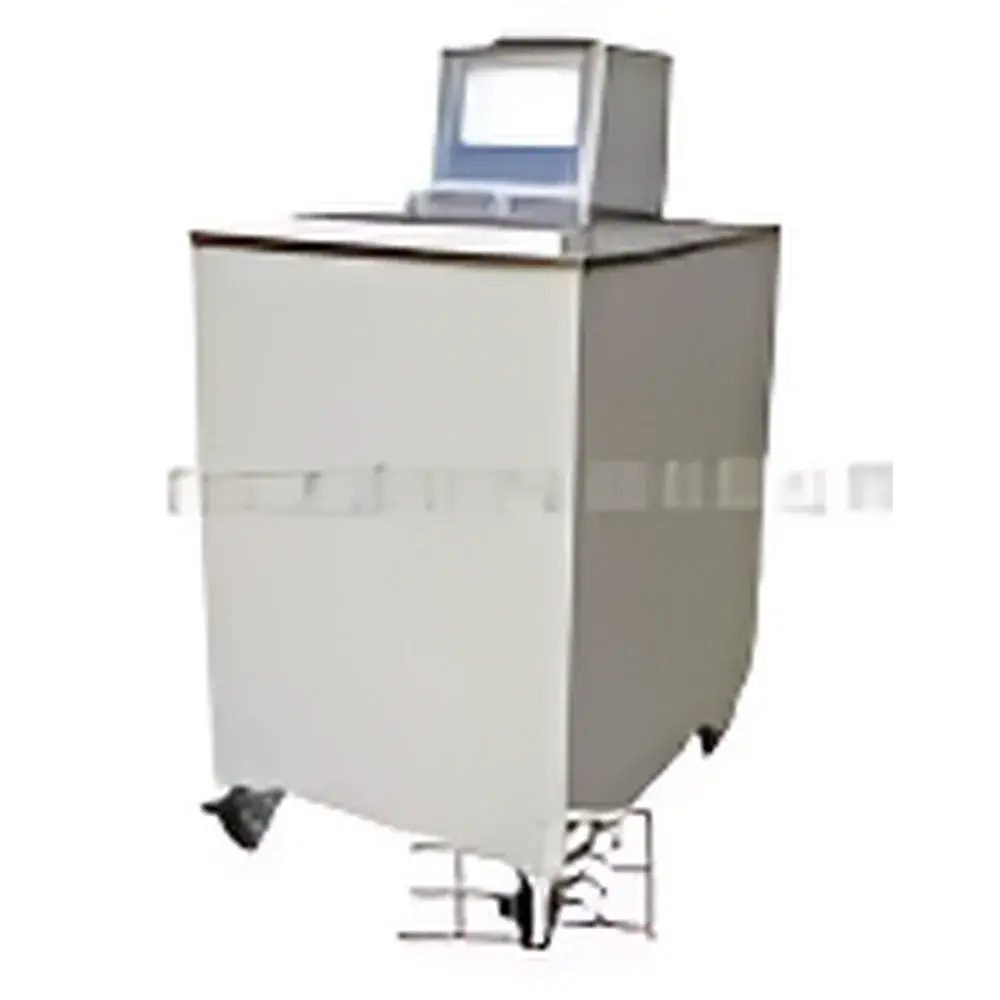
XIATECH C3000A Series Circulating Bath
| Brand | XIATECH |
|---|---|
| Model | C3000A Series |
| Type | Circulating Constant-Temperature Bath |
| Temperature Range | -30 to 100 °C |
| Temperature Stability | ±0.01 °C |
| Bath Volume Options | 10–30 L |
| Circulation Mode | Internal & External |
| Cooling/Heating Function | Dual-mode (Refrigerated & Heated) |
| Control Interface | USB port with TControl1.0 software |
| Construction | Stainless steel inner tank, fully sealed compressor cooling system |
| Display Resolution | 0.001 °C (LED digital) |
Overview
The XIATECH C3000A Series Circulating Bath is an engineered thermal management platform designed for high-precision temperature control in laboratory and R&D environments. Operating on a dual-mode refrigeration and heating principle, it maintains stable thermal conditions across a broad operational range (−30 °C to +100 °C) using a hermetically sealed compressor, optimized heat exchanger geometry, and a proprietary Fuzzy-PID composite control algorithm. This hybrid control strategy integrates the rapid response of fuzzy logic with the steady-state accuracy of standard PID regulation—enabling both fast thermal equilibration and exceptional long-term stability (±0.01 °C). The unit functions as both an immersion bath and an external temperature source, supporting jacketed reactors, calorimeters, viscometers, densitometers, spectrophotometers, thermal conductivity analyzers, and specific heat measurement systems. Its design adheres to fundamental thermodynamic requirements for metrological-grade thermal uniformity: ASL F200 validation confirms horizontal and vertical temperature deviations ≤0.03 °C across the full working volume.
Key Features
- Precision temperature stability of ±0.01 °C over the entire −30 °C to +100 °C range, verified per ISO/IEC 17025-aligned calibration protocols
- Multiple bath volumes available (10 L, 20 L, and 30 L) to accommodate varying sample mass, thermal load, and circulation distance requirements
- Stainless steel inner tank compatible with water, silicone oil, ethylene glycol–water mixtures, and other non-corrosive heat transfer media—no medium change required across the full temperature span
- Dual-circulation capability: internal recirculation for bath homogeneity; external loop connection (via standardized 1/2″ NPT or G1/2″ ports) for remote device temperature control
- Integrated safety mechanisms including over-temperature cutoff, low-fluid-level detection, and compressor overpressure protection
- High-resolution LED display showing both setpoint and real-time bath temperature with 0.001 °C digitization
- Low-noise operation (<58 dB(A)) enabled by vibration-damped mounting and optimized refrigerant flow dynamics
Sample Compatibility & Compliance
The C3000A series supports diverse experimental configurations without compromising thermal fidelity. Its stainless steel tank resists degradation from aqueous and organic media, making it suitable for applications requiring repeated cleaning or extended exposure to solvents. The unit complies with IEC 61010-1:2010 for electrical safety in laboratory equipment and meets CE marking requirements for electromagnetic compatibility (EMC Directive 2014/30/EU). While not certified under FDA 21 CFR Part 11, its USB interface and TControl1.0 software architecture support audit-trail-ready implementations when integrated into GLP/GMP workflows via user-defined logging intervals and timestamped data export (CSV/TXT). Temperature uniformity testing follows ASTM E145-22 Annex A3 methodology for liquid-bath thermal performance assessment.
Software & Data Management
TControl1.0 is a dedicated Windows-based application developed by XIATECH for comprehensive thermal system supervision. It provides real-time graphical plotting of temperature vs. time, multi-channel monitoring (up to 8 independent C3000A units simultaneously), programmable ramp/soak profiles, and event-triggered data capture. All communication occurs via standard USB 2.0 (CDC class), eliminating driver dependencies. Raw sensor readings—including PT100 resistance values and PID output percentages—are accessible through documented ASCII command protocol, enabling integration with LabVIEW, Python (PySerial), MATLAB, or custom SCADA platforms. Data logs include metadata such as ambient temperature, coolant pressure status, and error flags—facilitating traceability in method validation studies.
Applications
- Calibration of contact thermometers, RTDs, and thermocouples against NIST-traceable reference standards
- Thermal conditioning of optical components during refractive index or transmission measurements
- Stabilization of laser diodes and photodetectors in spectroscopic instrumentation
- Controlled-temperature testing of polymer viscoelasticity using rotational rheometers
- Heat capacity determination via differential scanning calorimetry (DSC) auxiliary baths
- Long-duration stability testing of pharmaceutical formulations under accelerated aging conditions (ICH Q1A)
- Thermal qualification of microfluidic devices and MEMS sensors
FAQ
What temperature media are compatible with the C3000A series?
Water, 50/50 ethylene glycol–water, silicone oils (e.g., DC200 series), and mineral oils meeting ISO VG 10–100 viscosity grades are approved. Avoid halogenated solvents or strong oxidizers.
Is external pump control supported?
Yes—the unit provides dry-contact relay outputs (250 VAC / 2 A) to synchronize external peristaltic or centrifugal pumps with bath operation cycles.
Can the C3000A operate unattended for 72+ hours?
When configured with redundant level sensing, uninterrupted power supply (UPS), and validated media volume, continuous operation exceeding 168 hours has been demonstrated in ISO 17025 accredited labs.
Does TControl1.0 support automated report generation?
It exports timestamped CSV files containing all active channels and events; third-party tools (e.g., Excel Power Query, Python Pandas) are recommended for templated reporting.
What is the minimum external loop flow rate for stable remote temperature control?
For optimal thermal coupling, maintain ≥0.8 L/min at the external port with ≤1.5 bar backpressure; lower rates may reduce effective stability to ±0.03 °C.



