
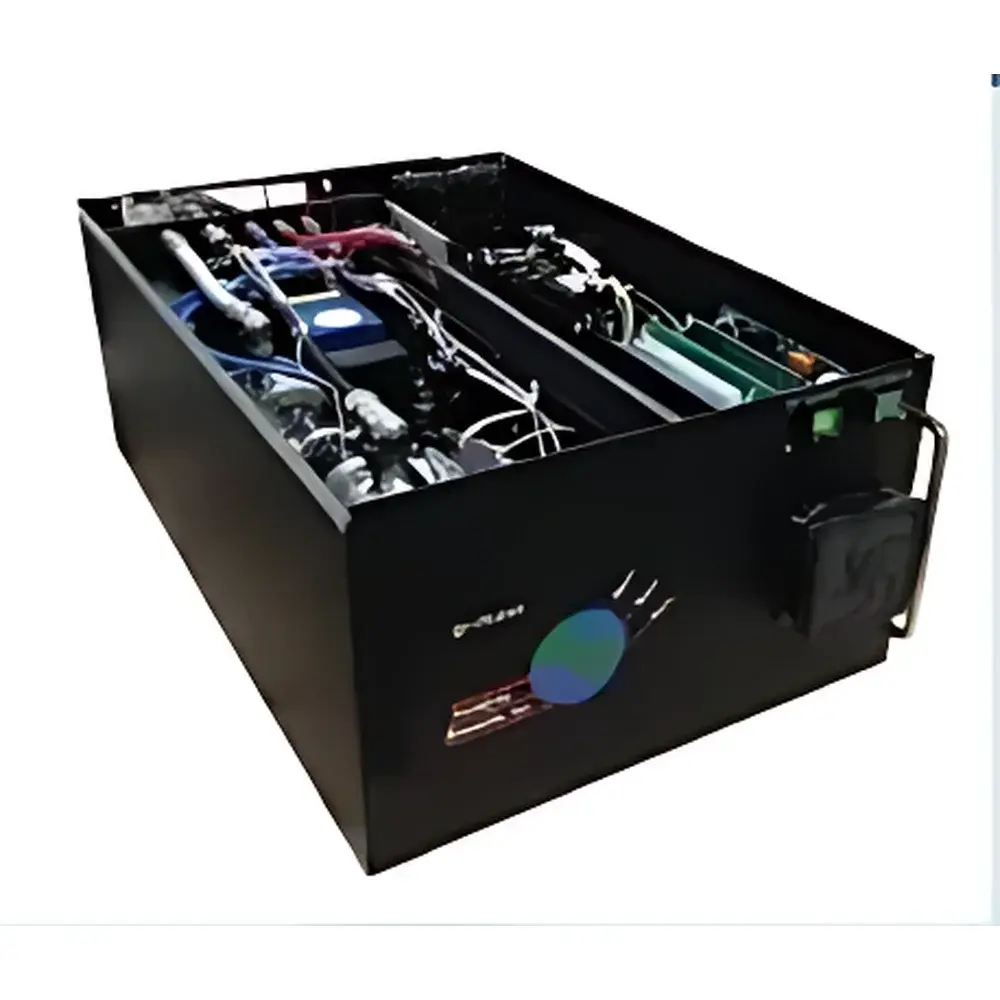
Aerodyne TILDAS-N2O Trace Nitrous Oxide Monitor
| Brand | Aerodyne |
|---|---|
| Origin | USA |
| Model | TILDAS-N2O |
| Detection Principle | Tunable Infrared Laser Direct Absorption Spectroscopy (TILDAS) |
| Measurement Range | Sub-ppt to ppm N₂O |
| Precision | ≤30 ppt (1σ, 1 s integration) |
| Temporal Resolution | Up to 10 Hz |
| Optical Path Length | 76 m (multipass cell) |
| Wavelength Region | Mid-IR (e.g., 2200 cm⁻¹ for N₂O/CO |
| Response Time (1/e) | <0.1 s |
| Operating Temperature | −20 to +50 °C |
| Sample Flow Rate | 0–20 slpm |
| Power Consumption | 250 W (excl. vacuum pump) |
| Dimensions | 440 mm × 660 mm × 267 mm (6U rack-mountable) |
| Weight | 35 kg (main unit) + 15 kg (TE cooler) |
| Data Interfaces | RS-232, USB, Ethernet |
| Software | TDLWintel v5.x (real-time control, automated valve sequencing, background subtraction, GLP-compliant audit trail) |
Overview
The Aerodyne TILDAS-N2O Trace Nitrous Oxide Monitor is a research-grade, field-deployable quantum cascade laser (QCL)-based gas analyzer engineered for high-precision, real-time quantification of nitrous oxide (N₂O) in ambient air, soil flux chambers, eddy covariance towers, and controlled laboratory environments. It employs Tunable Infrared Laser Direct Absorption Spectroscopy (TILDAS) in the mid-infrared spectral region—where N₂O exhibits strong, spectrally isolated rovibrational transitions—to deliver exceptional selectivity and sensitivity. Unlike chemiluminescence or electrochemical sensors, TILDAS enables absolute concentration measurement without reliance on calibration gases, leveraging fundamental line-strength databases (e.g., HITRAN) and first-principles Beer–Lambert modeling. The instrument achieves a detection limit of ≤30 ppt (1σ, 1-second integration), with a temporal response as fast as 10 Hz—making it uniquely suited for turbulent flux measurements via eddy covariance methodology under dynamic atmospheric conditions.
Key Features
- Patented 76-meter multipass absorption cell enabling sub-ppt sensitivity while minimizing sample volume and pumping requirements
- Quantum cascade laser operating at thermally stabilized mid-IR wavelengths (e.g., 2200 cm⁻¹ for simultaneous N₂O/CO detection; 1270 cm⁻¹ for N₂O/CH₄)
- Real-time water vapor (H₂O) co-measurement for automatic dry-air mixing ratio correction per ISO 8573-1 and WMO GAW guidelines
- Integrated thermoelectric (TE) cooler ensuring stable laser wavelength locking and long-term baseline reproducibility
- 16-channel programmable solenoid valve manifold supporting automated zero/span/background cycling and multi-inlet sampling protocols
- Rack-mountable 6U chassis (19″ standard) with ruggedized mechanical design for unattended outdoor deployment in harsh environmental conditions (−20 to +50 °C)
- Fully compliant with GLP data integrity requirements: TDLWintel software provides full audit trail, user access controls, and electronic signatures per FDA 21 CFR Part 11
Sample Compatibility & Compliance
The TILDAS-N2O is validated for direct analysis of undiluted ambient air, headspace gas from soil incubation chambers, and stack emissions following ISO 14644-1 particulate filtration. Its inherent molecular specificity eliminates cross-sensitivity to CO₂, CH₄, NH₃, or VOCs—critical for agricultural soil emission studies where co-occurring gases are prevalent. The system meets ASTM D6348–21 for trace gas analyzer verification and supports compliance with IPCC Tier 3 reporting frameworks for N₂O flux quantification. All optical components are sealed and purged to prevent contamination during long-term field operation, and the entire measurement chain—from inlet conditioning to spectral fitting—is traceable to NIST-certified reference standards.
Software & Data Management
TDLWintel v5.x serves as the embedded control and analysis platform, offering deterministic real-time acquisition at up to 100 Hz raw spectral sampling, with on-board Fourier deconvolution and least-squares spectral fitting. Users define custom measurement sequences—including alternating sample/background cycles, multi-gas scan modes, and adaptive averaging windows—via intuitive graphical workflow editors. Data output includes calibrated N₂O mole fractions (nmol·mol⁻¹), H₂O mixing ratios, pressure, temperature, and diagnostic metrics (e.g., residual RMS, laser power stability). Export formats include NetCDF-4 (CF-compliant), CSV, and binary HDF5, fully compatible with FluxNet, AmeriFlux, and ICOS metadata schemas. Remote monitoring and firmware updates are supported over secure SSH or TLS-enabled Ethernet connections.
Applications
- Eddy covariance-based N₂O flux measurements across agroecosystems, wetlands, and forest soils
- High-temporal-resolution chamber studies investigating fertilizer-induced pulse emissions
- Mobile platform deployments (e.g., flux vans, UAV-mounted payloads) requiring low-power, compact instrumentation
- Calibration transfer validation between primary CRDS/TILDAS analyzers and secondary chemiluminescence systems per WMO GAW recommendations
- Laboratory investigations of microbial N-cycle kinetics using isotopically labeled ¹⁵N tracers (compatible with ¹⁵N₂O spectral isolation)
- Urban air quality networks targeting anthropogenic N₂O sources (wastewater treatment, combustion)
FAQ
What is the minimum detectable N₂O concentration and integration time?
The instrument achieves ≤30 ppt (1σ) precision at 1-second integration; sub-10 ppt detection is attainable with 10-second averaging under optimal signal-to-noise conditions.
Does the system require daily calibration with certified gas standards?
No—TILDAS is an absolute technique based on fundamental spectroscopic parameters; routine calibration is not required. However, periodic zero checks using purified N₂ or synthetic air are recommended for QA/QC.
Can the analyzer operate unattended for extended field campaigns?
Yes—designed for continuous operation up to 12 months with remote diagnostics, automated background correction, and watchdog-triggered system recovery.
Is the software compliant with regulatory data integrity standards?
Yes—TDLWintel implements full 21 CFR Part 11 functionality including role-based access, electronic signatures, immutable audit logs, and data encryption.
What optional configurations support multi-species detection?
Available dual- and tri-gas modules include N₂O/CO (2200 cm⁻¹), N₂O/CO/CO₂ (2300 cm⁻¹), and N₂O/CH₄ (1270 cm⁻¹), all sharing the same optical bench and detector.
Related Products







