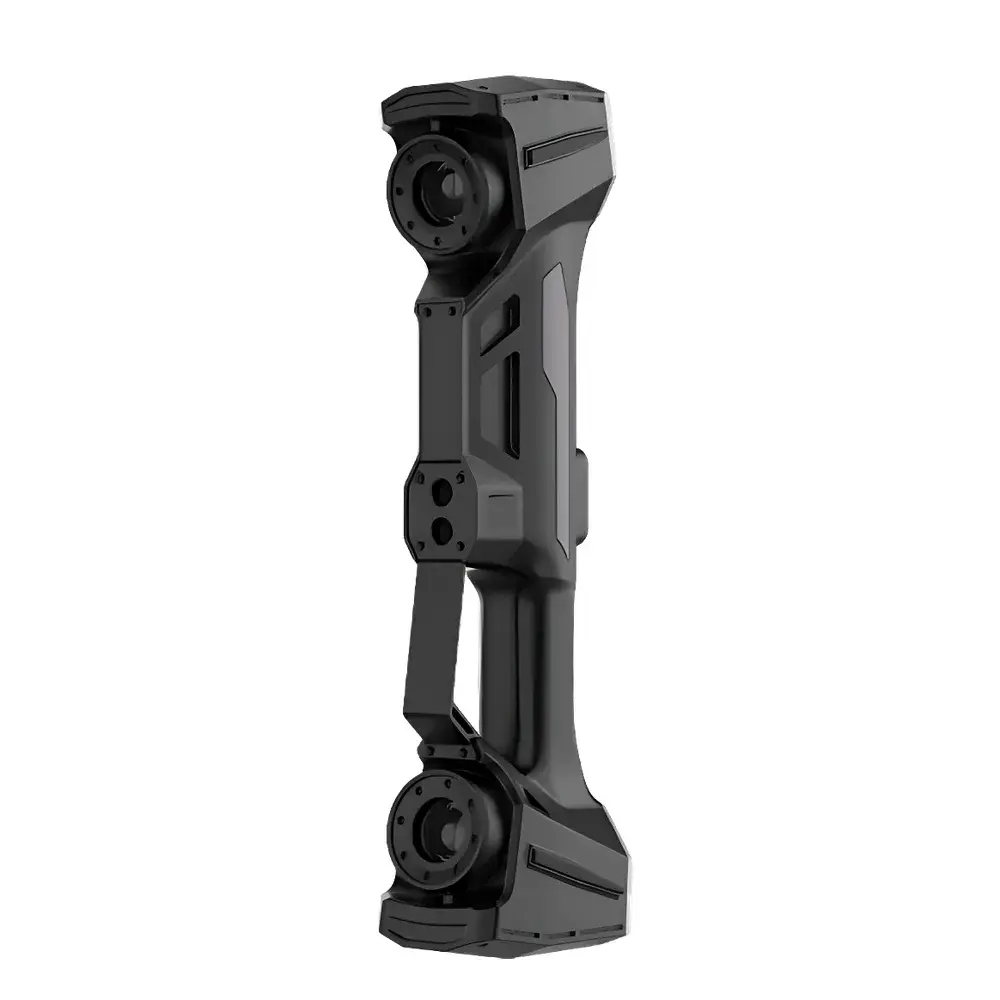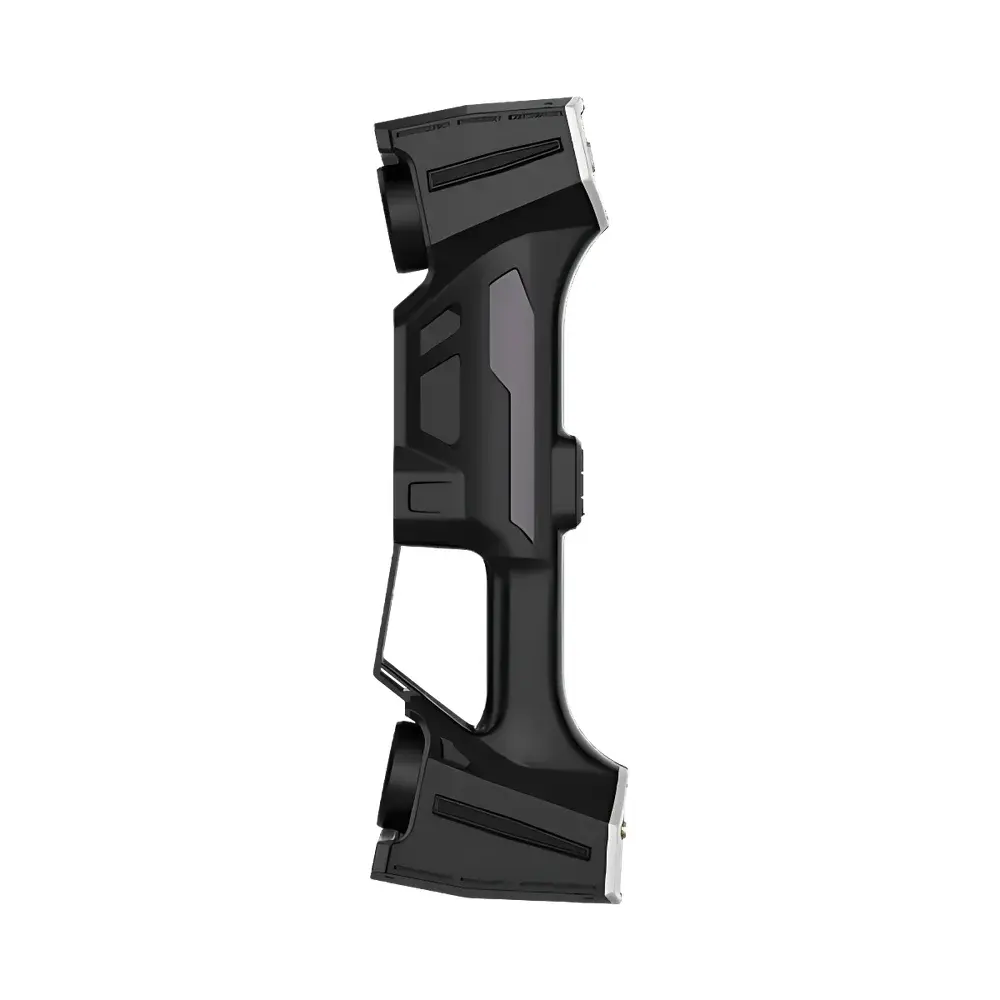
Aquaprofiler Flow Profiling System
| Origin | Germany |
|---|---|
| Manufacturer Type | Distributor |
| Origin Category | Imported |
| Model | Aquaprofiler |
| Pricing | Upon Request |
Overview
The Aquaprofiler Flow Profiling System is a high-precision, field-deployable acoustic Doppler current profiler (ADCP) designed for continuous, non-intrusive measurement of flow velocity profiles, water level, and volumetric discharge in open channels, natural rivers, irrigation canals, and pressurized conduits. Engineered for hydrological monitoring under challenging environmental conditions—including high turbidity, debris-laden flows, fluctuating sediment loads, and variable bank geometry—the system operates on the principle of coherent pulse-to-pulse phase difference analysis using dual slanted acoustic beams (±20° from vertical) to resolve horizontal velocity components, while a third vertically oriented transducer beam provides synchronous water surface elevation data. This tri-beam configuration enables simultaneous acquisition of 2D vector velocity fields across up to 128 depth cells per profile, with real-time integration of cross-sectional velocity distribution and wetted geometry to compute discharge in strict accordance with EN ISO 748:2019—“Measurement of liquid flow in open channels — Velocity-area method using current meters or acoustic Doppler velocity meters.”
Key Features
- Tri-beam acoustic Doppler architecture: two oblique beams (±20°) for 2D horizontal velocity vector resolution and one vertical beam for continuous water level tracking
- Configurable profiling resolution: up to 128 depth cells per vertical profile, with user-defined cell size (typically 2–20 cm) and blanking distance
- Self-contained flow computation engine compliant with EN ISO 748:2019 algorithms—no external calibration required for discharge calculation
- Ruggedized stainless-steel housing rated IP68, suitable for permanent submersion or mounting on fixed structures (e.g., bridge piers, weirs, or submerged frames)
- Integrated temperature and pressure sensors for real-time water density and depth compensation
- Low-power operation (12–24 V DC) with optional solar/battery hybrid support for remote, unattended deployment
- RS-485 and SDI-12 digital interfaces for seamless integration into SCADA, telemetry, or data logger networks
Sample Compatibility & Compliance
The Aquaprofiler is validated for use in heterogeneous hydraulic environments typical of natural rivers (including gravel-bed and vegetated reaches), concrete-lined canals, trapezoidal flumes, and partially filled pipes. It accommodates varying sediment concentrations (up to 10 g/L suspended solids) without signal degradation due to its adaptive signal processing and pulse-coherent demodulation. All flow computations adhere to EN ISO 748:2019 Annex C (acoustic Doppler methods), and the system supports traceable audit trails for GLP-compliant hydrometric reporting. Optional firmware modules enable compliance with USGS Water Resources Mission Area protocols and ISO 14001 environmental monitoring frameworks.
Software & Data Management
The system interfaces with Aquaview™ Desktop Suite (v4.2+), a Windows-based configuration, visualization, and post-processing platform supporting real-time telemetry dashboards, time-series export (CSV, NetCDF), and automated QA/QC flagging per ISO 5725-2 precision criteria. Raw binary data files include full beam-by-beam IQ samples, enabling advanced spectral analysis and uncertainty quantification (e.g., confidence intervals per velocity cell via ensemble variance). For regulated environments, optional 21 CFR Part 11-compliant audit logging is available, including electronic signatures, user access controls, and immutable data archiving.
Applications
- Real-time river discharge monitoring for flood forecasting and reservoir inflow estimation
- Performance verification of hydraulic structures (weirs, gates, drop structures) under variable flow regimes
- Wastewater network flow auditing and leakage detection in combined sewer systems
- Ecological flow assessment for instream habitat modeling and environmental flow regime studies
- Calibration reference for stage-discharge rating curves and validation of 1D/2D hydraulic models (e.g., HEC-RAS, MIKE HYDRO)
- Long-term climate-driven hydrological trend analysis in glacial-fed or snowmelt-dominated basins
FAQ
Does the Aquaprofiler require periodic factory recalibration?
No. The system employs factory-trimmed transducer timing and temperature-compensated electronics; EN ISO 748-compliant discharge calculation eliminates the need for site-specific or routine velocity calibration.
Can it operate in tidal estuaries with bidirectional flow?
Yes. Its pulse-coherent Doppler processing resolves both magnitude and direction of instantaneous velocity vectors, supporting accurate ebb/flood separation and net flux computation.
What is the minimum detectable flow velocity and associated uncertainty?
At 1 Hz sampling and 10 cm cell size, the typical velocity resolution is ±0.003 m/s (1σ), with total discharge uncertainty ranging from ±2.5% to ±5% depending on cross-sectional geometry and signal-to-noise ratio.
Is installation limited to fixed mounting, or does it support mobile survey configurations?
While optimized for permanent installations, the Aquaprofiler can be adapted to boat-mounted or cable-carrier profiling systems via optional gimbal mounts and motion-sensing compensation modules.
How is water level accuracy ensured during high-wave or aerated flow conditions?
The vertical beam utilizes adaptive threshold detection and multi-pulse echo averaging to maintain ±1 mm RMS water surface tracking even under breaking waves or air entrainment up to 20% void fraction.