
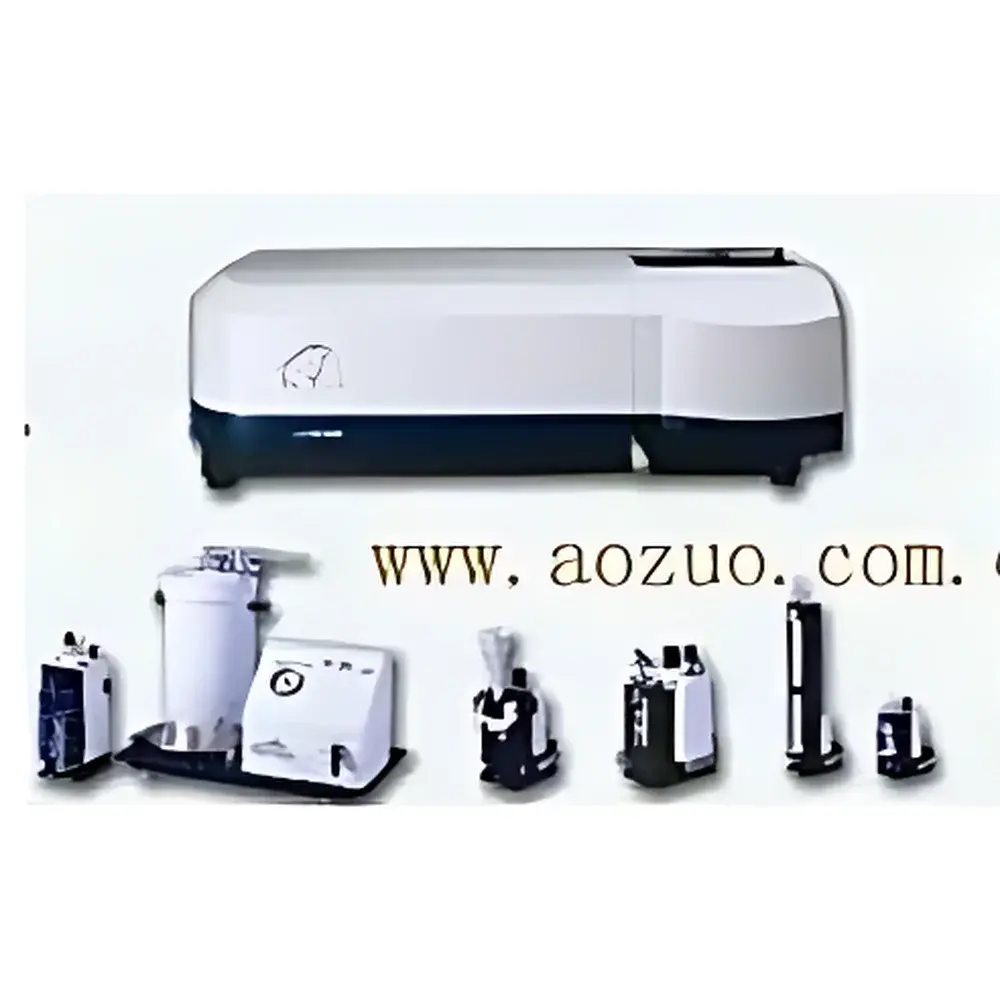
Aozuo EyeTech Soil Particle Size and Shape Analysis System
| Origin | Netherlands |
|---|---|
| Manufacturer Type | Authorized Distributor |
| Origin Category | Imported |
| Model | EyeTech |
| Pricing | Upon Request |
Overview
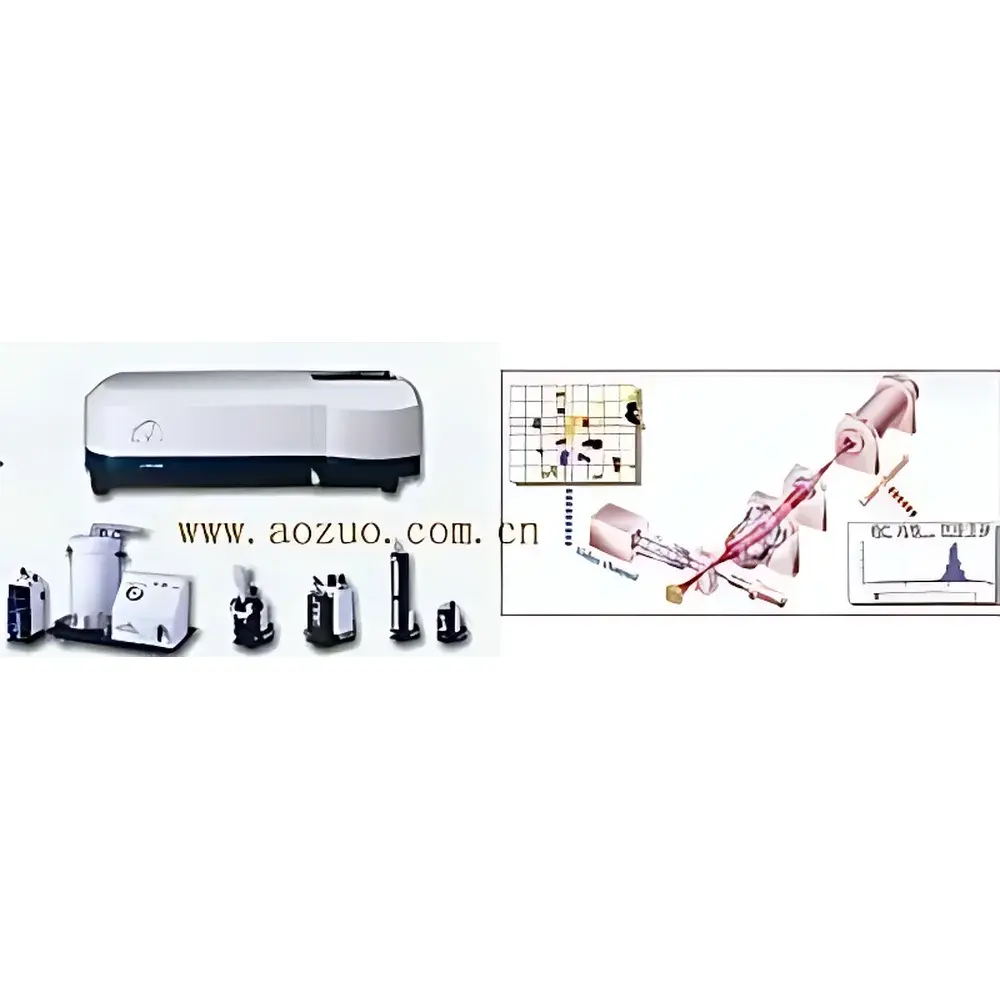
The Aozuo EyeTech Soil Particle Size and Shape Analysis System is a dual-channel, high-resolution analytical platform engineered for comprehensive characterization of heterogeneous environmental particulates—including soils, sediments, fly ash, sludge, and construction-related powders. Unlike conventional single-mode instruments, the EyeTech system integrates orthogonal measurement principles: laser-based optical extinction (light obscuration) in accordance with ISO 13320 and dynamic digital image analysis via high-speed video microscopy. This hybrid architecture eliminates reliance on assumed optical properties (e.g., refractive index), enabling robust, material-agnostic sizing and shape quantification across complex, polydisperse, and optically variable matrices typical of field-collected environmental samples. The system operates on the physical principle that particle-induced light blockage duration correlates directly with projected area—providing absolute size data independent of Mie or Fraunhofer scattering assumptions—while synchronized high-magnification imaging captures real-time morphological attributes under controlled dispersion conditions.
Key Features
- Dual-channel architecture: Simultaneous laser extinction and dynamic image acquisition ensures cross-validated, statistically representative results.
- Material-agnostic laser channel: Based on time-resolved optical extinction (ISO-compliant light obscuration), eliminating dependency on particle refractive index, density, or surface absorption—critical for unknown or mixed-phase environmental samples.
- High-fidelity video channel: Equipped with motorized zoom optics, programmable illumination, and real-time autofocus for consistent particle imaging across wide size ranges (0.5 µm to 5 mm).
- Modular measurement cell ecosystem: Interchangeable flow cells—including magnetic agitation, mechanical shear, laminar flow, aerosol injection, heated, cryogenic, and free-fall configurations—support dry, wet, viscous, fibrous, and volatile sample types.
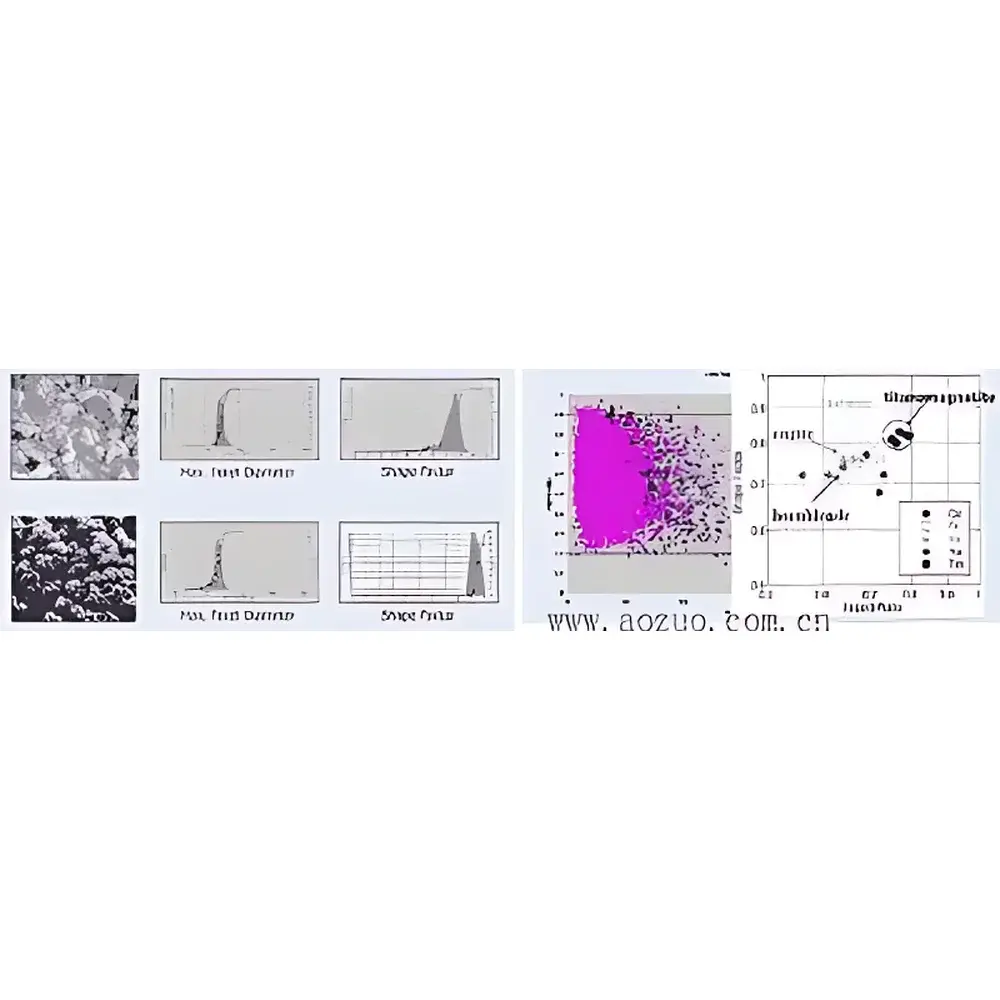
- Quantitative shape analytics engine: Computes ≥38 morphological descriptors per particle, including Feret diameter (max/min/mean), aspect ratio, circularity, convexity, fractal dimension, ellipticity, and surface roughness metrics.
- Trace-component detection capability: Laser channel achieves sub-1% volumetric detection sensitivity for minor fractions—enabling identification of coarse aggregates or microplastic contaminants within fine-grained matrices.
Sample Compatibility & Compliance
The EyeTech system accommodates diverse environmental sample formats without pre-sieving or chemical pretreatment: air-dried bulk soil, aqueous suspensions, stabilized slurries, cementitious pastes, and airborne particulate matter. It complies with ISO 13320 (laser diffraction and light obscuration), ISO 9276 (particle size analysis representation), and ASTM D422/D1140 (soil gradation standards). Data integrity meets GLP and GMP requirements through full audit trail logging, electronic signature support, and 21 CFR Part 11–compliant software architecture. All measurement cells are constructed from chemically inert materials (e.g., sapphire windows, PEEK housings) to prevent leaching or adsorption artifacts during repeated use with aggressive solvents or pH-extreme suspensions.
Software & Data Management
The proprietary EyeTech Analyze Suite provides integrated acquisition, processing, visualization, and reporting. Raw laser pulse trains and synchronized video frames are timestamp-aligned and stored in vendor-neutral HDF5 format. Statistical outputs include cumulative/differential distributions (D10, D50, D90), surface-area-weighted and volume-weighted means, and bivariate scatter plots (e.g., circularity vs. equivalent diameter). Shape filtering allows interactive subset selection based on user-defined morphological thresholds—enabling targeted analysis of angular vs. rounded fractions or elongated vs. isotropic populations. Reports export natively to PDF and Word, embedding annotated images, raw histograms, metadata (sample ID, operator, calibration logs), and embedded video clips (AVI/MKV) for traceability. Batch processing supports multi-sample comparative workflows with automated outlier rejection and inter-laboratory reproducibility assessment.
Applications
The EyeTech system serves as a primary tool in environmental geochemistry, soil physics, waste characterization, and regulatory compliance laboratories. Documented use cases include: (1) Urban runoff monitoring—quantifying temporal shifts in particle size–shape distributions during storm events to model sediment transport dynamics; (2) Thermal waste residue analysis—differentiating fly ash morphology between fluidized-bed and grate incinerators to infer combustion efficiency and heavy metal partitioning; (3) Soil structure assessment—correlating silt/clay fraction shape anisotropy with hydraulic conductivity and aggregate stability indices; (4) Microplastic identification—leveraging irregular convexity and edge fractality to distinguish synthetic polymer fragments from natural organic detritus in riverine sediments. Its ability to resolve both dimensional and topological heterogeneity makes it indispensable for predictive modeling of soil carbon sequestration, contaminant sorption kinetics, and erosion susceptibility mapping.
FAQ
Does the EyeTech system require refractive index input for laser measurements?
No. The laser channel employs optical extinction (light obscuration), which is independent of optical constants—making it suitable for unknown or mixed-composition environmental samples.
Can the system analyze cohesive or aggregated soil samples?
Yes. Optional dispersion modules—including ultrasonic bath integration, magnetic stirrer cells, and controlled-shear flow chambers—enable reproducible de-agglomeration without mechanical degradation.
What is the lower detection limit for shape analysis?
The video channel resolves particles ≥0.5 µm in equivalent spherical diameter under optimal contrast and magnification settings; resolution is sample-dependent and influenced by suspension clarity and refractive index matching.
Is method validation documentation available?
Yes. Comprehensive IQ/OQ/PQ protocols, ISO 17025–aligned uncertainty budgets, and inter-laboratory round-robin test reports are provided with each installation.
Can third-party software import raw EyeTech data?
Yes. All datasets export in open-format HDF5 and CSV, supporting direct ingestion into MATLAB, Python (pandas/scikit-image), R, and commercial statistical packages for custom algorithm development.
Related Products







