
Hyprop Soil pF Curve and Unsaturated Hydraulic Conductivity Measurement System
| Origin | Germany |
|---|---|
| Manufacturer Type | Distributor |
| Origin Category | Imported |
| Model | Hyprop |
| Price | Upon Request |
Overview
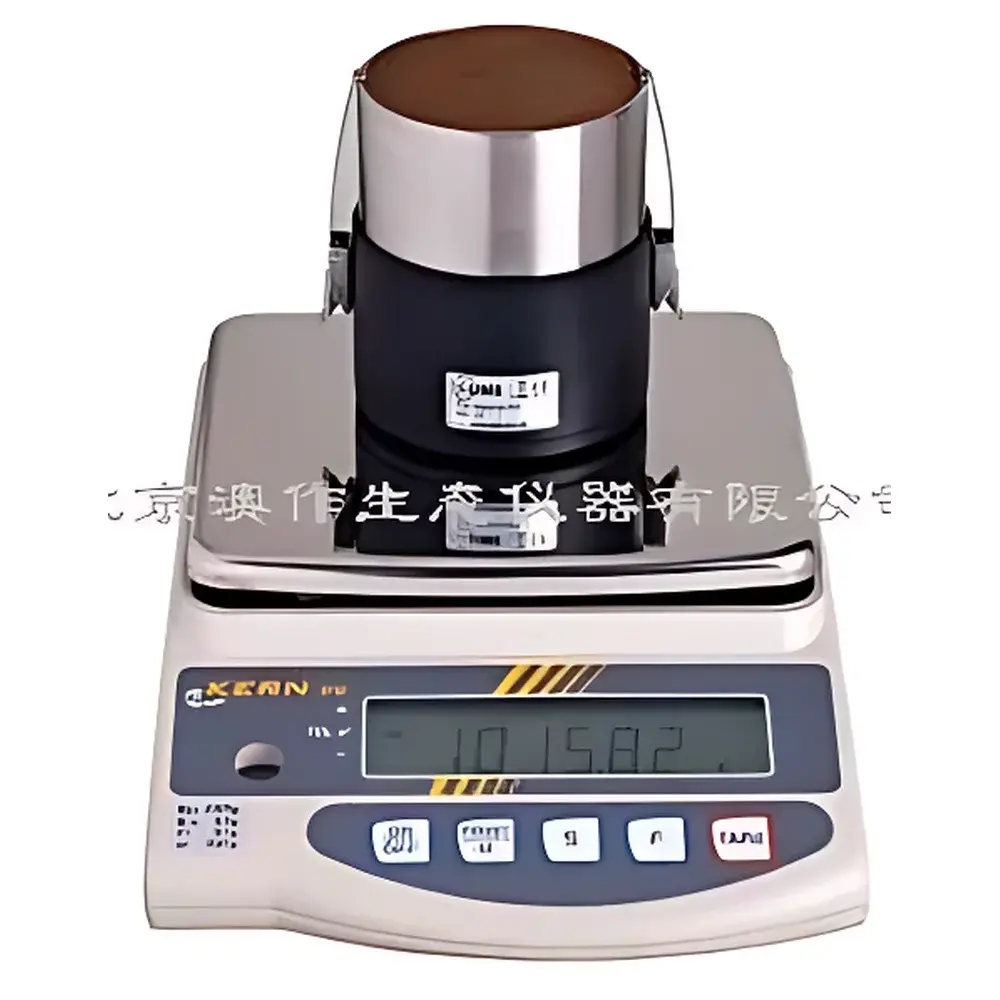
The Hyprop Soil pF Curve and Unsaturated Hydraulic Conductivity Measurement System is a laboratory- and field-deployable instrument engineered for the simultaneous determination of soil water retention curves (pF curves) and unsaturated hydraulic conductivity functions under near-natural drying conditions. Based on the validated simplified evaporation method (Peters & Durner, 2008, Journal of Hydrology), the system applies controlled evaporative drying to intact soil cores while continuously monitoring matric potential gradients and mass loss over time. It operates on the physical principle that evaporation from the soil surface establishes a stable, self-regulating moisture flux regime—enabling high-resolution inference of hydraulic properties across the entire unsaturated range (pF 0–4.2, equivalent to −0.1 kPa to −2500 kPa). Unlike pressure plate or centrifuge methods, Hyprop preserves structural integrity and avoids artificial saturation-drying cycles, delivering data directly relevant to real-world vadose zone processes in hydrological modeling, irrigation scheduling, and ecohydrological research.
Key Features
- Simultaneous acquisition of soil water retention (pF curve) and unsaturated hydraulic conductivity (K(h)) from a single, undisturbed soil core
- Modular architecture supporting up to 20 independent sample units—each with autonomous tensiometric and gravimetric sensing
- Integrated dual-microtensiometer system mounted at two vertical positions within the 250 mL ring-core, enabling direct measurement of matric potential gradients (Δh/Δz)
- High-precision gravimetry: 0–2500 g capacity, 0.01 g resolution, ±0.1 g accuracy; RS232 interface for seamless integration with lab balances
- Tensiometric range: −0.1 kPa to −2500 kPa (−1 hPa to −2500 hPa), with 0.01 hPa resolution and ±1.5 hPa accuracy (0–800 hPa)
- Field-portable design: compact footprint, low power consumption, and battery-compatible operation via optional DC adapter
- Non-destructive installation: microtensiometers inserted from the base of the ring-core, eliminating lateral disturbance to pore structure
- Automated data synchronization: tensioLINK USB interface (RS485-to-USB) ensures deterministic timestamping and error-free packet transmission
Sample Compatibility & Compliance
The Hyprop system accommodates standard 250 mL cylindrical soil cores (6.5 cm diameter × 7.5 cm height), compatible with widely used ring samplers and core extractors. It supports mineral soils ranging from coarse sand to heavy clay, provided the sample maintains structural coherence during slow evaporation. No pre-saturation or vacuum infiltration is required—only consistent ambient temperature and humidity control during measurement (recommended: 20 ± 2 °C, RH 40–60%). The system complies with ASTM D4944 (standard test method for field determination of soil moisture content) and ISO 11274 (soil quality—determination of water retention characteristic). Data acquisition protocols are fully traceable and support GLP-compliant documentation when used with tensioVIEW’s audit trail and user access controls.
Software & Data Management
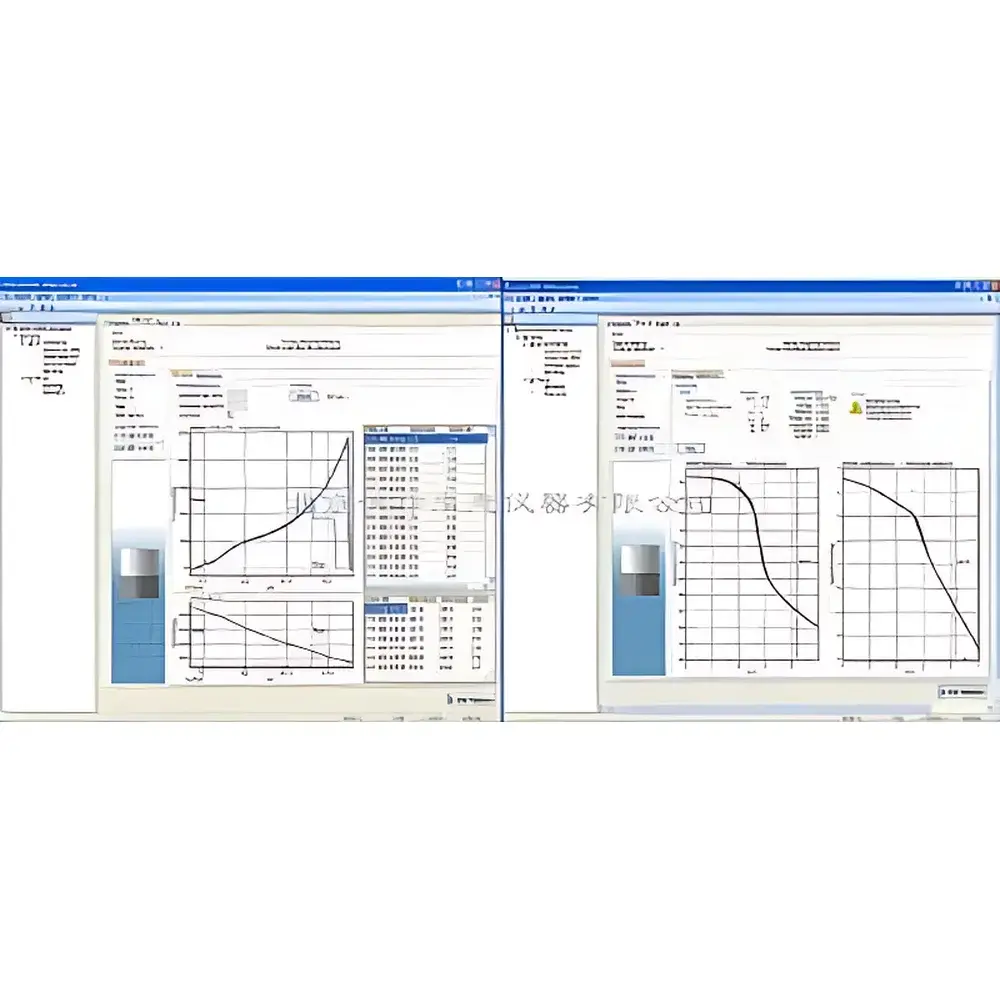
tensioVIEW software provides real-time visualization, automated parameter fitting, and export-ready reporting. It implements the inverse estimation algorithm described by Peters & Durner (2008) to derive the van Genuchten–Mualem hydraulic parameter set (α, n, θr, θs, Ks) from raw tensiometric and gravimetric time series. All measurements are stored in open-format CSV and HDF5 files, ensuring long-term archival integrity and interoperability with Python (SciPy, Pandas), R (hydrus, soilphysics), and MATLAB environments. The software supports FDA 21 CFR Part 11–aligned features including electronic signatures, session logging, and immutable raw-data archiving. Version-controlled updates and calibration certificate import are integrated into the configuration manager.
Applications
- Parameterization of Richards’ equation-based models in watershed-scale hydrological simulation (e.g., HYDRUS, SWAP, ParFlow)
- Evaluation of soil hydraulic response to land-use change, biochar amendment, or compaction
- Validation of pedotransfer functions (PTFs) using measured rather than estimated K(h) data
- Supporting FAO-56 crop water stress index development through root-zone water availability profiling
- Research on preferential flow initiation thresholds and hysteresis quantification in structured soils
- Teaching laboratories in soil physics, environmental engineering, and agricultural hydrology
FAQ
What soil types are suitable for Hyprop measurements?
Hyprop is validated for mineral soils with sufficient cohesion to maintain structural integrity during slow evaporation—including loams, clays, silts, and sandy loams. Highly organic or very coarse-textured soils (e.g., pure gravel or peat) may require modified boundary conditions or complementary methods.
Is sample saturation required before measurement?
No. The method begins with a naturally moist or air-dried core. Saturation is neither necessary nor recommended—evaporative drying initiates from field-moist conditions to preserve native pore connectivity.
Can Hyprop be used outdoors?
Yes, in shaded, temperature-stable environments. For extended field deployments, an insulated enclosure with passive humidity buffering and solar-shielded weighing station is advised to minimize diurnal thermal drift.
How does Hyprop differ from the WP4C or pressure plate apparatus?
Hyprop measures dynamic flux-driven properties under evaporative boundary conditions, whereas WP4C estimates equilibrium water potential at single points, and pressure plates yield discrete retention points via external suction—neither captures functional K(h) without additional assumptions or interpolation.
Is tensioVIEW compliant with ISO/IEC 17025 documentation requirements?
Yes—when configured with user-defined SOPs, calibration metadata embedding, and electronic signature workflows, tensioVIEW satisfies documentation traceability requirements for accredited testing laboratories.






