
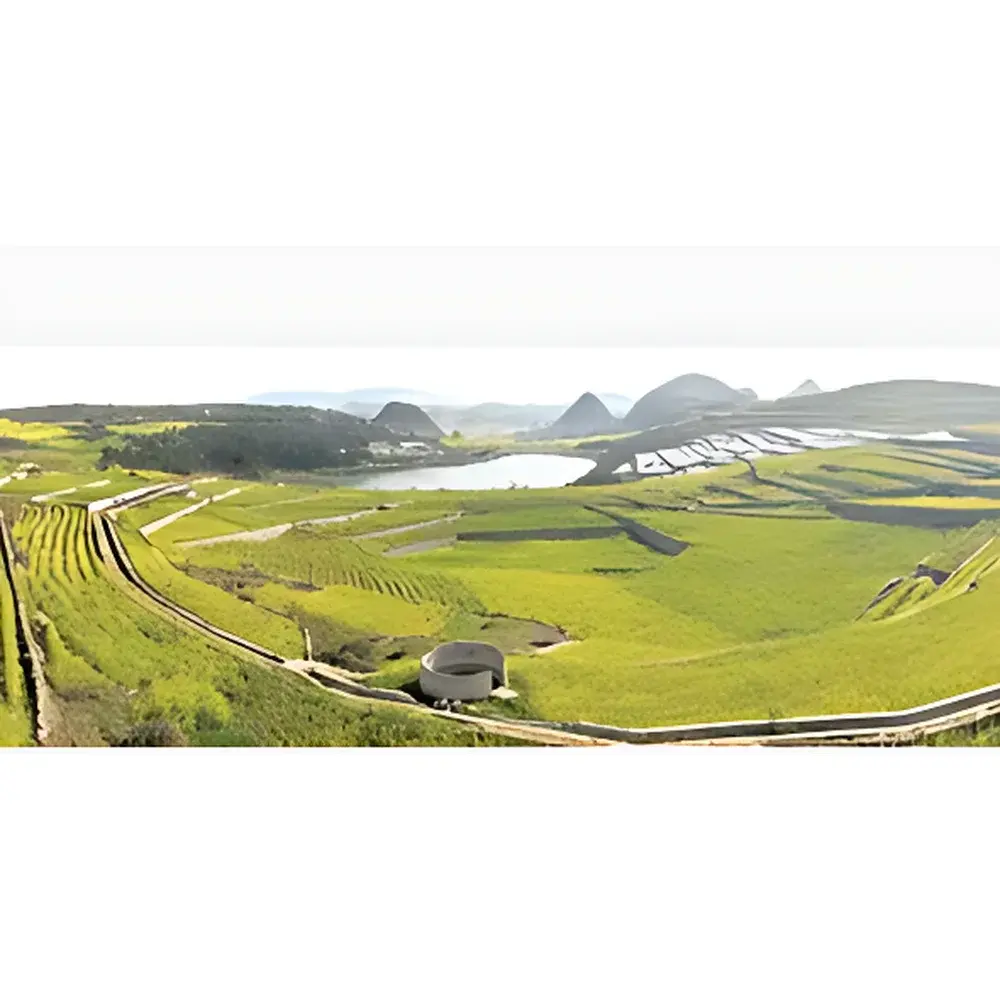
AZ LMP-ENVIDATA Small-Watershed Scale Water Resource Management System
| Brand | AZ (Beijing AoZuo) |
|---|---|
| Origin | Germany |
| Manufacturer Type | Original Equipment Manufacturer (OEM) |
| Product Category | Imported Instrument |
| Model | LMP-ENVIDATA |
| Instrument Type | Soil Moisture and Water Potential Analyzer |
| Compliance | CE-marked, IP67-rated, ISO/IEC 17025-compatible data acquisition architecture |
Overview
The AZ LMP-ENVIDATA Small-Watershed Scale Water Resource Management System is an integrated environmental monitoring platform engineered for high-resolution hydrological process observation and data-driven water resource assessment at the catchment scale (typically 0.1–10 km²). It operates on a physically grounded, multi-sensor measurement framework that captures the full water balance components—precipitation input, soil water storage dynamics, and surface runoff output—within closed or semi-closed small watersheds. The system applies first-principles hydrology: rainfall is quantified via laser disdrometry; soil moisture and matric potential are measured using time-domain reflectometry (TDR) and tensiometric principles; and open-channel flow is derived from ultrasonic stage sensing across calibrated weirs. This tripartite observational architecture enables continuous, synchronized acquisition of mass-balance-critical variables under field conditions, supporting both real-time operational monitoring and long-term trend analysis in compliance with international hydrological observation standards (e.g., WMO Guide to Hydrological Practices, ISO 14001 environmental management integration).
Key Features
- Laser disdrometer unit: Measures drop size distribution (DSD), fall velocity, intensity, and precipitation phase (rain, drizzle, snow, sleet, hail) with minimum detectable diameter of 0.16 mm; outputs SYNOP/METAR-compliant classification, Z/R ratio for radar calibration, and meteorological visibility (MOR)
- TDR-based soil moisture sensing: TRIME-series probes operate at 1 GHz frequency, resolving signal travel time with ±3 ps precision; direct dielectric permittivity measurement enables volumetric water content (θv) calculation across diverse soil textures
- Automated tensiometer array: Self-refilling ceramic cup tensiometers provide continuous soil water potential (ψ) measurements from −10 kPa to −80 kPa; configurable probe lengths (15–100 cm) and angular mounting support profiling through the unsaturated zone
- Ultrasonic stage-based runoff quantification: Dual-sensor configuration—vertical ultrasonic transducer for weir-stage measurement and horizontal reference transducer for temperature- and humidity-induced speed-of-sound correction—ensures <1% error under 30% submergence and <3% under 50% submergence
- Robust field deployment design: IP67-rated enclosures, operating temperature range of −30°C to +70°C, solar or AC power options, low-power data logging (≤15 mW in sleep mode), and GPRS-enabled wireless telemetry
Sample Compatibility & Compliance
The LMP-ENVIDATA system is validated for deployment across heterogeneous land-cover types—including agricultural fields, forested slopes, grassland, and eroded loess terrain—and accommodates variable soil hydraulic properties (sand to clay loam) via user-defined calibration curves (up to 15 stored profiles). All sensor modules comply with IEC 60529 (IP67 ingress protection), EN 61326-1 (EMC for measurement equipment), and CE marking requirements for environmental instrumentation. Data acquisition firmware supports audit-trail logging per GLP/GMP-aligned practices, and raw sensor outputs (voltage, pulse count, time-of-flight) are retained alongside processed values to ensure traceability. While not FDA 21 CFR Part 11-certified out-of-the-box, the ENVIdata server software architecture supports optional digital signature implementation and role-based access control for regulated research environments.
Software & Data Management
The ENVIdata server platform functions as a centralized, scalable data hub with dual deployment modes: on-premise installation on customer-owned Linux/Windows servers or secure cloud-hosted operation on AZ-managed infrastructure. Field loggers transmit time-stamped, CRC-verified datasets via HTTP(S) push protocol—eliminating reliance on legacy dial-up modems and improving transmission reliability by >99.2% in remote deployments. The software provides automated quality control (e.g., outlier detection via Tukey’s fences, gap-filling using temporal interpolation), metadata tagging (sensor ID, location, calibration date), and export to standard formats (CSV, NetCDF, OGC SensorML). Integrated GIS tools enable spatial visualization of soil moisture gradients overlaid on DEM and land-use layers, facilitating empirical modeling of soil water–topography relationships (e.g., wetness index derivation). API endpoints support integration with third-party hydrological models (e.g., SWAT, MIKE SHE) and national water information systems.
Applications
- Small-catchment water balance closure studies for validation of distributed hydrological models
- Soil moisture–rainfall–runoff response analysis in erosion-prone regions (e.g., Loess Plateau, Mediterranean hillslopes)
- Evaluation of rainwater harvesting efficiency and infiltration enhancement interventions
- Long-term monitoring of climate change impacts on near-surface hydrological partitioning
- Supporting watershed-scale irrigation scheduling and drought early-warning systems
- Field calibration and ground-truthing of satellite-derived soil moisture products (e.g., SMAP, Sentinel-1)
FAQ
Is the LMP-ENVIDATA system suitable for unattended operation in remote mountainous terrain?
Yes—its solar-powered configuration, wide thermal tolerance, and GPRS fallback connectivity enable continuous 12-month deployment without maintenance.
Can the TDR sensors be used in saline soils?
Standard TRIME probes are optimized for EC < 4 dS/m; for higher salinity, optional low-frequency TDR variants or capacitance-based alternatives are available upon request.
Does the ENVIdata server support automated report generation?
Yes—scheduled PDF/Excel reports can be configured for daily, weekly, or event-triggered delivery, including statistical summaries (mean, std dev, min/max) and anomaly alerts.
What level of technical support is provided for model development using collected data?
AZ offers optional consulting services for statistical modeling (e.g., multiple linear regression of soil moisture vs. topographic indices) and custom script development in R/Python.
Are firmware updates delivered remotely?
Firmware patches and feature upgrades are pushed over-the-air via the ENVIdata server interface, requiring no physical site visit.
Related Products







