Voxel-Spirit Nano-CT Voxel Calibration Phantom by CactuX
| Brand | CactuX |
|---|---|
| Origin | Czech Republic |
| Model | Voxel-Spirit |
| Component Type | Certified Metrological Reference Phantom for X-ray Computed Tomography |
| Calibration Accuracy | ±0.06 µm |
| FOV Compatibility | Down to 0.6 mm × 0.7 mm |
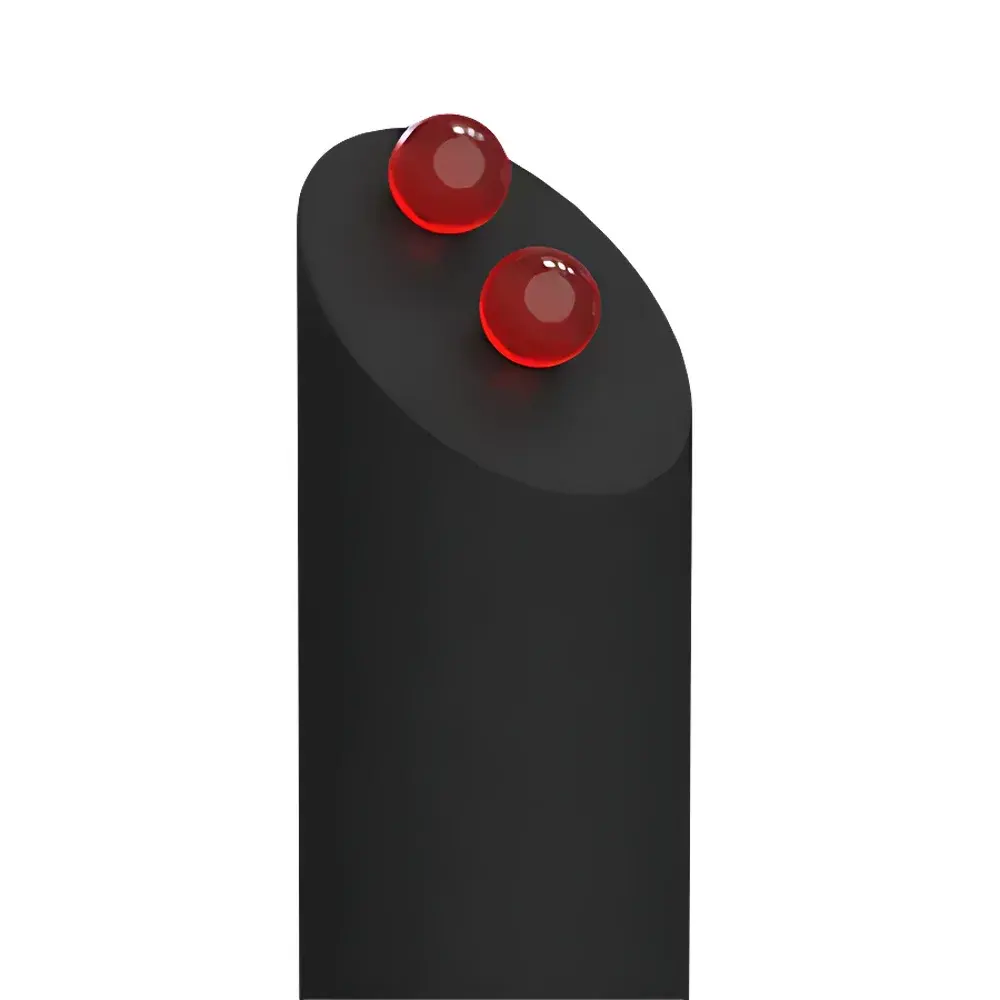
| Sphere Diameter | 0.3 mm |
| Inter-sphere Distance | 0.45 mm (NIST-traceable certified spacing) |
| Mount Options | 1.5 mm / 3.0 mm / 5.0 mm diameter × 50 mm length |
| Construction Materials | Synthetic ruby, high-purity carbon, and medical-grade stainless steel |
| Software Agnostic | Compatible with all standard CT reconstruction and image analysis platforms (e.g., Avizo, Dragonfly, VGStudio MAX, ImageJ/Fiji with CT plugins) |
Overview
The Voxel-Spirit Nano-CT Voxel Calibration Phantom is a metrologically certified reference standard engineered specifically for sub-micron resolution X-ray computed tomography (nano-CT) systems. Unlike conventional phantoms designed for macro- or micro-CT, Voxel-Spirit addresses the critical need for traceable, high-precision voxel size validation in ultra-high-resolution volumetric imaging—particularly where field-of-view (FOV) dimensions fall below 1 mm. Its design is grounded in first-principles geometric metrology: an array of precisely spaced, spherically symmetric features fabricated from materials with high X-ray attenuation contrast and exceptional dimensional stability. The phantom enables direct, non-destructive verification of voxel isotropy, spatial linearity, and reconstruction fidelity at resolutions approaching 0.5 µm effective voxel edge length. It is not a generic test object but a primary calibration artifact—certified to ±0.06 µm uncertainty in inter-feature spacing—making it suitable for ISO/IEC 17025-accredited laboratories performing CT-based dimensional metrology per ISO 12179, ASTM E1441, and VDI/VDE 2630-1.1 guidelines.
Key Features
- Traceable calibration: Inter-sphere distance of 0.45 mm certified to ±0.06 µm uncertainty via interferometric measurement against NIST-traceable standards.
- Sub-micron FOV compatibility: Validated for use with nano-CT systems operating at FOVs as small as 0.6 mm × 0.7 mm—enabling calibration in beamline, laboratory-scale, and benchtop nano-CT configurations.
- Material-optimized contrast: Spheres fabricated from synthetic ruby (Al₂O₃ doped with Cr³⁺) provide stable, high-Z contrast against low-Z carbon matrix; stainless steel mounting stem ensures mechanical rigidity without introducing scattering artifacts.
- Modular mounting system: Three interchangeable stem diameters (1.5 mm, 3.0 mm, 5.0 mm) allow secure integration into diverse sample holders—including rotation stages, vacuum-compatible fixtures, and custom micro-positioning mounts—without requiring re-alignment.
- Software-agnostic workflow: Requires no proprietary acquisition or processing software; compatible with open-source (ImageJ/Fiji + CT plugins), commercial (VGStudio MAX, Avizo, Dragonfly), and in-house reconstruction pipelines.
Sample Compatibility & Compliance
Voxel-Spirit is compatible with polychromatic and monochromatic X-ray sources operating in the 5–60 keV range, including synchrotron beamlines (e.g., ESRF ID19, PETRA III P05), laboratory nano-CT systems (e.g., Zeiss Xradia Versa, Thermo Fisher HeliScan), and compact microfocus setups. Its physical construction excludes organic binders, adhesives, or polymer substrates—eliminating outgassing, thermal drift, or radiation-induced deformation. All materials comply with ISO 10993-5 (cytotoxicity) and ASTM F899 (stainless steel specification), ensuring suitability for cleanroom and regulated environments. Certification documentation includes full uncertainty budget, traceability chain to national metrology institutes (CMI, Czech Metrology Institute), and conformance statement to ISO/IEC 17025:2017 clause 6.6 (reference material requirements).
Software & Data Management
Calibration using Voxel-Spirit follows a standardized, audit-ready protocol: acquire projection data under identical geometry used for sample scanning; reconstruct volume using default or validated parameters; identify sphere centroids in 3D via sub-pixel centroiding algorithms (e.g., Gaussian fitting or moment-based localization); compute measured inter-feature distance and compare against certified value. The resulting deviation informs voxel scaling correction factors applied during final sample reconstruction. All steps are fully documentable within electronic lab notebooks (ELNs) supporting 21 CFR Part 11 compliance. Raw projection datasets, reconstructed volumes, and centroid logs can be archived in FAIR-compliant formats (TIFF stacks, HDF5 metadata-embedded volumes) for GLP/GMP audit trails.
Applications
- Validation of voxel isotropy in additively manufactured lattice structures (e.g., Ti-6Al-4V gyroids, Ni-based superalloy foams).
- Uncertainty quantification for CT-based dimensional inspection of MEMS components, semiconductor packaging, and microfluidic devices.
- Reference standard for inter-laboratory comparison studies under EURAMET projects or ISO round-robin protocols.
- Verification of geometric accuracy in time-resolved (4D) nano-CT experiments involving in situ mechanical or thermal loading.
- Training and qualification of CT operators and metrologists in accordance with ISO 15530-3 and VDI/VDE 2630-2.1.
FAQ
Is Voxel-Spirit suitable for phase-contrast CT modalities?
Yes—its high-density ruby spheres generate strong absorption contrast while maintaining minimal edge-enhancement artifacts; optimal for both absorption- and propagation-based phase retrieval workflows.
Can it be used for beam hardening correction validation?
No—Voxel-Spirit is not designed for spectral characterization; it serves exclusively for spatial calibration. Beam hardening assessment requires dedicated multi-material phantoms (e.g., CIRS Model 062M).
What is the recommended exposure time per projection?
Depends on source flux and detector quantum efficiency; typical range is 100–500 ms/projection at 30 kV, 100 µA, with ≥1200 projections over 360°.
Does CactuX provide recalibration services?
Yes—certified recalibration every 24 months is available through CactuX’s accredited metrology lab (CMI-certified scope), including updated uncertainty budgets and ISO/IEC 17025-compliant reports.
Is the phantom vacuum-compatible?
Yes—the all-metal construction (ruby, carbon, stainless steel) and absence of volatile organics permit operation under high vacuum (≤10⁻⁵ mbar) without outgassing or dimensional change.