
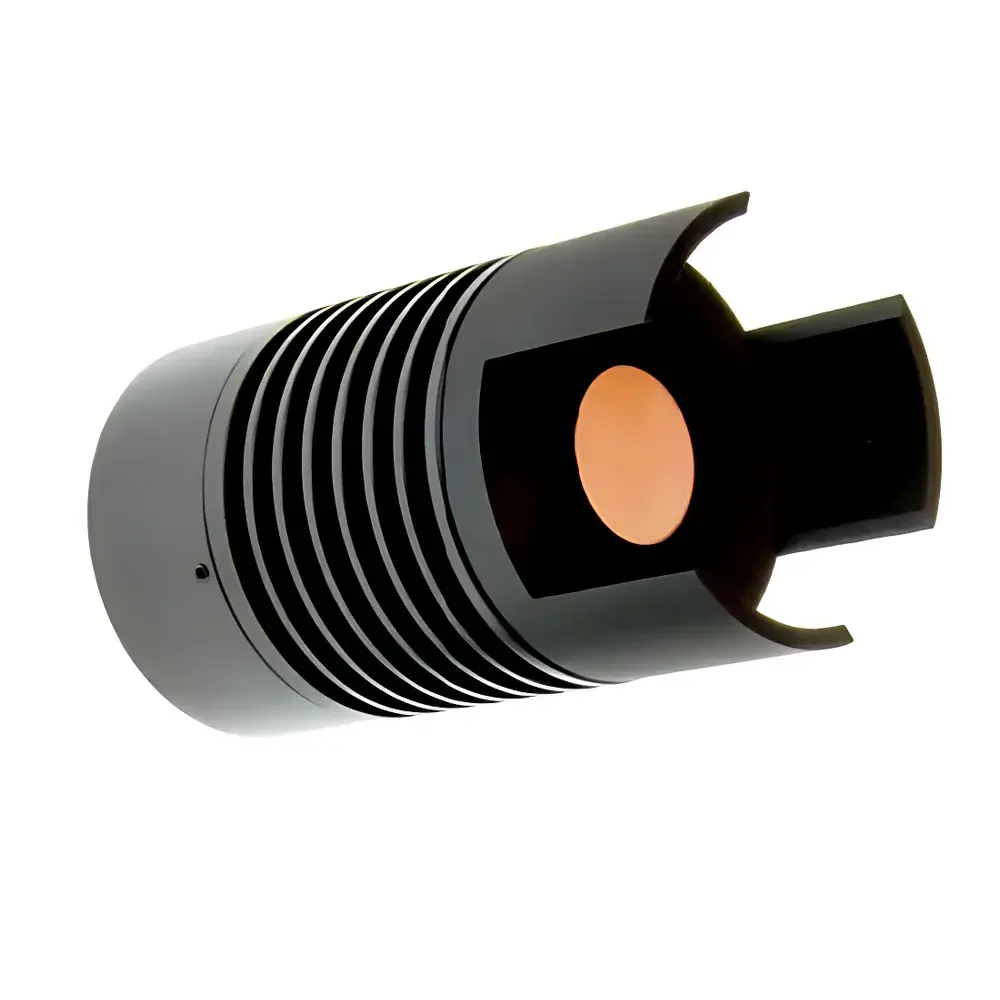
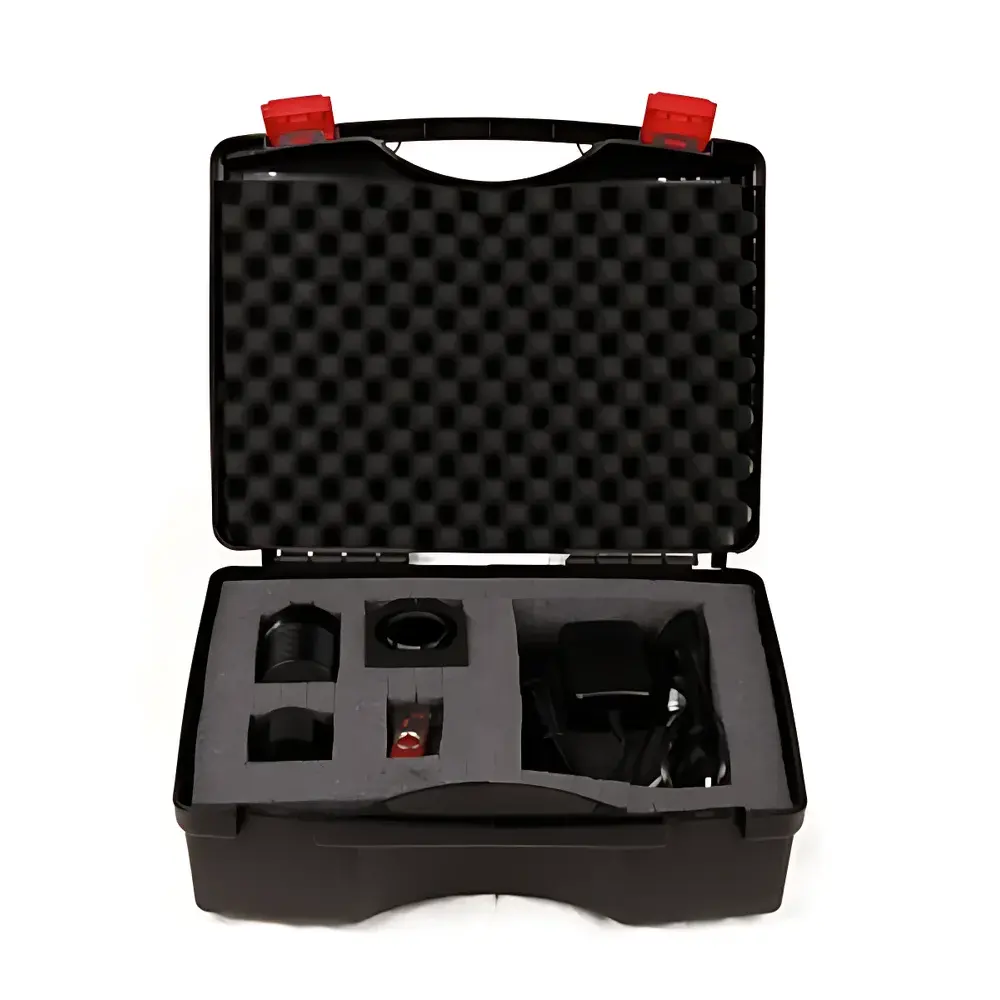
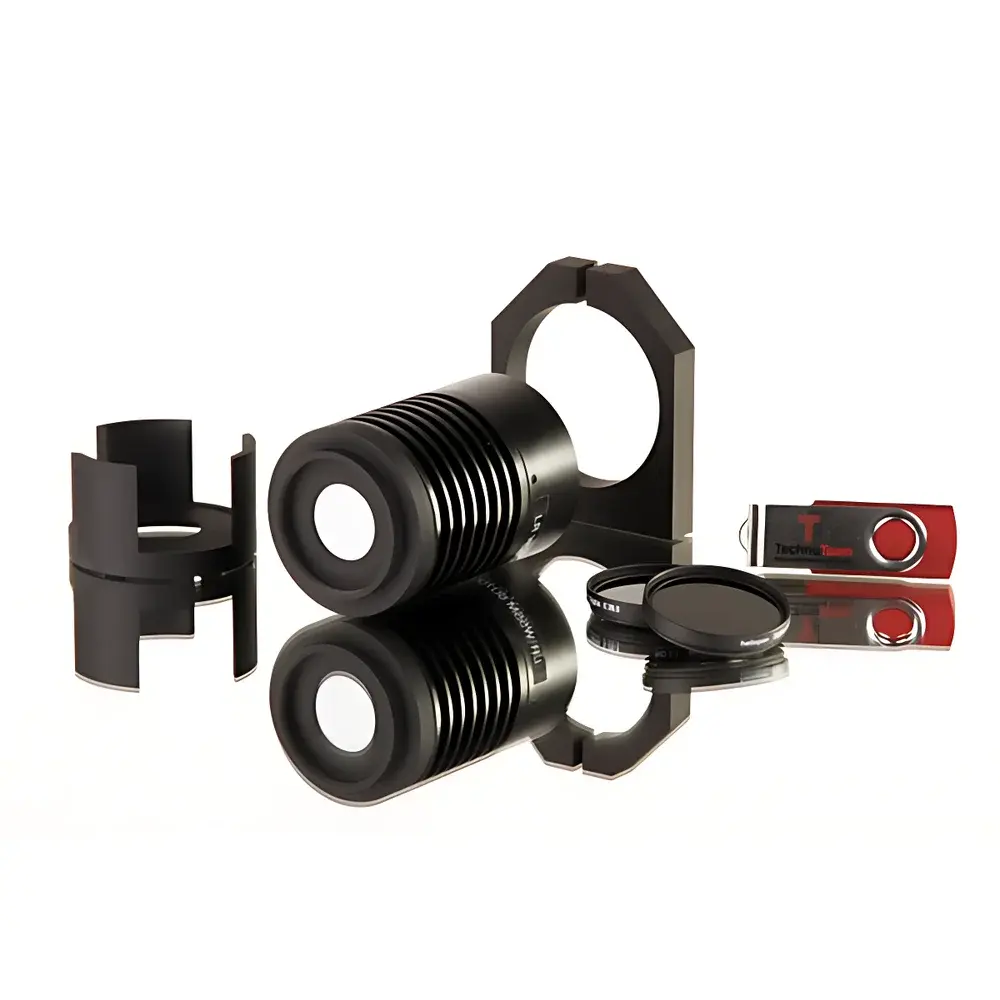
TechnoTeam L3 LED Luminance and Chromaticity Standard Light Source
| Brand | TechnoTeam |
|---|---|
| Origin | Germany |
| Model | L3 |
| Brightness Stability | <1% per 100 h |
| Chromaticity Coordinate Stability | <1 nm (dominant wavelength) per 100 h |
| Operating Temperature Range | 15°C – 30°C |
| Spatial Non-Uniformity | <2% |
| Spectral Options | Red, Green, Blue, Yellow, Orange, White |
| Interface | USB (real-time monitoring of drive current, heatsink temperature, and operational hours) |
| Application Scope | Calibration of luminance meters, chroma meters, CCD/CMOS imaging systems, integrating spheres, and goniophotometers |
Overview
The TechnoTeam L3 LED Luminance and Chromaticity Standard Light Source is an engineered reference instrument designed to address critical spectral mismatch errors inherent in conventional incandescent-based standard sources when calibrating modern solid-state lighting (SSL) measurement systems. Unlike broadband thermal radiators, the L3 employs spectrally narrowband, high-stability LEDs as primary emitters—enabling traceable, application-specific calibration aligned with the spectral power distributions (SPDs) of contemporary LED products, backlight units, and display modules. Its operation is grounded in photometric and colorimetric traceability to national metrology institutes (NMIs), supporting compliance with CIE S 023/E:2020, ISO/CIE 13655:2017 (Spectral irradiance and radiance measurements), and IEC 62385:2022 (LED module testing). The L3 operates under controlled thermal management to ensure long-term repeatability across photometric (luminance, luminous intensity), colorimetric (CIE 1931 xy, u’v’, dominant wavelength, CCT), and radiometric (spectral radiant flux) parameters.
Key Features
- Multi-spectral LED array with factory-traceable spectral output for red, green, blue, yellow, orange, and white emission—each individually characterized per CIE 15:2018 and NIST-traceable spectral irradiance calibration reports.
- High photometric stability: luminance drift <1% over 100 hours under constant-current drive and stabilized thermal environment (15–30°C ambient).
- Chromaticity stability maintained at Δλd <1 nm and Δx, Δy <0.001 per 100 h—achieved via integrated thermoelectric cooling (TEC), real-time junction temperature feedback, and closed-loop current regulation.
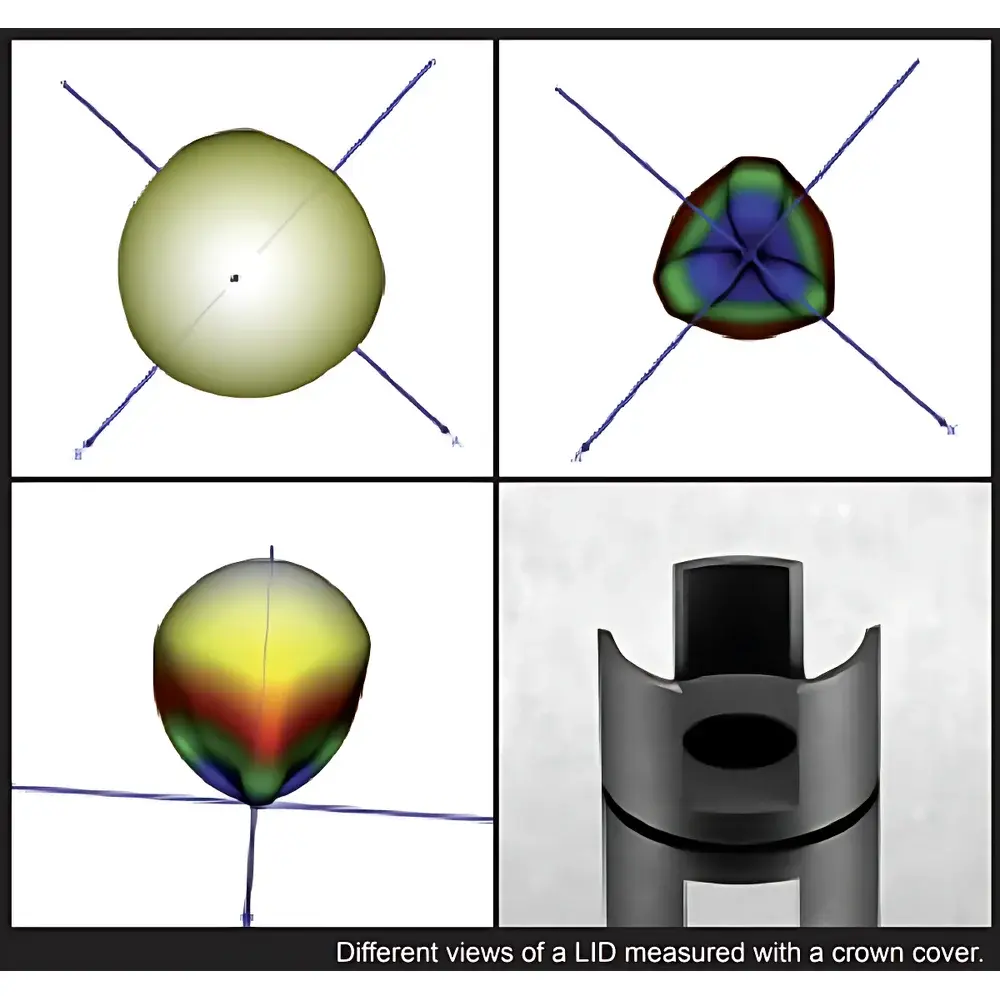
- Spatial uniformity <2% across the defined 25 mm aperture—verified using calibrated imaging photometers per ISO 9241-305:2016 Annex B.
- USB 2.0 interface enabling host-controlled operation and continuous telemetry: forward current, heatsink temperature, cumulative operating hours, and LED aging compensation status.
- Modular mechanical design compliant with ISO 5725-2:2022 for reproducible mounting in integrating spheres (e.g., Labsphere Ulbricht), goniophotometers (e.g., Instrument Systems CAS 140D), and benchtop photometry setups.
Sample Compatibility & Compliance
The L3 supports calibration of photodetector-based instruments—including luminance meters (e.g., Konica Minolta LS-150), tristimulus colorimeters (e.g., X-Rite i1Pro 3), scientific-grade CCD/CMOS cameras (e.g., FLIR Oryx ORX-10G), and spectral radiometers (e.g., Ocean Insight QE Pro)—across industry-standard measurement geometries (2° and 10° observer, f/2.8 and f/8 apertures). It meets requirements for GLP-compliant calibration workflows per ISO/IEC 17025:2017 Clause 6.4 (Equipment), including documented uncertainty budgets (k=2) for luminance (±0.8%), chromaticity (±0.0015 in CIE 1931 xy), and correlated color temperature (±25 K). Device firmware includes audit-log functionality compatible with FDA 21 CFR Part 11 electronic record controls when deployed in regulated QC environments.
Software & Data Management
TechnoTeam provides the L3 Control Suite—a Windows-based application supporting remote configuration, real-time parameter logging (CSV export), automated stability validation protocols, and integration with LabVIEW™ via IVI-COM drivers. All calibration certificates include full spectral data (380–780 nm at 1 nm intervals), CIE 1931 chromaticity coordinates, and uncertainty analysis per GUM (JCGM 100:2008). Raw spectral files are delivered in JIS Z 8722-compliant .spc format; metadata conforms to EXIF 2.31 for imaging system interoperability. Firmware updates retain backward compatibility and support secure digital signature verification.
Applications
- Primary calibration reference for LED luminous intensity standards in accredited photometric laboratories.
- Verification and recalibration of display measurement systems (e.g., OLED, microLED, LCD) used in automotive HUDs, medical monitors, and consumer electronics QA.
- Reference source for distributed photometry systems performing IES LM-79 and EN 13032-4 compliant testing.
- Stability reference in accelerated lifetime testing chambers where thermal and drive-current cycling must be decoupled from measurement drift.
- Training and inter-laboratory comparison exercises under EURAMET CG-18 guidelines for SSL metrology.
FAQ
Is the L3 suitable for calibrating spectroradiometers?
Yes—the L3’s spectrally resolved output and NIST-traceable SPD data enable absolute radiometric calibration of spectroradiometers within ±1.2% uncertainty (380–780 nm, k=2).
Can multiple L3 units be synchronized for multi-color uniformity mapping?
Yes—via TTL trigger input and USB command synchronization, enabling coordinated pulsing or sequential activation across up to 8 units with sub-millisecond timing precision.
What documentation is supplied with each unit?
Each L3 ships with a Certificate of Calibration (including spectral irradiance, chromaticity, and stability test data), ISO/IEC 17025-accredited uncertainty budget, EU Declaration of Conformity (CE), RoHS 2011/65/EU compliance statement, and full technical manual.
Does the L3 require annual recalibration?
TechnoTeam recommends recalibration every 12 months or after 2,000 operational hours—whichever occurs first—to maintain stated uncertainty performance under ISO/IEC 17025 surveillance requirements.
How is thermal drift compensated during extended measurements?
Integrated TEC modules actively regulate heatsink temperature to ±0.1°C; firmware applies real-time correction coefficients derived from in-situ thermal resistance modeling and junction temperature estimation.





