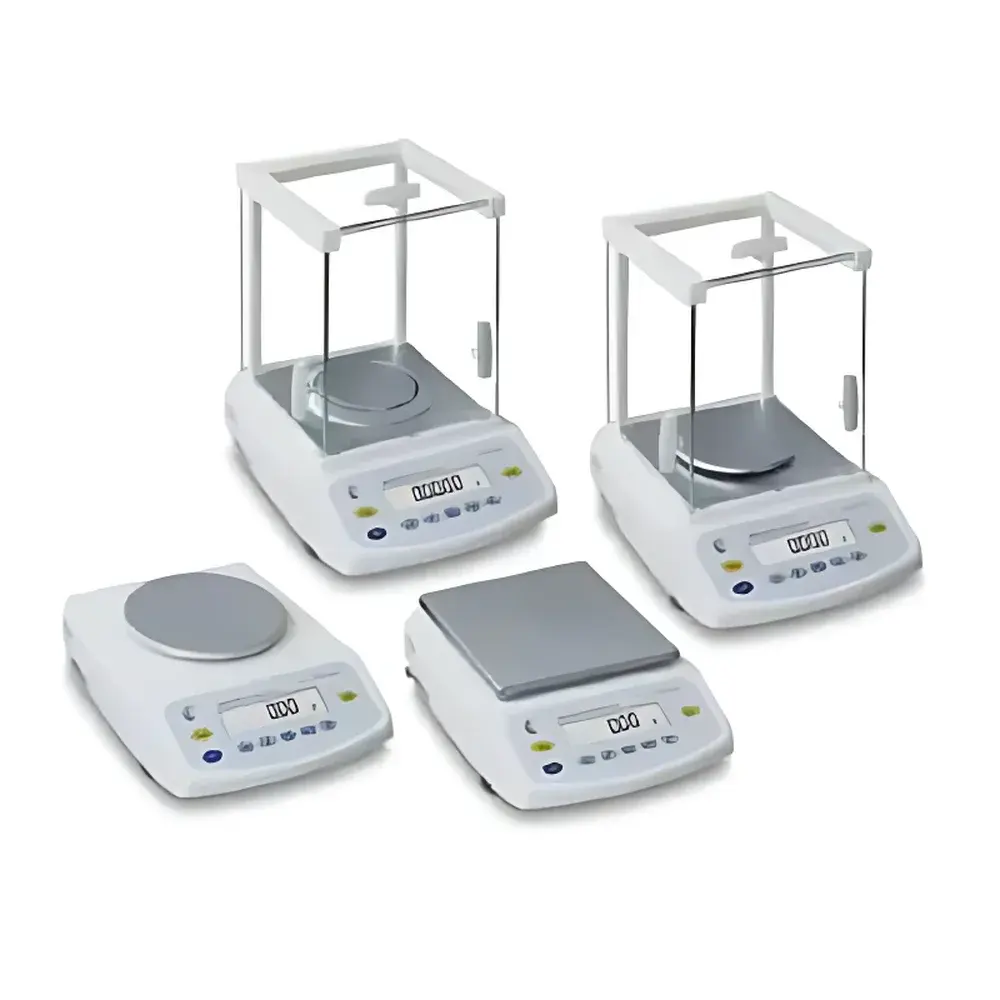
Sartorius BSA623S-CW Precision Balance
| Key | Brand: Sartorius |
|---|---|
| Origin | Germany |
| Model | BSA623S-CW |
| Readability | 1 mg |
| Capacity | 620 g |
| Calibration | Internal motor-driven calibration |
| Display | Backlit LCD with 15 mm character height |
| Pan Diameter | Ø 115 mm |
| Interface | RS-232C bidirectional |
| Compliance | ISO/IEC 17025, GLP, GMP-relevant data integrity support |
| Built-in Applications | Percentage weighing, net weight summation, animal/dynamic weighing, unit conversion, arithmetic functions (×, ÷) |
Overview
The Sartorius BSA623S-CW Precision Balance is an entry-level analytical-grade instrument engineered for routine laboratory weighing tasks requiring high repeatability and traceable accuracy. Designed and manufactured in Germany, it operates on electromagnetic force compensation (EMFC) principle—where the mass-induced deflection of a precision load cell is counterbalanced by a controlled electromagnetic current, yielding a stable, drift-resistant measurement signal. With a readability of 1 mg and a maximum capacity of 620 g, the BSA623S-CW meets the performance requirements for sample preparation, reagent dispensing, quality control checks, and educational applications where regulatory documentation and process consistency are essential. Its internal motor-driven calibration system ensures metrological integrity without manual intervention, reducing operator dependency and minimizing downtime between calibrations.
Key Features
- Internal motor-driven calibration: Fully automated, one-button calibration using built-in reference weights—eliminates external calibration artifacts and supports documented compliance workflows.
- Backlit LCD display with 15 mm high-contrast characters: Ensures legibility under variable ambient lighting conditions, including low-light or brightly lit cleanroom environments.
- Ergonomic control panel with intuitive menu navigation: English-language prompts (with optional multilingual firmware: German, French, Spanish, Chinese) and dedicated function keys reduce training time and minimize misoperation risk.
- Integrated leveling indicator adjacent to the display: Enables immediate visual verification of instrument level—critical for maintaining mechanical stability and measurement fidelity.
- RS-232C bidirectional interface as standard: Supports direct connection to Sartorius YDP03-0CE printers or PCs for real-time data capture, audit trail generation, and electronic record retention.
- Robust aluminum alloy housing and Ø115 mm stainless steel weighing pan: Provides mechanical durability and chemical resistance suitable for daily use in diverse laboratory settings.
Sample Compatibility & Compliance
The BSA623S-CW accommodates solid, granular, and non-volatile liquid samples within its 620 g capacity limit. Its 1 mg readability enables precise formulation of standards, titrants, and pharmaceutical intermediates. The balance conforms to international metrological standards including OIML R 76-1 (2006) for non-automatic weighing instruments and supports Good Laboratory Practice (GLP) and Good Manufacturing Practice (GMP) documentation requirements through timestamped, user-identifiable printouts and data exports. When paired with Sartorius-certified peripherals (e.g., YDP03-0CE printer), it facilitates compliance with FDA 21 CFR Part 11 principles—including electronic signature readiness, audit trail logging, and data immutability—provided system configuration and procedural controls are implemented per organizational SOPs.
Software & Data Management
While the BSA623S-CW does not feature embedded PC software, its RS-232C interface enables seamless integration with third-party laboratory information management systems (LIMS) and electronic lab notebooks (ELN) via ASCII-based communication protocols. All weighing events—including tare, net weight, calibration logs, and application-mode selections—are timestamped and exportable in plain-text format. Optional Sartorius Data Transfer Software (v3.x) provides configurable data mapping, automatic file naming conventions, and CSV/Excel-compatible output. For regulated environments, users must validate the complete data pathway—from balance to storage medium—per ISO/IEC 17025 clause 5.9 and Annex A.3 on measurement traceability and data integrity.
Applications
- Pharmaceutical QC: Weighing active pharmaceutical ingredients (APIs) and excipients during batch release testing.
- Chemical synthesis: Accurate dispensing of catalysts, reagents, and solvents prior to reaction setup.
- Food & beverage labs: Moisture content determination support, ingredient proportioning, and nutritional labeling verification.
- Academic teaching labs: Foundational instruction in metrology, uncertainty estimation, and error propagation analysis.
- Environmental testing: Preparation of standard solutions for ICP-OES, HPLC, and titration methods per ASTM D511, EPA Method 300.0, and ISO 11885.
FAQ
Does the BSA623S-CW support external calibration with user-provided weights?
No—the BSA623S-CW is equipped exclusively with internal motor-driven calibration; external calibration is not supported by design.
Is the balance compliant with ISO/IEC 17025 for accredited testing laboratories?
Yes, when operated within specified environmental conditions (temperature stability ±2 °C, humidity 30–80% RH non-condensing) and maintained per Sartorius service recommendations, the BSA623S-CW satisfies metrological requirements outlined in ISO/IEC 17025:2017 clause 6.4.1 for measurement equipment.
Can the display language be changed after installation?
Yes—five languages (English, German, French, Spanish, Chinese) are preloaded; selection is performed via the Setup menu without firmware update.
What is the warm-up time required before first use?
A minimum of 30 minutes is recommended to stabilize thermal equilibrium in the EMFC sensor and internal electronics.
Is the RS-232C interface compatible with modern USB-only computers?
Yes—using a certified USB-to-RS-232 adapter (e.g., FTDI chipset-based) and appropriate driver installation; Sartorius provides pinout diagrams and communication protocol specifications in the Operation Manual.