
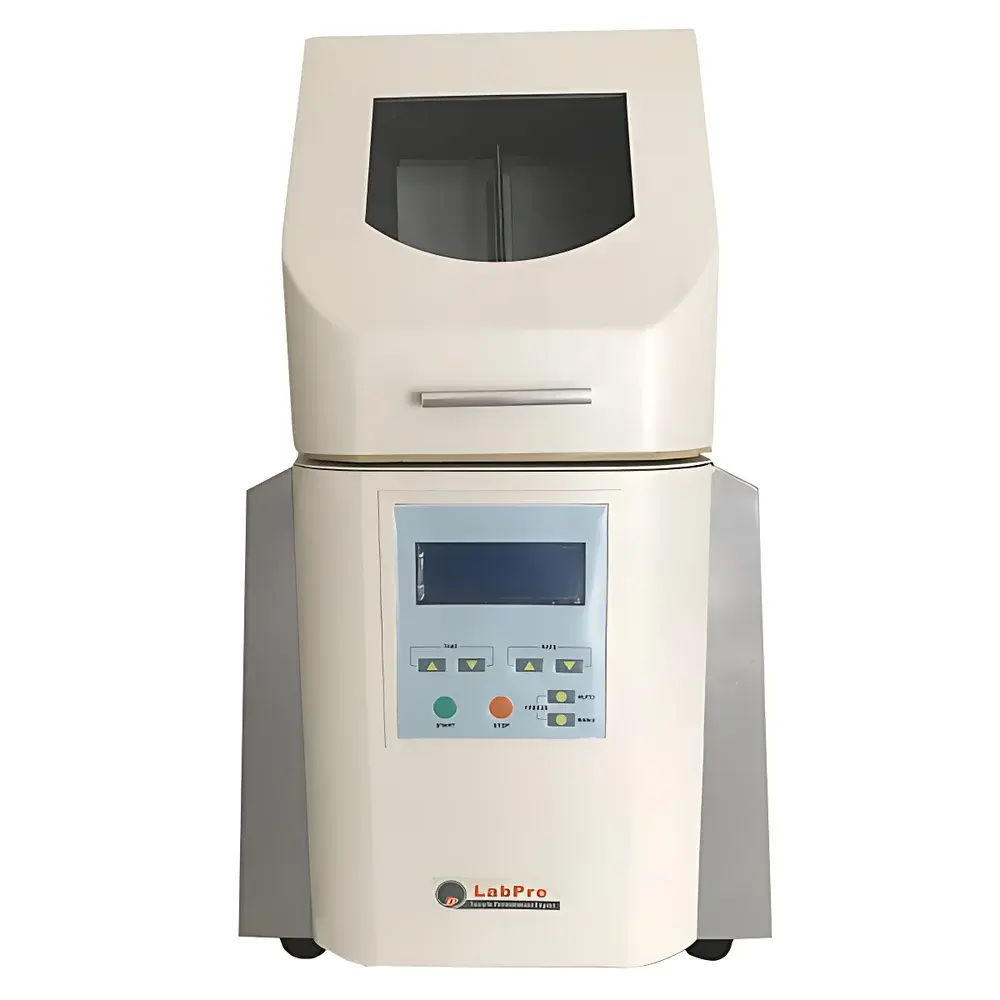
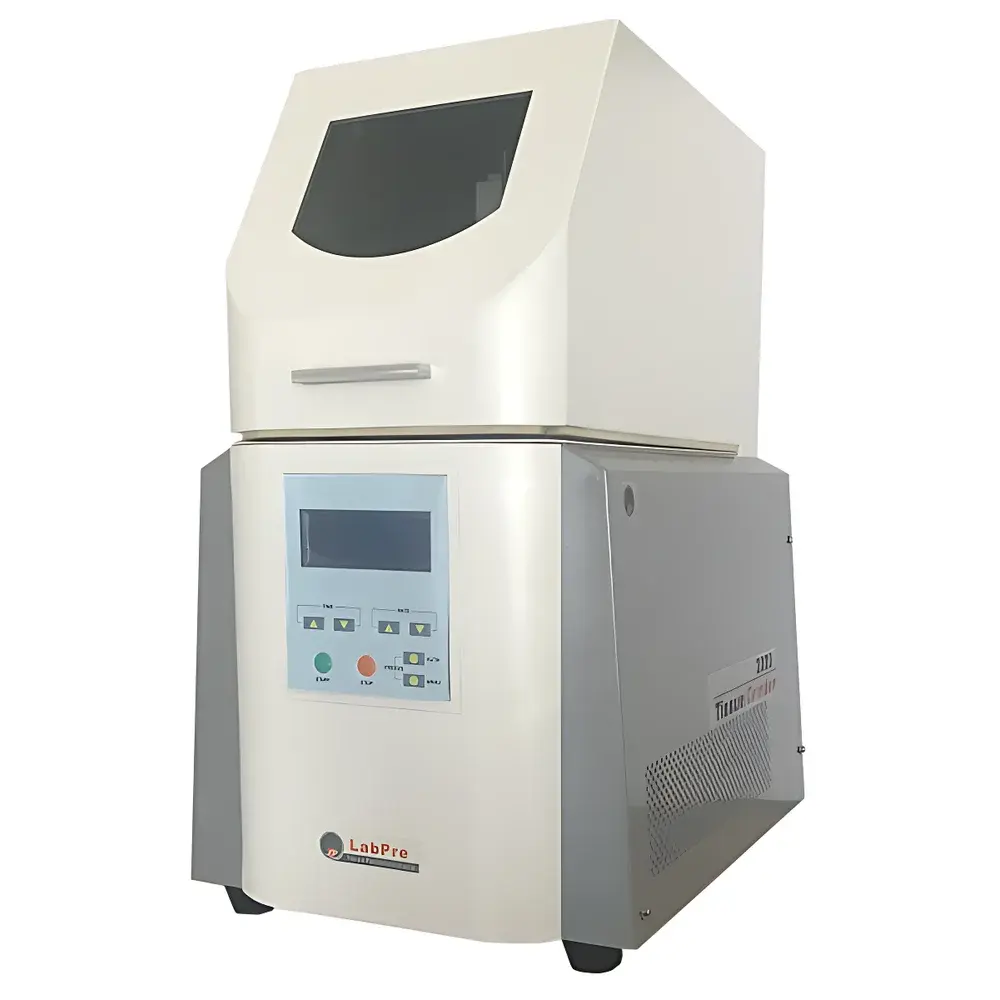
LabPre Tissue/Grinder 2020 High-Throughput Vertical Vibration Homogenizer
| Brand | LabPre |
|---|---|
| Origin | Beijing, China |
| Model | Tissue/Grinder 2020 |
| Instrument Type | High-throughput tissue homogenizer |
| Sample Compatibility | Soft biological tissues (plant organs, animal soft tissues, cultured cells, yeast, bacteria) |
| Input Size | <3 cm |
| Output Particle Size | 0.01–0.5 mm (pre-homogenized), <1 µm (final lysate after optimized cycles) |
| Throughput | Up to 576 samples per run (6 × 96-well deep-well plates) |
| Vibration Mode | Vertical reciprocating motion |
| Speed Range | 500–1750 rpm |
| Time Setting | 0–20 min (displayed in mm:ss format) |
| Power Supply | AC 230 V, 50 Hz |
| Dimensions | 380 × 500 × 650 mm (W×D×H) |
| Weight | 36 kg |
| Safety Certification | CE-compliant |
| Container Compatibility | 0.5–50 mL centrifuge tubes, 24-/48-/96-well deep-well plates, and equivalent labware — no fixture change required |
Overview
The LabPre Tissue/Grinder 2020 is a CE-certified, high-throughput vertical vibration homogenizer engineered for reproducible, scalable mechanical lysis of soft biological samples in molecular biology, agrigenomics, clinical diagnostics, and environmental microbiology laboratories. Unlike conventional horizontal orbital shakers or bead mills relying on rotational shear, the Tissue/Grinder 2020 employs a precisely controlled vertical reciprocating motion—generating high kinetic energy transfer directly along the gravitational axis. This principle maximizes impact force between grinding media (e.g., stainless steel or ceramic beads) and sample matrices, enabling rapid disruption of cell walls and extracellular matrices while minimizing thermal denaturation and nucleic acid shearing. The system is designed for routine integration into automated sample preparation workflows, supporting GLP-compliant protocols where traceability, inter-batch consistency, and operator safety are critical.
Key Features
- Vertical reciprocating vibration architecture ensures uniform energy distribution across all sample positions—eliminating edge effects common in horizontal shakers and improving inter-well reproducibility (CV < 5% for RNA yield across 576 wells under standardized conditions).
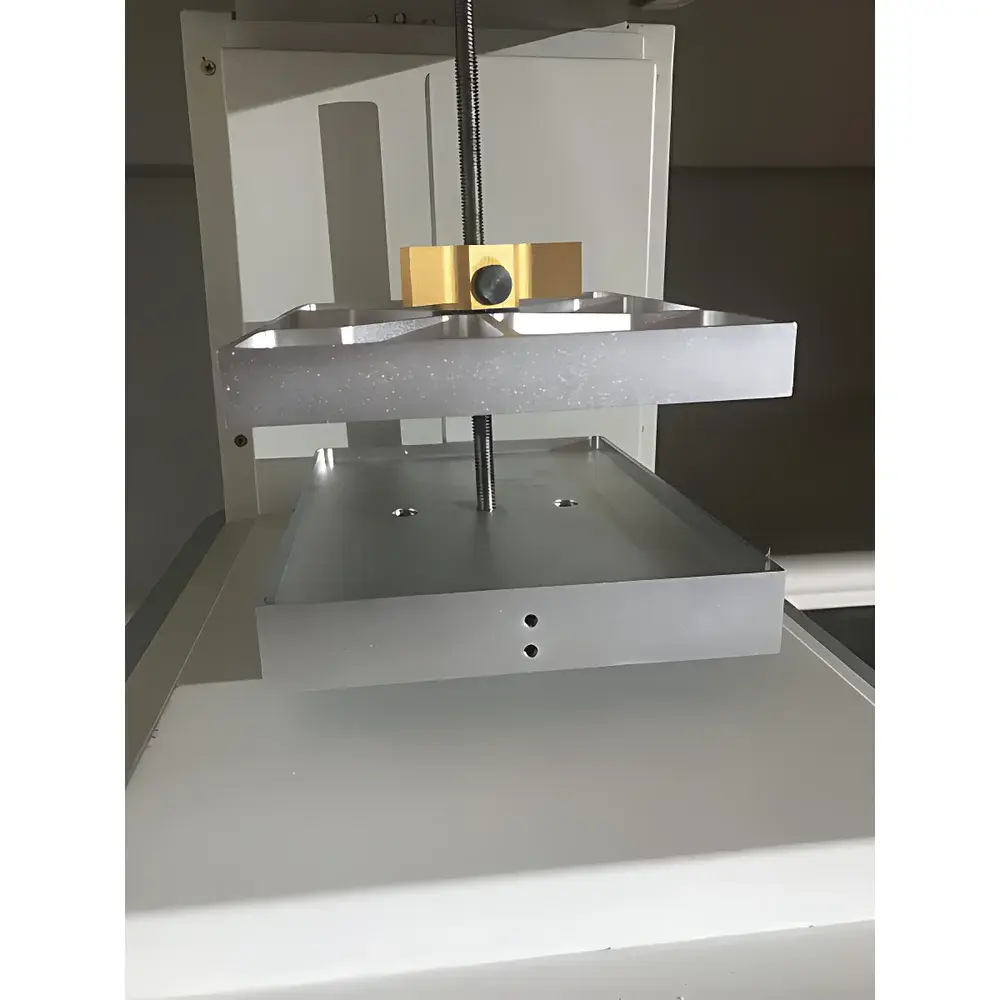
- True high-throughput capability: accommodates up to six 96-well deep-well plates simultaneously (576 samples), with load capacity extending to 24-, 48-, or 96-well formats and individual tubes (0.5–50 mL) without mechanical reconfiguration.
- Programmable operation interface: intuitive keypad-based control panel allows independent adjustment of speed (500–1750 rpm) and duration (0–20 min, mm:ss resolution), enabling method optimization for diverse sample types—from leaf mesophyll to murine liver or Saccharomyces cerevisiae cultures.
- Integrated safety system: automatic motor cutoff upon lid opening, polycarbonate transparent viewing window for real-time process monitoring, and dual-button start/stop logic compliant with IEC 61000-6-2 electromagnetic compatibility and EN 61000-6-4 emission standards.
- Rugged aluminum-alloy chassis and vibration-dampened base ensure stable operation at maximum speed, reducing acoustic noise (<65 dB(A)) and floor transmission—suitable for shared core facilities and ISO Class 7 cleanroom-adjacent environments.
Sample Compatibility & Compliance
The Tissue/Grinder 2020 is validated for use with soft-tissue matrices including plant roots, stems, leaves, fruits, seeds; mammalian soft tissues (e.g., spleen, brain, adipose); suspension-grown mammalian cells; bacterial pellets (E. coli, Bacillus spp.); yeasts; and fungal mycelia. It supports downstream applications requiring intact macromolecules—including RNA-seq library prep (RIN > 8.5), plasmid isolation, and immunoaffinity-coupled proteomics. The instrument meets CE marking requirements under Directive 2014/30/EU (EMC) and 2014/35/EU (LVD). Its operational parameters align with ASTM D7217–18 (standard practice for mechanical homogenization of biological samples) and support audit readiness for ISO/IEC 17025-accredited testing labs conducting pesticide residue analysis (e.g., in accordance with EN 15662:2018).
Software & Data Management
While the Tissue/Grinder 2020 operates via standalone hardware controls, its programmable parameters (speed, time, cycle count) are fully documentable within laboratory information management systems (LIMS) or electronic lab notebooks (ELN). Each protocol can be assigned a unique identifier and logged with timestamp, operator ID, and plate layout metadata—facilitating full traceability per FDA 21 CFR Part 11 Annex 11 requirements when integrated into validated workflows. Optional RS-232 or USB-to-serial interfaces enable external script-driven control for synchronization with liquid handlers or barcode readers in automated genomics pipelines.
Applications
- Nucleic acid extraction: high-yield, low-degradation isolation of genomic DNA, total RNA, and small RNAs from field-collected plant tissues prior to qPCR, genotyping-by-sequencing (GBS), or methylation profiling.
- Proteome sample prep: efficient solubilization of membrane proteins and nuclear extracts from cryo-preserved tissues, compatible with subsequent iTRAQ/TMT labeling or label-free quantitation.
- Pesticide residue analysis: homogenization of heterogeneous fruit/vegetable composites to <1 µm particle size, ensuring representative subsampling for LC-MS/MS multi-residue screening per SANTE/11813/2017 guidelines.
- Microbial strain banking: rapid, parallel lysis of 576 bacterial colonies for high-throughput plasmid rescue or CRISPR library validation.
- Biobanking and biorepository operations: standardized processing of human biospecimens (e.g., FFPE-adjacent fresh-frozen tissues) under SOPs aligned with ISBER Best Practices.
FAQ
What sample containers are supported without adapter changes?
Standard 96-well deep-well plates (V-bottom or U-bottom), 24-well and 48-well plates, and centrifuge tubes ranging from 0.5 mL to 50 mL—all secured via universal silicone-gasketed clamping plates.
Can the instrument be used for hard or fibrous tissues?
It is optimized for soft-to-moderately resilient tissues; fibrous samples (e.g., wood, cartilage, muscle tendons) require pre-chopping to <3 cm and may benefit from cryogenic pre-cooling or supplemental bead types (e.g., 4 mm stainless steel).
Is temperature control available during grinding?
No integrated cooling is provided; however, pre-chilled plates/tubes and ambient lab temperatures ≤22°C are recommended for heat-sensitive analytes. Dry ice inserts or chilled aluminum blocks may be placed beneath sample carriers.
How is cross-contamination prevented between wells?
Each well is physically isolated by rigid plate architecture and non-porous gasket seals; validation studies confirm no detectable carryover (≤0.001 ng DNA) between adjacent wells using qPCR spike-in assays.
Does the device support remote monitoring or network connectivity?
Not natively—but analog voltage output (0–5 V) correlates with real-time motor load, enabling third-party data acquisition systems to log operational stability and detect anomalies such as tube ejection or bead agglomeration.



