
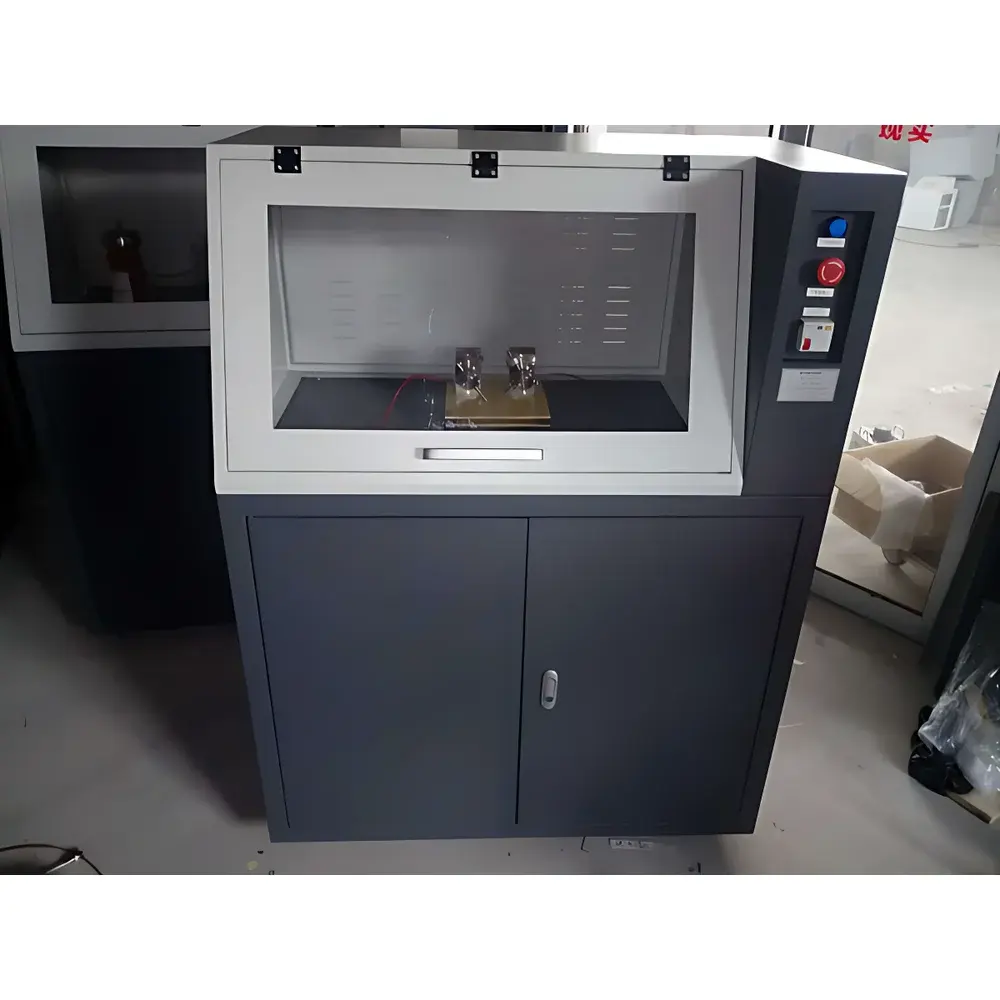
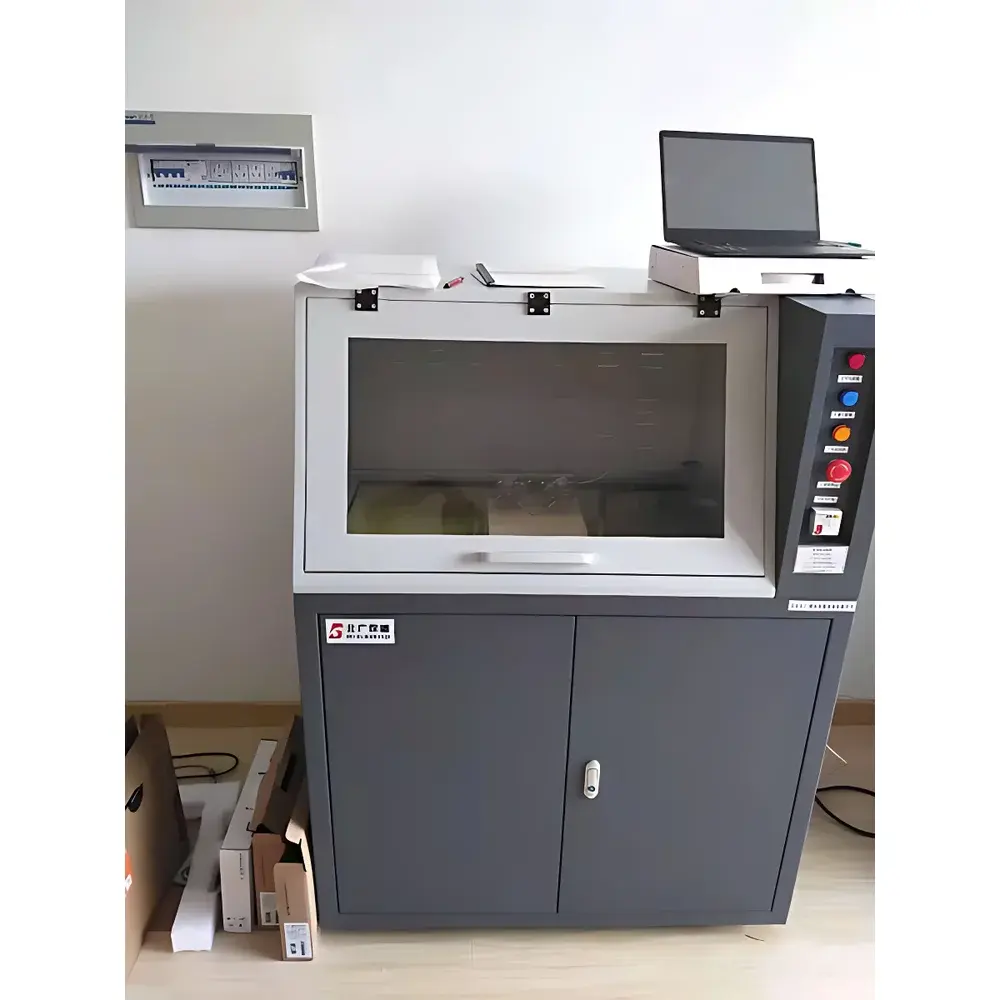
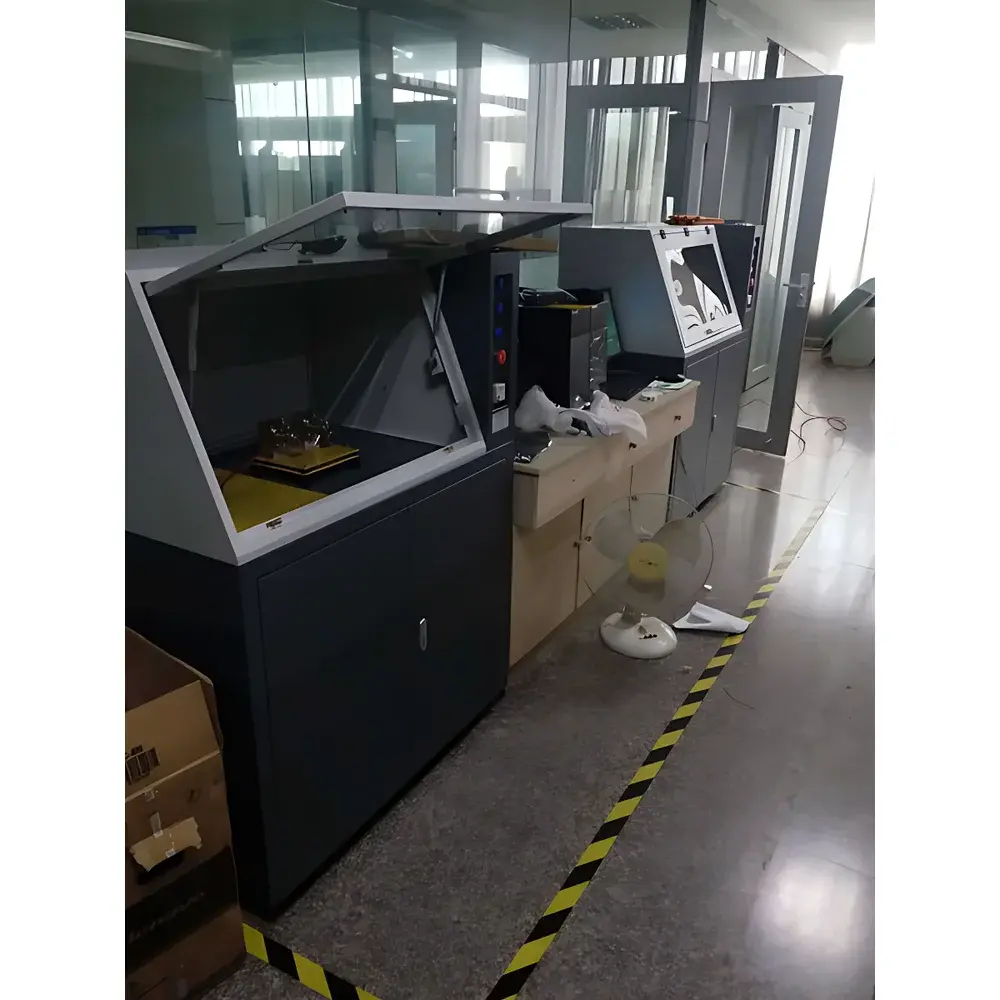
Beijing North Guang Precision Instruments BDH-20KV Microcomputer-Controlled Arc Resistance Tester
| Brand | Beijing North Guang Precision Instruments |
|---|---|
| Origin | Beijing, China |
| Manufacturer Type | OEM Manufacturer |
| Country of Origin | China |
| Model | BDH-20KV Microcomputer-Controlled |
| Price | USD 3,500 (FOB Beijing) |
Overview
The Beijing North Guang Precision Instruments BDH-20KV Microcomputer-Controlled Arc Resistance Tester is a purpose-built instrument designed to evaluate the arc resistance of solid electrical insulating materials under standardized high-voltage conditions. Arc resistance—defined as the time (in seconds) required for a conductive carbonized track to form across the surface of a specimen under controlled electric arcing—is a critical dielectric property for materials used in high-voltage switchgear, circuit breakers, busbar supports, and low-voltage high-current contact assemblies. The instrument operates on the principle of initiating and sustaining a controlled alternating-current (50 Hz) arc between two tungsten electrodes positioned at a fixed geometry above a flat test specimen. The test sequence follows a rigorously defined protocol: starting with intermittent arcing at low current, progressing to continuous arcing at increasing current levels (10, 20, 30, and 40 mA), until surface carbonization bridges the electrode gap and extinguishes the arc. This method conforms to the fundamental physical mechanism described in IEC 61621:1997 and ASTM D495–22, where degradation is driven by localized thermal decomposition, oxidative charring, and conductive path formation under intense plasma exposure.
Key Features
- Microprocessor-based control system with real-time display of arc initiation timing, current level, voltage output, and elapsed arc resistance time.
- TVS (Transient Voltage Suppression) integrated high-voltage protection architecture ensuring operator safety and equipment integrity during fault conditions.
- SPWM (Sinusoidal Pulse Width Modulation) electronic voltage regulation delivering stable 20 kV AC output with ≤±1% ripple under load.
- Precision-machined tungsten electrodes (Ø2.40 mm ± 0.05 mm), each featuring a ground elliptical tip with 30° ± 1° bevel angle and polished surface finish to ensure repeatable arc ignition and consistent plasma geometry.
- Adjustable electrode holder enabling precise control of electrode-to-specimen normal force (0.5 N ± 0.05 N), inter-electrode spacing (6.35 mm ± 0.1 mm), and angular alignment (35° ± 1° from horizontal, resulting in 110° ± 2° included angle).
- Automated test sequencing compliant with GB/T 1411–2002 (replacing GB 1411–78) and ASTM D495–22, including programmable intermittent-to-continuous arc transition profiles.
- Timing accuracy of arc-on/off cycles maintained within ±10 ms, verified per IEC 61621 Annex B calibration procedures.
Sample Compatibility & Compliance
The BDH-20KV accommodates rigid plate-shaped specimens conforming to standard dimensions specified in ASTM D495 (127 mm × 127 mm × 6.4 mm minimum thickness) and IEC 61621 (130 mm × 130 mm × 3–6 mm). Compatible material classes include thermosetting resins (epoxy, phenolic, melamine-formaldehyde), reinforced laminates (G10/FR4), silicone rubber composites, polyimide films, and ceramic-filled polymer matrices. All mechanical and electrical parameters—including electrode geometry, force application, ambient ventilation constraints (no forced draft unless smoke emission occurs), and optical observation window placement—are engineered to meet the dimensional and procedural requirements of GB/T 1411–2002, ASTM D495–22, and IEC 61621:1997. The system supports GLP-compliant operation through audit-trail-enabled firmware logging (timestamped test records, operator ID, parameter settings, and failure flags).
Software & Data Management
The embedded microcontroller firmware provides full test automation, including automatic current ramping, arc duration measurement, and pass/fail evaluation against user-defined thresholds. Test data—including arc resistance time, peak current/voltage, number of arc cycles prior to failure, and electrode displacement logs—are stored internally and exportable via USB interface in CSV format for traceability. Optional PC-based software (Windows 10/11 compatible) enables remote configuration, multi-test batch reporting, statistical process control (SPC) charting, and integration with LIMS environments. Firmware updates are delivered via secure encrypted firmware packages to maintain compliance with evolving national standards (e.g., future revisions of GB/T 1411); version history and calibration certificate metadata are embedded and digitally signed.
Applications
This instrument serves quality assurance laboratories in electrical equipment manufacturing, aerospace component suppliers, polymer compounders, and third-party certification bodies (e.g., CNAS-accredited labs). Typical use cases include: qualification testing of insulating housings for vacuum interrupters; comparative screening of flame-retardant additives in epoxy molding compounds; validation of arc tracking performance in EV battery module barriers; and regulatory submission support for UL 746A, IEC 60695-2-10, and GB/T 5169.10 compliance. Its reproducibility (CV < 3.5% across ten replicate tests on homogeneous phenolic laminate) makes it suitable for both R&D material development and routine production lot release.
FAQ
What standards does the BDH-20KV comply with?
It meets the technical and procedural requirements of GB/T 1411–2002, ASTM D495–22, and IEC 61621:1997. Firmware updates ensure ongoing alignment with revised editions of these standards.
Can the instrument perform both intermittent and continuous arc tests?
Yes—it executes fully automated sequences transitioning from intermittent arcing (with programmable off-times) to sustained arcs at 10, 20, 30, or 40 mA, per ASTM D495 Section 7.3.
Is electrode calibration traceable to national metrology institutes?
Electrode geometry verification tools (go/no-go gauges for tip angle and spacing) are supplied with NIST-traceable calibration certificates. Force calibration is performed using Class 0.1 digital force gauges.
Does the system support 21 CFR Part 11 compliance?
The optional PC software package includes electronic signature capability, audit trail generation, and role-based access control—fully configurable to meet FDA 21 CFR Part 11 requirements for regulated environments.
What maintenance is required for long-term accuracy?
Annual verification of high-voltage output stability (using calibrated HV divider), electrode tip regrinding per ASTM D495 Annex A, and sensor linearity checks using certified reference resistors and current shunts are recommended.



