
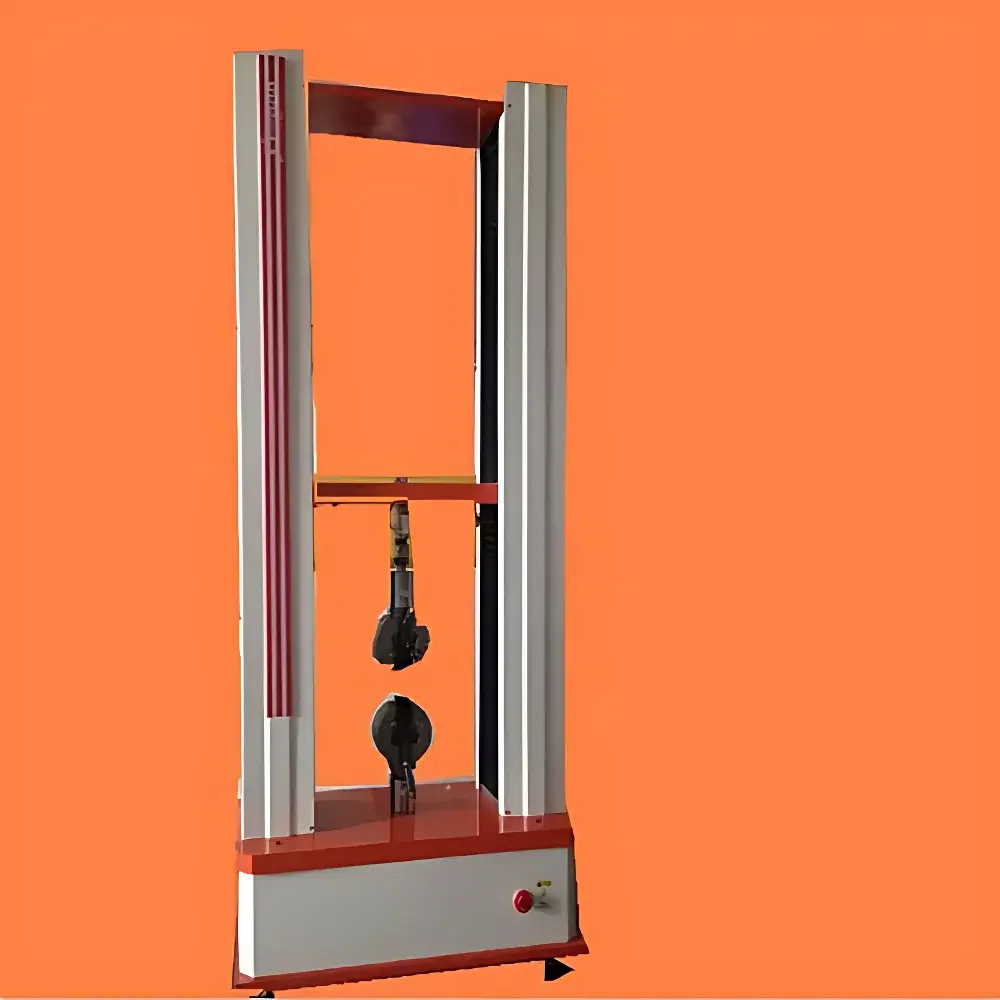
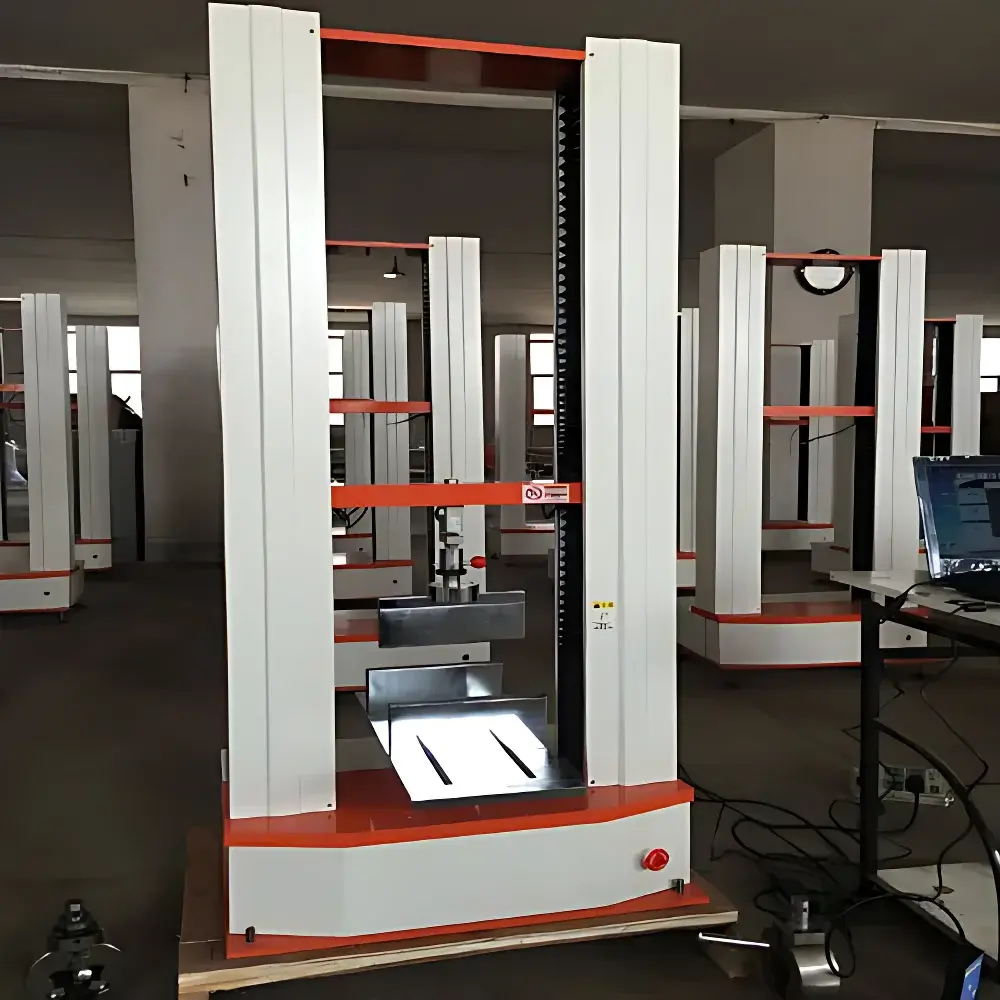
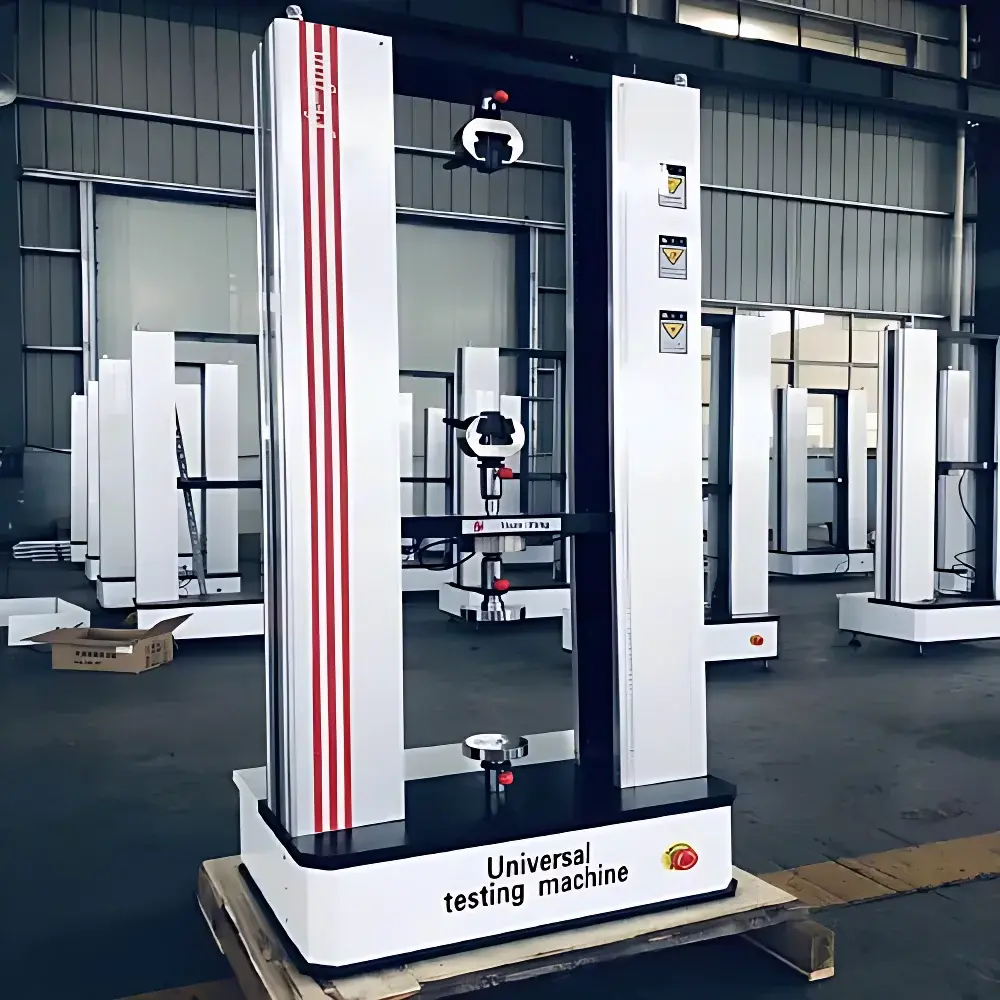
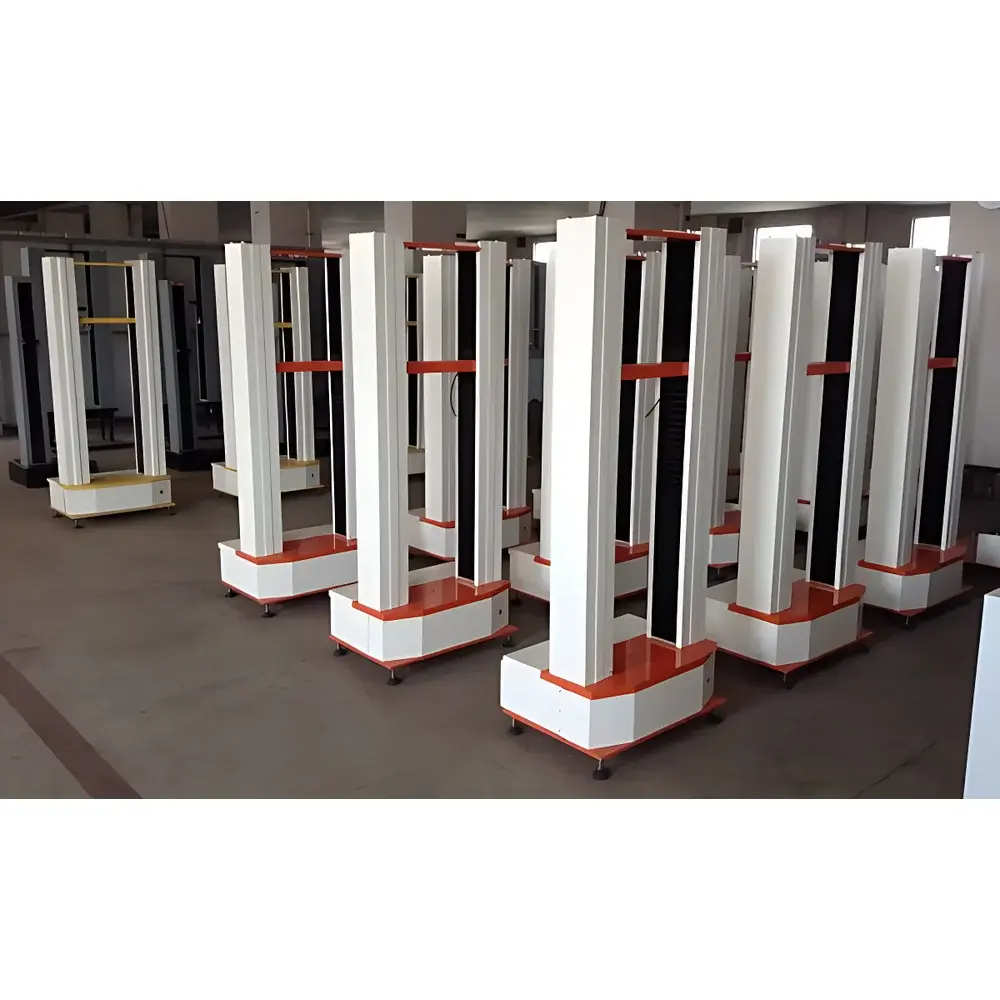
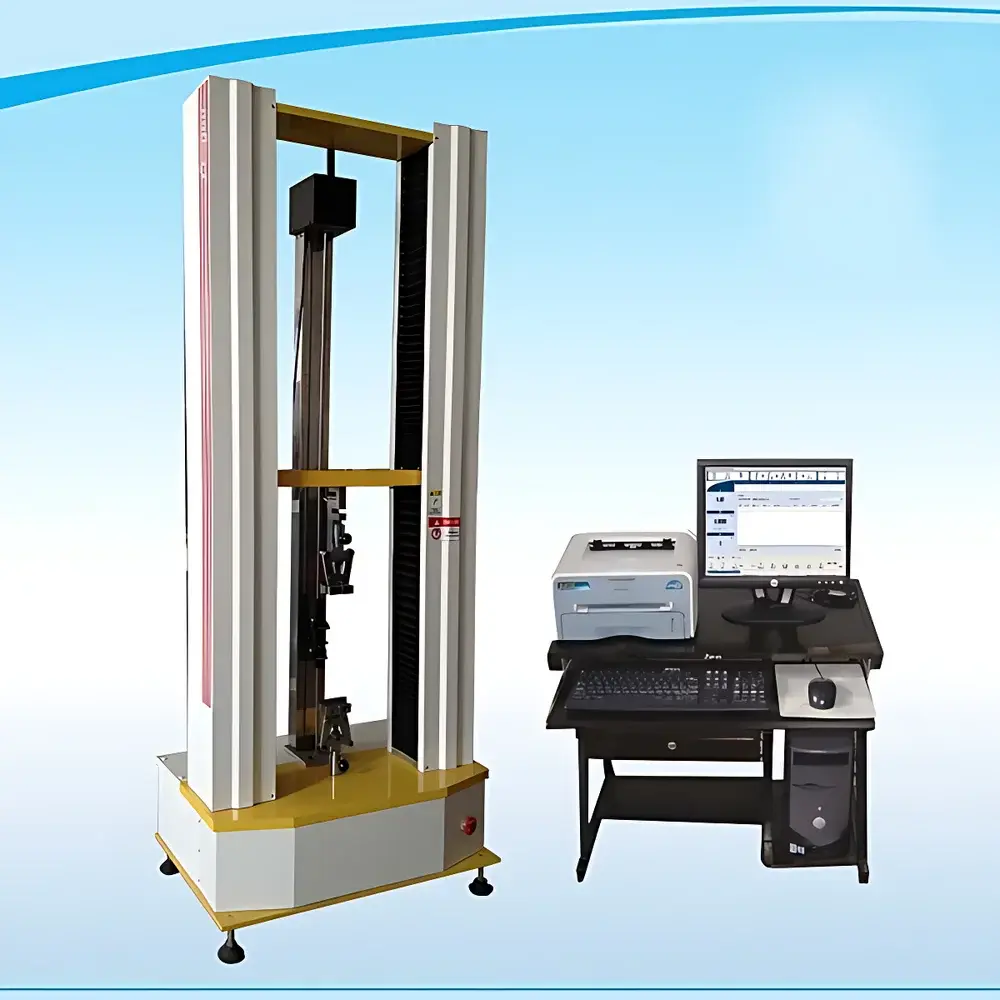
Beiguang Jingyi BWN-5000N Geotextile Tensile and Puncture Testing Machine
| Brand | Beiguang Jingyi (All Precision Instrument) |
|---|---|
| Origin | Beijing, China |
| Manufacturer Type | Direct Manufacturer |
| Model | BWN-5000N |
| Maximum Test Force | 0–5000 N |
| Force Measurement Range | 0–5000 N (Full Scale) |
| Force Accuracy | ±1% of reading |
| Displacement Resolution | 0.01 mm |
| Crosshead Travel | 0–1000 mm (excluding fixtures) |
| Speed Range | 0.05–500 mm/min (stepless, programmable) |
| Speed Accuracy | ±0.5% |
| Effective Force Measurement Range | 2–100% of full scale |
| Data Interface | RS232 |
| Control Mode | Pulse Command / External Control |
| Safety Features | Overload emergency stop, travel limit switches, auto-stop at break, leakage protection |
Overview
The Beiguang Jingyi BWN-5000N Geotextile Tensile and Puncture Testing Machine is a dedicated electromechanical testing system engineered for standardized mechanical evaluation of geosynthetic materials—including woven and nonwoven geotextiles, geogrids, geomembranes, and related civil engineering textiles. It operates on the principle of controlled uniaxial tensile loading and quasi-static puncture resistance measurement, conforming to core international test standards such as ASTM D4595 (tensile), ASTM D6241 (puncture), ISO 10319 (tensile), and GB/T 17639–2020 (Chinese national standard for geotextile tensile performance). The machine integrates a high-stiffness dual-column frame, precision load cell technology, and closed-loop motion control to deliver repeatable force-displacement data under defined strain rates and boundary conditions—critical for quality assurance in landfill liners, road reinforcement, slope stabilization, and hydraulic barrier applications.
Key Features
- High-accuracy load cell (5000 N capacity, ±1% accuracy per ASTM E4) with internal 16-bit A/D conversion and four-range auto-scaling (0.25/0.5/0.75/1× full scale) to maintain resolution across low- and high-force regimes.
- Programmable crosshead speed from 0.05 to 500 mm/min, with real-time feedback control ensuring ±0.5% speed stability—essential for rate-sensitive geotextile behavior including creep and stress relaxation.
- Dual-mode operation: tensile mode (gripped specimen elongation) and puncture mode (conical probe penetration per ASTM D6241), both supported by interchangeable fixtures and calibrated probe geometries.
- Robust mechanical architecture featuring hardened steel guide columns, preloaded ball screws, and anti-backlash drive mechanisms to minimize deflection and ensure axial alignment within 0.2 mm/m over full travel.
- Integrated safety subsystems: hardware-based overload cutoff, mechanical upper/lower travel stops, ground-fault circuit interrupter (GFCI), and automatic halt upon specimen rupture—compliant with IEC 61000-6-2 electromagnetic immunity requirements.
- Modular controller supporting RS232 serial communication for external PLC integration or legacy lab network compatibility; optional wireless handbox available for manual jog control during setup.
Sample Compatibility & Compliance
The BWN-5000N accommodates standard geotextile specimens per ASTM D4595 (200 mm × 50 mm strips) and ASTM D6241 (300 mm diameter circular samples), with adjustable grip width (up to 350 mm) and 950 mm usable crosshead travel. Fixture options include pneumatic self-tightening grips, roller clamps for low-modulus fabrics, and ASTM-compliant 50-mm-diameter conical puncture probes (60° apex angle, 1.5 mm tip radius). All mechanical and electrical design elements meet CE marking requirements for Machinery Directive 2006/42/EC and Low Voltage Directive 2014/35/EU. Force calibration traceability follows ISO/IEC 17025 guidelines via accredited third-party verification (certificate included). Environmental operating specifications: 10–35 °C ambient temperature, 20–80% RH non-condensing, vibration-isolated mounting surface (<0.2 mm/m level tolerance).
Software & Data Management
The system ships with UTM107-compatible Windows XP–based test software (backward-compatible with Windows 7/10 via virtualization). It supports multi-step test profiles—including constant-rate tensile, load-hold, displacement-controlled puncture, and cyclic loading sequences—with user-defined dwell times, ramp rates, and termination criteria (e.g., max force, elongation %, or fracture detection). Raw data is logged at ≥200 Hz sampling rate and stored in ASCII CSV format for post-processing in MATLAB, Excel, or statistical analysis packages. Audit trail functionality records operator ID, timestamp, calibration events, and parameter changes—supporting GLP compliance and FDA 21 CFR Part 11 readiness when deployed with validated electronic signatures. Software includes built-in calculation modules for tensile strength (kN/m), elongation at break (%), puncture resistance (N), and secant modulus (kN/m²).
Applications
This instrument serves routine QC/QA and R&D laboratories involved in geosynthetic material certification, supplier qualification, and specification validation. Typical use cases include: tensile strength and elongation testing of needle-punched nonwovens used in erosion control blankets; puncture resistance assessment of HDPE-coated geotextiles in municipal solid waste landfill caps; comparative creep analysis of biaxial geogrids under sustained load; and interface shear evaluation between geotextiles and granular soils per ASTM D5321. Beyond geotechnical applications, it is routinely adapted for mechanical characterization of polymer films, packaging laminates, technical textiles, and composite reinforcements—provided specimen geometry and gripping methodology comply with relevant ISO, ASTM, or EN standards.
FAQ
What standards does this machine directly support?
It is configured for ASTM D4595 (geotextile tensile), ASTM D6241 (puncture), ISO 10319, and GB/T 17639–2020 out-of-the-box; custom test methods can be programmed via software scripting.
Is calibration documentation provided with shipment?
Yes—a factory calibration certificate traceable to NIM (National Institute of Metrology, China) is included, covering force (0–5000 N) and displacement (0–1000 mm) channels.
Can the system operate without a PC?
No—the UTM107 controller requires a Windows-based host computer for test definition, execution, and data export; standalone LCD display mode is not available on this model.
What is the recommended maintenance interval?
Load cell zero-check and mechanical lubrication every 6 months; annual full recalibration advised; all maintenance logs are retained in software audit history.
Are fixtures for non-geotextile materials available?
Yes—standard tensile grips, peel fixtures, and compression platens are offered as optional accessories; custom tooling can be fabricated to ISO 527 or ASTM D882 specifications.



