
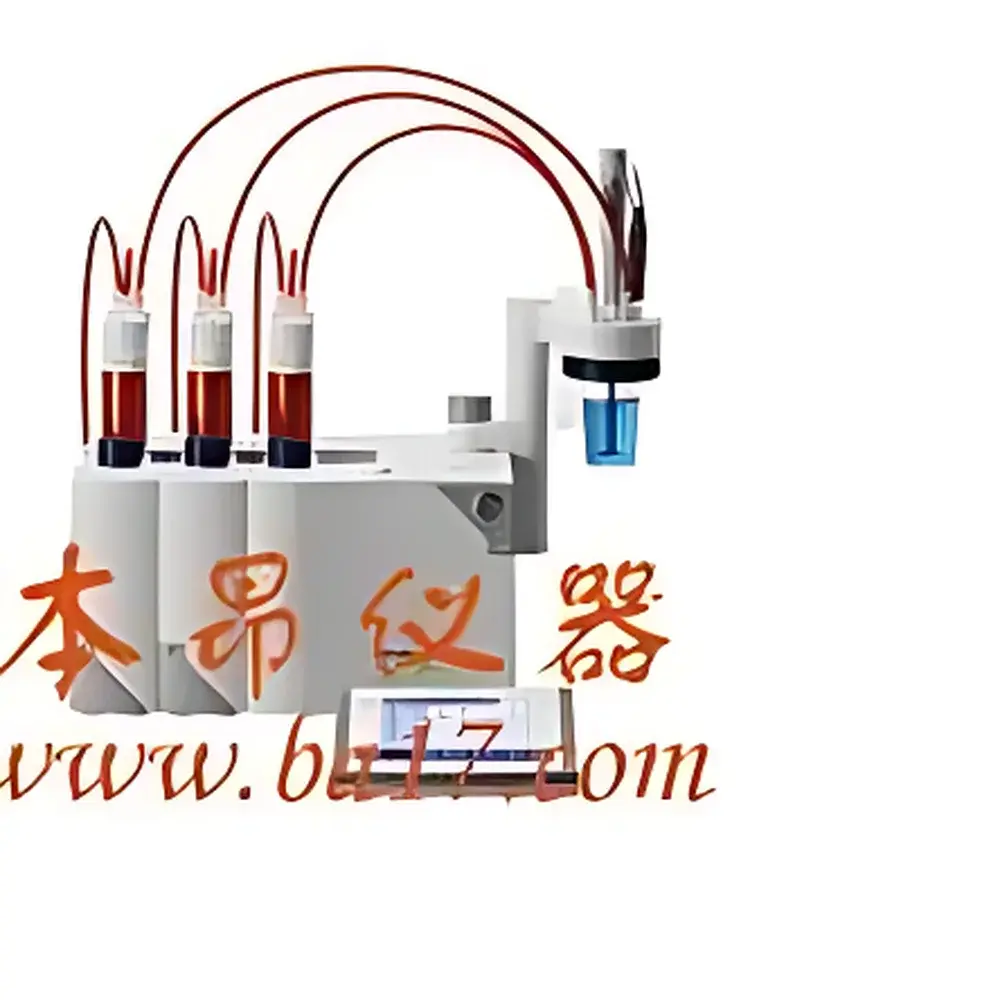
Metler-Toledo T50 Excellence Series Automatic Potentiometric Titrator
| Origin | Shanghai, China |
|---|---|
| Manufacturer Type | Authorized Distributor |
| Origin Category | Domestic (China) |
| Model | Mettler-Toledo T50 |
| Pricing | Available Upon Request |
| User Interface | Chinese Language |
| Titration Modes | Acid-Base, Complexometric, Non-Aqueous, Redox, Karl Fischer Moisture, Gas Moisture |
| Electrode Compatibility | Multi-electrode (pH, redox, ion-selective, polarographic, etc.) |
| Titration Tube Recognition | Automatic, Hot-Swappable |
| User Accounts | Up to 30 users, each with 12 customizable quick-access titration shortcuts |
| Compliance | Designed for GLP/GMP environments with audit trail readiness |
Overview
The Mettler-Toledo T50 Excellence Series Automatic Potentiometric Titrator is an entry-level yet fully functional benchtop titration system engineered for precision, repeatability, and regulatory compliance in quality control laboratories, R&D centers, and educational institutions. Based on classical potentiometric endpoint detection—measuring the potential difference between a working electrode (e.g., pH or redox electrode) and a reference electrode—the T50 delivers traceable, reproducible results across a wide range of volumetric analytical applications. Its architecture integrates a high-precision burette drive mechanism, intelligent reagent recognition via RFID-tagged titrant cartridges, and real-time potential monitoring at up to 10 Hz sampling rate. Unlike legacy systems requiring manual calibration and method reconfiguration, the T50 supports method-driven operation: users define titration parameters (e.g., equivalence point algorithm, stirring speed, dosing volume increments, endpoint criteria), and the instrument executes them autonomously while logging all raw sensor data and operational events.
Key Features
- Intelligent titrant recognition: Automatically identifies and validates reagent type, concentration, expiry date, and lot number via embedded RFID tags on standardized Mettler-Toledo titrant bottles—eliminating manual entry errors and supporting full traceability.
- Hot-swappable modular design: Burettes, electrodes, and sample changers can be exchanged during active operation without system shutdown, minimizing downtime and enabling seamless multi-method workflows.
- Customizable Chinese-language user interface: Features a responsive touchscreen with intuitive navigation, context-sensitive help, and role-based access control—including password-protected administrator, supervisor, and operator accounts.
- Personalized workflow acceleration: Supports up to 30 individual user profiles; each profile accommodates 12 programmable one-touch titration shortcuts—preconfigured for common SOPs such as HCl vs. NaOH standardization, EDTA titration of Ca²⁺, or iodometric determination of ascorbic acid.
- Robust mechanical architecture: Precision stepper-motor-driven burette with ±0.01 mL accuracy over full 50 mL range; integrated magnetic stirrer with adjustable speed (0–1200 rpm) and auto-stir optimization based on solution viscosity and electrode geometry.
Sample Compatibility & Compliance
The T50 accommodates diverse sample matrices—from aqueous solutions and organic solvents (e.g., methanol, acetonitrile) to suspensions and viscous oils—via interchangeable electrode holders and optional sample changers (up to 100 positions). It supports all major electrode types: combination pH electrodes, platinum redox sensors, silver/silver chloride reference electrodes, ion-selective electrodes (e.g., fluoride, chloride), and dual-platinum coulometric cells for Karl Fischer titrations. The system is designed to meet international regulatory expectations: full audit trail capability (including user actions, method changes, calibration logs, and raw data timestamps), electronic signature support per FDA 21 CFR Part 11 (when deployed with compliant software configuration), and alignment with ISO/IEC 17025 documentation requirements. Routine calibration verification follows ASTM E2081 and USP guidelines for titrimetric instrumentation.
Software & Data Management
The T50 operates under Mettler-Toledo’s tiamo™ software platform (v3.5+), installed on an external Windows PC connected via Ethernet or USB. tiamo™ provides method development wizards, real-time titration curve visualization (E vs. V, dE/dV vs. V), automated equivalence point calculation using first-derivative, second-derivative, or Gran plot algorithms, and customizable report templates compliant with internal QA templates or external client specifications. All raw data—including voltage, volume, temperature, and timestamp—are stored in encrypted .tdf files with SHA-256 hash integrity verification. Data export options include PDF, CSV, XML, and LIMS-compatible formats (ASTM E1384, HL7). System backups and firmware updates are managed through tiamo™’s centralized administration console, ensuring version-controlled deployment across multi-instrument labs.
Applications
The T50 serves as a primary analytical tool in pharmaceutical QC (e.g., assay of active ingredients, residual solvent analysis), food & beverage testing (acidity titration in wines, free fatty acid determination in edible oils), environmental labs (alkalinity and hardness profiling in wastewater), and polymer manufacturing (acid number measurement in resins). Its flexibility extends to non-standard applications such as dissolution testing with inline pH monitoring, stability-indicating assays for degradation products, and redox titrations in electroplating bath control. When paired with a KF oven module and coulometric cell, it performs precise water content analysis down to 10 µg—fully compliant with ASTM E203 and ISO 8534.
FAQ
Does the T50 support GLP-compliant data archiving?
Yes—when used with tiamo™ software configured with audit trail enabled, all user interactions, method modifications, calibration events, and raw titration data are time-stamped, digitally signed, and immutable.
Can the T50 perform back-titrations and multi-step titrations?
Yes—method programming allows sequential addition of multiple reagents, conditional endpoints, pause-and-wait steps, and post-titration calculations (e.g., % purity, mg KOH/g, water content).
Is electrode calibration required before every analysis?
No—calibration frequency follows laboratory SOPs and risk assessment; however, the system logs all calibration events and alerts users when overdue based on configurable intervals.
What safety features prevent over-titration or reagent waste?
The T50 implements dynamic dosing: initial coarse additions followed by fine increments near the endpoint, plus automatic stop conditions (e.g., max volume limit, slope threshold, or time-out) to prevent uncontrolled reagent consumption.
How is method transfer validated between T50 and higher-tier T70/T90 instruments?
All Excellence Series instruments share identical tiamo™ method files and electrode communication protocols—ensuring zero-modification method portability and cross-platform result comparability under ISO 17025 method validation protocols.




