
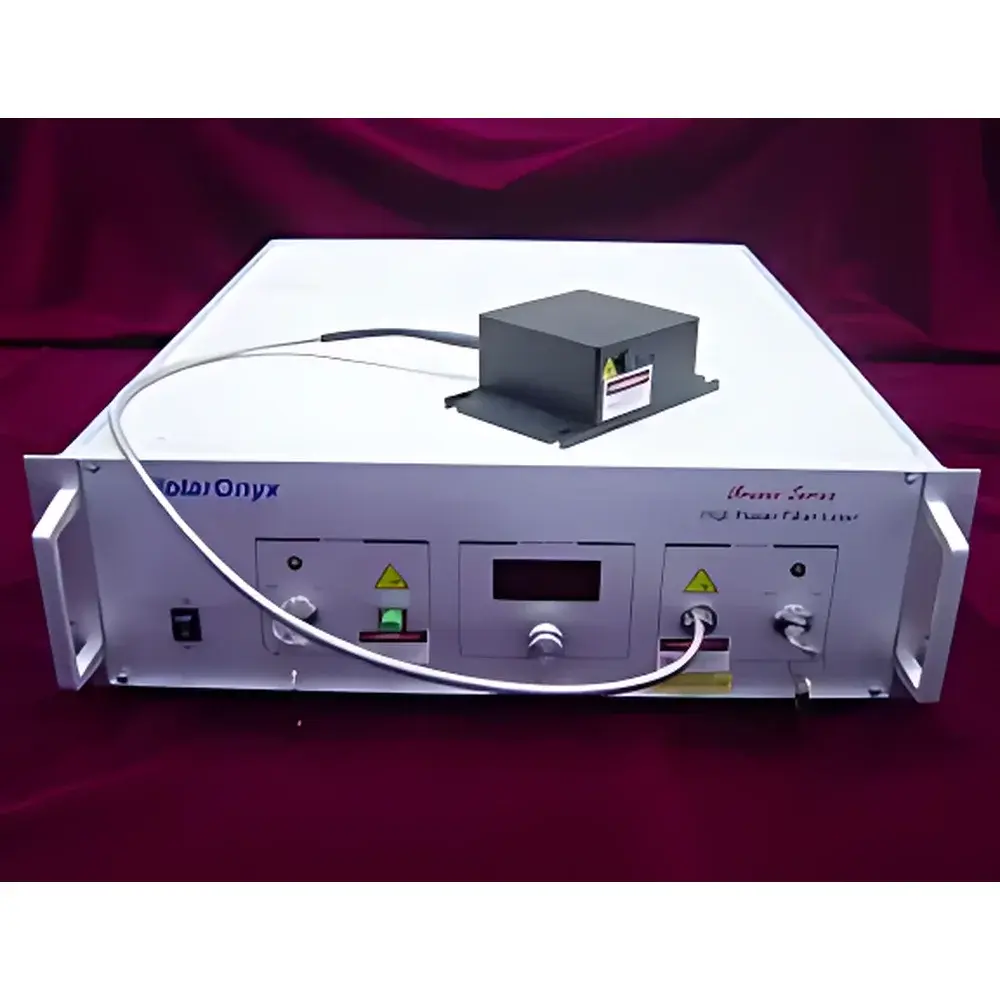
Femto+MERCURY Femtosecond Fiber Laser System
| Origin | USA |
|---|---|
| Manufacturer Type | Authorized Distributor |
| Origin Category | Imported |
| Model | MERCURY |
| Price Range | USD $13,500 – $40,800 (FOB) |
| Core Configuration | Solid-State Mode-Locked Fiber Laser Platform |
Overview
The Femto+MERCURY MERCURY femtosecond fiber laser system is an industrial-grade, turnkey ultrafast laser platform engineered for precision photonics applications requiring high temporal coherence, exceptional pulse-to-pulse stability, and long-term operational reliability. Based on all-fiber, polarization-maintaining (PM) chirped-pulse amplification (CPA) architecture, the MERCURY series delivers transform-limited pulses via nonlinear compression and integrated dispersion management—enabling sub-200 fs pulse durations across multiple wavelength bands without external grating compressors. Designed for integration into OEM instrumentation, scientific laboratories, and advanced manufacturing environments, the system complies with IEC 60825-1:2014 (Laser Product Safety) and meets Class 1 or Class 4 enclosure requirements depending on configuration. Its robust thermal management—supporting both air and water cooling—ensures stable output under continuous operation in ambient temperatures ranging from 15 °C to 30 °C.
Key Features
- Wavelength flexibility: Fundamental output at 770–810 nm, 1020–1100 nm, and 1520–1600 nm; optional harmonic generation modules (SHG, THG) extend coverage into UV and mid-IR spectral regions
- Pulse performance: Adjustable repetition rates from 0.1 MHz to 10 MHz; pulse energy up to 500 µJ; average power scalable from 50 mW to 200 W
- Beam quality: Diffraction-limited spatial profile with M² < 1.3 across all operating conditions, verified per ISO 11146-1:2005
- Electronic control interface: TTL-compatible trigger input/output, RS232 serial communication, and GUI-based software suite for real-time parameter monitoring and remote adjustment
- Modular mechanical design: Standardized rack-mount chassis (430 × 130 × 560 mm) accommodates interchangeable amplifier heads, compressor units, and harmonic generators—facilitating field upgrades and serviceability
- Thermal management: Dual-mode cooling architecture supports forced-air convection for low-power variants (<100 W) and closed-loop water cooling (up to 2 L/min flow rate, ΔT ≤ 3 °C) for high-power configurations
Sample Compatibility & Compliance
The MERCURY system is compatible with a broad range of optical components including fused silica, CaF₂, and ZnSe transmissive optics; reflective beam delivery systems using dielectric-coated mirrors; and vacuum-compatible translation stages used in ultra-high-vacuum (UHV) pump-probe setups. It conforms to key international standards relevant to laboratory and industrial laser deployment: EN 61000-6-3 (EMC emission limits), EN 61000-6-2 (immunity requirements), and FDA 21 CFR Part 1040.10/1040.11 for laser product registration in the United States. Optional GLP/GMP-compliant audit trail logging is available through the FemtoControl software package, supporting traceable calibration records and user access logs per ISO/IEC 17025:2017 Annex A.2.
Software & Data Management
FemtoControl v4.2 is the native control application for the MERCURY platform, providing deterministic timing synchronization, pulse energy stabilization feedback loops, and automated wavelength calibration routines. The software supports data export in HDF5 and CSV formats, enabling seamless integration with MATLAB, Python (via PySerial and h5py), and LabVIEW environments. All configuration changes—including repetition rate, output power setpoints, and TTL delay offsets—are timestamped and stored with SHA-256 checksums to ensure data integrity. Remote operation is enabled via Ethernet (TCP/IP) or USB-C virtual COM port, with role-based user permissions configurable for multi-user lab deployments.
Applications
- Time-resolved spectroscopy: Pump-probe experiments requiring precise inter-pulse delay resolution (<100 fs jitter) and shot-to-shot intensity stability (<0.5% RMS over 8 hours)
- Multi-photon microscopy: Two-photon excitation imaging in live-tissue preparations using 780 nm or 1040 nm fundamental wavelengths
- Ultrafast material processing: Micromachining of transparent dielectrics, thin-film ablation, and selective laser-induced forward transfer (LIFT)
- Frequency comb seeding: Optical frequency comb generation via supercontinuum broadening in photonic crystal fiber, referenced to Rb or GPS-disciplined oscillators
- OEM integration: Embedded laser source for commercial OCT systems, LIBS analyzers, and attosecond pulse generation platforms
FAQ
What is the typical warm-up time required to achieve spectral and temporal stability?
The MERCURY system reaches full thermal equilibrium and achieves specified pulse width and pointing stability within 30 minutes after cold start, as validated by internal thermistor network and real-time autocorrelation monitoring.
Is the laser qualified for use in cleanroom environments (ISO Class 5 or better)?
Yes—standard models feature sealed optical paths and conformal-coated electronics; optional ISO 14644-1 Class 5 certified enclosures are available upon request.
Can the repetition rate be externally synchronized to a master clock signal?
Yes—via the front-panel SYNC IN BNC connector, supporting 0.1–10 MHz square-wave reference signals with ≤50 ps jitter tolerance.
Does the system include factory calibration documentation traceable to NIST standards?
Each unit ships with a Certificate of Conformance and a Calibration Report listing wavelength accuracy (±0.5 nm), pulse duration (autocorrelator-traceable), and average power (NIST-traceable thermal sensor), valid for 12 months from date of shipment.
What is the expected mean time between failures (MTBF) under continuous operation?
Based on accelerated life testing per Telcordia GR-468-CORE, the MERCURY platform demonstrates an MTBF > 25,000 hours for core oscillator-amplifier modules when operated within specified ambient and cooling conditions.




