
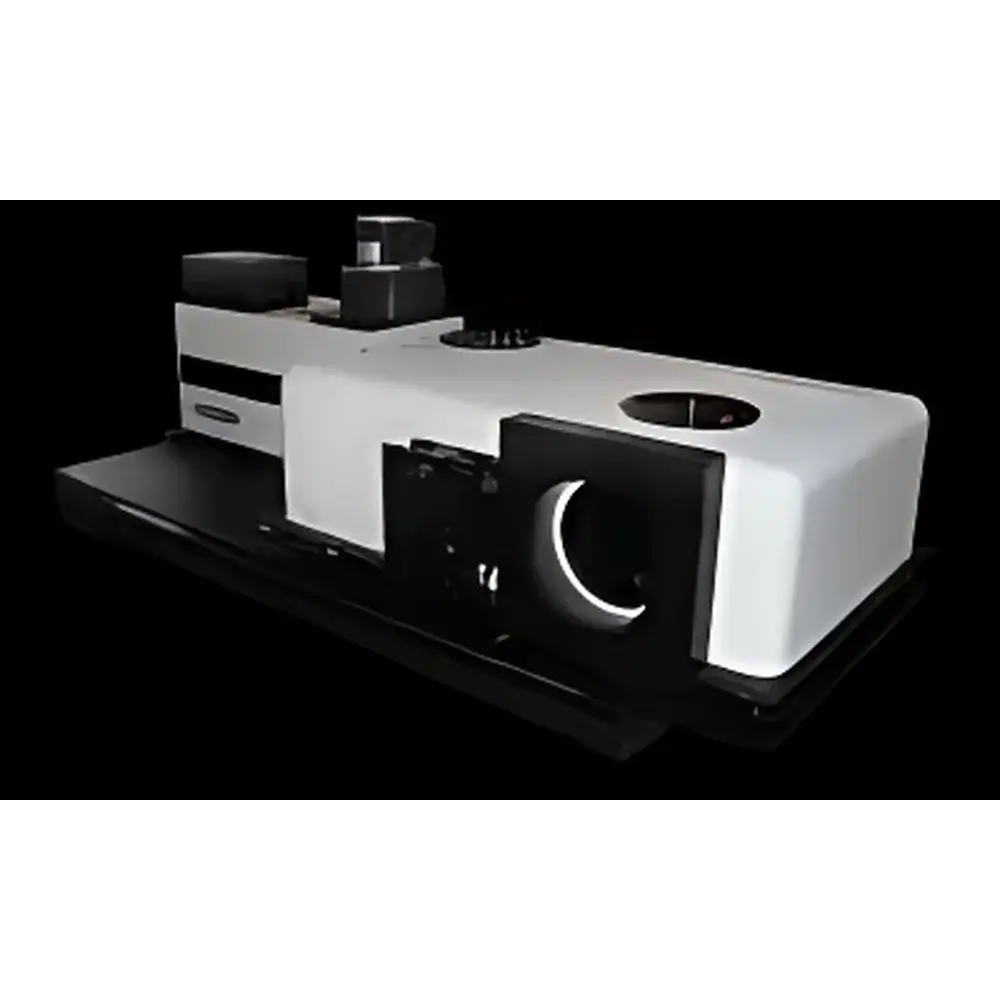
Sciencetech SS2.5KW Full-Reflection Solar Simulator
| Brand | Sciencetech |
|---|---|
| Origin | Canada |
| Model | SS2.5KW |
| Lamp Type | 2.5 kW Xenon Arc Lamp (Ozone-Free) |
| Cooling | Air-Cooled Lamp Tower |
| Beam Orientation | Horizontal or Vertical (configurable at order) |
| Filter Mount | 76 mm × 76 mm (3″ × 3″) standard, compatible with custom-sized filters |
| Optical Design | All-Reflective (mirror-based collimation and homogenization, no transmissive optics) |
| Compliance | ASTM E927-23, IEC 60904-9 Ed. 3 (Class AAA capable with appropriate filters) |
| Software Interface | Optional analog/digital control interface for power regulation and ignition sequencing |
Overview
The Sciencetech SS2.5KW Full-Reflection Solar Simulator is an engineered optical system designed to deliver high-intensity, spectrally tunable, and spatially uniform solar irradiance for photovoltaic (PV) device testing, material degradation studies, and space environment simulation. Unlike conventional solar simulators relying on transmissive optics—such as condenser lenses or diffusers—the SS2.5KW employs a fully reflective optical architecture based on precision parabolic and elliptical mirrors. This design eliminates chromatic aberration, minimizes thermal load on optical components, and preserves spectral fidelity across the full UV–NIR range (280–1800 nm). The simulator integrates a 2.5 kW ozone-free xenon arc lamp, whose native spectrum closely approximates extraterrestrial AM0 irradiance; when coupled with certified air mass (AM) filters—including AM0, AM1.5G, and AM1.5D—the system achieves Class AAA performance per IEC 60904-9 Ed. 3 and ASTM E927-23 standards in spectral match, spatial uniformity, and temporal stability.
Key Features
- All-reflective optical path: No transmissive lenses or prisms—ensures zero spectral distortion, minimal thermal drift, and long-term calibration stability.
- 2.5 kW high-pressure xenon arc lamp: Engineered for stable output over >1,000 hours; includes integrated igniter and regulated DC power supply with real-time lamp voltage/current monitoring.
- Air-cooled lamp tower: Eliminates liquid cooling infrastructure while maintaining thermal equilibrium under continuous operation at rated power.
- Modular filter mounting system: Accepts standard 76 mm × 76 mm (3″ × 3″) interference, bandpass, and AM filters; adaptable to non-standard dimensions via custom adapter plates.
- Configurable beam orientation: Factory-configured for horizontal or vertical output axis; optional 90° turning mirror enables dynamic redirection of the collimated beam in any cardinal direction without repositioning the main unit.
- Integrated LED display controller: Provides real-time lamp status, power level (% of max), ignition cycle counter, and fault diagnostics (e.g., lamp end-of-life, overtemperature).
Sample Compatibility & Compliance
The SS2.5KW is optimized for testing samples up to 20 cm × 20 cm at 1-sun equivalent irradiance (1000 W/m²), with uniformity better than ±2% over the defined test plane (measured per ISO 9050). Its reflective design ensures compatibility with heat-sensitive substrates—including organic PV layers, perovskite films, and polymer composites—by minimizing IR-induced localized heating. The system supports full traceability requirements for GLP and GMP environments: optional analog/digital I/O enables integration with LIMS and automated test benches, while firmware logs all operational parameters—including lamp runtime, filter identity, irradiance setpoint, and ambient temperature—for audit-ready data archiving compliant with FDA 21 CFR Part 11 when paired with validated software.
Software & Data Management
While the base SS2.5KW operates via front-panel controls, Sciencetech offers optional RS-232, USB, or Ethernet interfaces for remote command execution (SCPI-compliant syntax). Third-party software platforms—including LabVIEW, MATLAB, and Python-based automation suites—can initiate lamp ignition, ramp power levels, trigger irradiance calibrations using NIST-traceable reference cells, and synchronize exposure timing with external instrumentation (e.g., source meters, quantum efficiency systems). All configuration settings and operational logs are stored internally with timestamping and user-accessible export (CSV/JSON). Firmware updates maintain backward compatibility and introduce new calibration protocols aligned with evolving IEC and ASTM revisions.
Applications
- Photovoltaic performance validation: J-V curve tracing, EQE measurement, and accelerated lifetime testing under controlled AM0/AM1.5G spectra.
- Spacecraft component qualification: UV degradation testing of thermal control coatings, adhesives, and optical baffles under simulated low-Earth-orbit (LEO) or deep-space illumination.
- Photoelectrochemical cell development: Controlled irradiance delivery for water-splitting catalyst evaluation and tandem absorber optimization.
- Calibration of radiometric sensors: Traceable irradiance sources for field instrument validation and inter-laboratory round-robin studies.
- Material science research: Light-induced phase transitions, photochromism kinetics, and polymer crosslinking kinetics under spectrally resolved excitation.
FAQ
What spectral classes does the SS2.5KW achieve with standard filter configurations?
With AM1.5G and AM0 filters from Sciencetech’s certified catalog, the system meets Class AAA per IEC 60904-9 Ed. 3 across spectral match (A), spatial uniformity (A), and temporal stability (A) when operated within specified lamp aging limits and thermal stabilization periods.
Can the simulator be integrated into an environmental chamber?
Yes—the air-cooled lamp tower and all-reflective optics eliminate liquid coolant routing; optional feedthrough-compatible housing allows direct mounting onto chamber viewports with minimal beam path perturbation.
Is NIST-traceable calibration included with purchase?
Each unit ships with a factory irradiance map and spectral power distribution report, referenced to NIST SRM 2251 (silicon photodiode) and SRM 2252 (thermopile). Full traceable calibration services are available as a post-purchase option.
What maintenance intervals are recommended for the xenon lamp and optics?
Lamp replacement is advised after 1,000 hours of operation or upon measurable spectral shift (>5% deviation in UV output); mirror cleaning follows ISO 10110-7 protocols and is recommended every 200 hours in non-cleanroom environments.
Does the system support automated filter wheel integration?
Yes—optional motorized 6-position filter wheel (part number FW-SS6) is mechanically and electronically compatible, enabling unattended spectral switching during multi-condition testing sequences.



