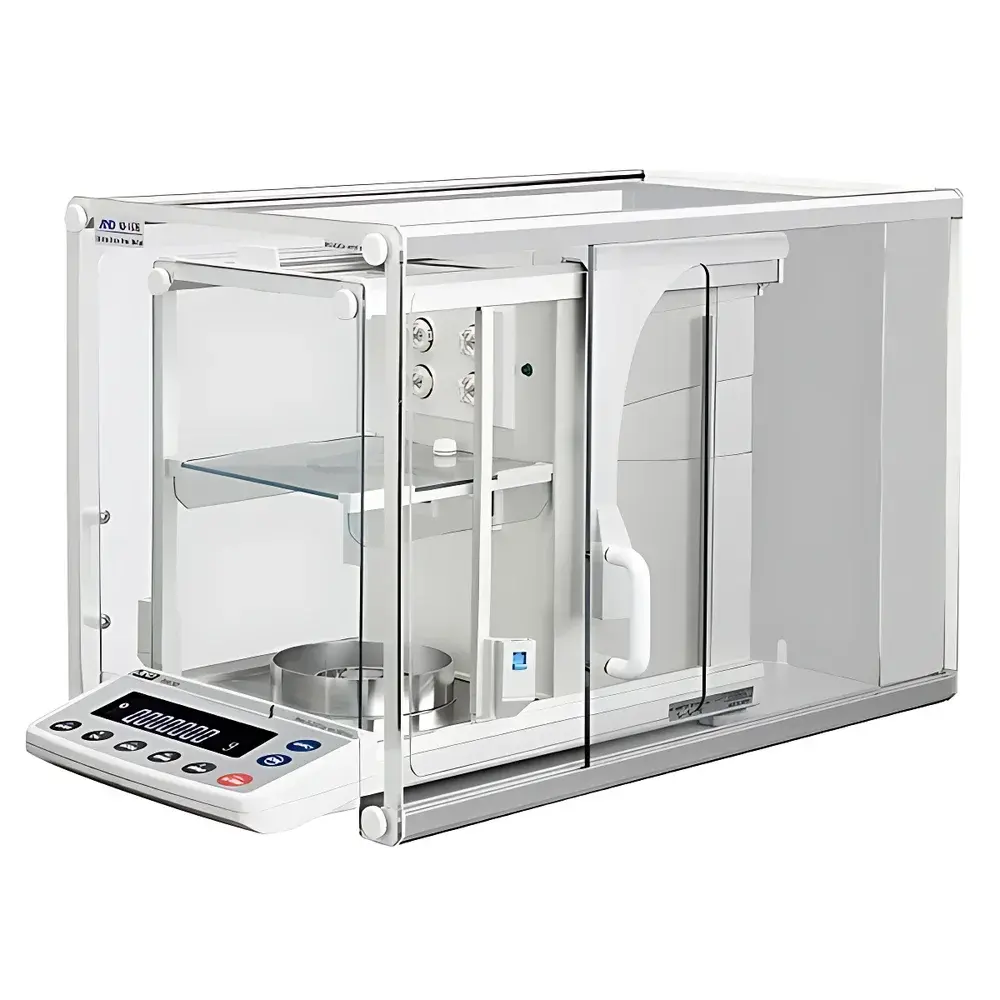
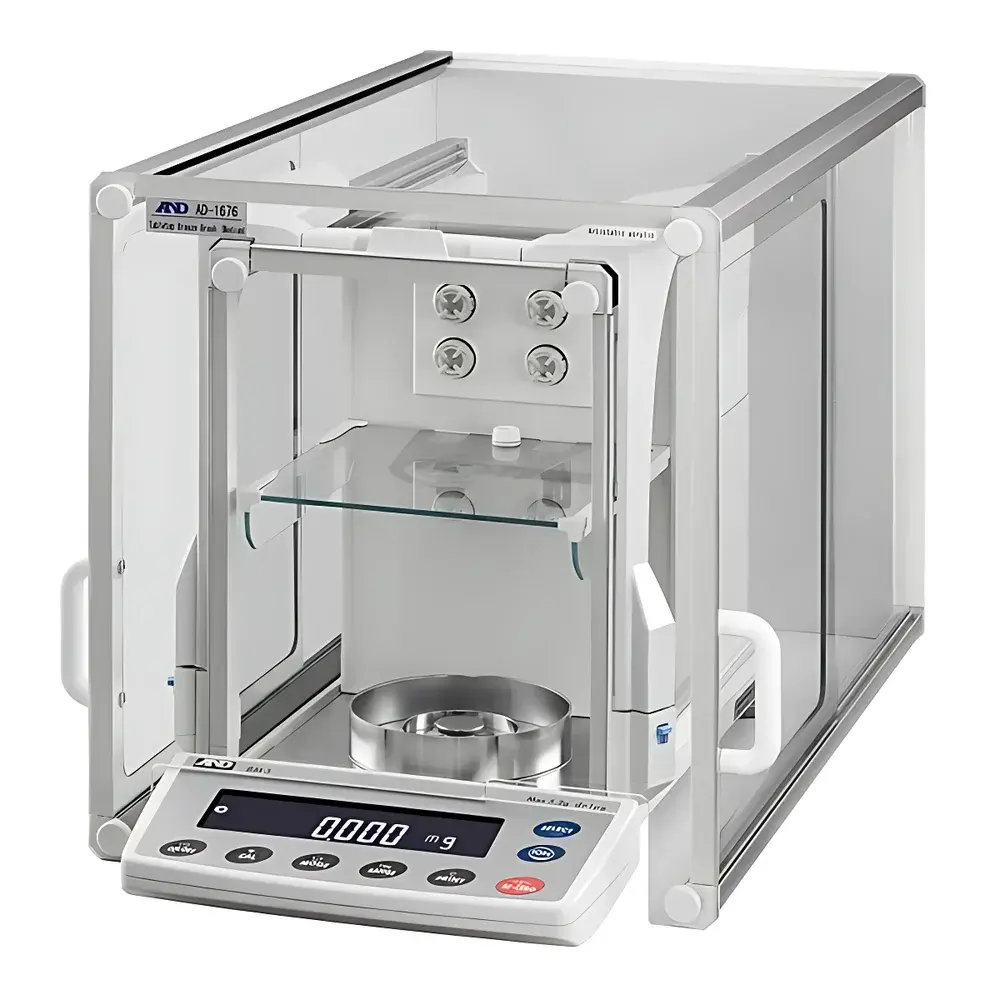
AND BM-22 Dual-Range Ultra-Micro Balance with 0.1 µg Readability
| Brand | AND/A&D |
|---|---|
| Origin | Japan |
| Model | BM-22 |
| Instrument Type | Ultra-Micro Balance |
| Maximum Capacity | 22 g |
| Dual Range | 5–20 g |
| Readability | 0.1 µg (10⁻⁷ g) |
| Repeatability | 0.004 mg |
| Calibration | Internal motorized calibration with built-in砝码 |
| Communication Interfaces | RS-232C and USB |
| Data Storage | 200 measurement records + 50 calibration logs |
| Software | WinCT-Balance (GLP/GMP-compliant reporting) |
Overview
The AND BM-22 is an ultra-micro balance engineered for laboratories requiring sub-microgram mass resolution in regulated and research-intensive environments. Designed and manufactured in Japan, it operates on electromagnetic force compensation (EMFC) principle — a high-stability transduction method that delivers exceptional linearity, thermal drift resistance, and long-term repeatability. With a readability of 0.1 µg (1 × 10⁻⁷ g) and dual-range capability (5–20 g), the BM-22 bridges the performance gap between conventional analytical balances and dedicated microbalances, enabling precise quantification of nanogram-scale samples without sacrificing operational flexibility. Its architecture integrates electrostatic mitigation at the hardware level — not as an afterthought, but as a foundational design requirement — making it especially suitable for handling low-mass powders, catalysts, pharmaceutical actives, reference standards, and nanomaterials where static-induced deviation compromises metrological integrity.
Key Features
- Electrostatic neutralization system: Integrated DC ionizer with zero-airflow design eliminates charge buildup on samples and weighing pan without inducing convection currents or disturbing delicate particulates.
- Conductive anti-static glass draft shield: Coated with transparent conductive layer to dissipate surface charge from operator contact or sample handling, ensuring stable zero and consistent weighing results.
- Ergonomic lateral sliding door mechanism: Allows simultaneous operation of door control and sample placement using both hands — reducing procedural time and minimizing environmental perturbation during critical weighings.
- Perforated mesh weighing pan: Optimized geometry minimizes air buoyancy effects and turbulence sensitivity, improving stability in non-climate-controlled lab spaces.
- Dual-ring weighing chamber design: Modular partition plate enables flexible configuration — removable for enhanced accessibility and electrostatic dissipation pathways when required.
- Internal motorized calibration: One-touch automatic calibration using factory-traceable internal weights; supports scheduled recalibration per ISO/IEC 17025 and USP guidelines.
Sample Compatibility & Compliance
The BM-22 accommodates diverse sample forms — including fine powders, crystalline APIs, lyophilized proteins, metal nanoparticles, and thin-film substrates — across pharmaceutical QC, materials science, forensic toxicology, and reference material certification workflows. Its electrostatic management system ensures reliable performance with insulating or triboelectrically active materials (e.g., polymers, ceramics, dried biologicals). The instrument complies with international metrological standards including OIML R76-1, ISO 9001, and JIS B 7721. All data outputs adhere to GLP, GMP, and GCP documentation requirements, supporting audit readiness under FDA 21 CFR Part 11 (when used with WinCT-Balance software configured for electronic signature and audit trail).
Software & Data Management
WinCT-Balance — A&D’s proprietary PC application — provides full bidirectional communication via RS-232C or USB. It enables real-time data logging, customizable report generation (including date/time stamp, operator ID, balance ID, and environmental metadata), and export in CSV, TXT, or PDF formats compliant with ISO/IEC 17025 Annex A.5 and USP . The software supports user-defined templates aligned with GLP/GMP documentation standards, including mandatory fields for calibration status, uncertainty estimation, and traceability references. Local storage retains up to 200 measurement entries and 50 calibration events with timestamp, operator code, and environmental conditions (if external sensor integration is enabled).
Applications
- Pharmaceutical development: Accurate dispensing and assay of potent drug substances (e.g., oncology APIs) where ±0.1 µg variation impacts potency calculations and batch release decisions.
- Reference standard preparation: Gravimetric dilution of certified reference materials (CRMs) for ICP-MS, HPLC, and titrimetric calibration.
- Nanomaterial characterization: Weighing of functionalized quantum dots, carbon nanotubes, or MOF powders prior to dispersion or surface area analysis.
- Forensic chemistry: Quantitative recovery assessment of trace evidence (e.g., narcotics, explosives residues) following extraction protocols.
- Academic research: High-precision stoichiometric synthesis in organometallic and catalytic chemistry labs.
FAQ
What does “0.1 µg readability” mean in practice?
It indicates the smallest mass increment the balance can display and resolve under optimal conditions — equivalent to one-tenth of a microgram or 100 nanograms. This specification assumes proper installation, environmental stabilization (±0.5 °C/hour, <30% RH variation), and use of anti-static accessories.
Is internal calibration sufficient for regulatory audits?
Yes — provided calibration frequency aligns with risk-based assessment per ISO/IEC 17025 Clause 6.5 and USP . Internal calibration verifies linearity and sensitivity; external verification with NIST-traceable weights is recommended at defined intervals or after relocation.
Can the BM-22 interface with LIMS or ELN systems?
Yes — via ASCII protocol over RS-232C or virtual COM port emulation over USB. WinCT-Balance supports direct export to common database schemas and includes configurable delimiter settings for seamless ingestion into laboratory information management systems.
Does the mesh pan affect weighing accuracy for volatile samples?
No — the perforated design reduces convective interference without compromising containment. For highly volatile or hygroscopic compounds, optional draft shield extensions and desiccant trays are available to maintain inert atmosphere during extended stabilization periods.