
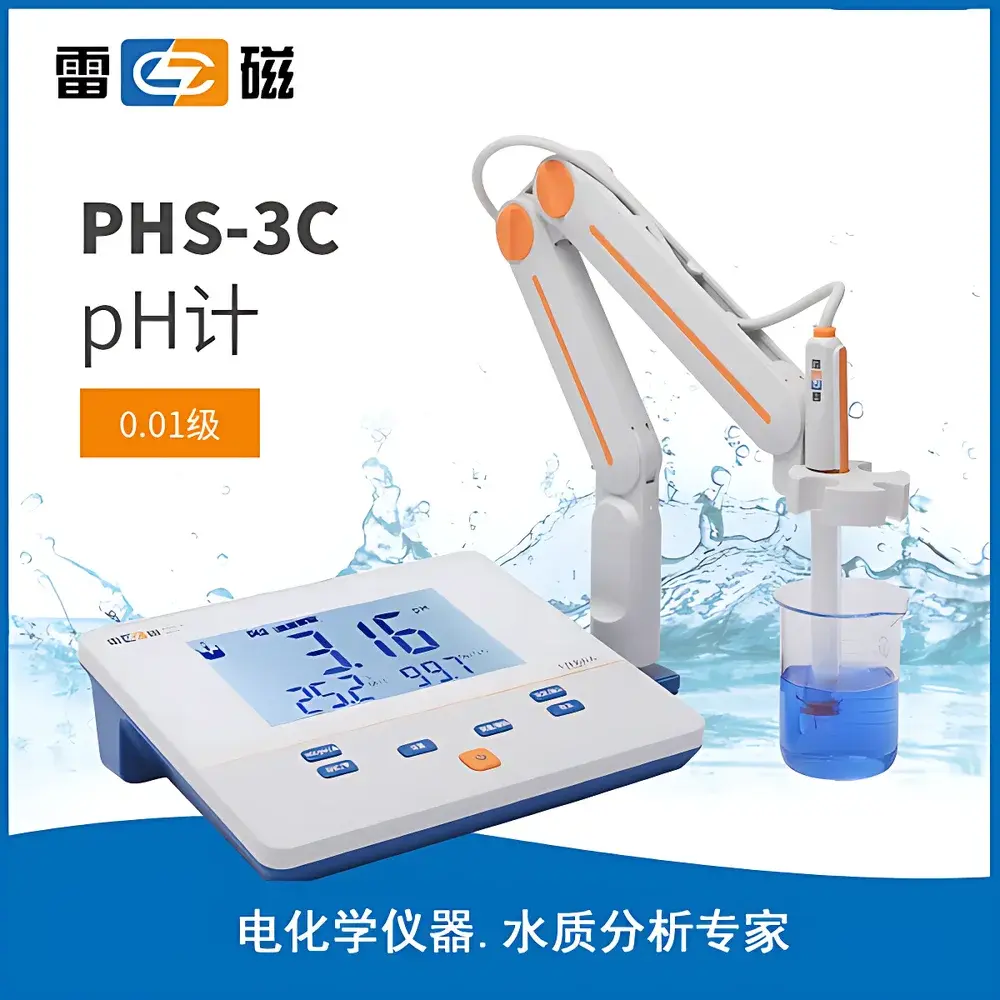
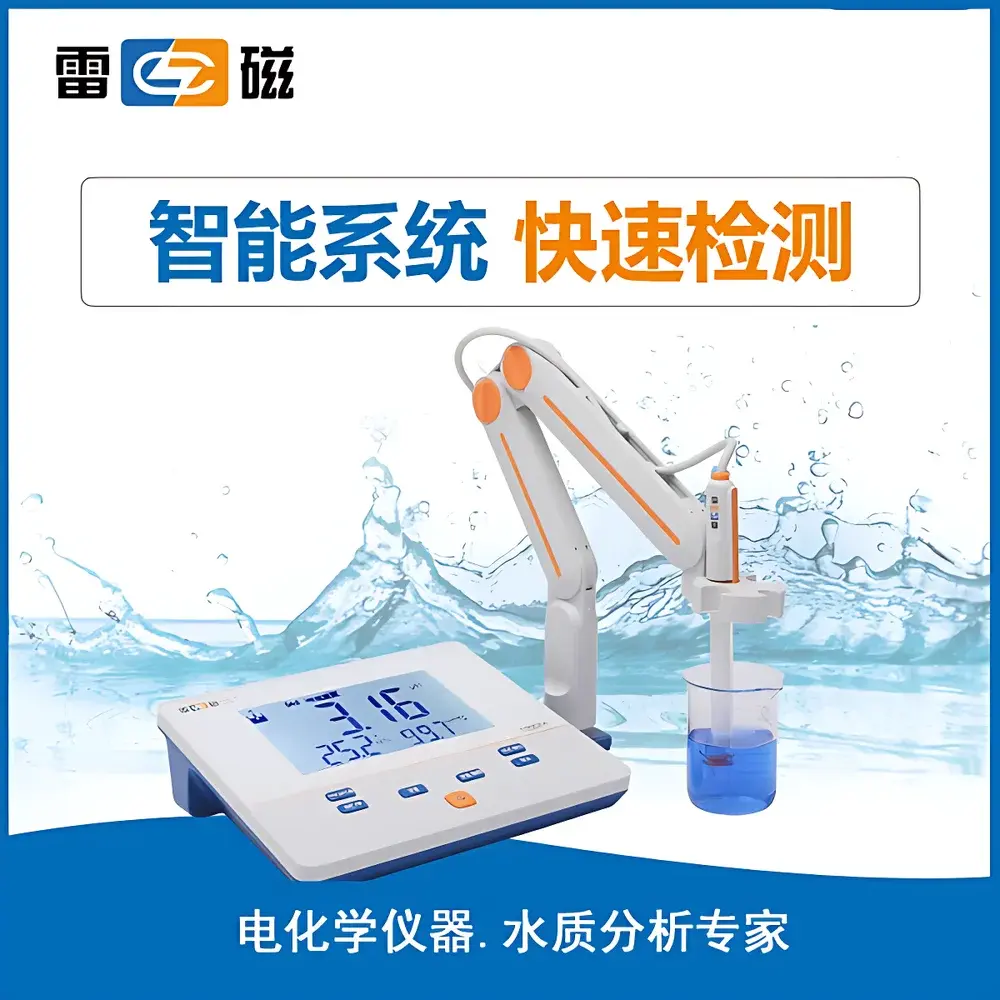
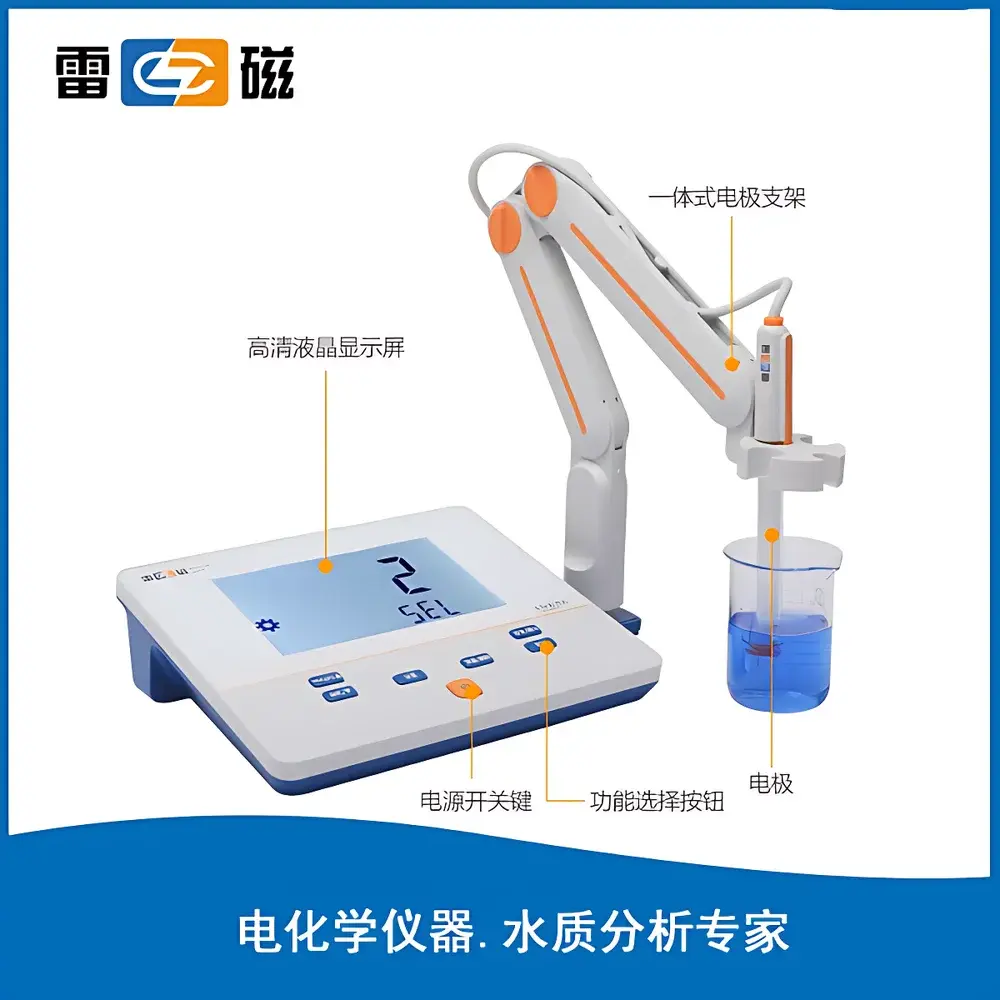
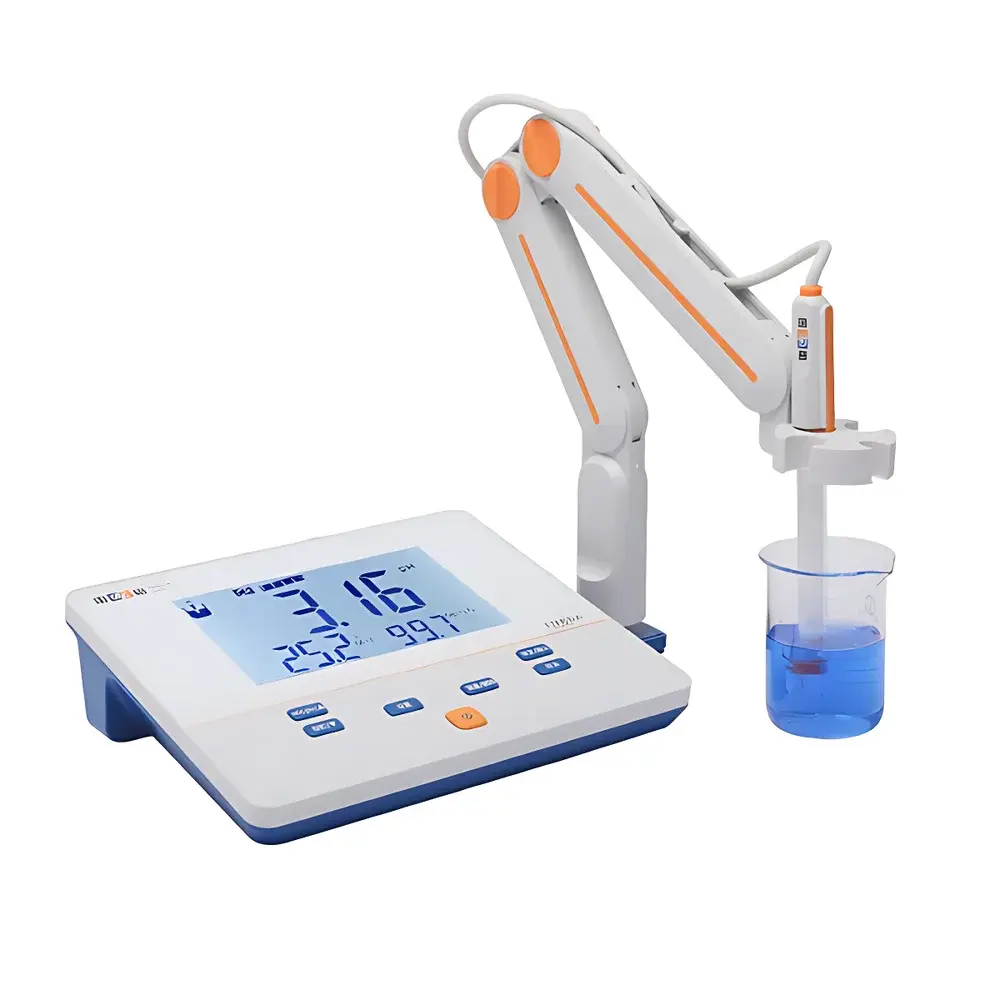
Leici PHS-3C Benchtop pH Meter
| Brand | Leici |
|---|---|
| Origin | Shanghai, China |
| Model | PHS-3C |
| Instrument Type | Benchtop |
| Parameter Type | Single-parameter (pH/mV) |
| Measurement Range | 0.00–14.00 pH |
| Resolution | 0.01 pH |
| Accuracy | ±0.01 pH ±1 digit |
| mV Range | −1999 to +1999 mV |
| mV Resolution | 1 mV |
| mV Accuracy | ±0.1% FS |
| Temperature Compensation | Manual, 0.0–60.0 °C |
| Stability | (±0.01 pH ±1 digit)/3 h |
| Power Supply | AC 220 V ±10%, 50 Hz ±1 Hz |
| Dimensions (L×W×H) | 290 × 210 × 95 mm |
| Weight | 1.5 kg |
| Calibration Buffers | pH 4.00, 6.86, and 9.18 standard solutions |
| Display | Backlit segment LCD |
Overview
The Leici PHS-3C is a benchtop single-parameter electrochemical instrument engineered for precise and reliable pH and millivolt (mV) measurements in routine laboratory, quality control, and educational environments. Based on the potentiometric principle—measuring the potential difference between a pH-sensitive glass electrode and a stable reference electrode—the PHS-3C delivers high reproducibility across the full aqueous pH scale (0.00–14.00). Its design adheres to international metrological standards for Class 0.01 pH instruments (per IEC 60746-1 and GB/T 11165–2022), ensuring traceable performance suitable for GLP-compliant documentation workflows. The instrument operates without integrated temperature sensing; instead, it supports manual temperature input (0.0–60.0 °C) to apply Nernstian correction to pH readings, enabling consistent results across varying sample thermal conditions.
Key Features
- Backlit segment-type LCD display with high-contrast numeric rendering—optimized for readability under variable ambient lighting in analytical labs and teaching facilities.
- Automatic recognition of three internationally standardized pH buffer solutions: pH 4.00, 6.86, and 9.18—reducing calibration errors and accelerating setup time during daily QC checks or student experiments.
- Two-point calibration protocol with intuitive step-by-step prompts, supporting both slope and offset verification per ISO 17025-recommended practice for measurement system validation.
- Manual temperature compensation interface—allowing users to enter measured sample temperature directly, thereby applying the theoretical −0.198 mV/pH/°C Nernst factor at 25 °C for accurate thermally adjusted pH values.
- Rugged mechanical architecture with compact footprint (290 × 210 × 95 mm) and low mass (1.5 kg), facilitating stable placement on vibration-dampened lab benches or mobile carts in multi-station teaching labs.
- Dual-mode operation: pH mode for acidity/alkalinity quantification and mV mode for redox potential assessment or electrode diagnostics—supporting troubleshooting of reference junction integrity or membrane response lag.
Sample Compatibility & Compliance
The PHS-3C is validated for use with standard combination pH electrodes (e.g., Leici E-201-C or equivalent BNC-input sensors) in aqueous and mildly buffered solutions. It is not designed for non-aqueous solvents, highly viscous media, or aggressive oxidizing/reducing matrices where electrode poisoning or junction clogging may occur. While the instrument itself does not carry CE, UKCA, or FDA 510(k) certification, its electrical safety conforms to GB 4793.1–2019 (equivalent to IEC 61010-1) for laboratory electrical equipment. Data recording and calibration logs are user-managed; for regulated environments requiring audit trails, external logging via RS232 (optional interface) or manual entry into LIMS-compliant spreadsheets is recommended to satisfy 21 CFR Part 11 documentation expectations.
Software & Data Management
The PHS-3C operates as a standalone hardware platform with no embedded firmware-based data storage or wireless connectivity. All measurement outputs—including pH, mV, temperature input, and calibration status—are displayed in real time but not retained internally. For traceability, laboratories integrate the unit with external serial data loggers or PC-based acquisition software (e.g., LabVIEW or custom Python scripts via RS232) to capture timestamped readings. Calibration events require manual annotation in lab notebooks or electronic records. This architecture aligns with minimal-compliance settings (e.g., undergraduate chemistry labs, municipal water testing stations) where full ALCOA+ data integrity is managed at the procedural—not device—level.
Applications
- Routine pH verification in pharmaceutical dissolution media (USP ), following compendial preparation protocols using certified NIST-traceable buffers.
- Academic instruction in general chemistry and analytical labs—demonstrating electrode theory, calibration curves, and buffer capacity concepts with visual feedback and repeatable endpoint detection.
- Quality assurance testing of food and beverage products (e.g., dairy, juice, pickling brines) per AOAC Official Methods and ISO 29541 guidelines.
- Environmental monitoring of surface water, wastewater effluents, and soil extracts—where manual temperature input compensates for field-collected sample equilibration delays.
- Electrode performance evaluation: mV mode enables open-circuit potential checks and asymmetry potential assessment prior to calibration—critical for maintaining electrode longevity and inter-laboratory comparability.
FAQ
Does the PHS-3C support automatic temperature compensation (ATC)?
No. The instrument requires manual entry of sample temperature within the 0.0–60.0 °C range to apply Nernst-based correction.
Can it be used with non-Leici electrodes?
Yes—any standard BNC-output pH electrode compliant with DIN/IEC 60746-1 output impedance and voltage range specifications is compatible.
Is RS232 communication included as standard?
No. RS232 output is available only via optional accessory cable and requires external terminal emulation software for data capture.
What buffer sets are recognized during calibration?
The unit auto-identifies pH 4.00, 6.86, and 9.18 buffers (at 25 °C); other buffers (e.g., pH 7.00 or 10.01) must be manually selected or avoided to prevent misidentification.
How often should calibration be performed?
Per ISO/IEC 17025 and internal SOPs: before each analytical batch, after electrode replacement, and following extended idle periods (>2 h) or exposure to extreme pH samples.






