
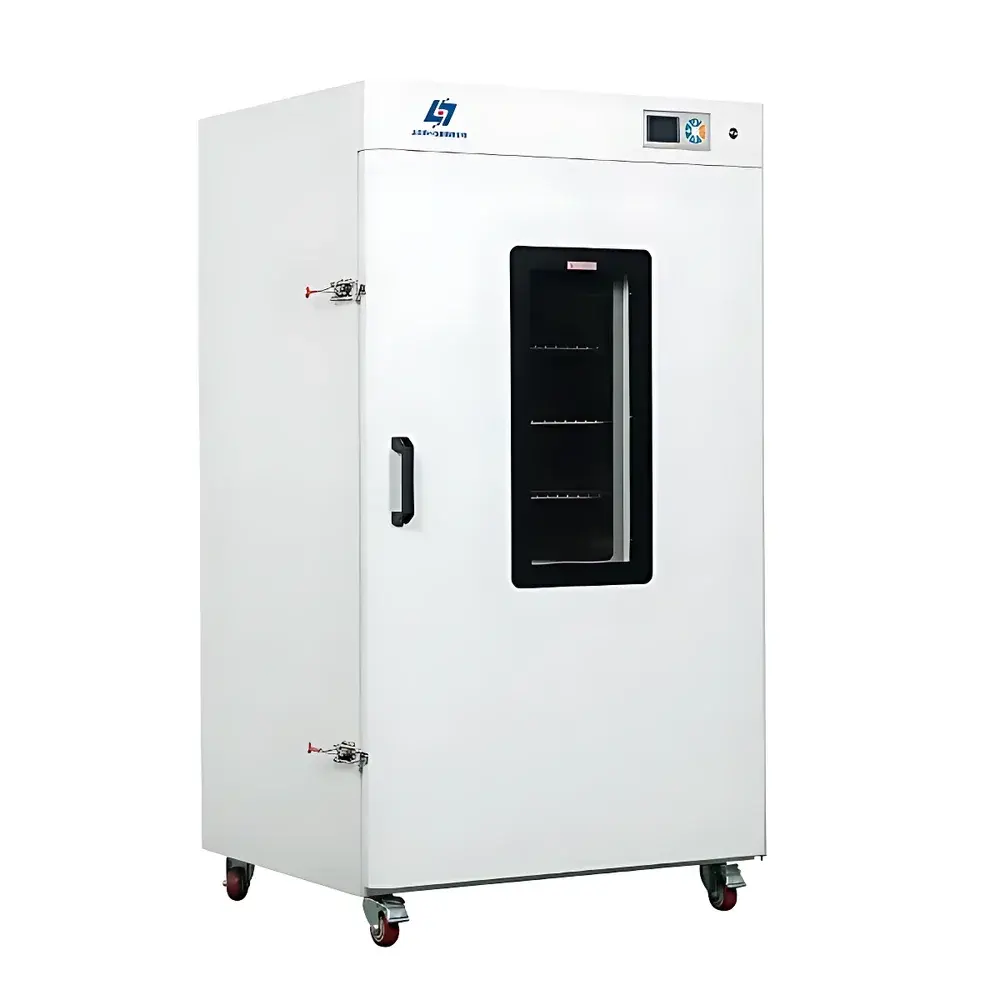
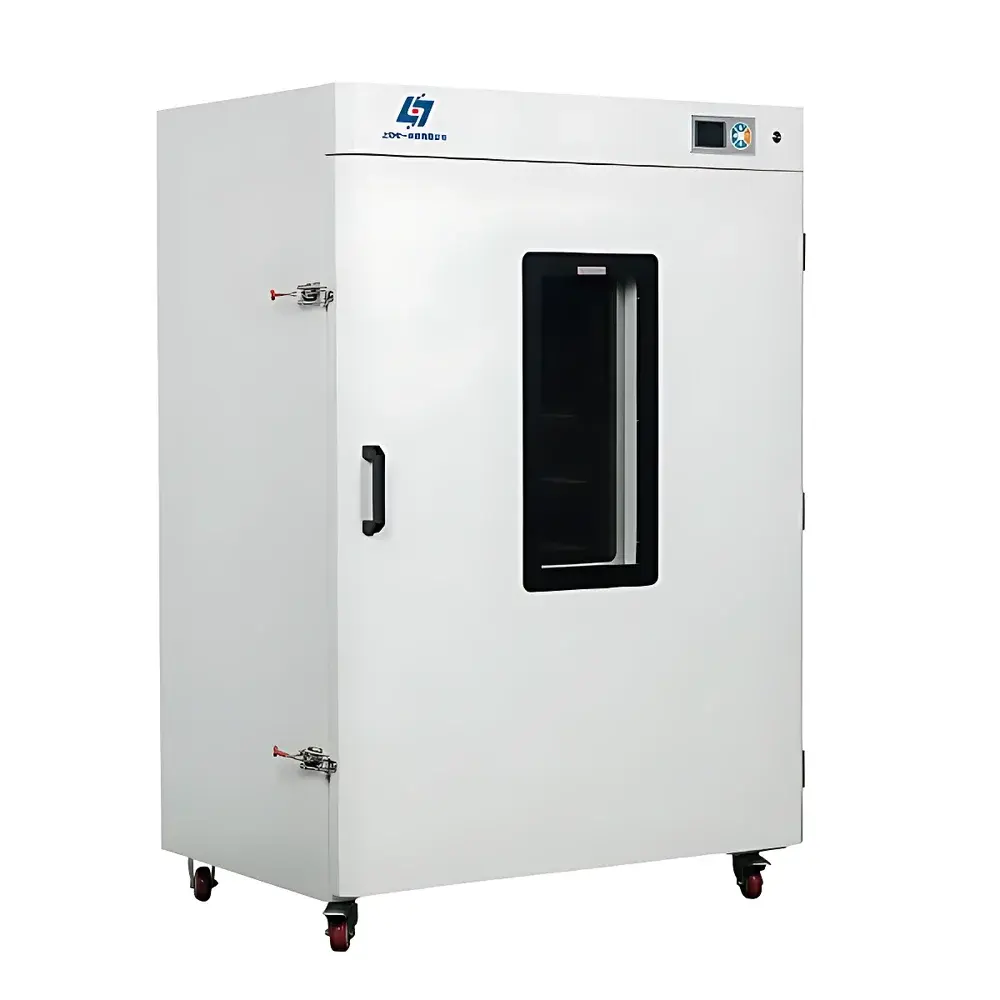
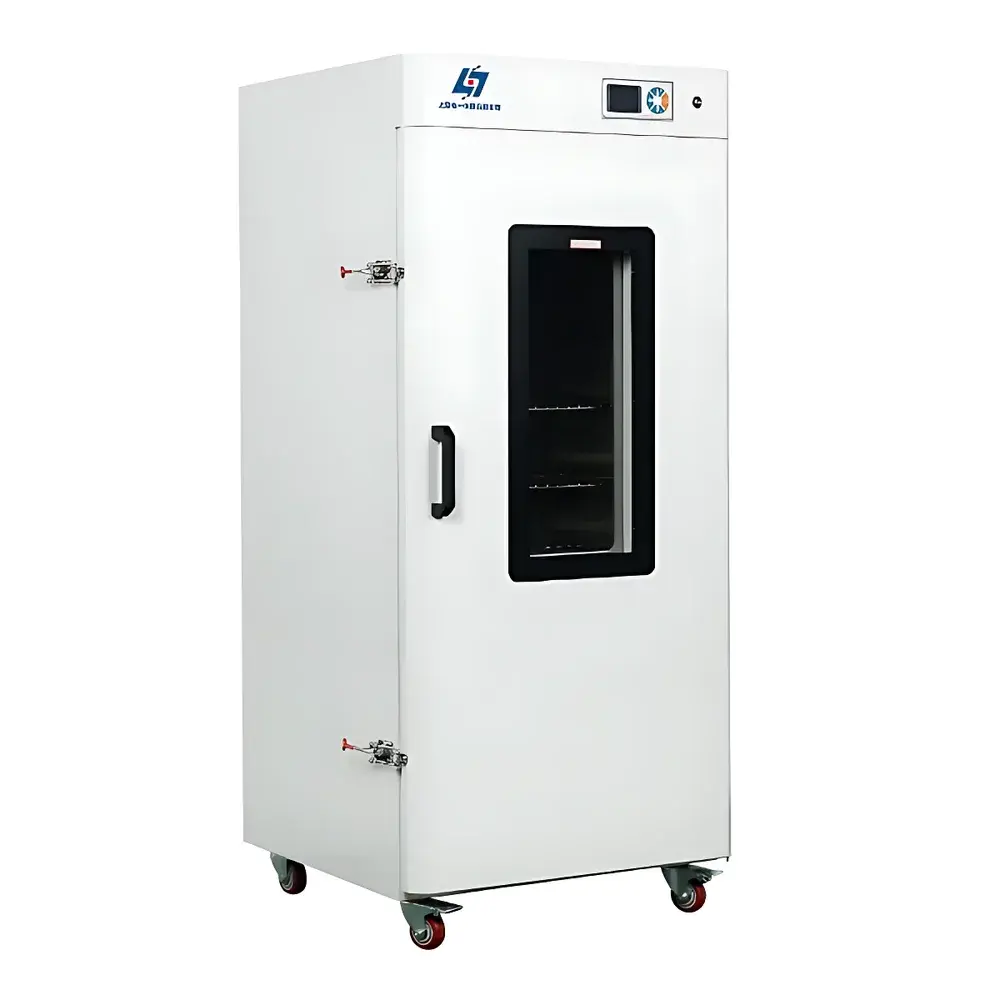
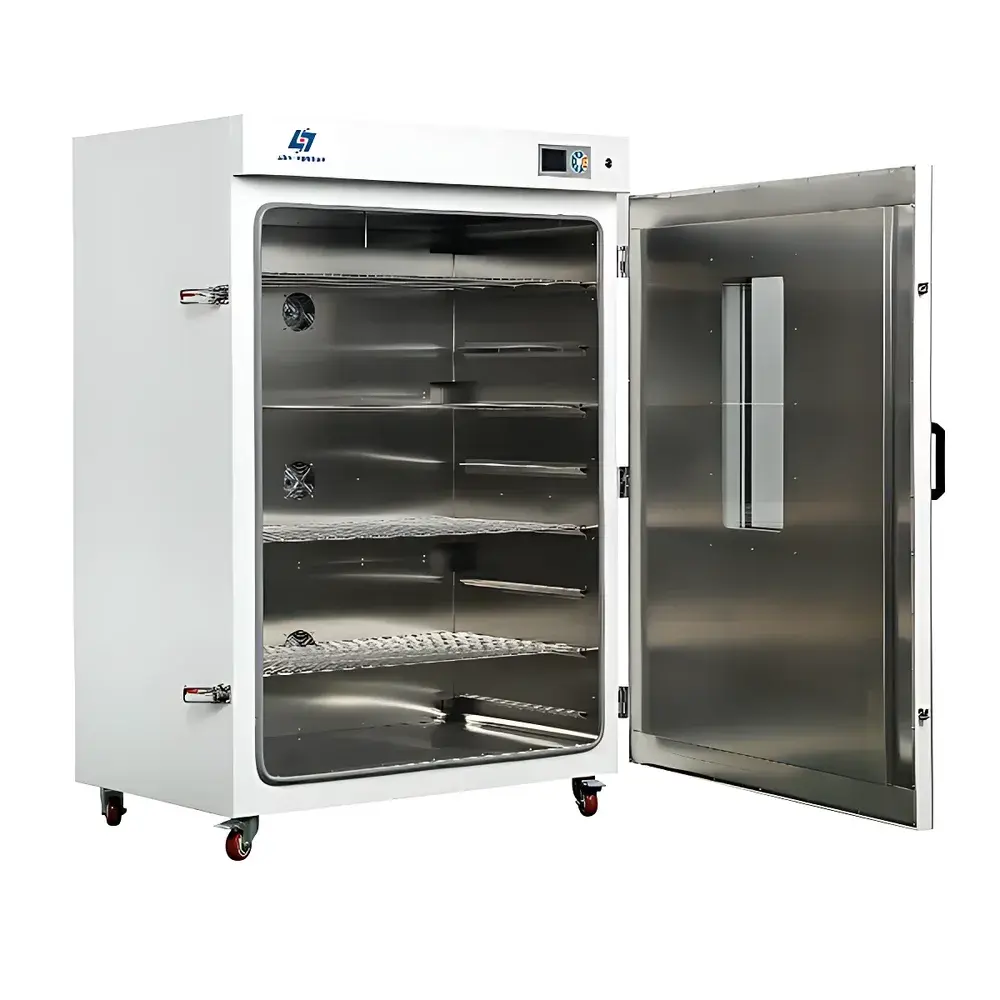
Yoyi DHG-9990C 1000L Nitrogen-Purged Forced-Air Drying Oven
| Brand | Yoyi |
|---|---|
| Origin | Shanghai, China |
| Manufacturer Type | Direct Manufacturer |
| Instrument Type | General-Purpose Drying Oven |
| Model | DHG-9990C |
| Temperature Fluctuation | ±1℃ |
| External Dimensions | 1145 × 1200 × 1390 mm |
| Temperature Control Range | RT+10 to 250℃ |
| Internal Chamber Dimensions | 1000 × 1000 × 1000 mm |
| Temperature Resolution | 0.1℃ |
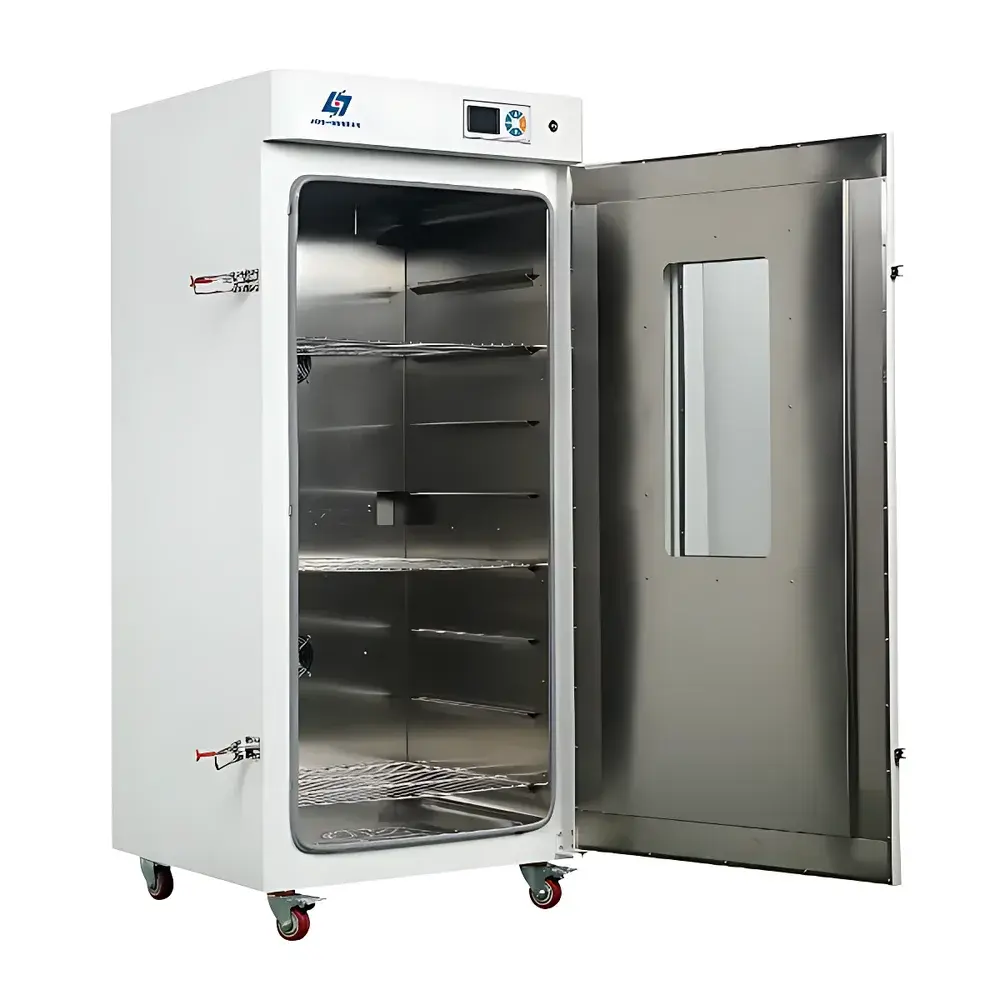
| Interior Material | Mirror-Finish Stainless Steel (SUS304) |
| Heating Method | Electric Heaters with Balanced Air Distribution |
| Temperature Uniformity | ±2.5% at 100℃ (measured per ISO 16783-1 and ASTM E2205 under nitrogen-purged, no-load conditions) |
| Inert Gas Inlet | Φ10 mm quick-connect port with precision float flowmeter (0–10 L/min) |
| Power Supply | AC380V, 50 Hz |
| Rated Power | 6000 W |
| Compliance | CE-marked |
Overview
The Yoyi DHG-9990C is a large-capacity, nitrogen-purged forced-air drying oven engineered for laboratories requiring inert-atmosphere thermal processing of oxygen-sensitive, thermally labile, or oxidation-prone materials. Unlike standard convection ovens, the DHG-9990C integrates a precisely regulated inert gas management system—primarily nitrogen—to displace ambient air, suppress oxidative degradation, and maintain a low-oxygen (<0.5% O₂ typical at steady-state flow), low-humidity environment within its 1000 L stainless steel chamber. Its operational principle relies on PID-controlled electric heating elements coupled with a rear-mounted axial fan and optimized horizontal airflow ducting, ensuring uniform convective heat transfer across the entire working volume. This architecture conforms to the fundamental design criteria outlined in ISO 16783-1 (Laboratory equipment — Drying ovens — Performance requirements and test methods) and supports applications where thermal stability under controlled atmospheric composition is critical—such as catalyst activation, polymer film annealing, pharmaceutical excipient drying, and pre-sterilization of surgical instruments.
Key Features
- 1000 L ultra-large internal chamber (1000 × 1000 × 1000 mm) constructed from electropolished SUS304 stainless steel for corrosion resistance, cleanability, and long-term dimensional stability;
- Microprocessor-based 4.3-inch LCD controller with intelligent PID algorithm, enabling precise setpoint regulation, programmable ramp/soak profiles (when equipped with optional multi-segment programmer), and real-time display of set temperature, actual chamber temperature, and elapsed time;
- Dual-layer tempered glass observation window with silicone gasket seal, permitting visual monitoring without compromising chamber integrity or thermal efficiency;
- Robust forced-air circulation system featuring rear-mounted high-efficiency centrifugal blower and symmetrical baffle-guided wind tunnels—validated to deliver ≤±2.5% temperature uniformity at 100℃ under nitrogen purge (per ISO 16783-1 Annex C);
- Dedicated nitrogen inlet (Φ10 mm quick-fit connector) integrated with calibrated float-type flowmeter (0–10 L/min range), enabling reproducible gas exchange rates and rapid atmosphere stabilization;
- Auto-compensating power recovery function: retains all user-defined parameters—including temperature setpoints, timer values, and alarm thresholds—during unexpected power interruption;
- Triple-layer insulation comprising high-density ceramic fiber board and aluminum foil shielding, minimizing external surface temperature rise and improving energy efficiency;
- Adjustable stainless steel shelving (3 standard trays included), load-rated to 15 kg per shelf, with 25 mm vertical pitch for flexible sample configuration.
Sample Compatibility & Compliance
The DHG-9990C accommodates a broad spectrum of sample formats—from bulk powder batches and stacked Petri dishes to oversized mechanical assemblies and composite material panels—within its unobstructed cubic chamber. Its inert-gas capability makes it suitable for processing materials governed by USP , ISO 14644-1 Class 7/8 cleanroom-compatible workflows, and GMP Annex 1-relevant thermal decontamination protocols. While not certified as a Class II biological safety cabinet or explosion-proof enclosure, the oven complies with IEC 61010-1:2010 for laboratory electrical equipment safety and carries CE marking for EMC and Low Voltage Directive conformity. Optional accessories—including independent overtemperature cut-off (350℃ mechanical limiter), RS485 communication module with Modbus RTU support, and embedded thermal printer—enable integration into validated quality systems compliant with FDA 21 CFR Part 11 (electronic records/signatures) and EU Annex 11 (computerized systems).
Software & Data Management
When configured with the optional RS485 interface and companion PC software, the DHG-9990C supports continuous logging of chamber temperature, nitrogen flow rate (via analog input calibration), and operational status flags (e.g., door open, heater active, alarm triggered). Data export is available in CSV format with timestamped entries, supporting trend analysis, deviation investigation, and audit-ready documentation. The software includes configurable alarm thresholds, user-level access control (admin/operator modes), and electronic signature capture for critical parameter changes—aligning with ALCOA+ data integrity principles (Attributable, Legible, Contemporaneous, Original, Accurate, Complete, Consistent, Enduring, Available). All firmware updates are delivered via secure USB flash drive; no cloud connectivity is implemented, preserving network isolation per IT security best practices.
Applications
- Pharmaceutical: Moisture removal from hygroscopic APIs without oxidative decomposition; pre-drying of lyophilization vials; thermal validation of depyrogenation cycles;
- Materials Science: Annealing of conductive polymer films under inert atmosphere; outgassing of carbon composites prior to resin infusion; sintering of metal-organic frameworks (MOFs);
- Electronics Manufacturing: Pre-bake of PCB substrates and semiconductor wafers to eliminate residual solvents and adsorbed water;
- Food & Agriculture Research: Accelerated shelf-life testing of lipid-rich samples (e.g., nuts, seeds, oils) under controlled O₂ partial pressure;
- Academic & Government Labs: Standardized drying of soil/sediment samples per ASTM D2234/D2927; preparation of reference standards for gravimetric analysis;
- Medical Device Production: Sterilization cycle development for heat-stable implant components; cleaning validation residue drying under nitrogen blanket.
FAQ
What is the maximum recommended nitrogen flow rate for optimal atmosphere purity?
For most applications requiring O₂ reduction below 1%, a sustained flow rate of 5–8 L/min is empirically validated to achieve equilibrium within 30 minutes. Higher flow rates (>10 L/min) do not proportionally improve purity but increase operational cost.
Can the DHG-9990C operate without nitrogen purge?
Yes—it functions as a high-uniformity forced-air oven in ambient air mode. However, temperature uniformity specification (±2.5%) applies only under nitrogen-purged, no-load conditions per ISO 16783-1; ambient-air uniformity may vary slightly due to convection dynamics.
Is the interior chamber fully accessible for cleaning and validation swabbing?
Yes—the seamless mirror-finish SUS304 construction, absence of internal seams or rivets, and removable shelves facilitate ISO 14644-compliant cleaning procedures and residue sampling per ICH Q5C.
Does the oven support automated calibration verification?
While not equipped with built-in reference sensors, the unit features two PT100 sensor ports (one operational, one spare) compatible with external calibration probes. Optional RS485 + software enables automated calibration log generation per ISO/IEC 17025 requirements.
What safety certifications does the DHG-9990C hold?
It bears CE marking per Directive 2014/35/EU (LVD) and 2014/30/EU (EMC), and conforms to EN 61010-1:2010+A1:2013 for protection against electric shock, fire hazard, and mechanical injury. No ATEX or UL listing is provided.
Related Products



