
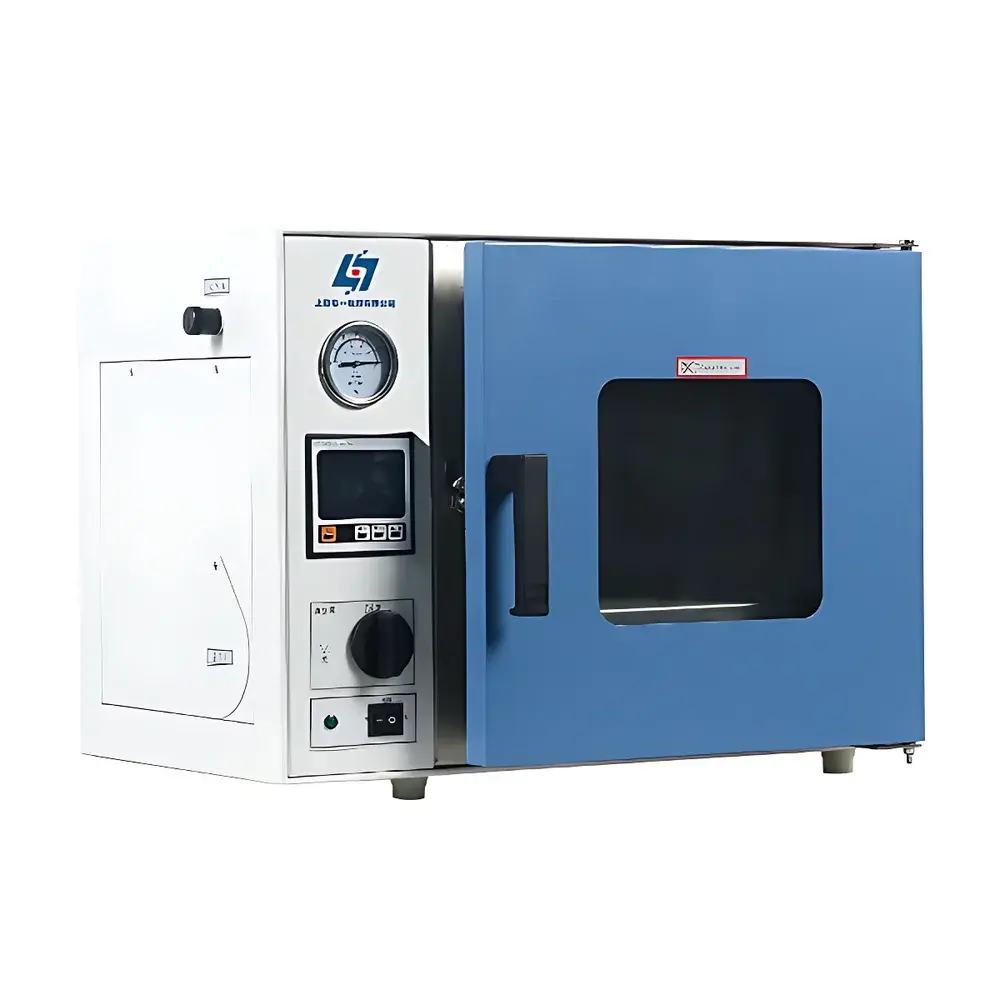
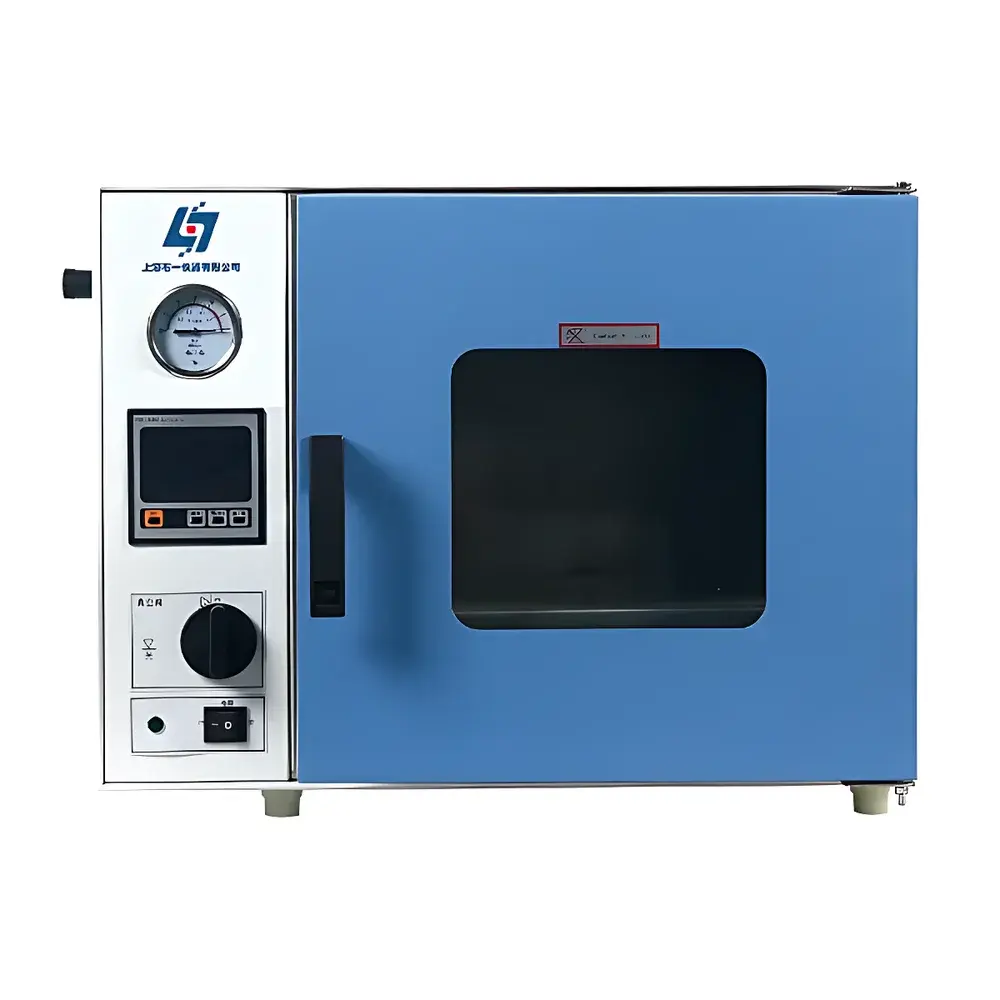
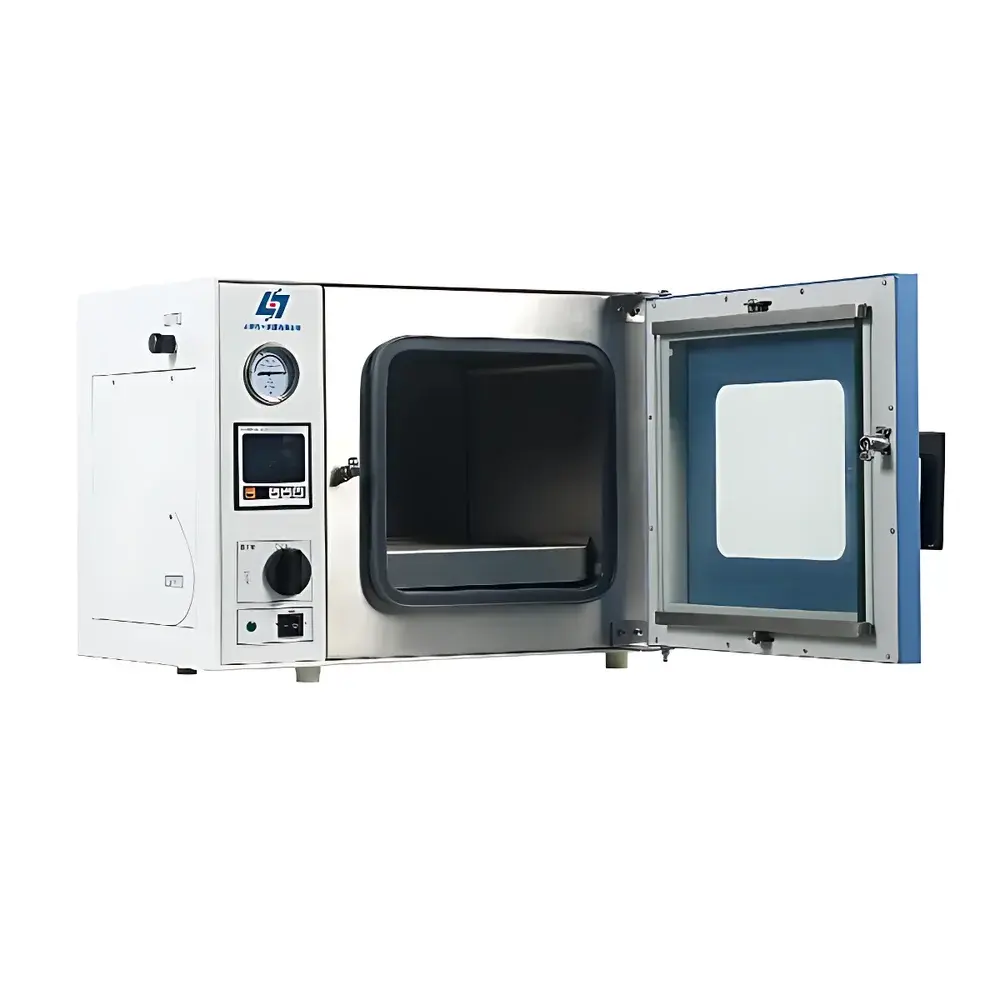
Yoyi DZF-6020C Benchtop Nitrogen-Purged Vacuum Oven
| Brand | Yoyi |
|---|---|
| Origin | Shanghai, China |
| Manufacturer Type | Direct Manufacturer |
| Product Category | Domestic |
| Model | DZF-6020C |
| Instrument Type | Vacuum Oven |
| Temperature Range | RT+10°C to 250°C |
| Temperature Uniformity | ±1°C |
| External Dimensions | 615×470×470 mm |
| Internal Chamber Dimensions | 300×300×275 mm |
| Temperature Resolution | 0.1°C |
| Chamber Material | Stainless Steel |
| Ultimate Vacuum Level | ≤133 Pa |
| Power Input | AC 220 V, 50 Hz |
| Heating Method | Internal (non-removable aluminum shelves) |
| Vacuum Gauge | Analog stainless-steel vacuum gauge |
| Nitrogen Inlet | Quick-connect Φ10 mm interface with float-type flow control valve (0–10 L/min) |
| Insulation | Ceramic fiber blanket between chamber and outer casing |
| Door Seal | Molded silicone rubber gasket |
| Timer Range | 1–9999 minutes |
| Standard Configuration | Integrated vacuum pump + lower cabinet enclosure |
| Shelf Quantity | 1 stainless-steel/aluminum composite shelf |
Overview
The Yoyi DZF-6020C is a compact, benchtop nitrogen-purged vacuum oven engineered for precise thermal processing under oxygen-free or inert atmospheres. It operates on the fundamental principle of simultaneous vacuum evacuation and controlled inert gas (e.g., N₂, Ar) backfilling to eliminate oxidative degradation during drying, curing, degassing, or thermal stabilization. Unlike conventional forced-air ovens, this system maintains a stable low-pressure environment (≤133 Pa) while enabling dynamic atmosphere control—critical for handling thermolabile compounds, hygroscopic powders, sensitive electronic components, and oxidation-prone active pharmaceutical ingredients (APIs). Its internal heating architecture ensures rapid, uniform temperature distribution across the 300×300×275 mm stainless-steel chamber, minimizing thermal gradients and supporting reproducible process outcomes in regulated laboratory workflows.
Key Features
- Microprocessor-based PID temperature controller with 0.1°C resolution and ±1°C uniformity across the working zone—validated per ASTM E2202 and ISO 17025 traceable calibration protocols.
- Dual-mode operation: vacuum-only mode for deep moisture removal; nitrogen-purge mode for maintaining inert headspace during heating, cooling, or dwell cycles.
- Integrated analog vacuum gauge with stainless-steel housing and front-panel mounting—designed for long-term stability and ease of maintenance without requiring electrical signal conditioning.
- Quick-connect Φ10 mm nitrogen inlet with calibrated float-type flowmeter (0–10 L/min), enabling manual adjustment of purge rate to match chamber volume and process kinetics.
- Ceramic fiber insulation layer between inner chamber and cold-rolled steel exterior—achieving thermal efficiency compliant with IEC 61000-3-2 energy consumption standards for lab equipment.
- Tempered double-layer observation window with integrated silicone gasket seal—providing real-time visual monitoring while preserving vacuum integrity and inert atmosphere retention.
- Non-removable anodized aluminum shelves with high thermal conductivity—engineered to minimize localized hot spots and reduce thermal inertia during ramp-hold-cool sequences.
- Power-fail recovery function with non-volatile parameter memory—retaining setpoints, timer values, and operational status after unexpected shutdown per GLP-compliant data integrity requirements.
Sample Compatibility & Compliance
The DZF-6020C accommodates standard laboratory glassware (e.g., weighing dishes, Petri dishes, crucibles) and small-volume solid samples up to 5 kg total load. It is routinely deployed in applications requiring adherence to USP , ISO 10993-12 (material compatibility), and FDA 21 CFR Part 11–aligned documentation practices when paired with optional audit-trail-enabled software. The stainless-steel chamber complies with ISO 8573-1 Class 3 compressed air purity standards for inert gas systems, ensuring no metallic leaching or surface catalysis during extended thermal exposure. All structural welds and gasket interfaces meet EN 15085-2 CL1 certification criteria for vacuum-rated enclosures.
Software & Data Management
While the base unit features standalone microcontroller operation, optional RS485/Modbus RTU interface enables integration into centralized lab management systems (LIMS) or SCADA platforms. When connected to validated third-party data acquisition software, the oven supports time-stamped logging of temperature, vacuum pressure, nitrogen flow rate, and cycle duration—with automatic generation of CSV-formatted reports suitable for regulatory submission. Audit trail functionality—including user login tracking, parameter change history, and electronic signature fields—is available via certified software add-ons compliant with Annex 11 and ALCOA+ principles.
Applications
- Rapid dehydration of biological tissues, plant extracts, and enzymatic preparations without denaturation.
- Moisture and solvent residue removal from lithium-ion battery electrode coatings prior to cell assembly.
- Thermal aging studies of polymer composites under inert conditions to isolate thermo-oxidative effects.
- Pre-conditioning of reference standards and calibration materials per ISO Guide 35 recommendations.
- Stabilization of metal-organic frameworks (MOFs) and perovskite precursors susceptible to ambient humidity and O₂.
- Accelerated shelf-life testing of pharmaceutical intermediates under accelerated stability protocols (ICH Q1A).
FAQ
What vacuum level can the DZF-6020C achieve without external pumping enhancement?
The integrated vacuum pump delivers a base pressure of ≤133 Pa (1 Torr) under standard ambient conditions, sufficient for most low-oxygen drying and degassing applications.
Is nitrogen purging possible during active heating cycles?
Yes—the system allows concurrent vacuum evacuation, heating, and controlled nitrogen backfilling via the manually adjustable flow valve, enabling dynamic atmosphere management throughout all thermal phases.
Does the chamber support vacuum-tight sealing with standard glassware lids or septa?
The door gasket design achieves ≤5×10⁻³ mbar·L/s helium leak rate per ISO 10648-2, compatible with standard borosilicate glass vessels sealed with PTFE-faced caps or Viton septa.
Can the oven be validated for GMP environments?
Yes—its mechanical construction, material certifications, and optional data logging capabilities support IQ/OQ/PQ protocol execution per ASTM E2500 and EU GMP Annex 15 guidelines.
What maintenance intervals are recommended for the vacuum pump and seals?
The oil-lubricated rotary vane pump requires oil replacement every 500 operating hours; silicone door gaskets should be inspected quarterly and replaced if compression set exceeds 20% per ASTM D395.



