
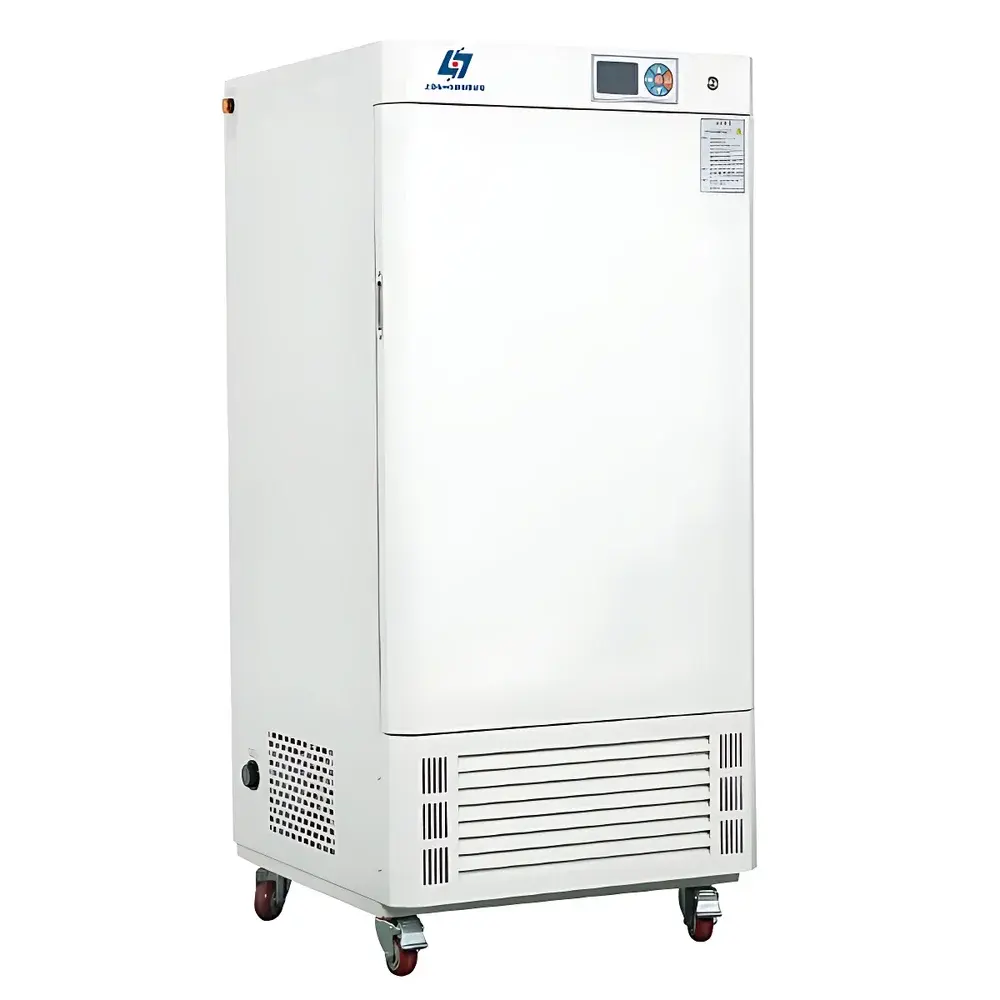
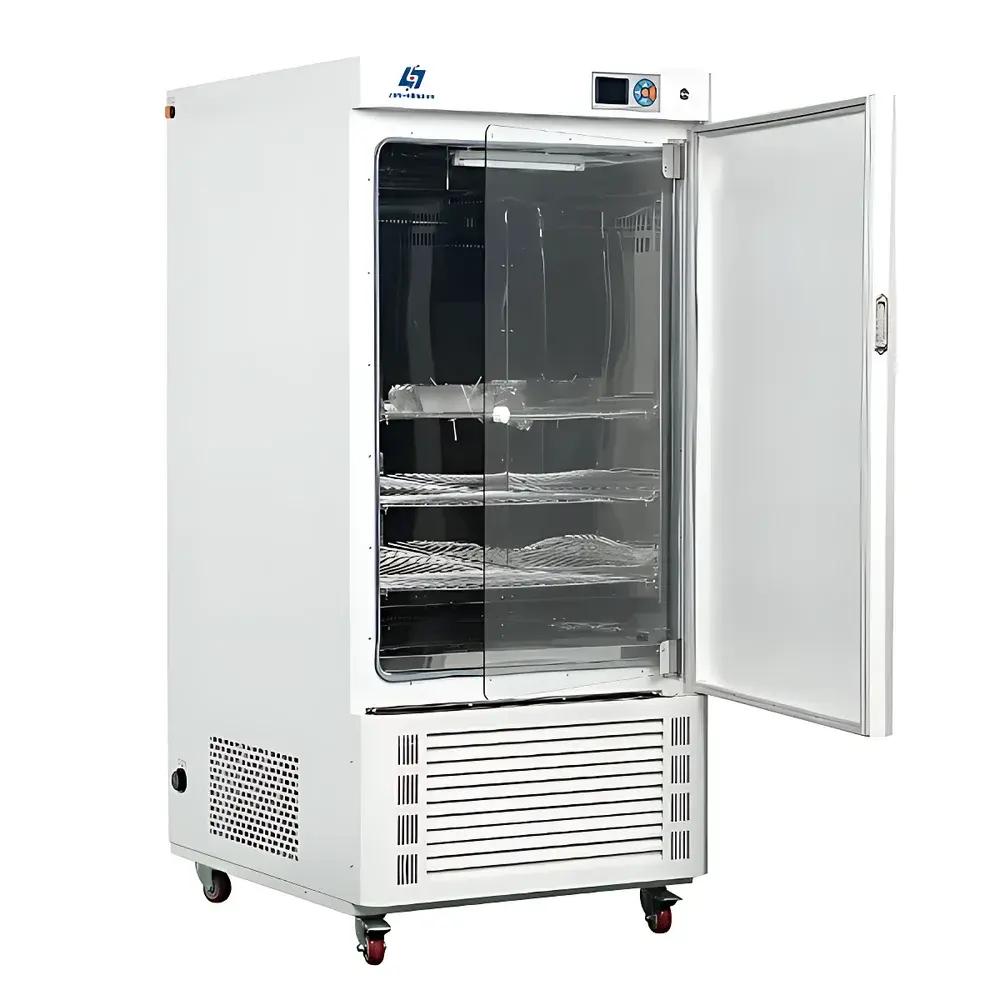
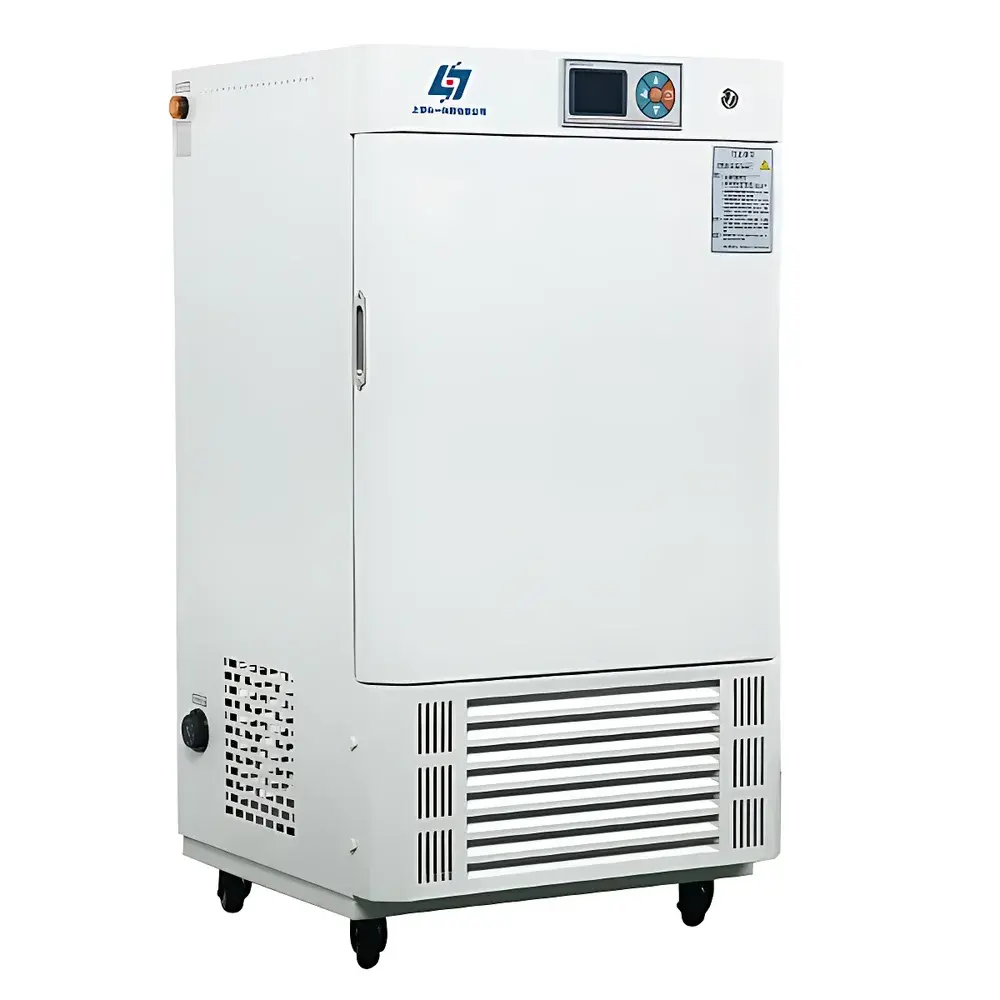
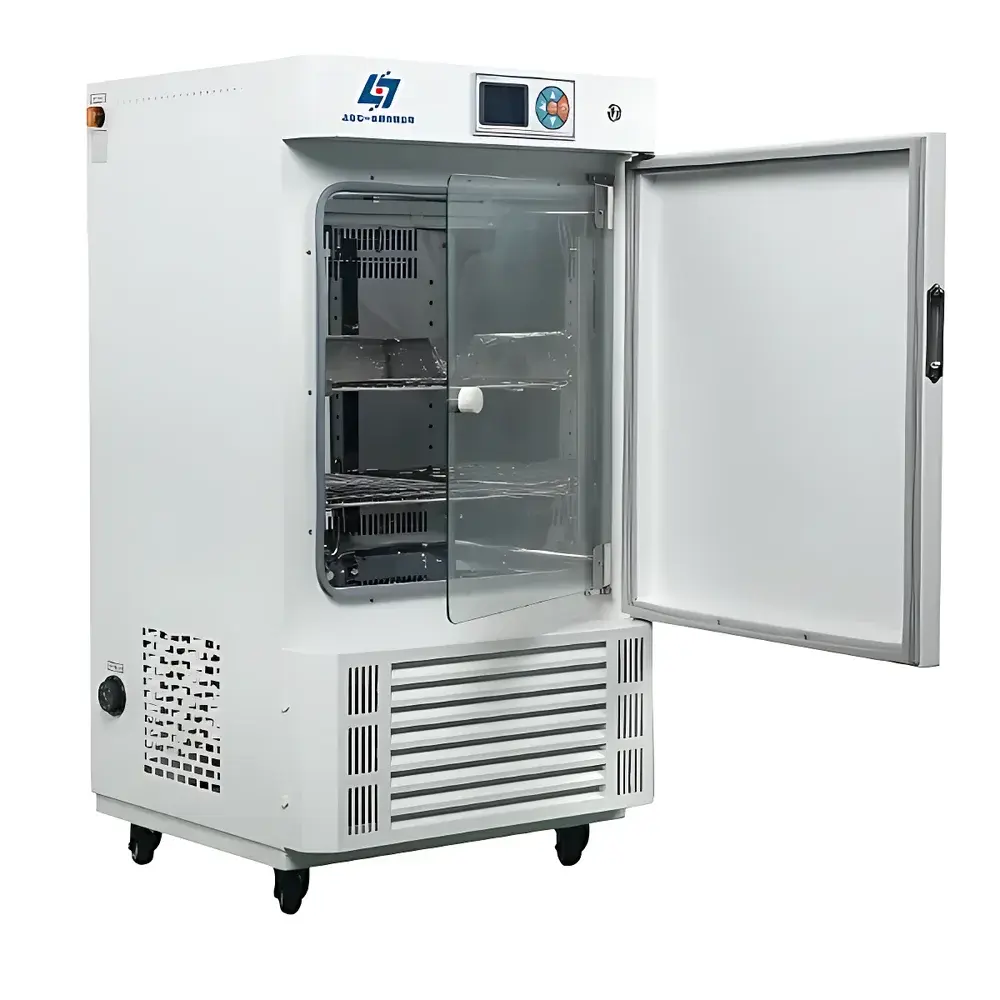
Yoyilab LRH-250 Biochemical Incubator
| Brand | Yoyilab |
|---|---|
| Origin | Shanghai, China |
| Manufacturer Type | Direct Manufacturer |
| Model | LRH-250 |
| Cooling Method | Compressor-based Refrigeration |
| Temperature Range | 0–65 °C |
| Temperature Accuracy | ±0.1 °C |
| Temperature Fluctuation | ±0.5 °C (high-temp zone), ±1.0 °C (low-temp zone) |
| Temperature Uniformity | ±1.5 °C (at 25 °C test point) |
| Chamber Capacity | 250 L |
| External Dimensions | 705 × 725 × 1525 mm (W × D × H) |
Overview
The Yoyilab LRH-250 Biochemical Incubator is a microprocessor-controlled, dual-mode (heating and refrigeration) environmental chamber engineered for precise, stable temperature regulation across a broad operational range of 0–65 °C. Designed specifically for static cultivation and preservation of microorganisms—including bacteria, yeasts, molds, and fungi—it integrates compressor-based cooling with PID-regulated resistive heating to maintain thermal stability under variable ambient conditions (5–30 °C). Its robust architecture supports long-term incubation protocols required in BOD testing, microbial enumeration, mycological isolation, plant tissue culture, and seed germination studies. The unit complies with fundamental design principles outlined in ISO 15190:2020 (laboratory safety) and aligns with general Good Laboratory Practice (GLP) requirements for documented environmental control in regulated life science workflows.
Key Features
- High-fidelity microcomputer PID temperature control system with 0.1 °C resolution and programmable timer (1–9999 minutes), enabling reproducible thermal profiles across repeated experimental cycles.
- Dual-layer insulated door with low-emissivity glass window minimizes thermal leakage during observation—maintaining internal uniformity without requiring door opening.
- Electro-polished stainless-steel interior chamber (mirror-finish) featuring radius-corner geometry for seamless cleaning and reduced microbial adhesion; adjustable stainless-steel shelving accommodates variable sample configurations.
- Compressor-driven refrigeration circuit optimized for low-noise, energy-efficient operation at sub-ambient setpoints; includes automatic defrost cycle and overtemperature cut-off protection per IEC 61000-4-2 compliance standards.
- 5.7-inch backlit LCD interface with menu-driven navigation displays real-time setpoint, actual chamber temperature, elapsed time, and remaining hold duration simultaneously.
- Power-loss recovery function retains user-defined parameters (setpoint, timer, alarm thresholds) in non-volatile memory—ensuring continuity after unexpected outages or system resets.
- Four-position leveling feet with locking casters allow secure positioning on uneven surfaces while supporting safe relocation within shared lab spaces.
Sample Compatibility & Compliance
The LRH-250 accommodates standard microbiological vessels including Petri dishes (up to 150 mm diameter), test tubes (16 × 150 mm), Erlenmeyer flasks (up to 2 L), and multi-well plates (6–96-well formats). Its chamber volume (250 L net) and internal dimensions (700 × 700 × 1020 mm) permit stacking of up to four full-height shelves (included), each rated for 15 kg load capacity. The unit meets CE marking requirements for electromagnetic compatibility (EMC Directive 2014/30/EU) and low-voltage safety (LVD Directive 2014/35/EU). While not certified to FDA 21 CFR Part 11 out-of-the-box, its optional RS485 interface (with supplied software) enables audit-trail-capable data logging suitable for GLP/GMP-aligned environments when validated per organizational SOPs.
Software & Data Management
The LRH-250 operates autonomously via embedded firmware but supports external data acquisition through an optional RS485 serial interface (Modbus RTU protocol). When paired with Yoyilab’s companion PC software (v3.2+), users can configure multi-step temperature ramps, export timestamped CSV logs (temperature, runtime, alarm events), and generate PDF reports compliant with internal QA documentation standards. Optional accessories—including a thermal printer module (real-time strip-chart output), BOD-rated power sockets (IEC 60320 C13), and 25 mm/50 mm pass-through ports—extend functionality for specialized assays such as dissolved oxygen monitoring or gas-permeable membrane experiments.
Applications
- Biochemical oxygen demand (BOD5) analysis per ASTM D5210 and ISO 5815-1 protocols.
- Mycological culture maintenance and sporulation induction at controlled low-temperature setpoints (e.g., 4–12 °C).
- Pharmaceutical stability testing (ICH Q1A–Q1E) for short-term accelerated conditions (e.g., 40 °C/75% RH with external humidifier).
- Agricultural research: seed viability assessment, callus induction, and photoperiod-independent germination trials.
- Environmental microbiology: water quality indicator organism enumeration (e.g., E. coli, coliforms) using membrane filtration or MPN methods.
- Veterinary diagnostics: anaerobic pre-enrichment (with optional N2/CO2 gas inlet kit) and fungal isolation from clinical specimens.
FAQ
What is the minimum operating temperature, and how is sub-ambient stability achieved?
The LRH-250 achieves stable operation down to 0 °C using a hermetically sealed R134a compressor system with proportional expansion valve control—validated under ISO 17025-accredited thermal mapping per ASTM E2251.
Does the incubator support humidity control?
No—this is a dry-air biochemical incubator. Humidity management requires integration with external humidification modules or separate saturated-salt chambers.
Can the unit be validated for GxP environments?
Yes—its digital control architecture, parameter retention, and optional data-logging interface meet foundational requirements for IQ/OQ/PQ execution; final validation must be performed per site-specific protocols.
Is the stainless-steel interior electropolished to ISO 15527 specifications?
The interior surface finish conforms to Ra ≤ 0.8 µm, satisfying typical bioburden reduction criteria for non-sterile microbiological applications.
What safety certifications does the LRH-250 hold?
CE-marked for EMC (EN 61326-1) and electrical safety (EN 61010-1); RoHS 2011/65/EU compliant; no UL/cUL listing available.




