
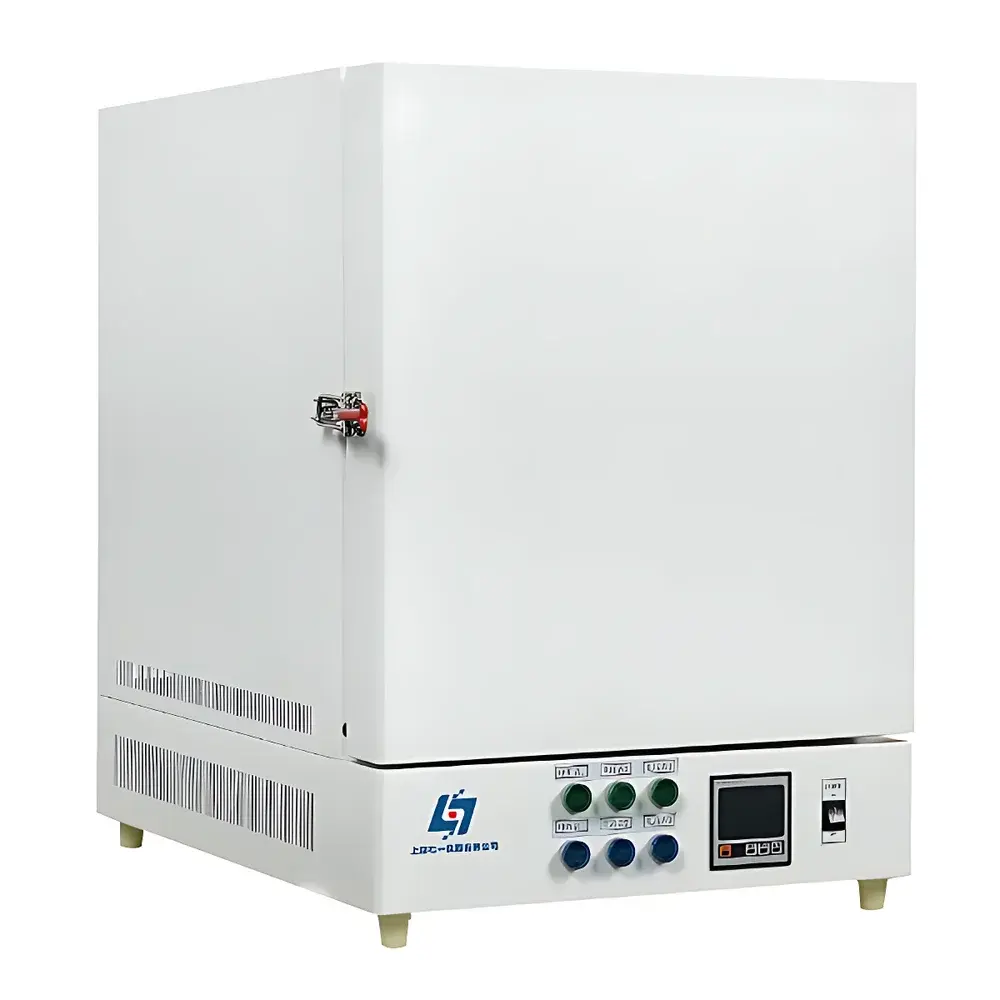
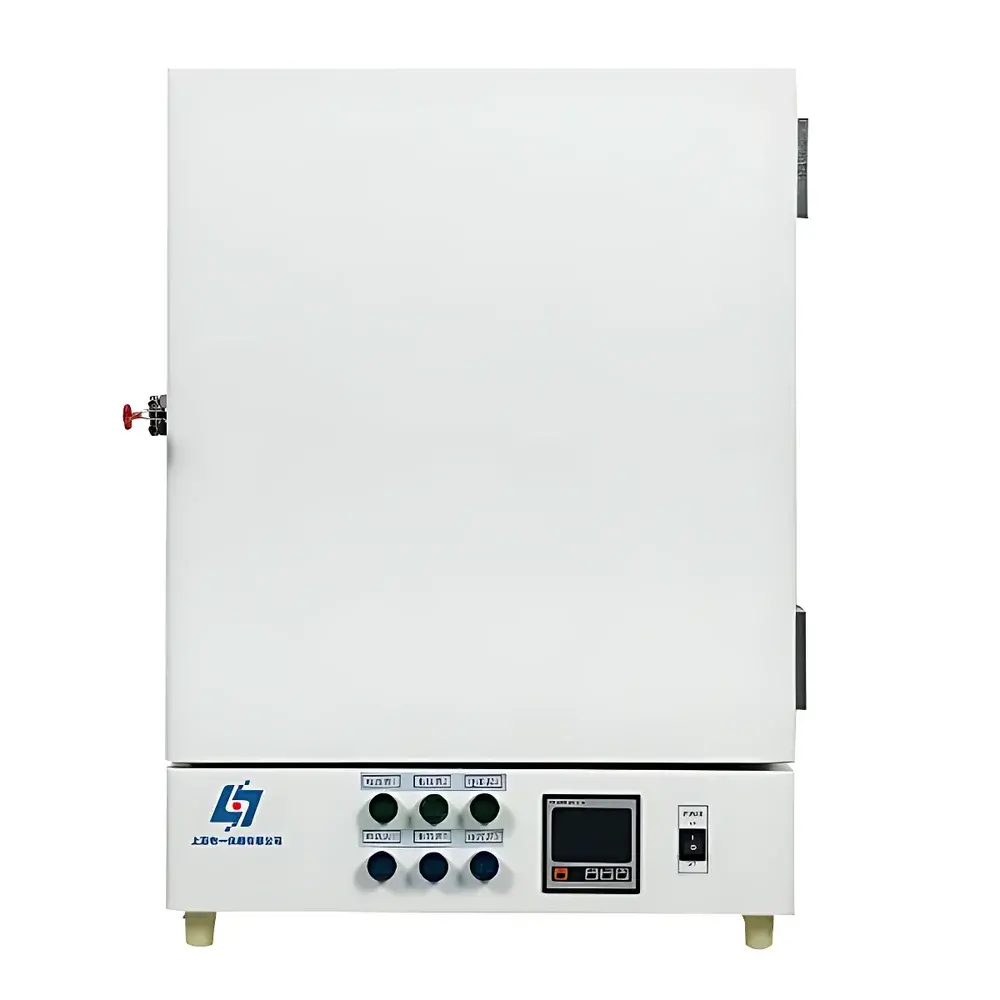
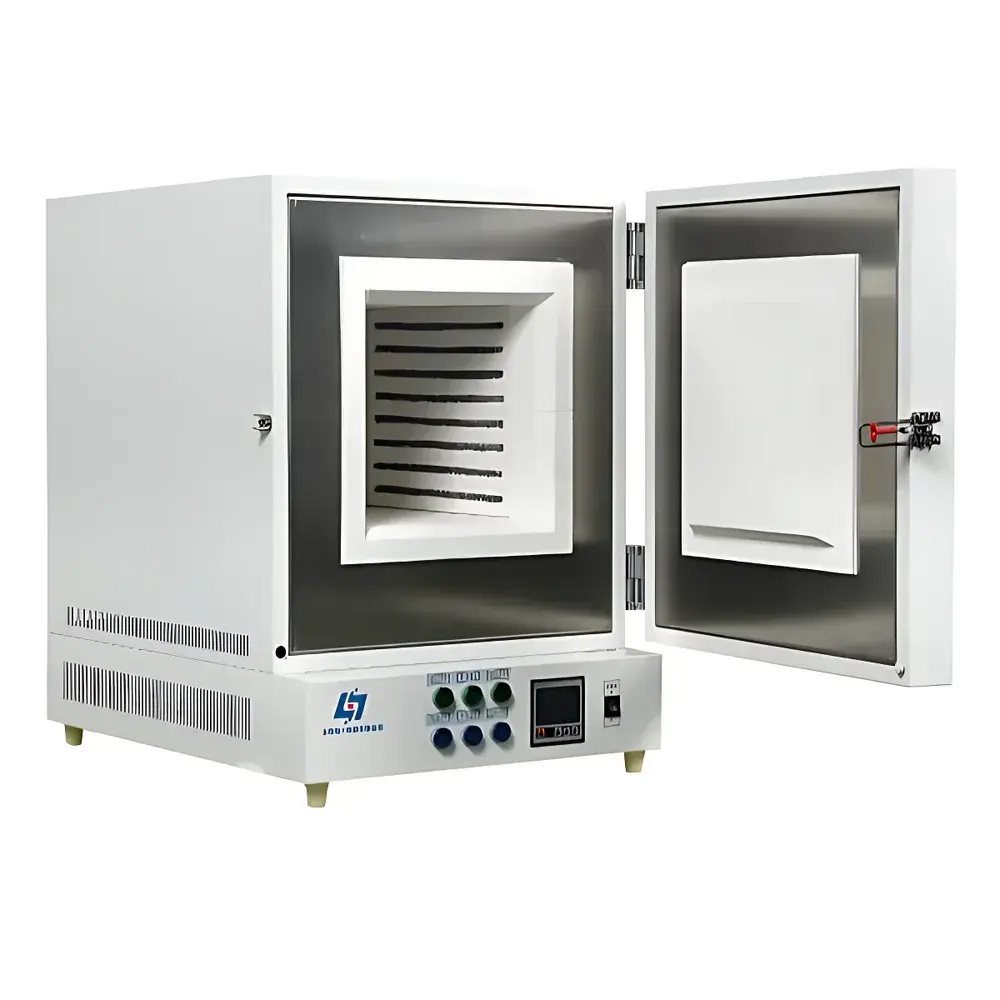
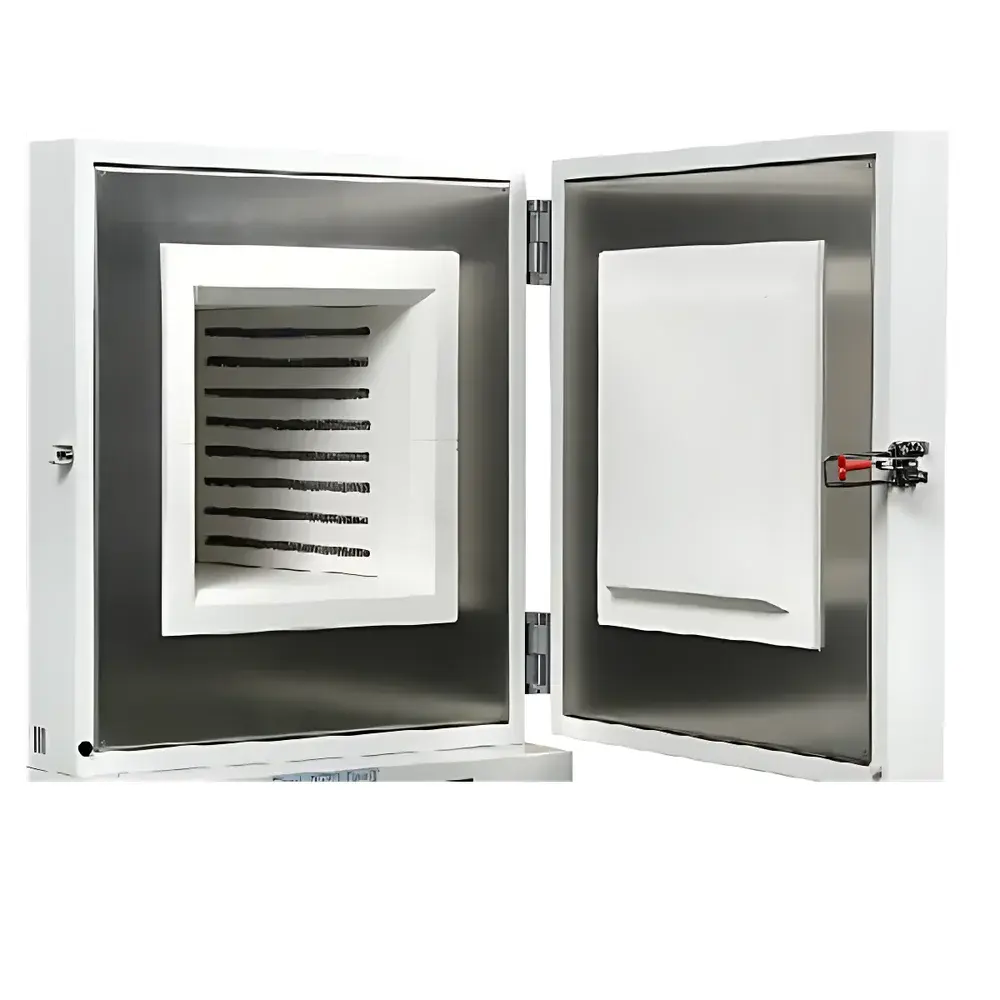
Yoyi SX2-16-10A 1000°C Ceramic Fiber Muffle Furnace
| Brand | Yoyi |
|---|---|
| Origin | Shanghai, China |
| Manufacturer Type | Direct Manufacturer |
| Instrument Type | Box-Type Muffle Furnace |
| Max Temperature | 1000°C |
| Temperature Control Accuracy | ±1°C |
| Rated Power | 16 kW |
| Heating Element | Ni-Cr Resistance Wire (Mo-doped) |
| Internal Chamber Dimensions | 400 × 500 × 400 mm |
| Nominal Volume | 80 L |
| Insulation Material | High-Purity Alumina-Silica Ceramic Fiber |
| Control System | Microprocessor-Based PID Controller with LCD Interface |
| Safety Features | Overcurrent, Overvoltage, Overtemperature, Leakage Protection, Short-Circuit Protection |
| Compliance | Designed per IEC 61000-6-3 (EMC), GB/T 10066.1–2004 (Industrial Electric Furnaces), and general laboratory safety standards for Class II electrical equipment |
Overview
The Yoyi SX2-16-10A is a high-performance, 80-liter capacity ceramic fiber muffle furnace engineered for precision thermal processing in research laboratories, materials science departments, and quality control environments. Operating on resistive heating principles via Mo-doped nickel-chromium alloy wire elements, it delivers stable, uniform temperature distribution across its fully insulated chamber—enabling reproducible heat treatments up to 1000°C. Unlike traditional brick-lined furnaces, its lightweight ceramic fiber construction minimizes thermal mass, allowing rapid ramp rates (typically 10–15°C/min from ambient to 1000°C under no-load conditions) while reducing energy consumption by approximately 60% compared to conventional refractory-lined units. The furnace complies with fundamental safety and electromagnetic compatibility requirements for laboratory-grade electric heating equipment and is suitable for applications requiring strict thermal profile adherence—including ASTM C865 (sintering of advanced ceramics), ISO 5660-1 (fire testing calorimetry sample conditioning), and USP heavy metal residue ashing protocols.
Key Features
- High-efficiency alumina-silica ceramic fiber insulation (density: ~128 kg/m³) providing exceptional thermal retention and surface temperature suppression—external casing remains ≤50°C at 1000°C internal setpoint.
- Robust cold-rolled steel enclosure with phosphating pretreatment and electrostatic epoxy powder coating for corrosion resistance and long-term structural integrity.
- Microprocessor-driven PID temperature controller featuring dual-setpoint capability, programmable ramp/soak cycles (up to 30 segments), real-time deviation alarm, and auto-recovery after power interruption.
- LCD graphical interface supporting simultaneous display of setpoint, actual chamber temperature, elapsed time, remaining hold time, and system status indicators.
- Comprehensive electrical protection suite including overcurrent circuit breakers, solid-state relay monitoring, grounded chassis design, and residual-current device (RCD) integration.
- Optimized chamber geometry with symmetrical heating element layout ensures radial and axial temperature uniformity within ±5°C across the full 80 L working volume at 1000°C (verified per ISO/IEC 17025-accredited calibration procedures).
Sample Compatibility & Compliance
The SX2-16-10A accommodates diverse sample forms—including crucibles (alumina, quartz, platinum), ceramic green bodies, metallurgical specimens, catalyst supports, and powdered pharmaceutical excipients—within its 400 × 500 × 400 mm workspace. Its inert muffle environment eliminates direct flame contact and minimizes atmospheric contamination during calcination, ashing, or annealing. The furnace meets baseline requirements for GLP-compliant thermal processing workflows when paired with external data loggers or optional RS485-enabled communication modules. While not inherently 21 CFR Part 11 compliant, audit-trail functionality can be implemented through third-party validated software interfacing via the provided serial port. It is routinely deployed in accordance with ISO 11469 (polymer identification ashing), ASTM E1191 (metallographic specimen preparation), and EN 14387 (activated carbon ignition loss testing).
Software & Data Management
The embedded controller supports local parameter configuration without external software; however, optional RS485 Modbus RTU connectivity enables integration into centralized lab management systems (LIMS) or SCADA platforms. When equipped with the Yoyi Communication Suite (sold separately), users gain access to remote monitoring, automated report generation (CSV/PDF), event-triggered data capture, and electronic signature support for SOP-aligned operation. Firmware updates are performed via USB port using Yoyi’s certified utility—ensuring traceability and version control aligned with ISO/IEC 17025 documentation practices. All temperature logs include timestamped metadata (setpoint, PV, alarm flags, operator ID if authenticated), satisfying minimum record-keeping expectations for ISO 9001:2015 Clause 8.5.2.
Applications
- Thermal gravimetric analysis (TGA) sample pre-conditioning and residue quantification.
- Sintering of oxide ceramics (Al₂O₃, ZrO₂), ferrites, and piezoelectric materials under controlled oxidizing atmospheres.
- Ash content determination per AOAC 942.05 and EPA Method 1695 for environmental and food safety testing.
- Heat treatment of tool steels, stainless alloys, and titanium components for microstructural homogenization.
- Pre-firing of dental porcelain substrates and low-expansion glass-ceramic blanks.
- Calcination of battery cathode precursors (e.g., LiCoO₂, NMC) prior to electrochemical evaluation.
FAQ
What is the recommended maintenance schedule for the ceramic fiber lining?
Ceramic fiber modules require no routine replacement under normal usage; visual inspection every 6 months for cracking or compression deformation is advised. Avoid mechanical impact or moisture exposure to preserve thermal performance.
Can this furnace operate continuously at 1000°C?
Yes—rated for continuous duty at maximum temperature. Ambient cooling and adequate ventilation (minimum 300 mm clearance on all sides) are mandatory to sustain component longevity.
Is nitrogen purging supported?
The unit does not include built-in gas inlet/outlet ports; however, custom flanged access points can be added during factory configuration upon request.
How is temperature uniformity verified?
Uniformity is validated using a 9-point thermocouple mapping procedure per ASTM E2203, conducted annually or after major service events.
Does the controller support multi-stage programming?
Yes—the standard firmware includes 30-segment programmable ramp-soak profiles with independent rate and dwell settings per segment.



