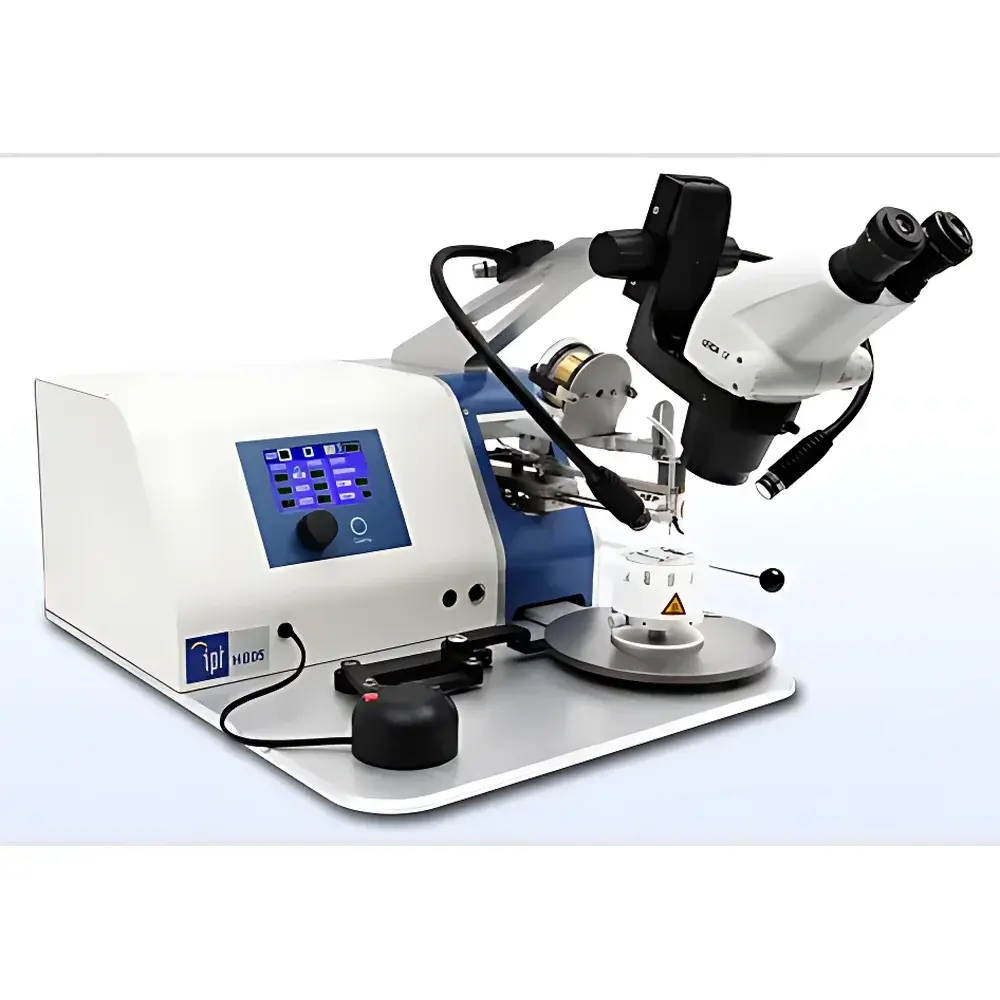
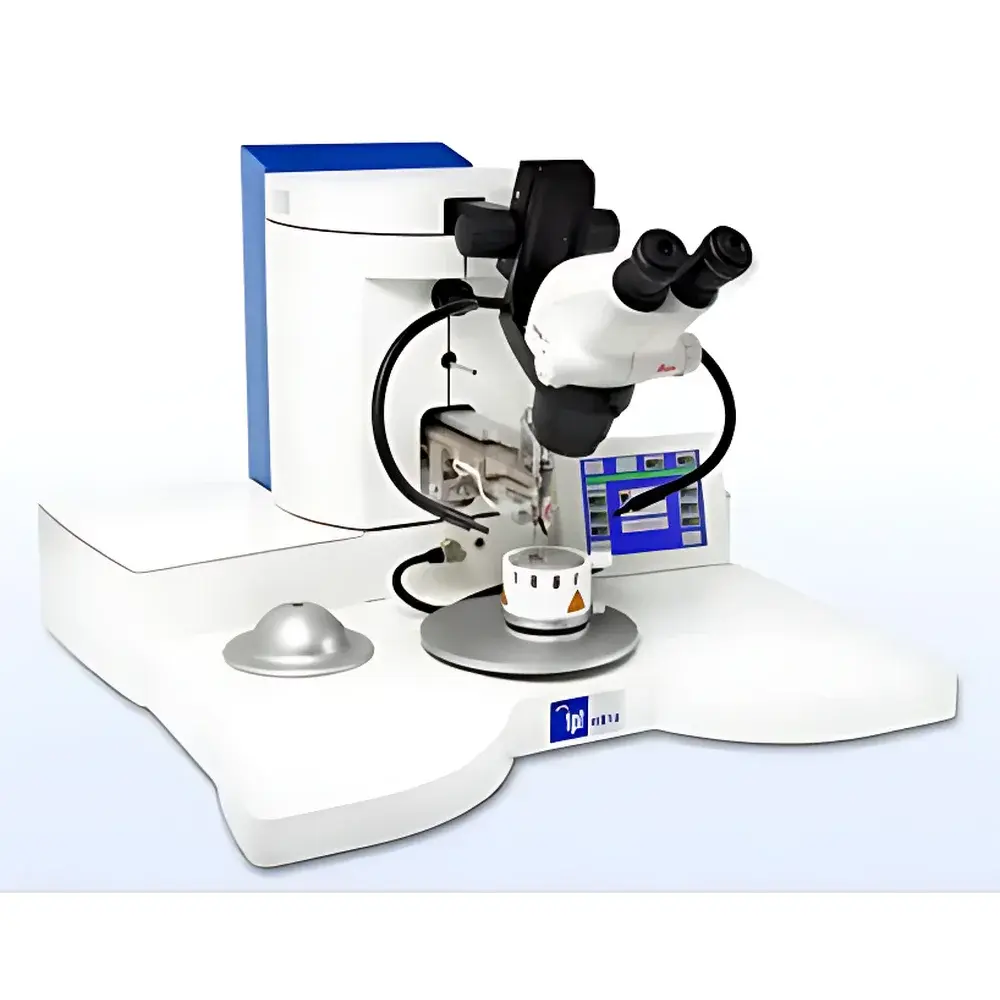
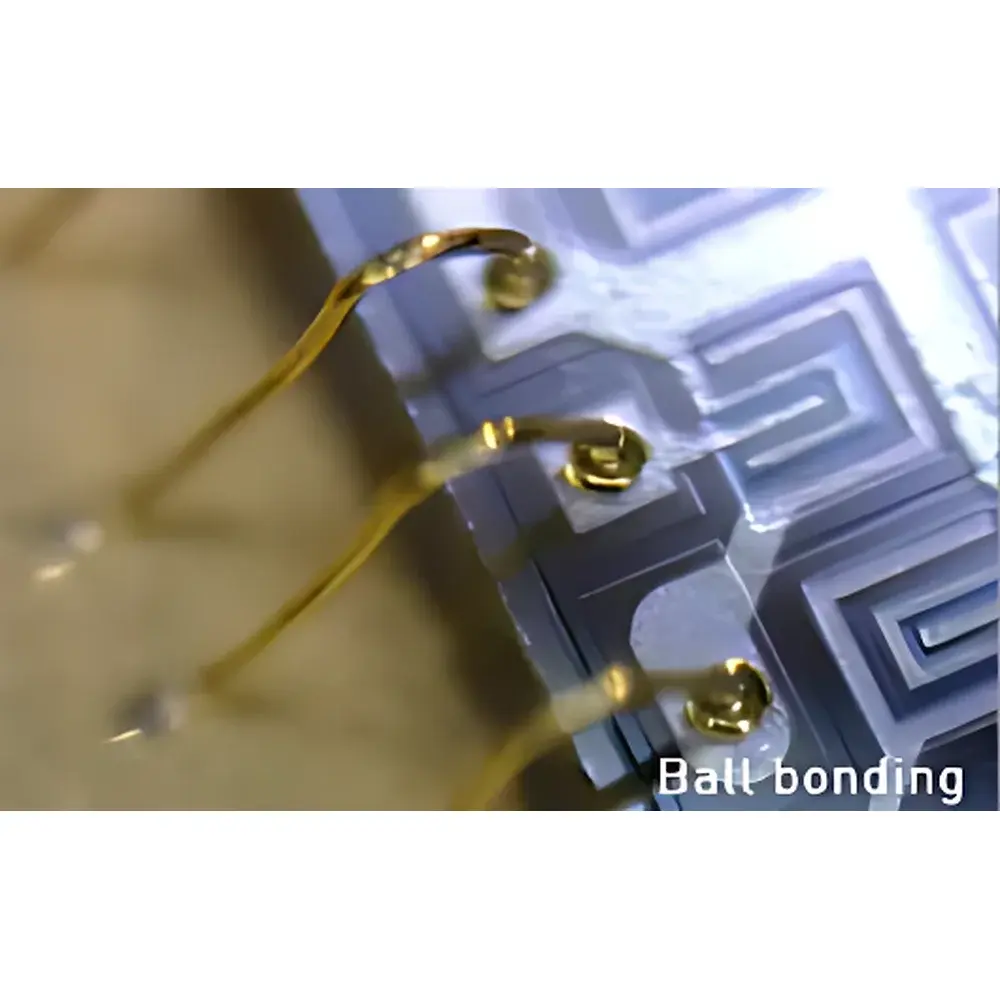
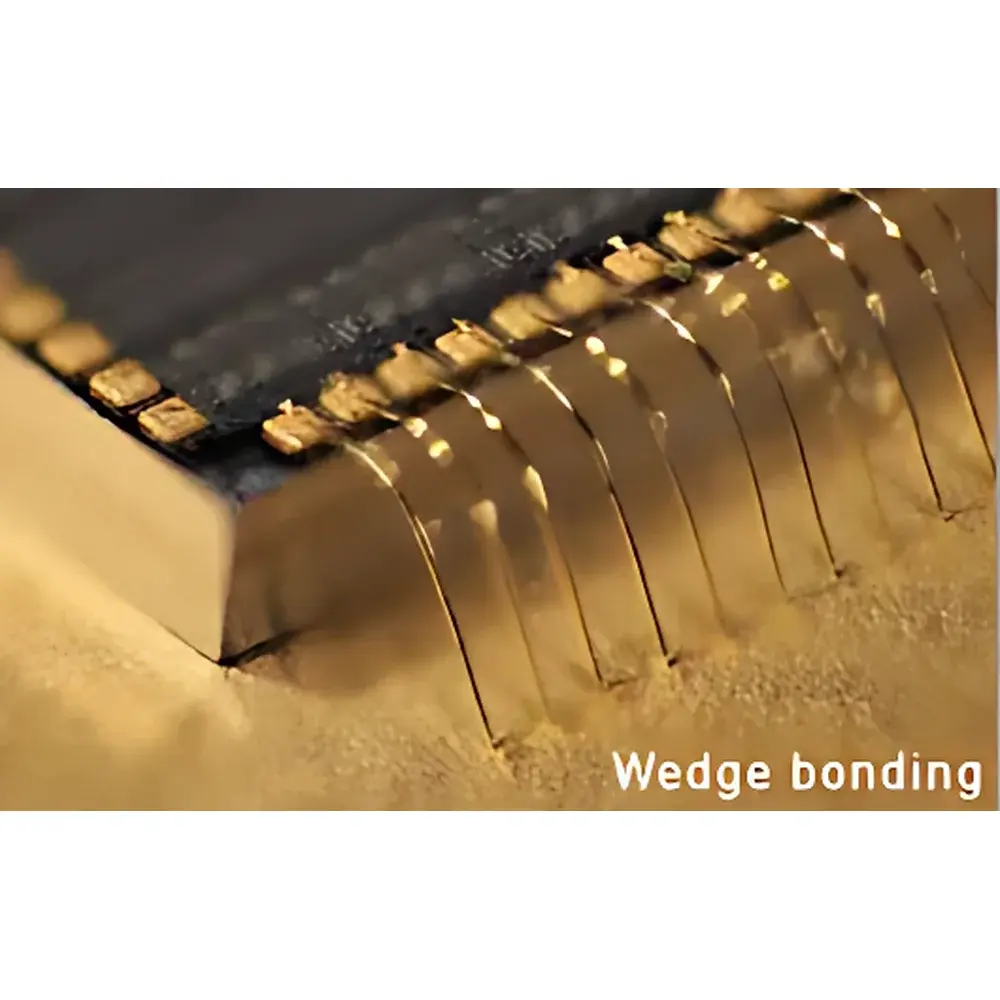
TPT HB10 Wedge & Ball Bonding System
| Brand | TPT |
|---|---|
| Origin | Germany |
| Model | HB10 |
| Bonding Methods | Wedge-Wedge, Ball-Wedge, Ribbon & Bump Bonding |
| Wire Diameter Range | 17–75 µm (gold/aluminum) |
| Ribbon Size | up to 25 × 250 µm |
| Ultrasonic Frequency | 62 kHz, PLL-controlled |
| Ultrasonic Power Output | 0–5 W |
| Bond Time | 0–10 s |
| Bond Force | 5–150 cNm (350 cNm optional) |
| Motorized Z-Axis Travel | 17 mm |
| Deep-Cavity Bond Head Clearance | 16 mm |
| Bond Arm Length | 165 mm |
| Programmable Recipes | 100 |
| Touchscreen Interface | 6.5" LCD |
| Temperature Control Range | up to 250 °C ±1 °C |
| Power Supply | 100–240 V AC, ±10%, 50/60 Hz, max. 10 A |
| Dimensions (W×D×H) | 680 × 640 × 490 mm |
| Net Weight | 42 kg |
Overview
The TPT HB10 Wedge & Ball Bonding System is a precision-engineered, benchtop thermosonic bonding platform designed for R&D laboratories, pilot-line validation, and low-volume production environments in semiconductor packaging, MEMS assembly, and advanced sensor manufacturing. It operates on the principle of thermosonic bonding—combining controlled heat, ultrasonic energy, and precise mechanical force to form reliable intermetallic bonds between wire or ribbon conductors and metallized pads on die or substrates. Unlike purely thermal or ultrasonic-only processes, thermosonic bonding enables robust bond formation at lower temperatures and reduced mechanical stress—critical for fragile die, thin-film structures, and copper wire systems sensitive to oxidation or pad cratering. The HB10 supports multiple bonding modalities—including wedge-wedge (for ribbon or fine wire), ball-wedge (for gold or copper ball bonding), and bump bonding—within a single, reconfigurable head architecture, eliminating the need for separate dedicated machines.
Key Features
- Multi-modal bonding capability: switch between ball-wedge, wedge-wedge, ribbon, and bump bonding by simply changing the bonding tool—no hardware reconfiguration required.
- Motorized Z-axis with 17 mm travel and 6:1 mechanical reduction ratio ensures high-resolution vertical positioning and repeatable force application (5–150 cNm standard; 350 cNm optional).
- Deep-cavity bond head clearance of 16 mm accommodates tall packages, stacked-die assemblies, and custom substrate fixtures.
- 6.5-inch capacitive touchscreen interface with intuitive GUI for real-time parameter entry, recipe management (up to 100 stored programs), and immediate adjustment of ultrasonic power, bond time, temperature, and force profiles.
- Electronic ball diameter control and motorized wire feed with 50.8 mm (2″) spool compatibility ensure consistent loop geometry and process repeatability.
- Integrated pull-test option (optional) enables inline mechanical verification of bond strength per MIL-STD-883 Method 2011.9 or JEDEC JESD22-B116.
- USB data export supports audit-ready backup of process logs, parameter sets, and operator annotations—aligned with GLP/GMP documentation requirements.
Sample Compatibility & Compliance
The HB10 accommodates a broad range of substrate types including silicon die, ceramic QFNs, leadframes, flex PCBs, and glass carriers. It supports gold, aluminum, and copper wire (17–75 µm), as well as ribbon (max. 25 × 250 µm), enabling compatibility with legacy Al-wire processes and next-generation Cu-wire migration paths. All thermal control (up to 250 °C ±1 °C) and ultrasonic output (62 kHz, PLL-stabilized) are traceable to NIST-calibrated references. The system meets CE marking requirements per Machinery Directive 2006/42/EC and EMC Directive 2014/30/EU. Its programmable parameters and electronic audit trail support compliance with ISO 9001:2015, IATF 16949, and FDA 21 CFR Part 11 when configured with user access controls and electronic signature modules.
Software & Data Management
The embedded firmware provides full parameter logging—including timestamped bond events, ultrasonic amplitude history, Z-axis position traces, and thermal setpoint deviations. Data exports via USB in CSV format are compatible with statistical process control (SPC) platforms such as Minitab or JMP. Optional software upgrade enables remote monitoring via Ethernet, integration into MES systems via OPC UA, and automated report generation compliant with AIAG CQI-23 guidelines for wire bonding process audits.
Applications
- Development and qualification of Cu wire bonding processes for automotive and industrial ICs.
- Prototyping of fan-out wafer-level packaging (FOWLP) interconnects using ribbon bonding.
- Reliability testing of thermosonic bonds under temperature-humidity-bias (THB) and highly accelerated stress test (HAST) conditions.
- Process window optimization for low-k dielectric passivation layers where cratering and pad lift must be minimized.
- Research into ultrasonic energy coupling mechanisms in heterogeneous material stacks (e.g., Au-Al, Cu-Al, Al-Si).
FAQ
Does the HB10 support copper wire bonding out of the box?
Yes—the system is fully compatible with copper wire (17–75 µm) and includes optimized ultrasonic waveform shaping and inert atmosphere compatibility options to mitigate oxidation during bonding.
Can the HB10 be integrated into an automated production line?
While primarily designed as a standalone benchtop unit, the HB10 features digital I/O ports and optional Ethernet connectivity for external PLC handshake, recipe loading, and status reporting—enabling semi-automated cell integration.
Is calibration documentation included with shipment?
Each unit ships with a factory calibration certificate covering Z-axis encoder linearity, temperature sensor accuracy (±1 °C), ultrasonic power meter traceability, and force transducer verification—valid for 12 months from date of commissioning.
What safety certifications does the HB10 hold?
The system complies with EN 61000-6-2 (immunity) and EN 61000-6-4 (emissions), carries CE marking, and conforms to UL 61010-1 for laboratory electrical equipment safety.
How is software updated and maintained?
Firmware updates are delivered via encrypted USB stick with version-controlled release notes; all updates preserve existing recipe libraries and calibration offsets without requiring recalibration.