
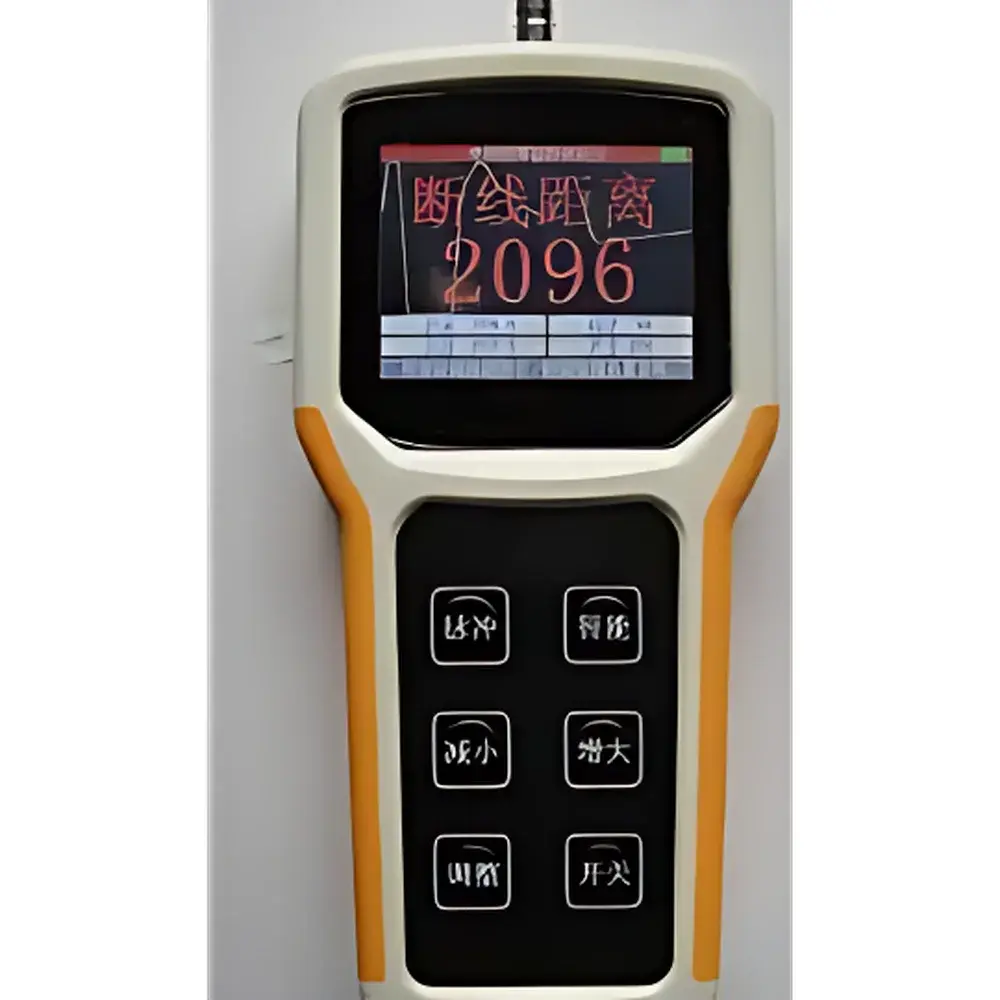
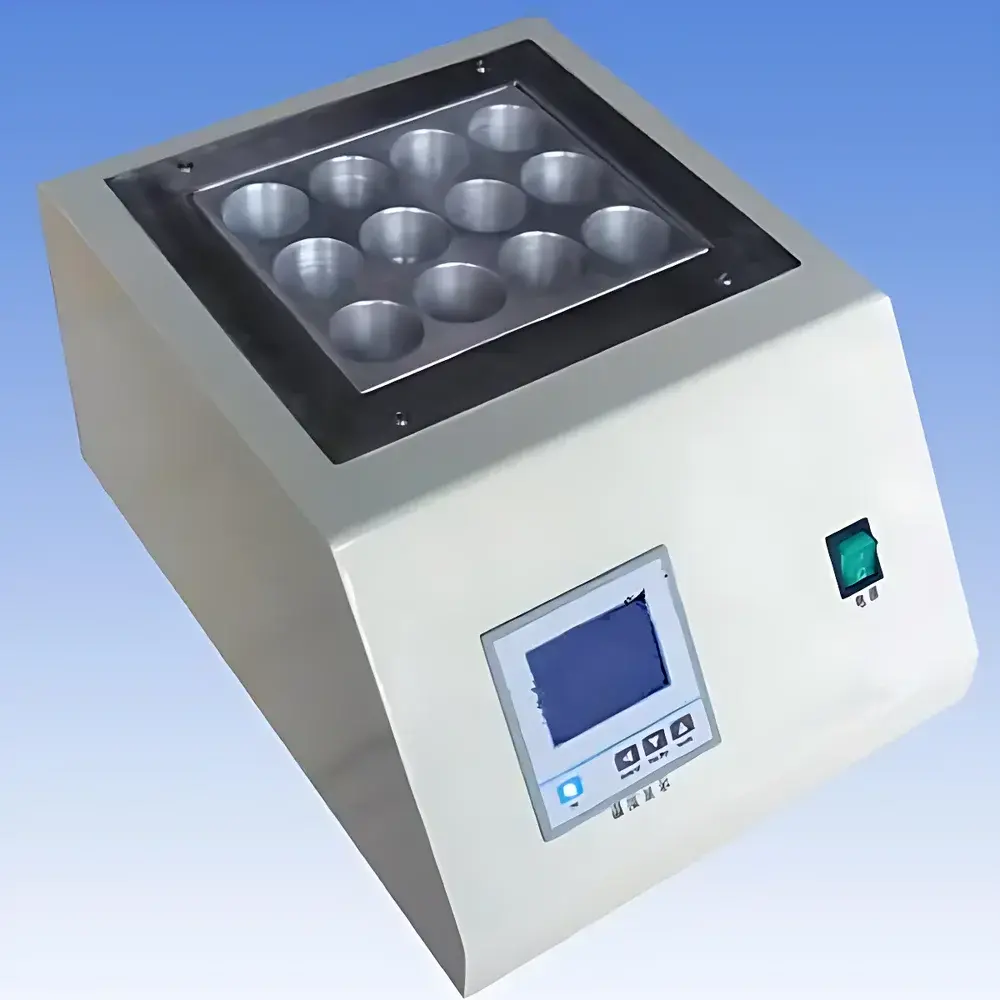
HengaoDe H15658 Online Fluid Contamination Monitor for Aerospace, Aviation & Power Systems
| Brand | HengaoDe |
|---|---|
| Origin | Beijing, China |
| Manufacturer Type | Authorized Distributor |
| Country of Origin | China |
| Model | H15658 |
| Price | USD 56.20 (FOB) |
| Flow Rate Range | 50–500 mL/min |
| Operating Temperature | −20 to +60 °C |
| Storage Temperature | −40 to +85 °C |
| Max Pressure Rating | 500 bar |
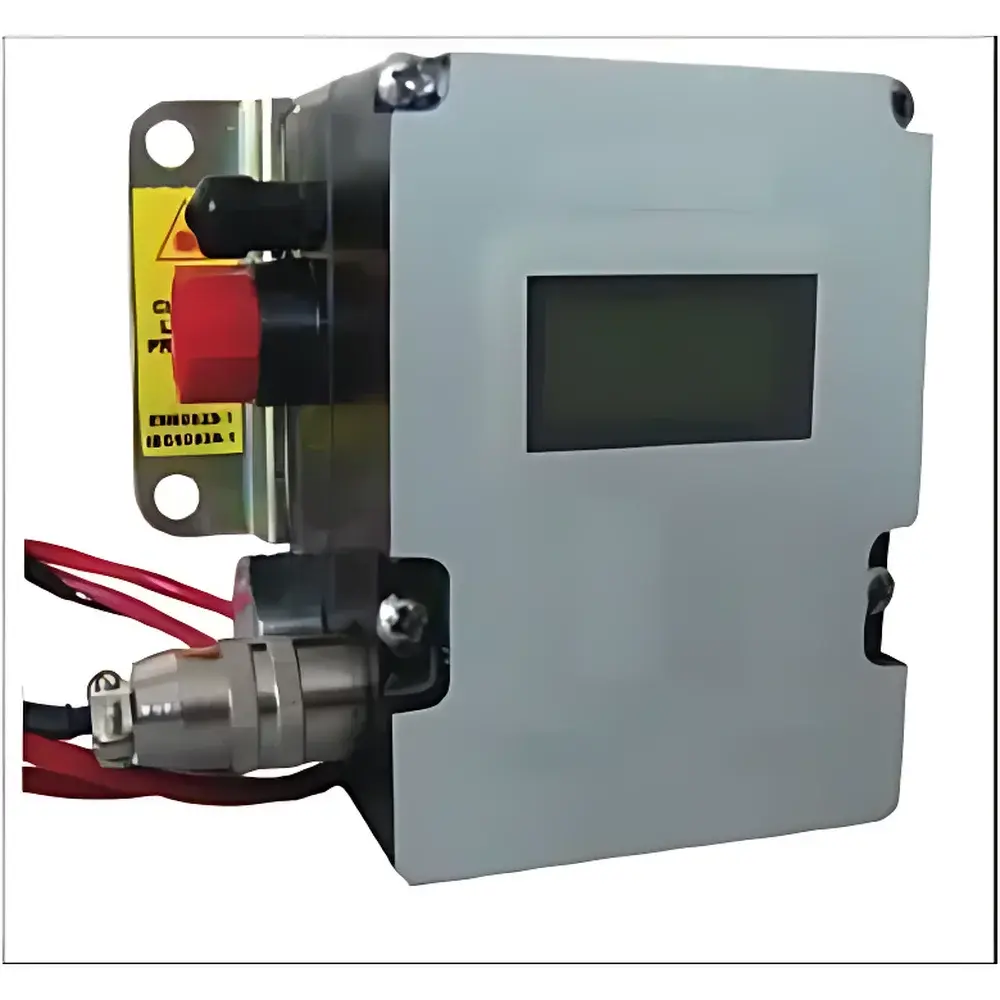
| Dimensions | 94 × 87 × 46 mm |
| Weight | 2.5 kg |
| Power Supply | 9–36 VDC |
| Detection Channels | 4-channel optical particle counting |
Overview
The HengaoDe H15658 Online Fluid Contamination Monitor is an industrial-grade, real-time particulate contamination analyzer engineered for continuous in-line monitoring of hydraulic fluids, lubricants, and dielectric oils in mission-critical systems. It operates on the principle of light extinction (LE) particle counting—where fluid passes through a precisely aligned optical sensing zone, and transient reductions in transmitted light intensity are quantified to determine particle size distribution and concentration per ISO 4406:2017 and NAS 1638 standards. Designed specifically for aerospace, aviation, and high-reliability power generation applications, the H15658 delivers robust performance under extreme pressure (up to 500 bar), wide ambient temperature variation (−20 to +60 °C), and stringent EMI environments typical of turbine control systems, flight control hydraulics, and nuclear plant auxiliary circuits.
Key Features
- Four independent optical detection channels enabling simultaneous multi-size binning (e.g., ≥4 µm(c), ≥6 µm(c), ≥14 µm(c), ≥21 µm(c)) per ISO 11171 calibration traceability
- Compact form factor (94 × 87 × 46 mm) with IP65-rated front panel and stainless-steel wetted parts compatible with aviation-grade phosphate ester (Skydrol®), MIL-PRF-5606/83282 hydraulic fluids, and transformer oils
- Wide dynamic flow range (50–500 mL/min) with integrated flow stabilization to maintain laminar flow profile across sensor aperture—ensuring measurement reproducibility < ±3% RSD
- High-pressure rated inlet/outlet ports (SAE 100R2A or equivalent) and internal pressure compensation circuitry to eliminate drift during transient load conditions
- Low-power DC operation (9–36 VDC) with reverse-polarity and overvoltage protection—designed for integration into aircraft 28 VDC bus or substation DC control systems
- Embedded non-volatile memory for event logging (alarm triggers, calibration timestamps, flow anomalies) compliant with IEC 62443-3-3 security baseline requirements
Sample Compatibility & Compliance
The H15658 is validated for use with mineral-based, synthetic, and fire-resistant hydraulic fluids—including but not limited to MIL-PRF-5606H, MIL-PRF-83282D, Skydrol LD-4, and ISO VG 32–68 lubricants. It meets material compatibility requirements per ASTM D4170 (oxidation stability), ASTM D2880 (hydrolytic stability), and SAE AS5780 (aerospace fluid cleanliness verification). The instrument’s optical path design minimizes bubble interference and accommodates fluids with kinematic viscosities up to 460 cSt at 40 °C. All firmware and hardware configurations support audit-ready data integrity per FDA 21 CFR Part 11 (electronic records/signatures) when paired with optional secure communication modules. Calibration certificates are traceable to NIST SRM 2806a (liquid particle reference standards) and issued with uncertainty budgets per ISO/IEC 17025.
Software & Data Management
The H15658 communicates via isolated RS-485 Modbus RTU protocol (slave ID configurable) and supports seamless integration into SCADA, CMMS, and predictive maintenance platforms. Its embedded firmware includes dual-mode output: analog (4–20 mA isolated, user-configurable per channel) and digital (Modbus register mapping for particle counts, ISO code, differential pressure, and system health status). Optional HengaoDe DataLink™ PC software provides real-time trending, alarm threshold configuration (predefined or custom ISO codes), and automated report generation in PDF/CSV formats compliant with ISO 4406 reporting conventions. All logged events—including sensor self-diagnostics, flow deviation alerts, and power interruption flags—are time-stamped with UTC synchronization and stored with cryptographic hash integrity for GLP/GMP audit trails.
Applications
This monitor is deployed in preventive maintenance programs across regulated sectors where fluid cleanliness directly impacts component longevity and system safety. Typical installations include: real-time monitoring of servo-valve pilot circuits in fly-by-wire aircraft; closed-loop lube oil systems for gas turbine generators in combined-cycle power plants; hydraulic reservoirs in wind turbine pitch/yaw control systems; and dielectric oil circuits in HVDC converter station cooling loops. In aerospace MRO facilities, it supports adherence to OEM-specified contamination limits (e.g., Airbus ATR/ASD S1000D work instructions, Boeing D6-17487 Rev. 12) during post-maintenance fluid reconditioning validation. Its compact footprint and low power draw also enable retrofitting into legacy equipment without major mechanical modification.
FAQ
Is the H15658 certified for use in certified aircraft installations?
The H15658 is supplied as a ground-support and line-replaceable unit (LRU) for maintenance verification—not as a DO-160 qualified flight-certified component. Integration into airframe systems requires separate EASA Part 21G or FAA PMA approval.
Can the device measure water-in-oil content?
No. The H15658 performs optical particle counting only. Water content analysis requires complementary instrumentation such as Karl Fischer titrators or dielectric constant sensors.
What calibration frequency is recommended for ISO 4406 compliance?
Annual recalibration against NIST-traceable standards is required. Field verification using ISO MTD test dust (ISO 11171) is advised before each critical measurement campaign.
Does the unit support hazardous area classification (e.g., ATEX, IECEx)?
Not natively. For Zone 1/21 applications, it must be installed in an explosion-proof enclosure meeting EN 60079-0 and EN 60079-1 specifications.
How is sensor fouling mitigated during extended operation?
The optical cell incorporates a self-cleaning hydrodynamic flow geometry and optional ultrasonic transducer module (H15658-ULS, sold separately) to suppress deposit accumulation on lens surfaces.






