
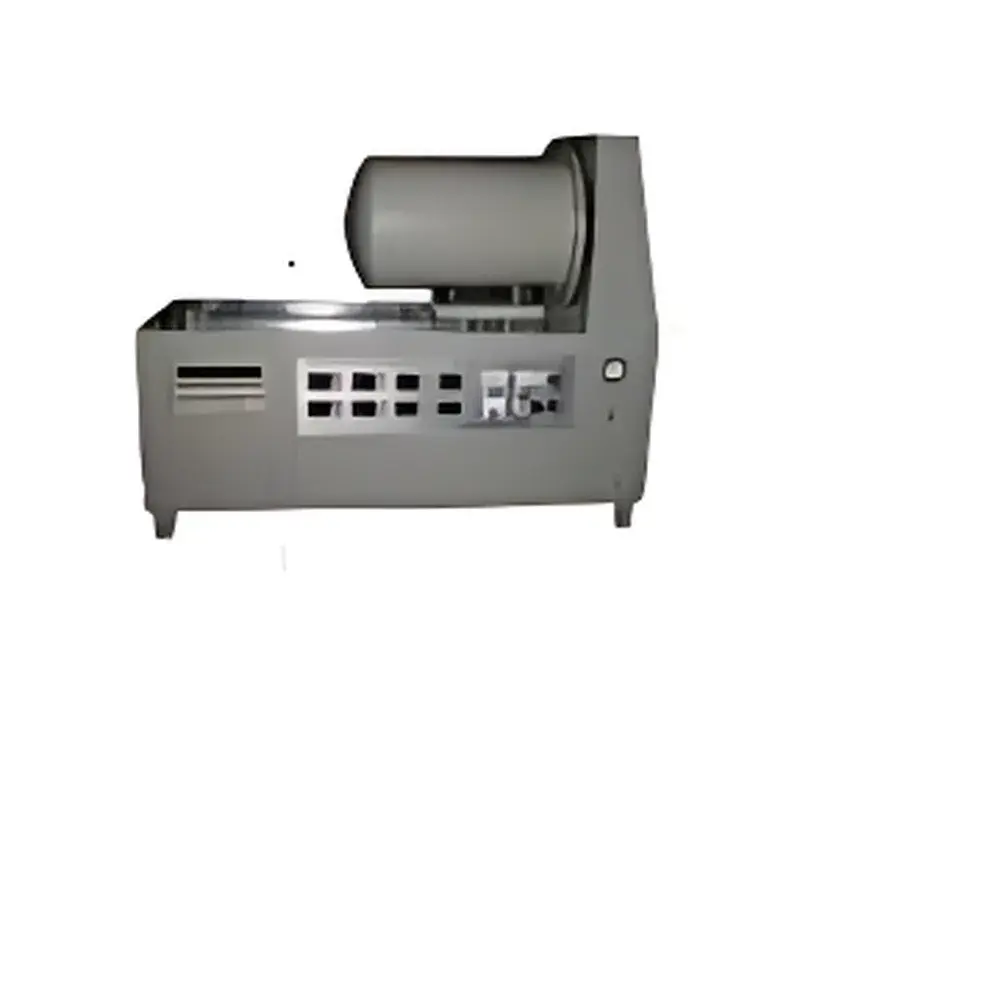
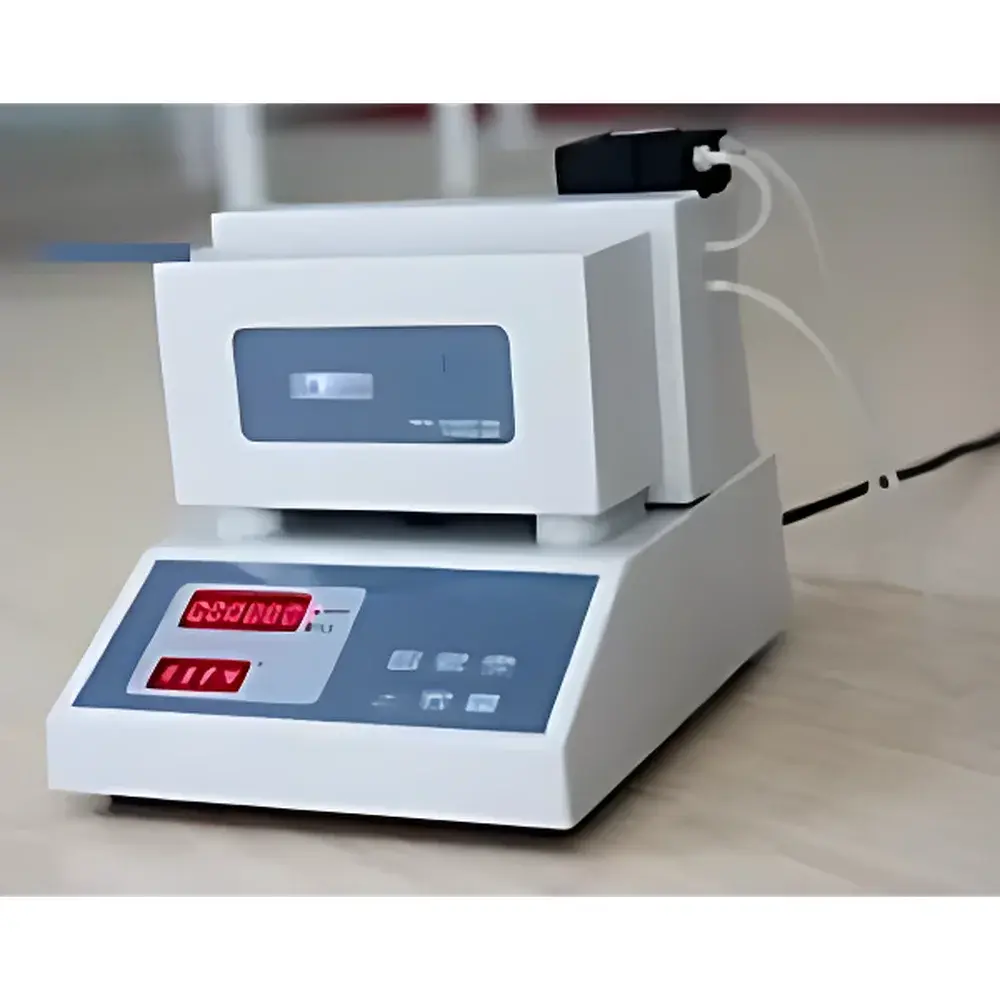
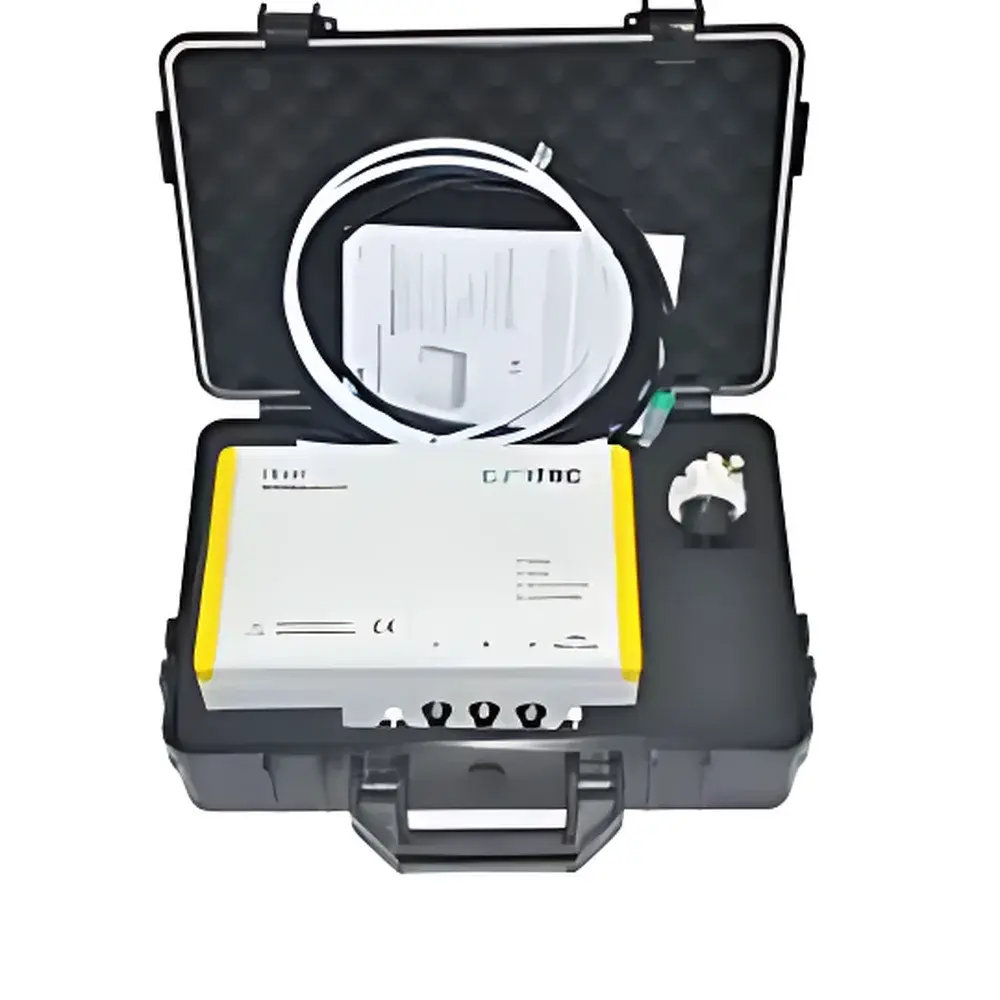
HengaoDe HDRJ-I High-Temperature Thermal Conductivity Tester for Metals (Direct Electrical Heating Method, Compliant with GB/T 3651–1983)
| Brand | HengaoDe |
|---|---|
| Origin | Beijing, China |
| Manufacturer Type | Authorized Distributor |
| Country of Origin | China |
| Model | HDRJ-I |
| Price | USD 170 (approx.) |
| Thermal Conductivity Range | 5–400 W/m·K |
| Accuracy | ±5% |
| Max Furnace Temperature | 1000°C |
| Operating Temp. Range | 80–900°C (phase-change-free zone) |
| Power Supply | 220 V, 50 Hz |
| Sample Geometry | Rod: Ø3–5 × 220 mm |
| Wire | Ø1–3 × 20–45 mm |
| Computer Interface | RS-232/USB, Auto-Test & Data Export Enabled |
Overview
The HengaoDe HDRJ-I High-Temperature Thermal Conductivity Tester is a precision instrument engineered for the determination of thermal conductivity in metallic materials under controlled elevated temperatures. It operates on the principle of the longitudinal direct-current (DC) electrical heating method—also known as the “direct resistive heating” or “self-heating rod method”—where the specimen serves simultaneously as both heater and sensor. A precisely regulated current passes axially through the conductive sample, generating uniform Joule heating; temperature gradients along the specimen length are measured via calibrated thermocouples (typically Type K or S), enabling calculation of thermal conductivity λ via Fourier’s law: λ = Q·L / (A·ΔT), where Q is power input, L is distance between thermocouples, A is cross-sectional area, and ΔT is the steady-state axial temperature difference. This method eliminates external heat flux uncertainties associated with guarded hot plate or laser flash techniques, offering high reproducibility for homogeneous metals and alloys within the 80–900°C range—specifically targeting conditions free of solid-phase transformations (e.g., austenite–ferrite transitions in steels). The system fully complies with GB/T 3651–1983 (“Method for Measurement of High-Temperature Thermal Conductivity of Metals”), and its design supports traceable calibration against NIST-traceable reference metals (e.g., copper SRM 781).
Key Features
- Integrated high-stability resistance furnace with programmable temperature control up to 1000°C, enabling precise stabilization at target test temperatures (80–900°C) with ±2°C uniformity across the hot zone.
- Dual-point thermocouple measurement (inconel-sheathed, Class I tolerance) mounted at fixed axial intervals (20 mm spacing standard) for accurate ΔT detection under steady-state conditions.
- Four-wire Kelvin sensing circuitry ensures precise DC current delivery (0.1–10 A range) and voltage drop measurement, minimizing lead resistance errors.
- Automated test sequence execution via embedded microcontroller and PC software: ramp → soak → data acquisition → calculation → report generation.
- Robust mechanical fixture assembly with low-thermal-conductivity ceramic insulation blocks and adjustable axial alignment to minimize parasitic heat loss and ensure uniaxial heat flow.
- Compliance-ready data logging: timestamps, raw thermocouple mV outputs, current/voltage readings, calculated λ values, and operator ID—all stored with audit trail capability.
Sample Compatibility & Compliance
The HDRJ-I accommodates cylindrical metallic specimens only: solid rods (Ø3–5 mm × 220 mm) and wires (Ø1–3 mm × 20–45 mm). Surface finish must be uniform and oxide-free (recommended grit-blasted or electropolished); samples must exhibit isotropic homogeneity and absence of internal voids or segregation. The instrument is validated for non-reactive metals and alloys including copper, aluminum, stainless steels (304, 316), Inconel 600, and titanium Grade 2. It is not suitable for refractory metals requiring >1000°C operation (e.g., Mo, W), composites, or coated substrates. Regulatory alignment includes adherence to GB/T 3651–1983 and technical equivalency to ASTM E1225 (Standard Test Method for Thermal Conductivity of Solids by Means of the Guarded-Comparative-Longitudinal Heat Flow Technique) for comparative validation. While not FDA 21 CFR Part 11–certified out-of-box, the software architecture supports electronic signature modules and audit-log export for GLP/GMP environments upon customer-specific configuration.
Software & Data Management
The HDRJ-I is supplied with Windows-based control software (v3.2+, compatible with Win10/11) supporting real-time monitoring of temperature profiles, current/voltage waveforms, and convergence diagnostics. All measurements are saved in CSV and XML formats compliant with ASTM E1447–22 (Standard Practice for Data Exchange in Materials Testing). The software includes built-in uncertainty propagation per GUM (JCGM 100:2008), calculates expanded uncertainty (k=2) based on thermocouple calibration certificates, current source stability, dimensional metrology inputs, and repeatability statistics from ≥3 replicate runs. Raw datasets include metadata fields for lab ID, sample lot number, operator name, ambient humidity/pressure, and calibration date of transducers. Optional add-ons include PDF report templating (with institutional logo), LIMS integration via ODBC, and automated backup to network drives or cloud storage (AWS S3 or Azure Blob).
Applications
This instrument serves R&D and QA/QC laboratories engaged in high-temperature material characterization, particularly in aerospace (turbine disk alloys), nuclear energy (cladding thermal performance), power generation (heat exchanger tube validation), and advanced manufacturing (additively manufactured metal parts). Typical use cases include: (1) mapping λ(T) curves for alloy development; (2) verifying thermal performance of recycled or remelted metal batches; (3) validating supplier-provided thermal property data sheets; (4) supporting finite element modeling inputs for thermal stress simulations; and (5) routine inspection of production lots prior to high-temperature service deployment. Its robustness and standardized methodology make it especially valuable in ISO/IEC 17025-accredited testing labs seeking cost-effective, standards-aligned alternatives to laser flash analyzers for metallic systems.
FAQ
What is the minimum required sample purity for valid results?
Metals must be ≥99.5% pure (e.g., oxygen-free copper, 99.99% Al) or compositionally certified (e.g., NIST SRM 781). Alloying elements must be homogeneously distributed; segregation invalidates axial gradient assumptions.
Can the system measure anisotropic materials such as rolled sheet?
No. The longitudinal DC method assumes isotropy and uniform cross-section. Anisotropic or layered structures require alternative methods (e.g., laser flash or transient plane source).
Is vacuum or inert atmosphere operation supported?
Yes—the furnace chamber accepts optional quartz tube inserts with flanged gas inlet/outlet ports, enabling Ar/N₂ purging or low-pressure (<10⁻² mbar) operation using external vacuum pumps.
How often must thermocouples be recalibrated?
Per ISO/IEC 17025, annual calibration against a fixed-point cell (e.g., Cu freezing point, 1084.62°C) is recommended; field verification using reference metal samples every 200 test hours is advised.
Does the software support multi-language UI or export to Excel directly?
The interface is English-only, but CSV exports open natively in Excel; column headers follow ASTM E1447 naming conventions for seamless import into statistical analysis tools (Minitab, JMP, Python pandas).






