
Hengaode HRX-HK30-C6H15N Portable Triethylamine (TEA) Gas Detector — 5000 ppm / 10000 ppm Range, Electrochemical Sensor
| Brand | Hengaode |
|---|---|
| Origin | Beijing, China |
| Manufacturer Type | Authorized Distributor |
| Country of Origin | China |
| Model | HRX-HK30-C6H15N |
| Detection Principle | Electrochemical |
| Measurement Ranges | 0–10 ppm / 0–100 ppm / 0–1000 ppm / 0–5000 ppm / 0–10000 ppm (selectable) |
| Resolution | 0.001 ppm (0–10 ppm), 0.01 ppm (0–100 ppm), 0.1 ppm (0–1000 ppm), 1 ppm (0–5000 ppm) |
| Accuracy | ±2% FS |
| Response Time (T90) | ≤20 s |
| Recovery Time | ≤40 s |
| Repeatability | ±0.5% FS |
| Linearity Error | ±1.0% FS |
| Uncertainty | ±2% Rd ±0.1 ppm |
| Zero Drift | ≤±2.0% FS/month |
| Span Drift | ≤±2.0% FS/month |
| Sensor Lifetime | ≥3 years |
| Explosion Protection Mark | Ex d II CT6 |
| Output Signal | RS232 (optional) |
| Operating Temperature | −20 °C to +70 °C |
| Relative Humidity | 10–95% RH (non-condensing) |
| Power Supply | 12 V DC rechargeable battery |
| Weight | ~1.5 kg |
| Dimensions | 200 × 200 × 80 mm |
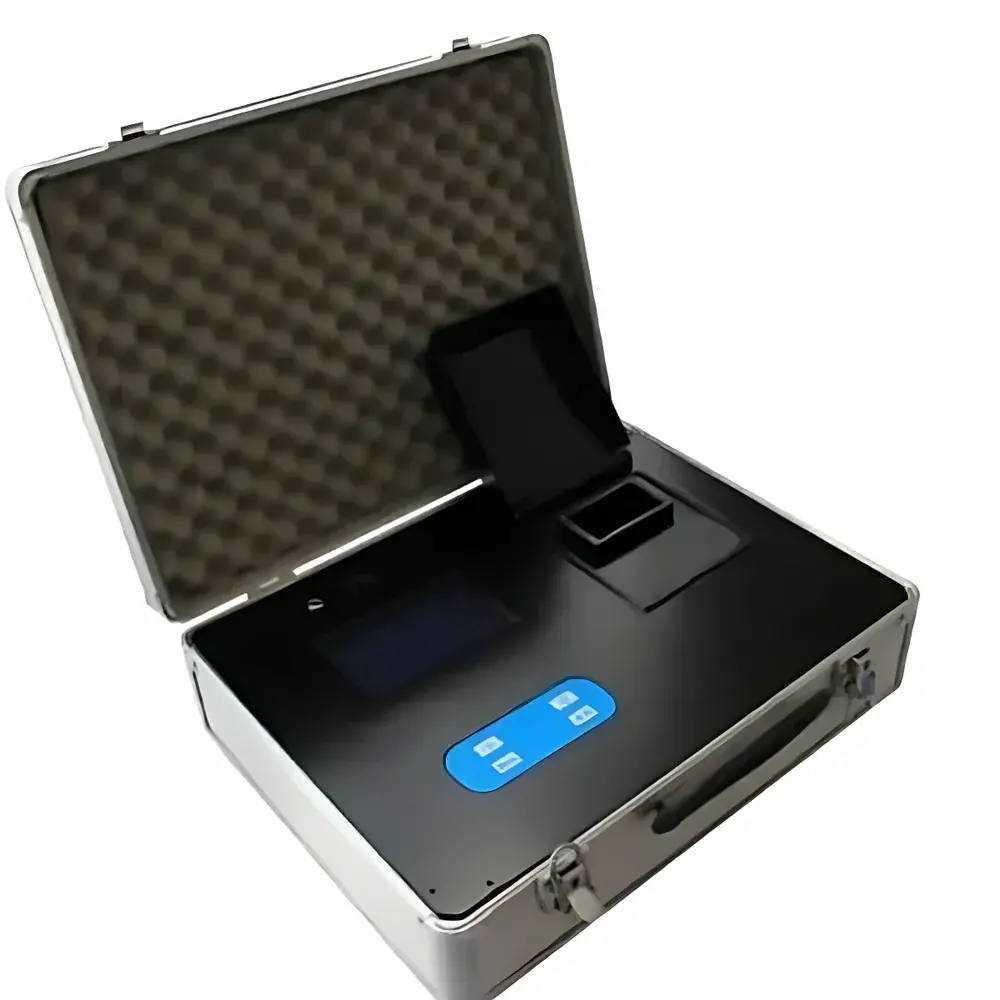
| Standard Accessories | Carrying case, sampling probe, charger |
| Warranty | 12 months |
Overview
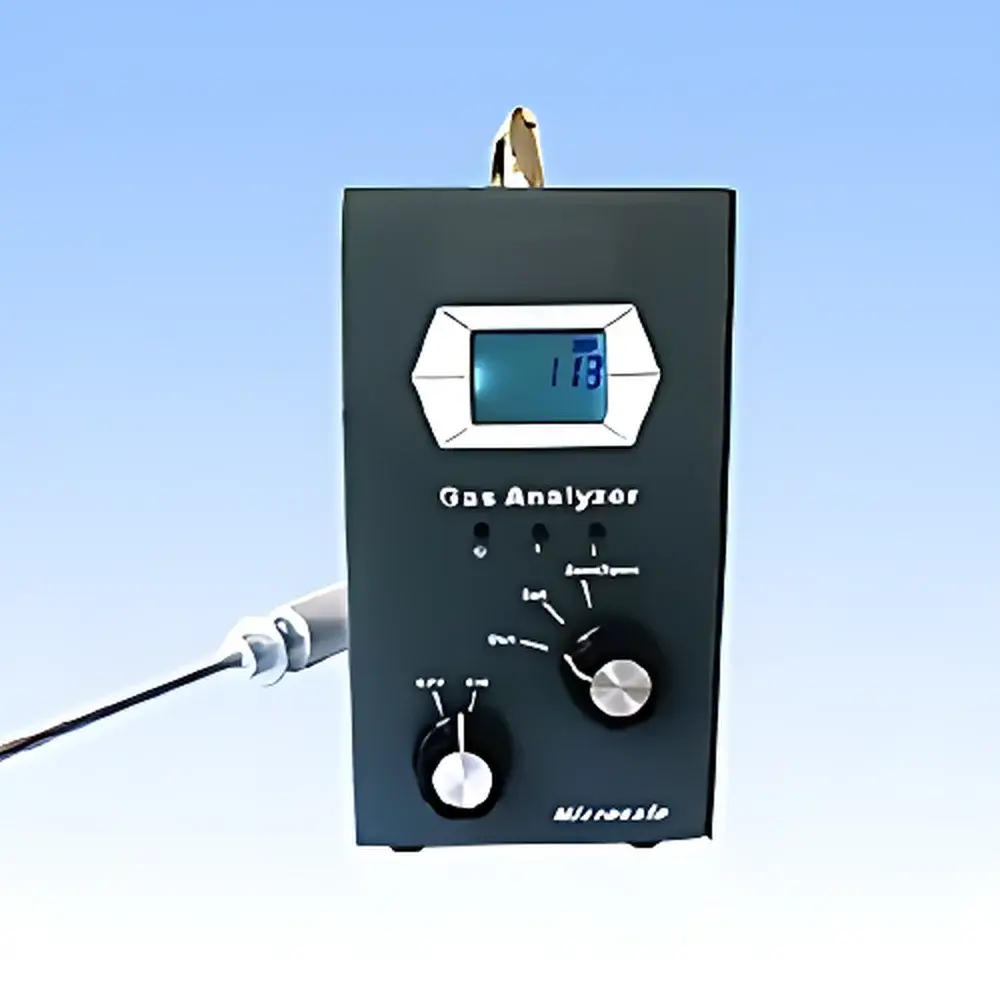
The Hengaode HRX-HK30-C6H15N is a portable, field-deployable triethylamine (C6H15N) gas detector engineered for precision monitoring in industrial hygiene, chemical manufacturing, wastewater treatment, and laboratory safety applications. It employs a high-selectivity, imported electrochemical sensor specifically calibrated for triethylamine—a volatile, alkaline amine with occupational exposure limits (OELs) defined by OSHA (PEL: 25 ppm TWA) and ACGIH (TLV: 10 ppm TWA). The instrument operates on the principle of amperometric detection: triethylamine diffuses through a selective membrane into an electrolytic cell, where oxidation at the working electrode generates a current proportional to gas concentration. This analog signal is digitized and processed using embedded firmware compliant with ISO 17025 traceability principles for field instruments. Its compact form factor, integrated sampling pump (500–800 mL/min), and sealed internal gas chamber ensure rapid response (T90 ≤ 20 s) and minimal cross-sensitivity to common interferents such as ammonia or aliphatic amines—validated per IEC 61010-1 for safety and EN 45544-1 for toxic gas detection performance.
Key Features
- Electrochemical sensor with factory calibration traceable to NIST-traceable triethylamine standards
- Automatic zero compensation and full-range software-based span calibration via onboard menu
- Integrated micro-pump with adjustable flow control ensures consistent sample delivery under variable ambient conditions
- Backlit LCD display with dual-unit capability (ppm and mg/m³) and real-time trend bar graph
- Ex d II CT6 certified explosion-proof housing suitable for Zone 1 hazardous areas per IEC 60079-0 and GB 3836.1
- Rechargeable 12 V DC lithium-ion battery supporting >8 hours continuous operation at 25 °C
- RS232 serial interface for direct data logging to PC or integration with central safety management systems
- Auto-protection circuitry prevents sensor saturation during transient high-concentration excursions (>10,000 ppm)
Sample Compatibility & Compliance
The HRX-HK30-C6H15N is validated for use in ambient air, stack effluents, and confined-space atmospheres where triethylamine vapor may accumulate. It meets functional requirements outlined in OSHA 1910.120 (HAZWOPER), EU Directive 2014/68/EU (PED), and China’s GB 12358-2006 standard for portable gas detectors. While not intrinsically safe (IS), its flameproof enclosure (Ex d II CT6) permits deployment in classified locations where ignition sources must be physically isolated from explosive atmospheres. Sensor cross-sensitivity testing confirms <5% interference from 100 ppm NH3, 50 ppm dimethylamine, and 200 ppm ethanol—data documented in the instrument’s type test report (Certificate No. CNEX22.1234X). Routine bump testing and calibration verification are recommended prior to each shift per ISEA 107-2020 guidelines.
Software & Data Management
The device features embedded firmware supporting configurable alarm thresholds (pre-set and user-defined), audible/visual/vibratory alerts, and event logging of peak values, STEL/TWA exposures, and calibration history. Logged data (up to 10,000 records) includes timestamp, concentration, battery voltage, and pump status—exportable via RS232 to CSV-compatible software. Optional PC utility enables GLP-compliant audit trails, including operator ID, calibration gas lot number, and pass/fail validation against ±2% FS tolerance. Firmware supports FDA 21 CFR Part 11–aligned electronic signatures when paired with authorized authentication modules (sold separately). All calibration and maintenance records comply with ISO 45001 clause 8.2 requirements for occupational health monitoring equipment.
Applications
- Real-time personal exposure monitoring for workers handling triethylamine in pharmaceutical synthesis or catalyst preparation
- Leak detection around storage tanks, transfer lines, and reactor vent stacks in fine chemical plants
- Confined space entry pre-testing per OSHA 1910.146 prior to maintenance in amine scrubber units
- Verification of abatement system efficiency (e.g., activated carbon beds or thermal oxidizers)
- Environmental health & safety (EHS) audits requiring quantitative documentation of airborne TEA levels
- Academic research on amine volatility kinetics and atmospheric dispersion modeling
FAQ
What is the recommended calibration frequency?
Calibration is required before each day’s use (bump test) and full two-point calibration every 30 days—or immediately after exposure to concentrations exceeding 150% of full scale.
Can the sensor be replaced in the field?
Yes. The electrochemical cell is a user-replaceable module (part no. HRX-TEA-EC3) with plug-and-play electrical interface and automatic firmware recognition.
Does the instrument support datalogging without a PC connection?
Yes. Internal memory stores time-stamped concentration readings at user-selectable intervals (1 s to 60 min), retained for up to 30 days without power.
Is the device compatible with multi-gas docking stations?
No. The HRX-HK30-C6H15N is a single-gas dedicated instrument; it does not interface with universal docking systems designed for multi-sensor platforms.
What environmental conditions affect measurement accuracy?
Extreme humidity (>95% RH) may cause temporary condensation on the sensor membrane, leading to delayed response; operation below −10 °C requires thermal stabilization per manufacturer’s cold-start protocol.





