
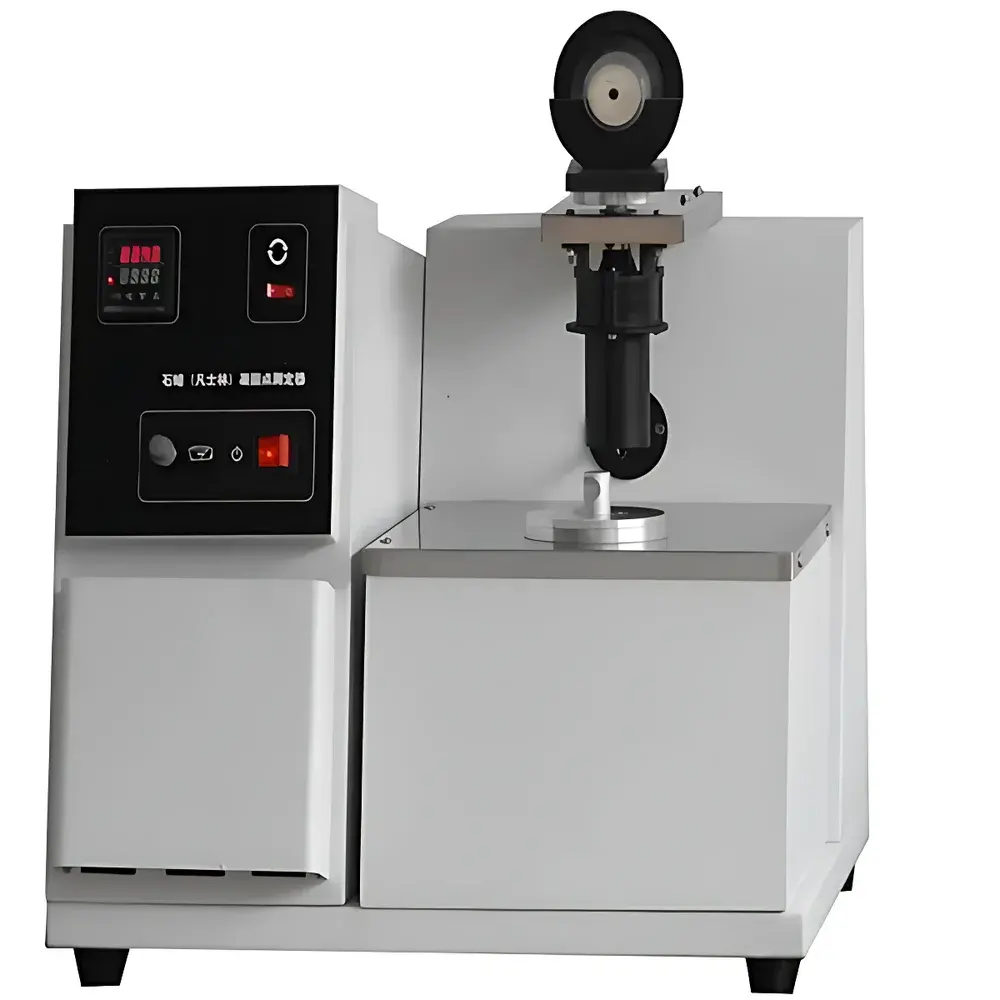
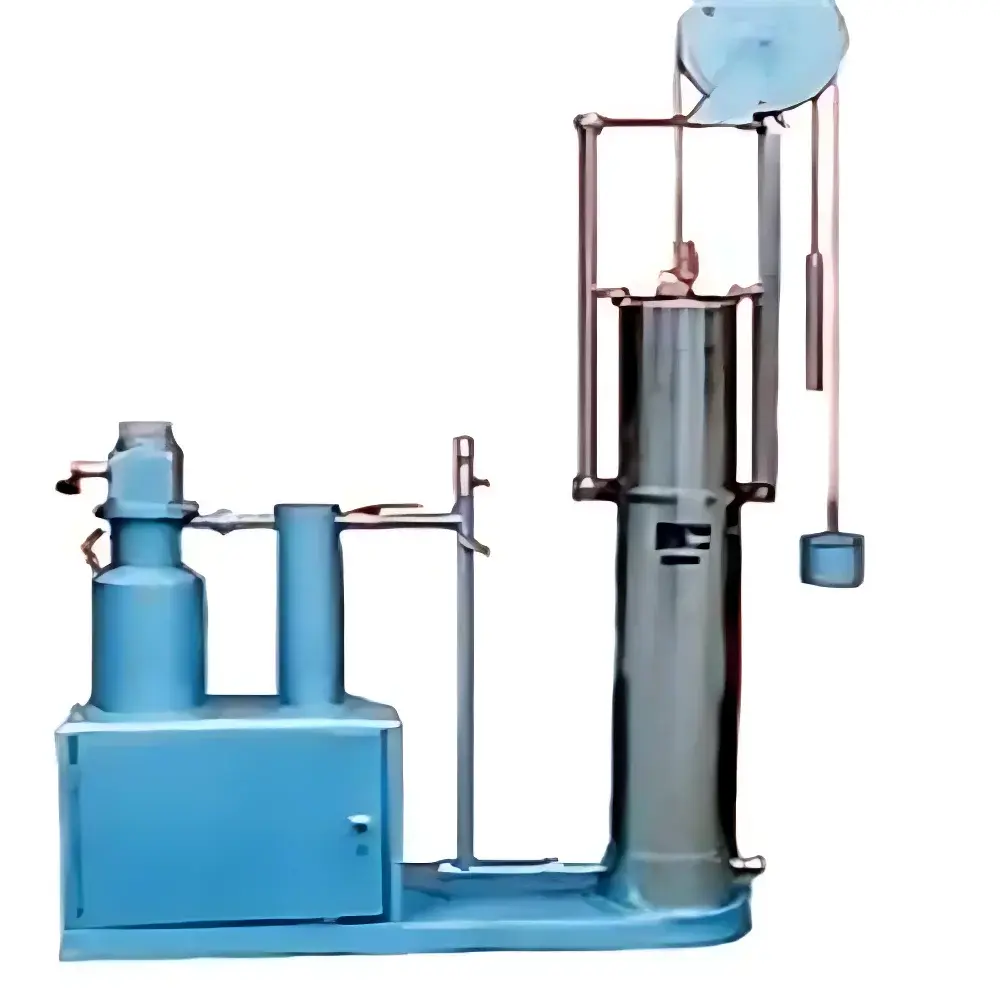
HengaoDe HAD-L938 Paraffin and Petroleum Jelly Solidification Point Tester
| Brand | HengaoDe |
|---|---|
| Origin | Beijing, China |
| Manufacturer Type | Authorized Distributor |
| Country of Origin | China |
| Model | HAD-L938 |
| Compliance | ASTM D938-2012 |
| Heating Method | Metal Bath |
| Temperature Control | Digital PID Controller with PT100 Sensor |
| Rotation Drive | DC Motor |
| Rotation Speed | 2.5 s/rev |
| Power Consumption | 400 W |
| Supply Voltage | AC 220 V, 50 Hz |
Overview
The HengaoDe HAD-L938 Paraffin and Petroleum Jelly Solidification Point Tester is a precision laboratory instrument engineered for the standardized determination of solidification point in paraffin waxes and petroleum jellies (petrolatum), in strict accordance with ASTM D938–2012. The solidification point—defined as the temperature at which a molten wax sample ceases flow under controlled cooling—is a critical quality parameter influencing product performance in lubrication, cosmetics, pharmaceutical ointments, and packaging applications. Unlike melting point, solidification point reflects the onset of structural rigidity during cooling, closely tied to crystalline network formation and gel structure development in semi-solid hydrocarbon matrices. The HAD-L938 implements a validated air-jacketed cooling protocol: a pre-melted wax droplet is affixed to the bulb of a calibrated thermometer, then suspended within a pre-heated glass flask acting as a thermal buffer. As the assembly cools at a defined rate, the temperature at which macroscopic flow arrest occurs is recorded visually—providing a reproducible, operator-independent endpoint. This method eliminates reliance on subjective visual opacity changes or arbitrary viscosity thresholds, ensuring traceability to internationally recognized test methodology.
Key Features
- Metal bath heating system—eliminates open-flame hazards and ensures uniform thermal distribution across sample zones
- DC motor-driven horizontal rotation mechanism—maintains consistent orientation of the wax-coated thermometer bulb during cooling, minimizing convection artifacts and sedimentation bias
- Adjustable rotation speed (2.5 seconds per revolution)—enables optimization for varying wax compositions and viscosity profiles
- Digital PID temperature controller with PT100 platinum resistance sensor—delivers ±0.1 °C stability over extended operation cycles
- Integrated fixture design—facilitates rapid, repeatable positioning of thermometer and flask without tools or alignment jigs
- Compliance-ready configuration—includes ASTM-certified reference thermometer and standardized test tube stopper per D938 requirements
Sample Compatibility & Compliance
The HAD-L938 is validated for use with refined paraffin waxes (CAS 8002–74–2), microcrystalline waxes, and USP/NF-grade petrolatum. It accommodates samples with needle penetration values ranging from 50 to 300 dmm (ASTM D1321) and oil content up to 25 wt%. Instrument operation conforms to the procedural constraints of ASTM D938–2012, including specified cooling rate control, ambient draft restrictions (<0.3 m/s), and observation interval timing (≤30 s). While not certified to ISO/IEC 17025 calibration standards out-of-box, the unit supports third-party verification using NIST-traceable thermometry standards. All mechanical and thermal components are constructed from corrosion-resistant stainless steel and borosilicate glass, meeting GLP environmental durability expectations for routine QC laboratories.
Software & Data Management
The HAD-L938 operates as a standalone analog-digital hybrid instrument with no embedded firmware or data logging capability. Temperature readings are captured manually via the integrated three-and-a-half-digit LED display and recorded in laboratory notebooks or LIMS-compatible spreadsheets. For audit readiness, users may integrate external digital thermometers (e.g., Fluke 1523/1524 with 21 CFR Part 11-compliant software) into the workflow. The absence of onboard memory or network interfaces simplifies validation pathways in regulated environments where electronic record integrity must be independently verified. All operational parameters—including bath setpoint, rotation timing, and ambient conditions—are documented per SOP requirements to satisfy FDA 21 CFR Part 11 and EU Annex 11 data governance expectations.
Applications
This tester serves core quality assurance functions across multiple sectors: in petrochemical refineries, it verifies batch consistency against specification limits for paraffin-based phase-change materials; in pharmaceutical manufacturing, it supports compendial compliance for petrolatum used in topical ointment bases (USP , Ph. Eur. 2.2.45); in cosmetic R&D labs, it correlates solidification behavior with sensory attributes such as spreadability and melt-in-mouth profile; and in packaging material testing, it evaluates wax-coating integrity under thermal cycling conditions. Its robust architecture enables daily use in high-throughput QC settings while maintaining inter-laboratory reproducibility (RSD <1.2% across five independent operators per ASTM D445 repeatability guidelines).
FAQ
Does the HAD-L938 comply with current ASTM D938 editions?
Yes—the instrument implements all mandatory procedural elements of ASTM D938–2012, including air-jacket geometry, thermometer immersion depth, and visual endpoint criteria.
Can the unit be used for microcrystalline wax testing?
Yes—provided the sample exhibits clear flow arrest (not gradual stiffening), and the cooling rate remains within ±0.5 °C/min tolerance per standard requirements.
Is calibration certificate included with shipment?
No—calibration is performed by end-users or accredited service providers using NIST-traceable references; documentation templates for calibration logs are available upon request.
What maintenance is required for long-term accuracy?
Annual verification of PT100 sensor drift and mechanical alignment of the rotation axis is recommended; no consumables or lubricants are required due to sealed motor and metal-bath construction.
Is the device suitable for GLP-regulated environments?
Yes—its deterministic, non-software-dependent operation simplifies validation, and all critical parameters are directly observable and manually recordable per GLP documentation standards.



