
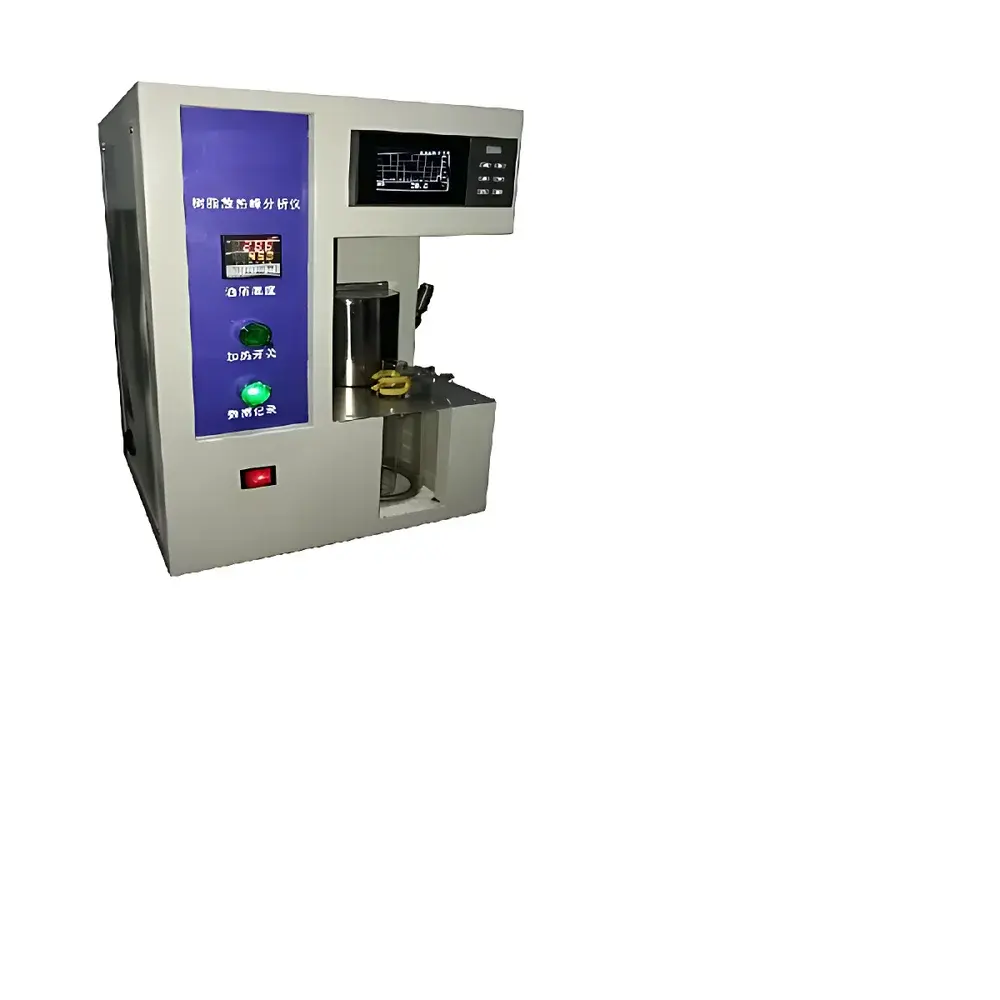
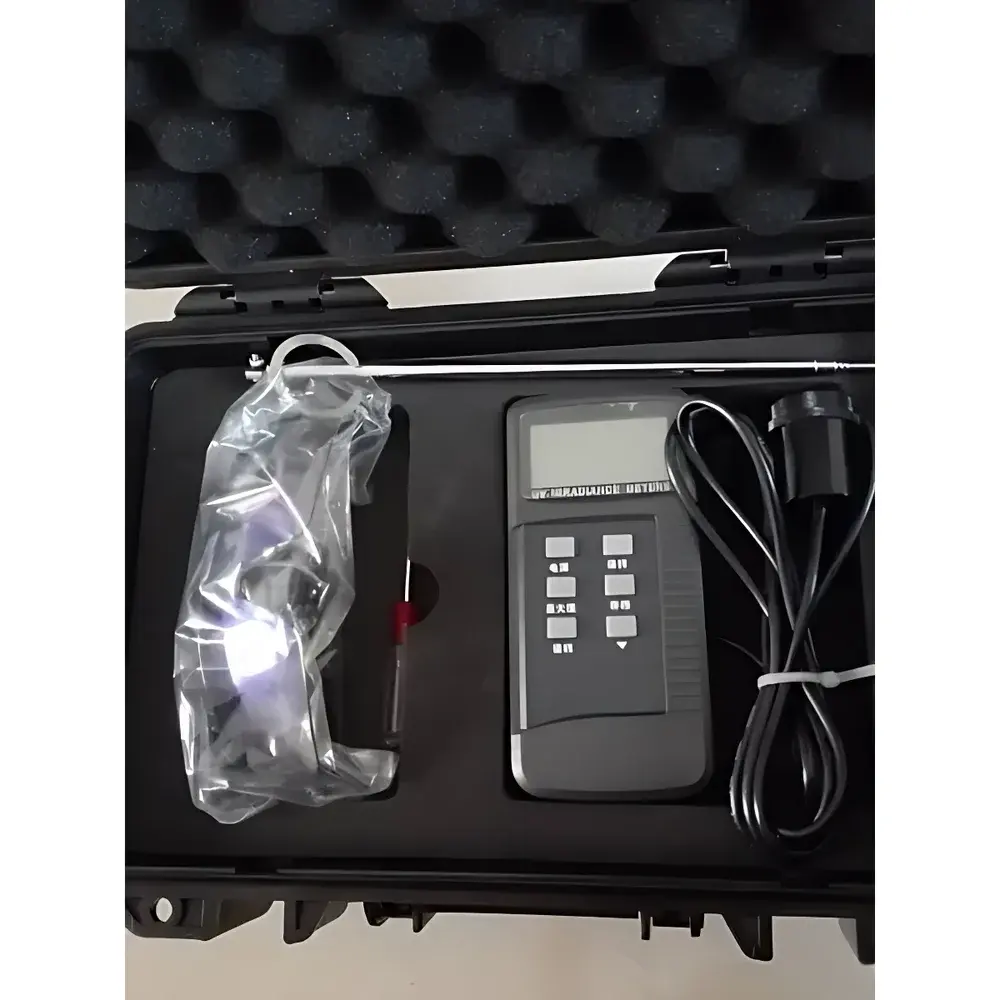
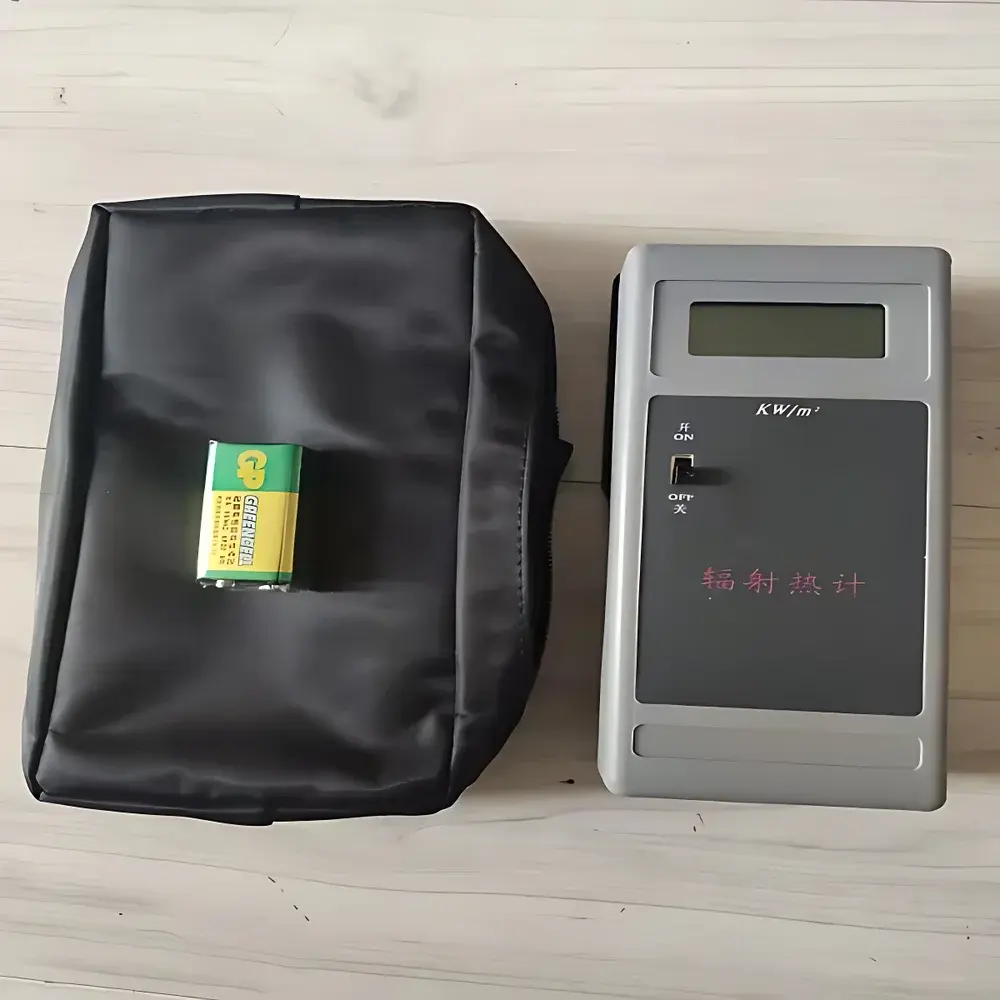
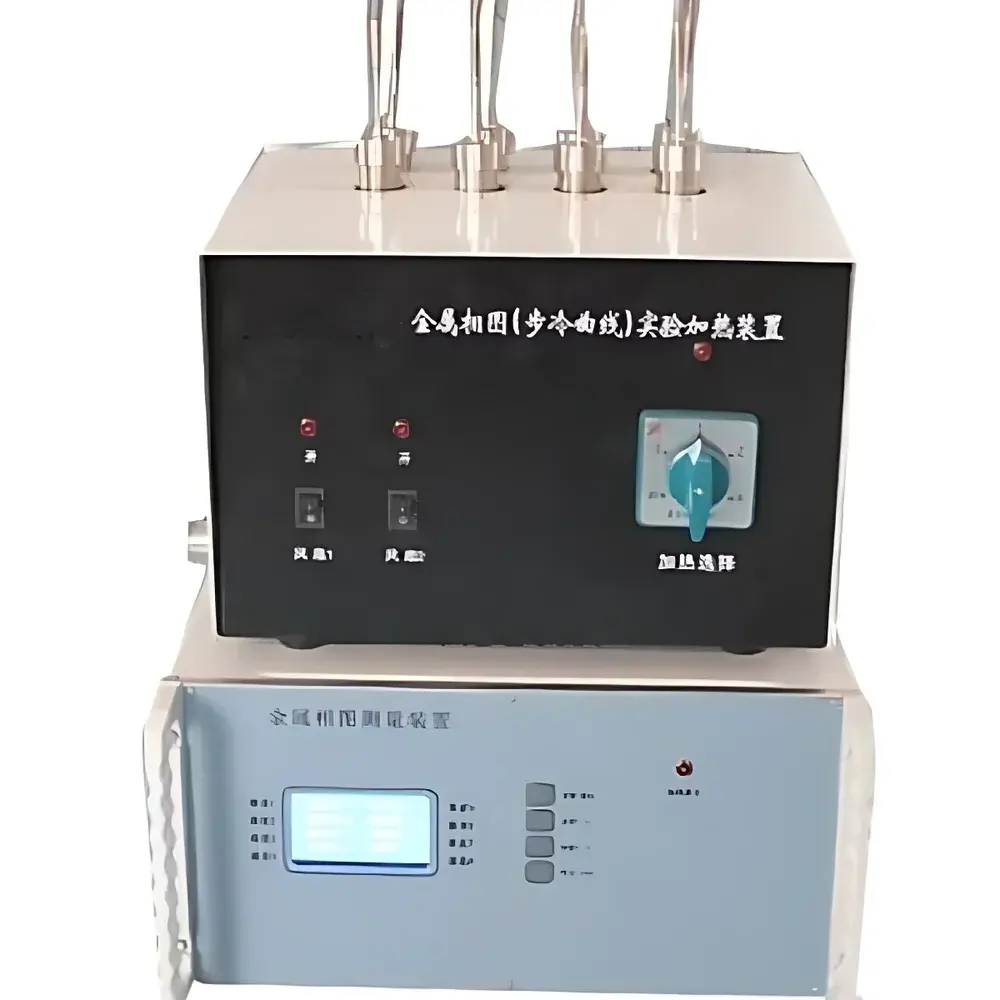
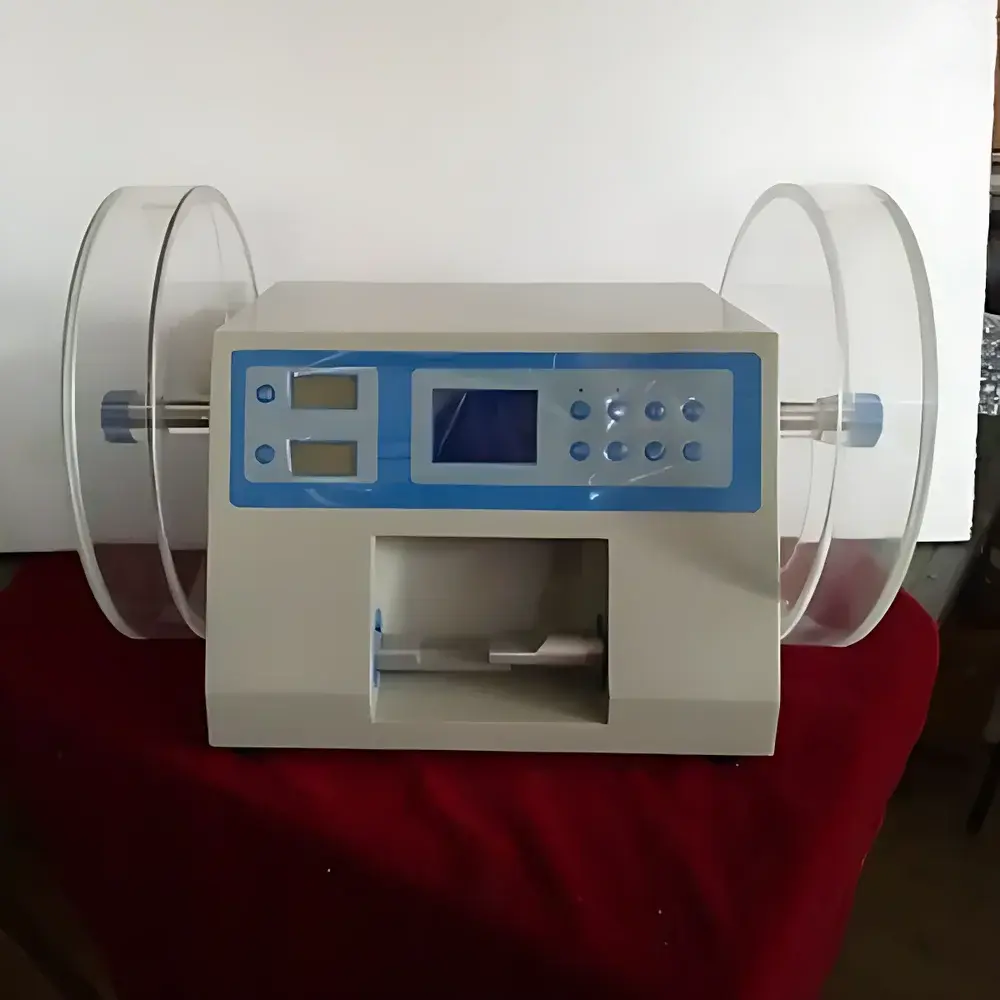
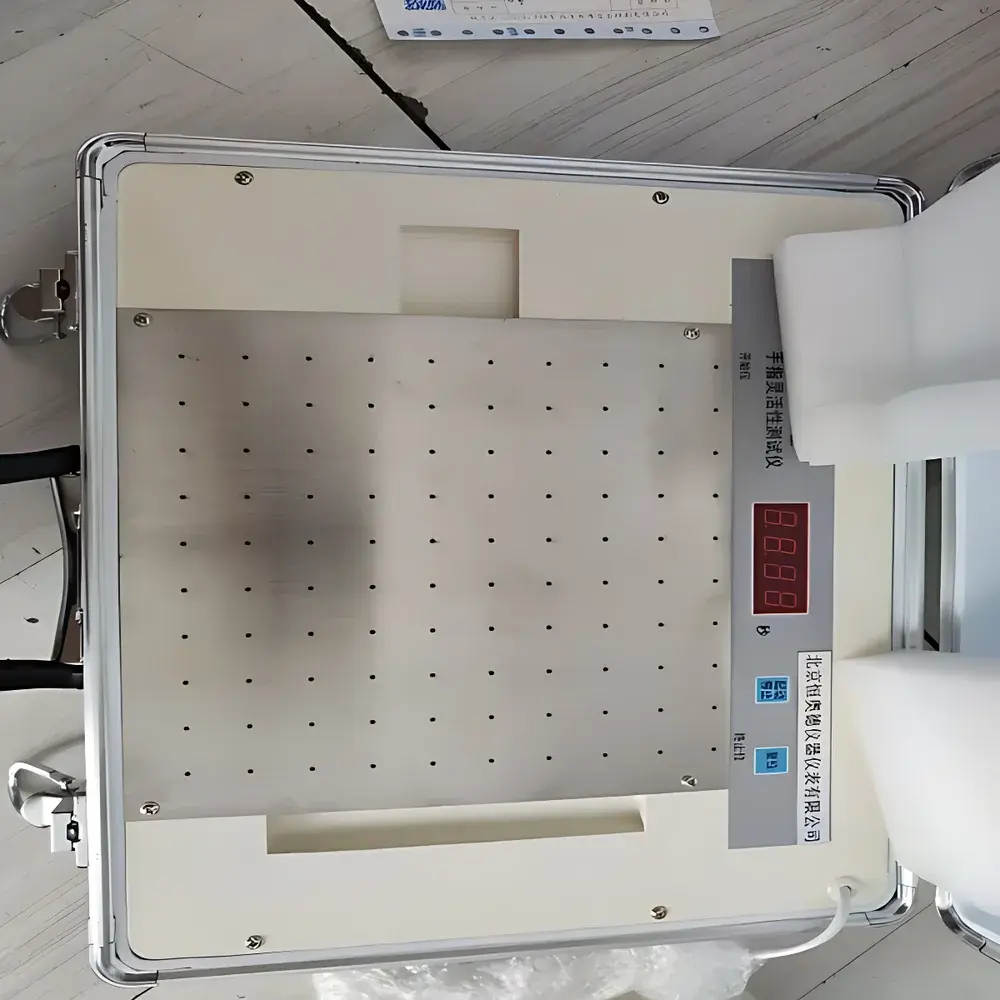
HengaoDe HAD-SRF Resin Exothermic Peak Analyzer with 32-bit COKTEX-H4 Microprocessor
| Brand | HengaoDe |
|---|---|
| Origin | Beijing, China |
| Manufacturer Type | Authorized Distributor |
| Country of Origin | China |
| Processor | 32-bit COKTEX-H4 microcontroller |
| Display | 3-inch monochrome LCD |
| Data Interface | USB port |
| Temperature Accuracy | ±0.1 °C |
| Minimum Temperature Resolution | 0.1 °C |
| Minimum Time Resolution | 1 s |
| Temperature Sampling Rate | Configurable, up to 1 sample/s |
| Operating Temperature Range | −20 °C to 230 °C |
| Power Supply | 220 V AC, 50 Hz, single-phase |
Overview
The HengaoDe HAD-SRF Resin Exothermic Peak Analyzer is a dedicated thermal profiling instrument engineered for precise real-time monitoring of exothermic reactions during thermosetting resin curing processes. It operates on the principle of high-resolution temperature-time curve acquisition using a calibrated platinum resistance sensor and a deterministic 32-bit COKTEX-H4 microcontroller architecture. Unlike general-purpose data loggers, the HAD-SRF is purpose-built for polymer process development, quality control in composite manufacturing, and R&D validation of curing kinetics—particularly where peak exotherm onset, magnitude, and duration are critical indicators of crosslink density, catalyst activity, or formulation stability. Its embedded firmware implements fixed-interval sampling with sub-second time stamping, enabling reproducible identification of reaction inflection points per ASTM D3418 and ISO 21319 standards for thermal analysis of polymers.
Key Features
- High-fidelity thermal acquisition with ±0.1 °C sensor accuracy and 0.1 °C display resolution ensures traceable quantification of exothermic peaks across low- to mid-range curing temperatures (−20 °C to 230 °C).
- Deterministic 32-bit COKTEX-H4 microcontroller delivers consistent sampling timing and eliminates jitter-induced artifacts in time-domain thermal profiles.
- Monochrome 3-inch LCD with wide viewing angle provides clear, glare-resistant visualization of real-time temperature curves and numeric readouts under laboratory or production floor lighting conditions.
- USB interface enables direct data export to Windows-based analysis platforms without proprietary drivers; exported files are CSV-compatible for integration with MATLAB, Origin, or custom Python processing pipelines.
- Configurable sampling rate (1 Hz default, adjustable via front-panel menu) supports both rapid-cure screening and extended slow-cure monitoring protocols.
- Robust mechanical design includes an aluminum-shielded sensor housing and EMI-suppressed signal conditioning circuitry, ensuring stable operation near industrial heating equipment or RF sources.
Sample Compatibility & Compliance
The HAD-SRF is compatible with standard resin test cups (customizable dimensions per user specification) and integrates seamlessly with common differential thermal analysis (DTA) workflows. It supports non-contact or immersion-style probe mounting configurations depending on resin viscosity and container geometry. While not a certified calorimeter, its measurement methodology aligns with the foundational principles outlined in ISO 11357-2 (Differential Scanning Calorimetry) for qualitative exotherm detection. The device complies with IEC 61000-4-2 (ESD immunity) and IEC 61000-4-3 (radiated RF immunity) for electromagnetic compatibility in shared lab environments. Its temperature calibration traceability follows NIST-traceable reference standards, supporting GLP documentation requirements for routine QC testing in adhesive, coating, and composite material production facilities.
Software & Data Management
The analyzer requires no external software for basic operation—data logging, display, and USB dump are fully self-contained. When connected to a host PC, raw time-temperature sequences are exported as timestamped ASCII text files (UTF-8 encoded), containing columns for elapsed time (s), measured temperature (°C), and status flags. No proprietary binary formats or license-dependent viewers are required. For laboratories operating under FDA 21 CFR Part 11 compliance mandates, the instrument’s audit-ready output format allows integration into validated LIMS or ELN systems via automated ingestion scripts. Optional third-party Python libraries (e.g., hadsrf-parser) provide functions for baseline correction, peak detection via Savitzky-Golay differentiation, and Arrhenius activation energy estimation from multiple isothermal runs.
Applications
- Optimization of epoxy, phenolic, and unsaturated polyester resin cure cycles in aerospace prepreg and wind turbine blade manufacturing.
- Batch-to-batch consistency verification of catalyzed resin systems prior to composite layup.
- Evaluation of inhibitor efficacy in ambient-cure adhesives and sealants.
- Accelerated aging studies correlating exotherm profile shifts with shelf-life degradation.
- Teaching laboratory use in polymer science courses for illustrating autocatalytic reaction behavior and gel point prediction.
- Supporting ASTM D7028 (Standard Test Method for Glass Transition Temperature of Polymer Matrix Composites by Dynamic Mechanical Analysis) as a complementary low-cost screening tool.
FAQ
Does the HAD-SRF support multi-channel temperature inputs?
No—the HAD-SRF is a single-sensor instrument optimized for focused exotherm characterization. For multi-point thermal mapping, consider pairing it with external multiplexed thermocouple modules compatible with its USB virtual COM port interface.
Can the device be calibrated in-house?
Yes—calibration is performed using two-point NIST-traceable reference baths (e.g., 0 °C ice point and 100 °C boiling point at local atmospheric pressure). Full calibration procedure and tolerance limits are documented in the included technical manual.
Is the USB data export compliant with 21 CFR Part 11?
The raw data file itself is Part 11–compliant as an unalterable electronic record; however, electronic signatures and audit trails must be implemented at the LIMS/ELN level—no built-in signature capability exists on the device.
What is the maximum recommended cable length between sensor and main unit?
For optimal noise immunity and signal fidelity, keep the sensor lead length ≤2 m. Shielded twisted-pair extension cables rated for RTD applications may extend this to 5 m with verified accuracy retention.
Does the instrument meet IP rating requirements for humid environments?
The main unit carries an IP20 rating (indoor use only); the sensor probe is rated IP65 when installed with supplied gasketed cup adapters—suitable for controlled-humidity curing chambers but not for direct steam exposure.







