
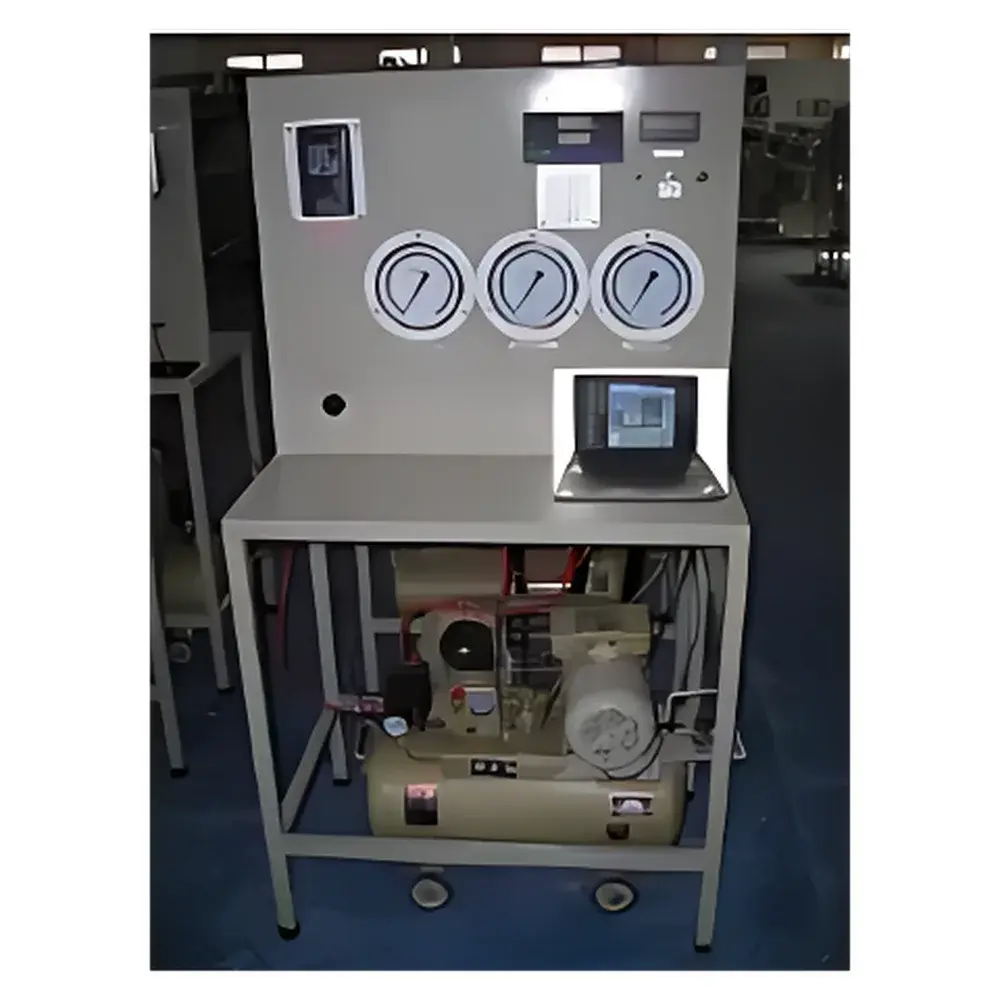
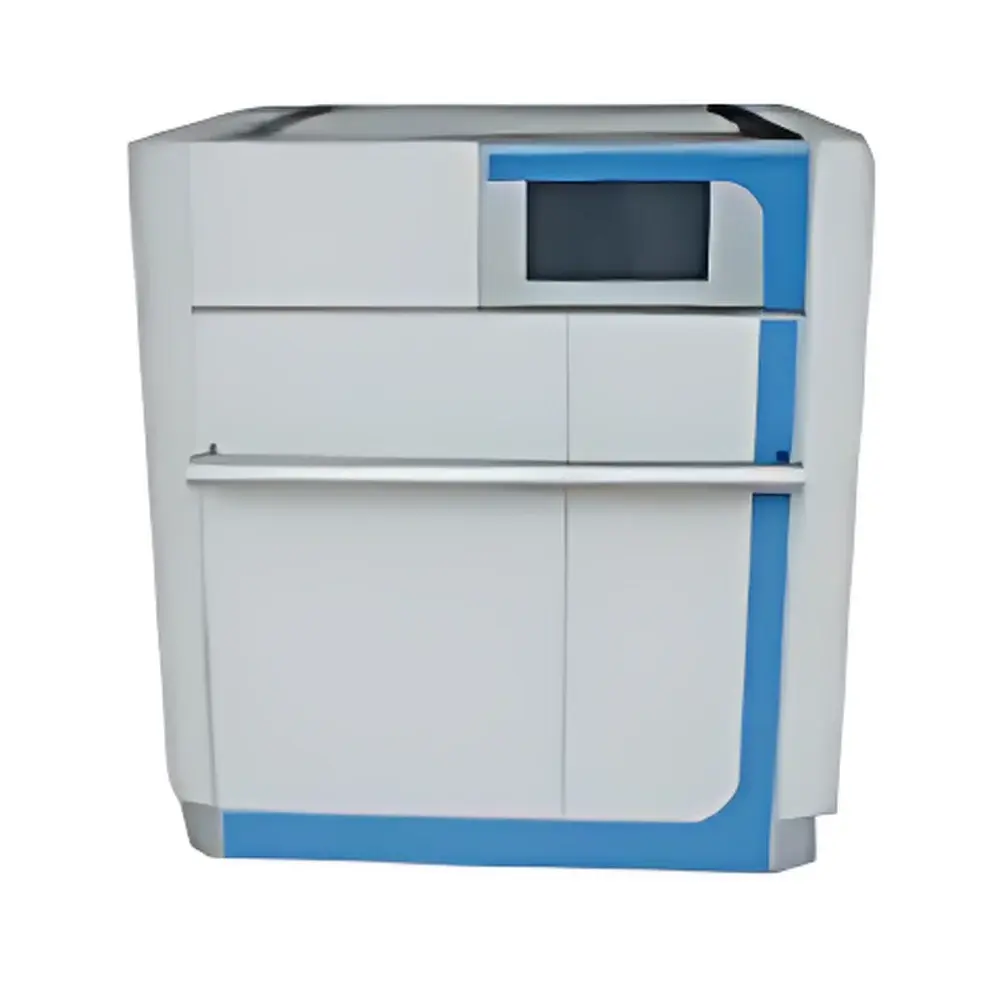
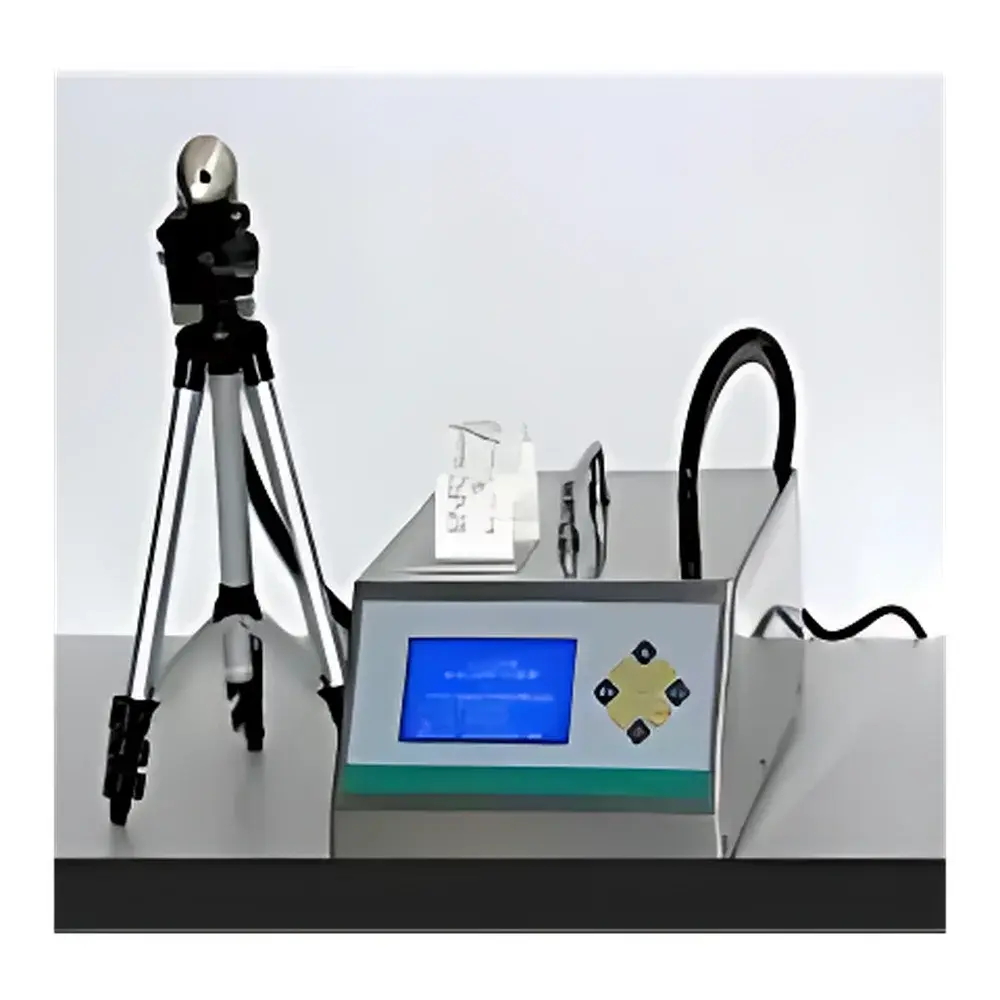
HengaoDe H28312 Air Compressor Performance Test Rig for Piston Compressor Characteristic Analysis
| Brand | HengaoDe |
|---|---|
| Origin | Beijing, China |
| Manufacturer Type | Authorized Distributor |
| Country of Origin | China |
| Model | H28312 |
| Price | USD 1,680 (FOB Beijing) |
Overview
The HengaoDe H28312 Air Compressor Performance Test Rig is an engineered educational and research platform designed to characterize the thermodynamic behavior of reciprocating piston compressors under variable operating conditions. It implements a validated experimental methodology grounded in classical engineering thermodynamics and modern data acquisition principles. The system captures real-time cylinder pressure versus crank angle (or piston displacement) trajectories—i.e., closed-loop indicator diagrams—by synchronizing high-fidelity pressure transduction with precise angular position sensing via Hall-effect switches. This enables quantitative determination of key performance metrics including indicated work per cycle, indicated power, polytropic compression index (n), volumetric efficiency (ηv), and isentropic efficiency (when combined with inlet/outlet temperature measurements). The rig operates at ambient temperature and pressure, powered by single-phase AC 220 V, and is calibrated for use in undergraduate thermal-fluid laboratories, graduate-level compressor research, and industrial training environments requiring traceable, repeatable thermodynamic validation.
Key Features
- Integrated pressure sensing system with calibrated piezoresistive transducer mounted directly on the compressor cylinder head
- Hall-effect position sensor synchronized to crankshaft rotation, generating TTL-compatible trigger pulses at top-dead-center (TDC) and bottom-dead-center (BDC)
- PCI-based data acquisition card with programmable sampling frequency (1–10 kHz range), supporting phase-locked acquisition over full compression cycles
- Dedicated Windows-based software for real-time visualization of p-V diagrams (closed and expanded formats), automatic calculation of indicated work via numerical integration (trapezoidal rule), and export of raw time-series data in CSV/ASCII format
- Compressor unit with accessible cylinder head porting, standard suction/exhaust valve configuration, and adjustable speed control via variable-frequency drive (VFD) interface
- Pre-configured PC workstation (Intel Core i5-3470, 4-core/4-thread, 3.2 GHz, 8 GB RAM, 500 GB HDD) preloaded with acquisition and post-processing software
- Structural aluminum frame with vibration-damping mounts; overall footprint: 800 × 400 × 800 mm (W × D × H)
Sample Compatibility & Compliance
The H28312 test rig is configured for single-stage, air-cooled, oil-lubricated reciprocating compressors with bore ≤ 60 mm and stroke ≤ 80 mm. It supports both fixed-speed and variable-speed operation, enabling steady-state and transient characterization across rotational speeds from 600 to 1800 rpm. All instrumentation complies with IEC 61000-4 electromagnetic compatibility standards. Pressure transducers are calibrated per ISO/IEC 17025-accredited procedures, with traceability to NIM (National Institute of Metrology, China). The system satisfies pedagogical requirements outlined in ASME PTC 10-2017 (Performance Test Codes for Compressors and Exhausters) Annex B for instructional applications. Data logging architecture supports audit trails and timestamped metadata, facilitating alignment with GLP documentation practices in academic and regulated R&D settings.
Software & Data Management
The proprietary acquisition and analysis suite provides dual-mode operation: real-time monitoring and offline post-processing. During acquisition, users define sampling rate, trigger edge polarity, number of cycles per capture, and auto-save parameters. The software computes instantaneous pressure-volume coordinates, integrates area within the closed p-V loop to yield indicated work (in joules/cycle), and derives mean effective pressure (MEP). Additional outputs include compression ratio estimation, polytropic exponent (n) via log(p)-log(V) linear regression, and volumetric efficiency based on swept volume and actual mass flow (when coupled with orifice plate or thermal mass flow meter). Export functions support MATLAB (.mat), Excel (.xlsx), and generic text formats. Raw datasets retain full metadata: acquisition timestamp, sensor IDs, calibration coefficients, and environmental conditions (ambient T/P logged separately). No proprietary runtime dependencies—software runs natively on Windows 10/11 x64.
Applications
- Undergraduate thermodynamics laboratory: Visualization of ideal vs. real compression processes, validation of polytropic assumptions, and error analysis of clearance volume estimation
- Graduate combustion and turbomachinery courses: Comparative study of valve timing effects, heat transfer losses during compression, and mechanical efficiency decomposition
- Industrial maintenance training: Diagnosis of valve leakage, ring wear, and cylinder scoring through characteristic distortion in indicator diagrams
- Research on alternative working fluids: Evaluation of refrigerant or CO2 compression behavior under subcritical/supercritical conditions (with compatible seals and sensors)
- Energy efficiency benchmarking: Quantification of part-load performance degradation and optimization of intercooling strategies
FAQ
What is the maximum sampling frequency supported by the DAQ system?
The PCI data acquisition card supports up to 10 kHz sampling per channel, configurable in hardware-triggered mode synchronized to Hall sensor pulses.
Can the system measure temperature alongside pressure?
Yes—two additional analog input channels are reserved for optional thermocouple or RTD inputs (type K or PT100), enabling simultaneous p-T-V analysis.
Is the software compliant with FDA 21 CFR Part 11 requirements?
While not certified for GMP production environments, the software includes user authentication, electronic signatures, and immutable audit logs—sufficient for GLP-aligned academic and preclinical research.
Does the rig include calibration certificates for all sensors?
Each pressure transducer and Hall sensor ships with individual factory calibration reports (NIST-traceable where applicable) and uncertainty budgets per ISO/IEC 17025.
Can the system be integrated with external flow meters or dynamometers?
Yes—the DAQ card provides four isolated analog inputs and eight digital I/O lines, allowing synchronization with third-party instruments via TTL triggers or analog voltage signals.






