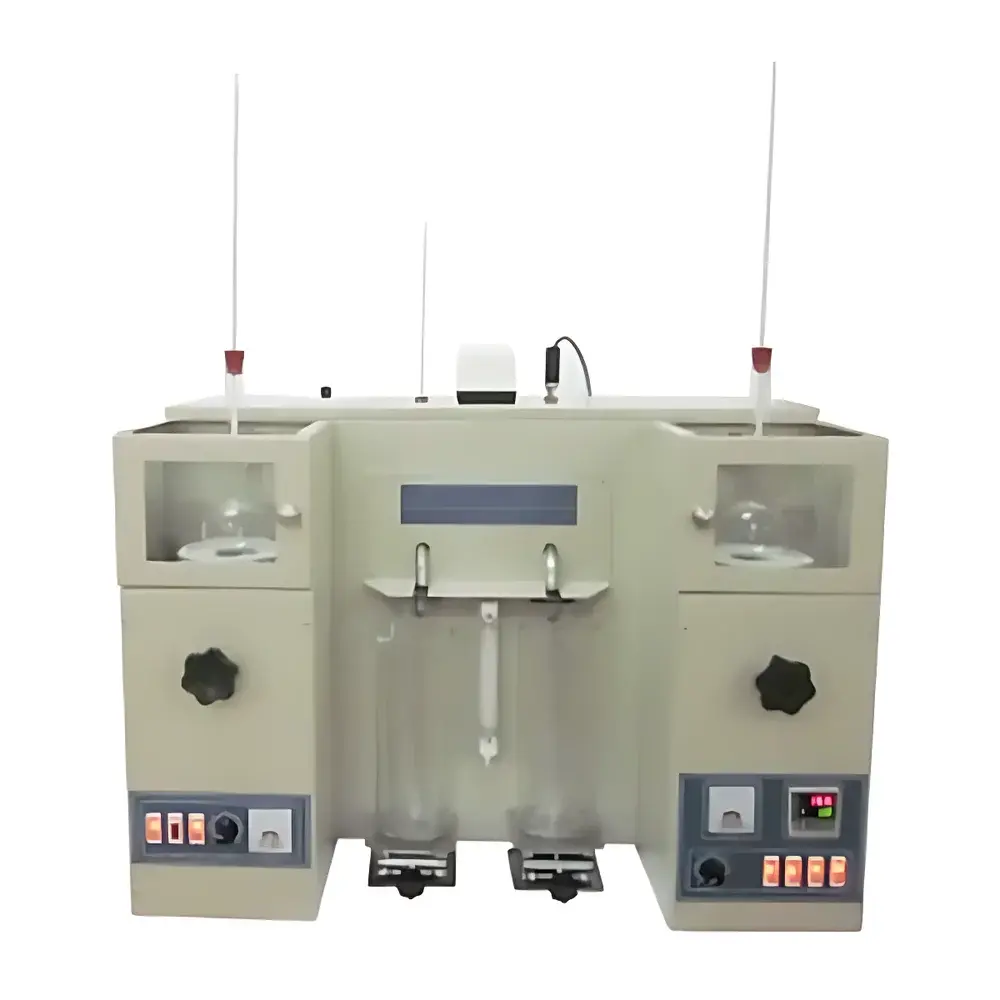
HengaoDe HAD-L6536C Dual-Sided Petroleum Distillation Analyzer per GB/T 6536
| Brand | HengaoDe |
|---|---|
| Origin | Beijing, China |
| Manufacturer Type | Authorized Distributor |
| Country of Origin | China |
| Model | HAD-L6536C |
| Price | USD 42.50 (FOB) |
| Power Supply | AC 220 V ±10%, 50 Hz |
| Heating Power | 2 × 1000 W |
| Distillation Flask | 125 mL, ASTM/GB-compliant |
| Graduated Cylinder | 100 mL, 1 mL graduation |
| Temperature Range | –2 to +400 °C (full-immersion glass thermometer, 1 °C scale) |
| Heating Plate | Silicon carbide, dual apertures (Φ38 mm & Φ50 mm) |
| Temperature Control Range | (Ambient +10) to 80 °C |
| Control Accuracy | ±0.5 °C |
| Display | LED digital |
| Ambient Operating Conditions | ≤30 °C, ≤85% RH |
Overview
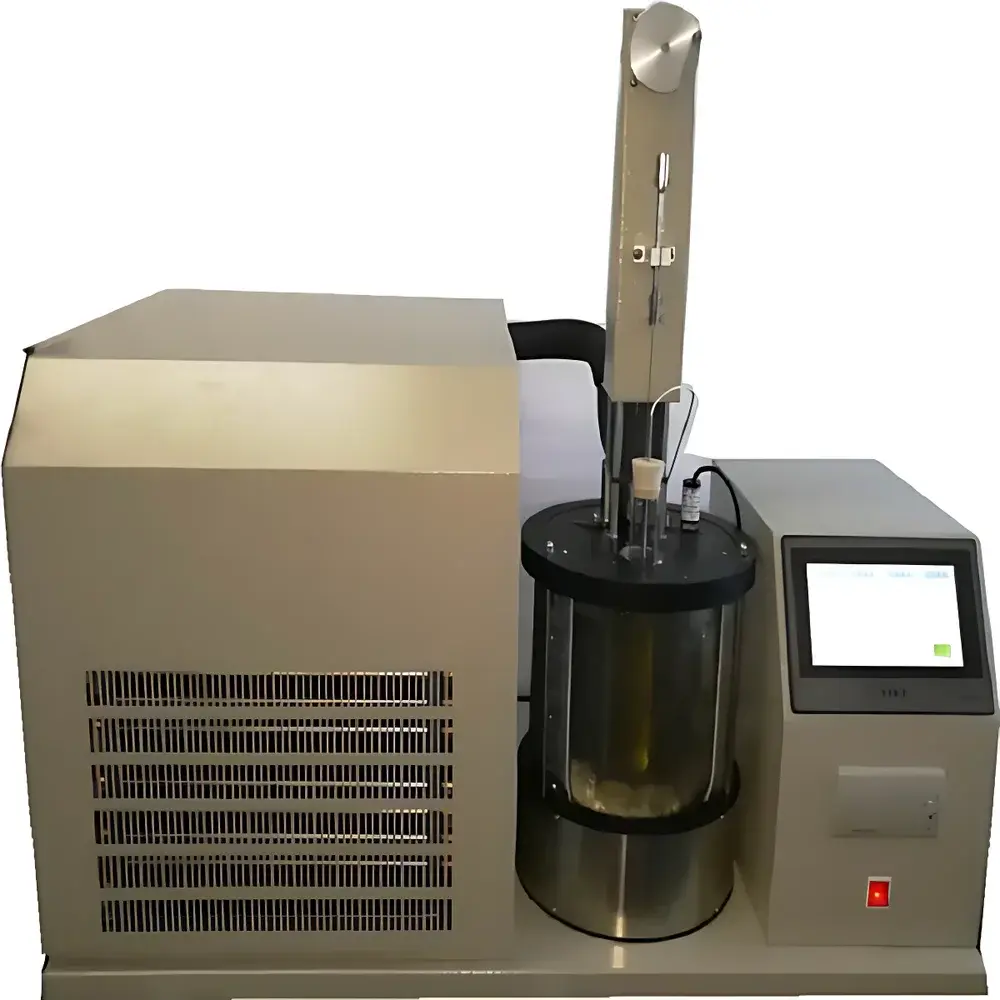
The HengaoDe HAD-L6536C Dual-Sided Petroleum Distillation Analyzer is a precision-engineered laboratory instrument designed and validated in strict accordance with the Chinese national standard GB/T 6536—“Standard Test Method for Distillation of Petroleum Products at Atmospheric Pressure.” It implements a standardized ASTM D86–compatible distillation protocol using dual independent heating zones, enabling simultaneous or sequential analysis of two samples under identical thermal and vapor-phase conditions. The system employs controlled electric resistance heating, calibrated full-immersion thermometry, and gravity-fed condensate collection to deliver reproducible boiling point distribution data—including initial boiling point (IBP), 10%, 50%, 90%, and final boiling point (FBP)—for volatile hydrocarbon mixtures. Its architecture supports routine quality control in refinery laboratories, fuel formulation R&D, and regulatory compliance testing for gasoline, aviation turbine fuels, naphthas, diesel fractions, and industrial solvents.
Key Features
- Dual-channel design enables parallel distillation runs, improving lab throughput without cross-contamination risk.
- Two independently controllable 1000 W silicon carbide heating elements ensure uniform thermal input and rapid temperature stabilization.
- Compliant 125 mL ASTM/GB-specified distillation flasks and 100 mL graduated receiving cylinders meet metrological traceability requirements.
- Full-immersion mercury-in-glass thermometers (–2 to +300 °C and –2 to +400 °C ranges, 1 °C scale) provide direct, NIST-traceable temperature measurement per standard methodology.
- Digital PID temperature controller with LED display offers setpoint resolution of 0.1 °C and maintains ±0.5 °C accuracy across the (ambient +10) to 80 °C bath control range.
- Robust carbonized silicon carbide heating plates feature precisely machined apertures (Φ38 mm and Φ50 mm) to accommodate varying flask geometries while minimizing heat loss.
- Designed for ambient operation ≤30 °C and relative humidity ≤85%, ensuring stable performance in standard QC laboratory environments.
Sample Compatibility & Compliance
The HAD-L6536C is validated for use with petroleum-based liquid samples conforming to GB/T 6536 scope: motor gasoline, aviation gasoline, jet fuel (Jet A-1, JP-5), narrow-boiling solvents, naphtha, light and middle distillates, and related hydrocarbon blends. It does not support high-viscosity, thermally unstable, or highly reactive feedstocks (e.g., crude oil, heavy fuel oil, or polymer solutions). All mechanical and thermal components comply with GB/T 26575—“General Technical Requirements for Petroleum Testing Instruments,” and the system supports audit-ready documentation for ISO/IEC 17025-accredited laboratories. While not certified to ASTM E29 or ISO 17025 out-of-the-box, its operational parameters align with the measurement uncertainty framework defined in ASTM D86 Annex A1 for repeatability (r) and reproducibility (R) assessment.
Software & Data Management
The HAD-L6536C operates as a standalone hardware platform with no embedded microprocessor or digital data logging capability. Temperature readings are observed visually via analog thermometers; volume collection is recorded manually from the graduated cylinder. As such, it requires external documentation protocols—such as paper-based test logs, LIMS-integrated manual entry, or digital note-taking systems—to satisfy GLP or GMP record retention requirements. Laboratories implementing 21 CFR Part 11 compliance may integrate the instrument into validated workflows using secondary recording devices (e.g., time-stamped video capture or calibrated digital thermocouple loggers), provided such additions undergo IQ/OQ validation per internal SOPs. No firmware, USB interface, or software driver is included or supported.
Applications
This analyzer serves critical functions across upstream, midstream, and downstream petroleum operations: verification of gasoline volatility specifications (Reid Vapor Pressure correlation), jet fuel flash point screening, solvent purity assessment in pharmaceutical excipient manufacturing, batch release testing of reformulated naphthas, and academic research on fractional distillation thermodynamics. It is routinely deployed in refinery QC labs, third-party testing centers serving API-certified fuel producers, and university chemical engineering teaching laboratories where hands-on understanding of vapor–liquid equilibrium and ASTM/GB method execution is emphasized. Its dual-channel configuration also supports comparative studies—e.g., evaluating additive effects on distillation curves or validating calibration transfer between instruments.
FAQ
Does the HAD-L6536C include automated data acquisition or PC connectivity?
No. It is a fully manual, analog-operated distillation apparatus. All measurements—temperature and distillate volume—are read visually and recorded externally.
Can this unit be used for ASTM D86 testing outside China?
Yes—its physical configuration, flask geometry, condenser alignment, and temperature measurement methodology are functionally equivalent to ASTM D86 apparatus requirements. Users must verify local regulatory acceptance and perform method equivalence validation per their QA protocol.
What maintenance is required for long-term reliability?
Routine cleaning of glassware (flask, condenser, cylinder) after each use; periodic inspection of heating plate integrity; annual recalibration of thermometers by an accredited metrology lab; and verification of electrical grounding and insulation resistance per IEC 61010-1.
Is the instrument supplied with certified reference materials or calibration certificates?
No. Calibration thermometers and volumetric glassware must be sourced separately and certified per ISO/IEC 17025 before first use. HengaoDe provides dimensional drawings and material certifications for all metallic and ceramic components.
Can the HAD-L6536C operate continuously for extended shifts?
It is rated for intermittent duty—maximum 4 hours of continuous heating per session. Extended operation requires 30-minute cooldown intervals to prevent thermal stress on the silicon carbide plates and maintain ±0.5 °C control stability.