
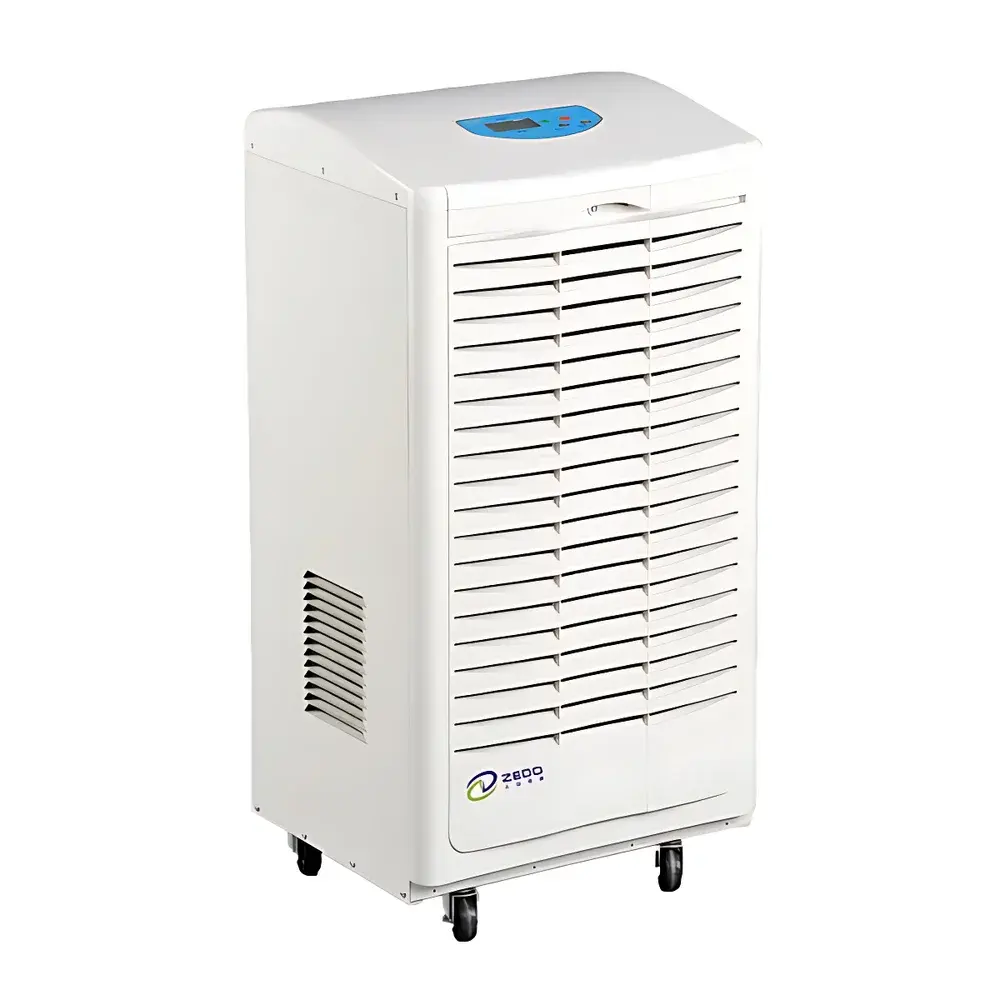
ZEDO ZD-8138C Industrial Desiccant-Style Compressor Dehumidifier for Construction Sites
| Brand | ZEDO |
|---|---|
| Origin | Zhejiang, China |
| Manufacturer Type | Direct Manufacturer |
| Region of Origin | Domestic (China) |
| Model | ZD-8138C |
| Instrument Type | Compressor-Based Dehumidifier |
| Application Type | Industrial Duty |
| Dimensions (L×W×H) | 480 × 430 × 1100 mm |
| Operating Temperature Range | 5–38 °C |
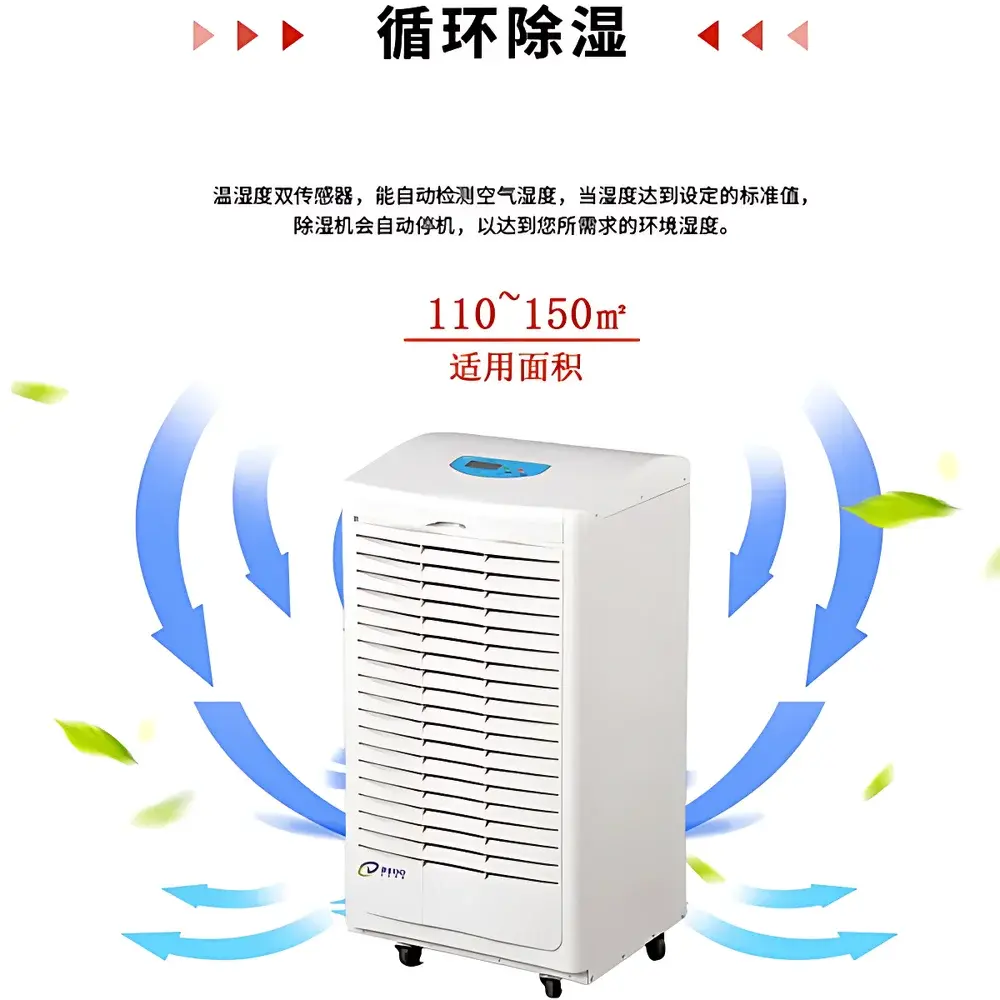
| Recommended Coverage Area | 100–200 m² |
| Airflow Rate | 1725 m³/h |
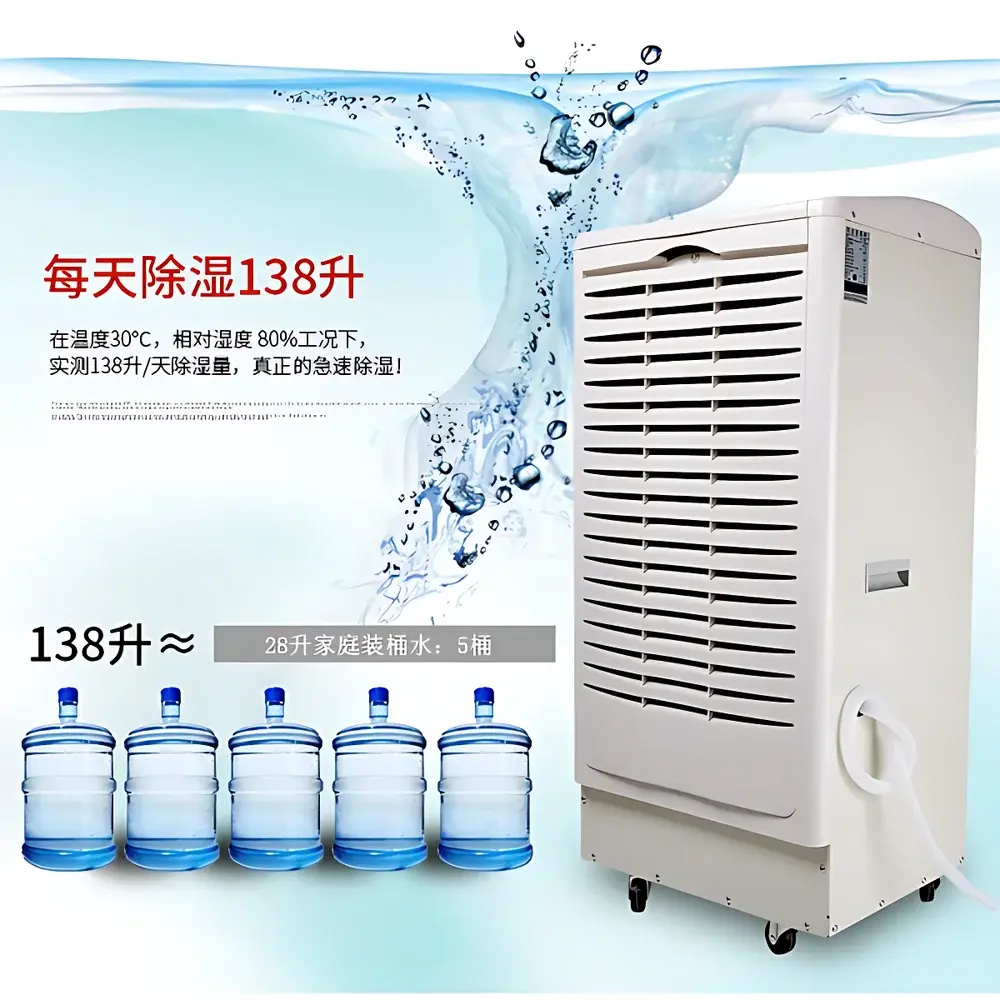
| Dehumidification Capacity | 138 L/day |
| Power Input | 2000 W |
| Noise Level | 50 dB(A) |
| Weight | 58 kg |
| Drainage Method | Continuous via PVC hose |
| Control System | Microprocessor-Based Humidity Setpoint Control with Japanese Shinyo High-Accuracy Hygrothermometer Sensor |
| Safety Protections | Three-Minute Compressor Delay, High/Low Pressure Cutout, Overload & Undervoltage Protection |
| Filtration | Standard Activated Carbon Filter |
| Certifications | CE-marked per EN 60335-1 & EN 60335-2-40 (Household and Similar Electrical Appliances – Safety) |
Overview
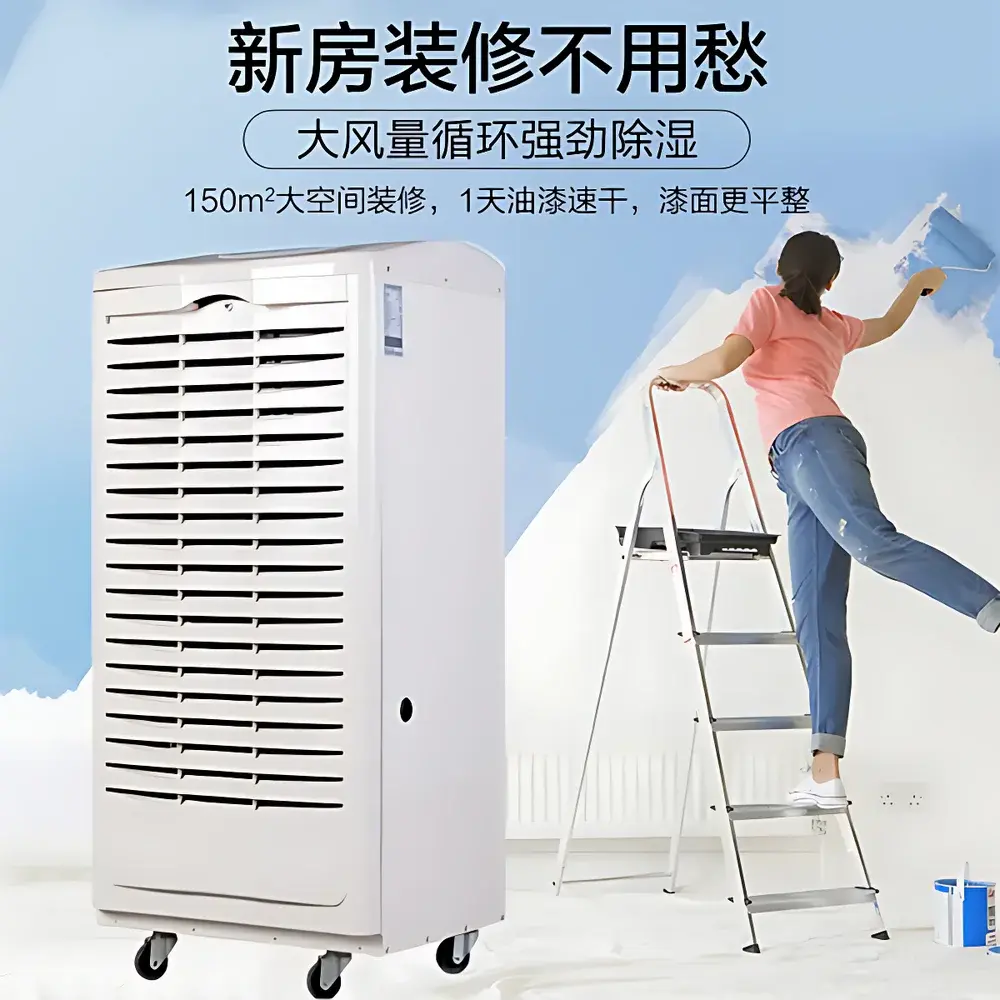
The ZEDO ZD-8138C is an industrial-grade, compressor-driven dehumidifier engineered for rigorous environmental control in construction-phase indoor environments—particularly during high-humidity periods such as monsoon seasons or unconditioned post-framing stages. It operates on the principle of refrigerant-based condensation: ambient air is drawn across a finned-tube evaporator coil cooled below the dew point by a hermetic scroll compressor system; moisture condenses and is collected in a reservoir or drained continuously via gravity-fed hose; the now-dry air passes over the condenser coil, where waste heat from refrigerant compression is recovered to reheat the airstream prior to discharge—ensuring stable dry-bulb temperature and minimizing thermal shock to building materials. This thermodynamically balanced process delivers consistent psychrometric performance without introducing significant sensible cooling load, making it suitable for occupied or semi-occupied job sites where HVAC systems remain offline.
Key Features
- Hermetically sealed high-efficiency scroll compressor with R410A refrigerant—compliant with EU F-Gas Regulation (EC) No 517/2014 and compatible with global phase-down schedules.
- Optimized heat exchanger assembly featuring internally grooved copper tubing and hydrophilic aluminum fins—enhancing latent heat transfer coefficient and reducing fouling susceptibility in dusty construction environments.
- Dual centrifugal impeller airflow system delivering 1725 m³/h volumetric flow at low acoustic signature (≤50 dB[A] at 1 m), enabling operation during active carpentry, drywall finishing, or painting phases without disrupting workflow.
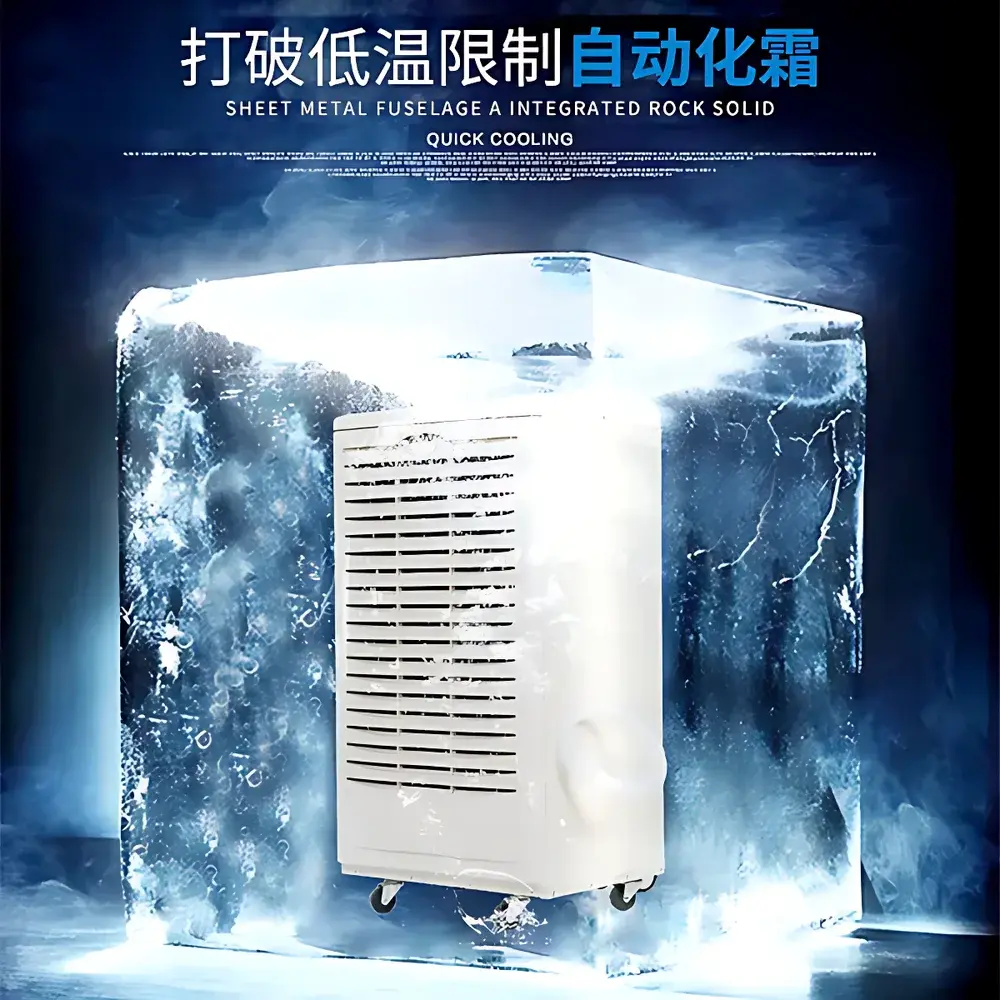
- Microprocessor controller with real-time humidity feedback loop, adjustable setpoint range (30–80% RH), hysteresis tuning, and automatic defrost cycle management—ensuring uninterrupted operation across variable ambient conditions (5–38 °C).
- Integrated safety architecture including compressor crankcase heater, three-minute anti-short-cycle delay, high/low refrigerant pressure monitoring, motor thermal overload protection, and undervoltage lockout—meeting IEC 60335-1 Class II insulation requirements.
- Structural chassis designed for field durability: powder-coated steel frame, reinforced castor mounts (two with brakes), and service-accessible modular layout separating refrigeration, electrical, and air-handling subsystems per ISO 5801 fan performance testing conventions.
Sample Compatibility & Compliance
The ZD-8138C is validated for continuous-duty deployment in non-classified indoor spaces where relative humidity must be actively maintained between 40–60% RH to mitigate moisture-related degradation of substrates—including gypsum board, OSB sheathing, hardwood flooring, adhesives, and waterborne coatings. Its design conforms to ISO 16813:2006 (Indoor environmental input parameters for design and assessment of energy performance of buildings) and supports compliance with ASTM D1729 (Standard Practice for Visual Evaluation of Color Differences), ASTM D2244 (Color Difference Calculation), and ISO 12944-5 (Paints and varnishes — Corrosion protection of steel structures) when used as part of a documented environmental conditioning protocol. While not certified for cleanroom use (ISO 14644-1 Class 5+), its activated carbon prefilter meets EN 779:2012 G3 classification for coarse particulate removal—reducing airborne dust loading on downstream components during construction activity.
Software & Data Management
The unit incorporates embedded firmware supporting local parameter logging (humidity setpoint, runtime hours, fault codes) with timestamped event history stored in non-volatile memory. No proprietary cloud platform or remote telemetry is included; all configuration and diagnostics are performed via front-panel membrane keypad with LED status indicators. For integration into QA/QC documentation workflows, optional RS-485 Modbus RTU interface (available upon request) enables connection to building management systems (BMS) or third-party data loggers compliant with IEEE 1344-1995 time-synchronization standards. Audit trails generated during operation satisfy GLP-aligned record retention requirements when paired with external timestamped logging—though the device itself does not implement FDA 21 CFR Part 11 electronic signature functionality.
Applications
- Construction site humidity control during dry-in, taping/mudding, flooring installation, and paint application—especially critical in coastal or subtropical regions where ambient RH exceeds 75% for >72 consecutive hours.
- Moisture mitigation in newly plastered or concrete-floored spaces prior to final finishes, preventing efflorescence, blistering, or interfacial delamination in polymer-modified thin-set mortars.
- Pre-commissioning conditioning of mechanical rooms, server closets, and medical equipment storage areas where hygroscopic packaging integrity must be preserved before handover.
- Temporary climate stabilization in archival vaults, museum renovation zones, and library restoration labs where cellulose-based artifacts require <55% RH to inhibit mold propagation per ANSI/NISO Z39.78-2002 guidelines.
- Support of ASTM E1907-22 (Standard Practice for Determining Moisture Content of Wood Using Electrical Resistance Meters) by establishing uniform equilibrium moisture content (EMC) baselines across structural timber batches.
FAQ
Can the ZD-8138C operate continuously in unventilated spaces during active construction?
Yes—the unit is rated for 24/7 operation in enclosed environments with no minimum fresh-air intake requirement. Its reheated discharge air prevents excessive cooling and maintains thermal stability within target zones.
Is this model suitable for use in temperature-controlled laboratories?
It is not intended for precision environmental chambers or ISO Class-certified labs. Its ±5% RH control tolerance and lack of integrated calibration traceability limit applicability to general-purpose drying rather than metrology-grade conditioning.
Does the unit include refrigerant charge verification ports for field service?
Yes—high- and low-side service valves conforming to SAE J2064 standards are provided for refrigerant recovery, evacuation, and charging using standard HVAC manifold gauges.
What maintenance intervals are recommended for extended field deployment?
Filter cleaning every 72 operational hours in high-dust environments; coil inspection and light brushing every 500 hours; full refrigerant circuit leak check and oil analysis annually—or after any compressor-related fault event.
Can multiple units be daisy-chained for synchronized control?
No native master-slave protocol exists. However, external PLC-based sequencing (e.g., using dry-contact relays triggered by zone-specific hygrometers) can coordinate staged activation across distributed units.



